Sequencing Skills Addition & Subtraction Worksheets for Ages 4-9
3 filtered results
-
From - To
Welcome to our Sequencing Skills Addition & Subtraction Worksheets page, designed for children ages 4-9! These engaging worksheets help young learners master the foundational concepts of sequencing essential for solving addition and subtraction problems. With vibrant illustrations and interactive activities, students will enjoy developing critical thinking and problem-solving skills. Our easy-to-follow exercises encourage children to recognize numerical order and improve their mathematical fluency. These printable resources are perfect for classroom use, homeschooling, or extra practice at home. Spark your child's love for math while reinforcing their sequencing abilities—download, print, and watch your little ones flourish in their math journey!
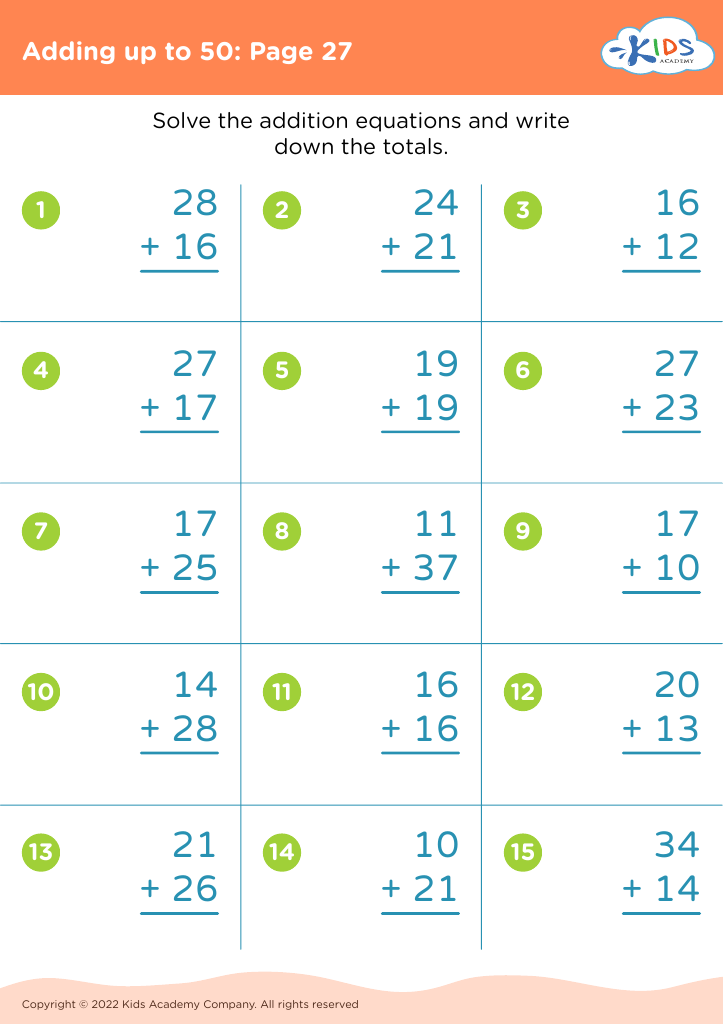
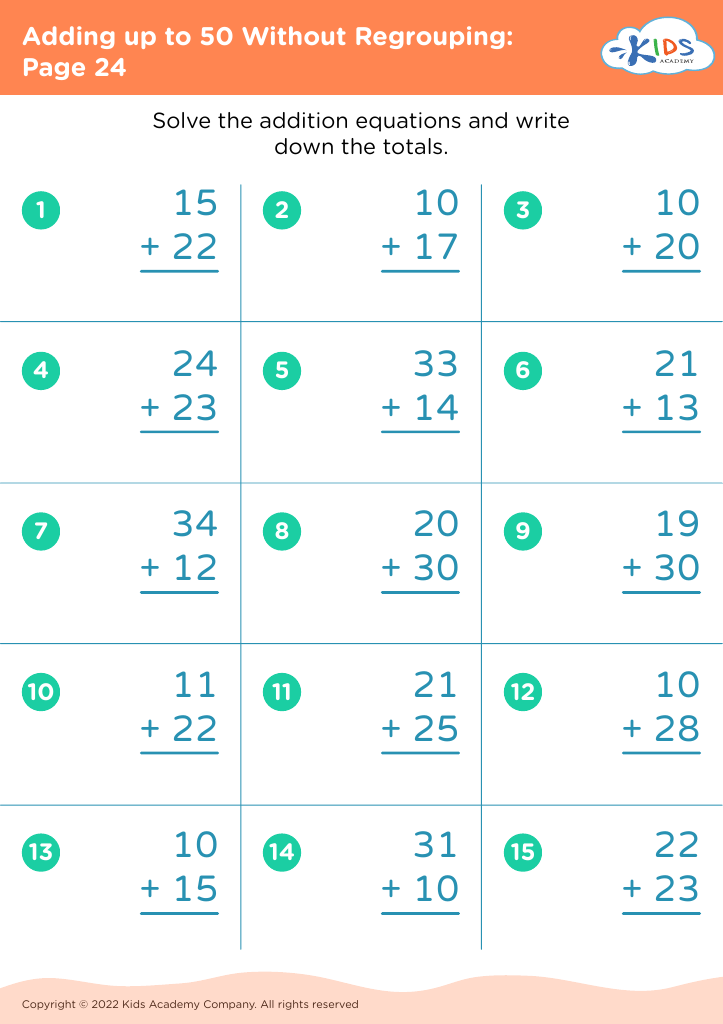
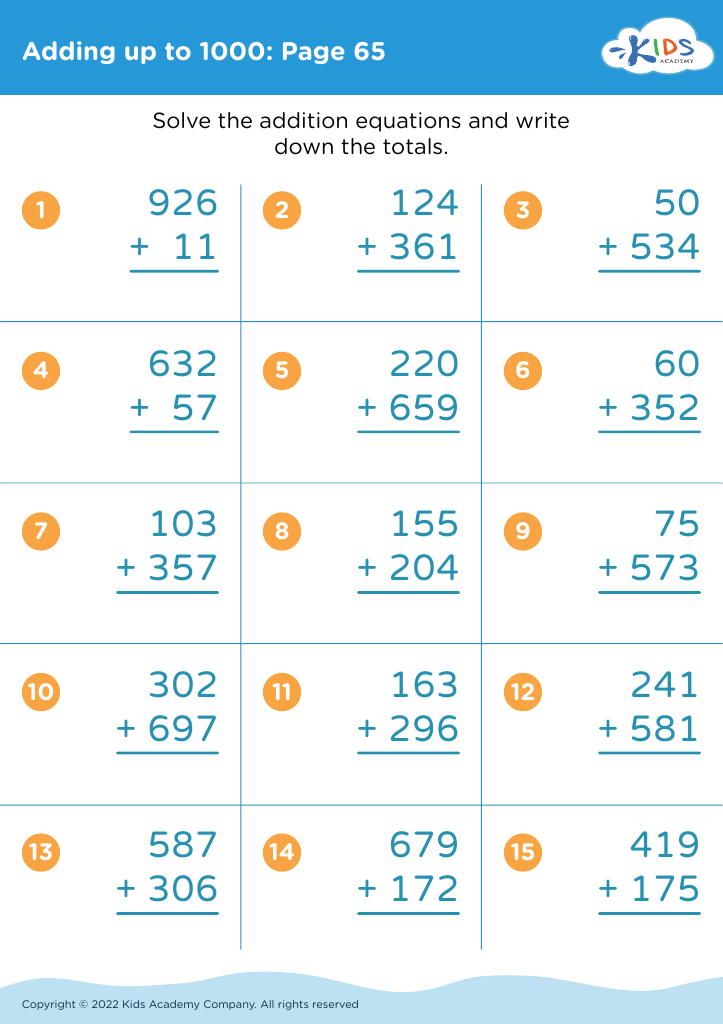








Sequencing skills in addition and subtraction are fundamental for children aged 4 to 9, forming the foundation of their mathematical understanding. These skills enable children to recognize patterns, develop critical thinking, and solve problems effectively. At this age, students begin to learn not only how to perform calculations but also how to understand the relationship between numbers. Mastering sequencing helps children follow the logical steps required to arrive at a solution, which is crucial when performing operations like addition and subtraction.
For teachers and parents, fostering these skills is essential for building confidence in math. Children who struggle with sequencing may experience frustration, leading to a negative attitude toward mathematics. Additionally, strong sequencing abilities can support students in tackling more complex math concepts in later grades.
Engaging activities that promote sequencing—such as using number lines, visual aids, and interactive games—can make learning engaging and accessible. By prioritizing sequencing skills, parents and teachers equip children not only with mathematical proficiency but also with the ability to approach challenges systematically. This foundational skill set will positively impact their overall cognitive development and prepare them for future academic success. Investing in these skills early fosters a lifelong appreciation for mathematics.








