Spatial awareness Addition & Subtraction Worksheets for Ages 4-9
6 filtered results
-
From - To
Enhance your child's mathematical skills with our engaging Spatial Awareness Addition & Subtraction Worksheets, designed specifically for ages 4-9. These printable resources focus on developing spatial awareness while strengthening foundational math concepts. Young learners will enjoy fun, themed activities that challenge their understanding of number relationships, promote critical thinking, and encourage hands-on learning. By incorporating visual aids and interactive exercises, children will improve their ability to visualize problem-solving scenarios in addition and subtraction. Perfect for at-home practice or classroom use, these worksheets make learning mathematics enjoyable and effective! Equip your child with essential skills for their educational journey today!
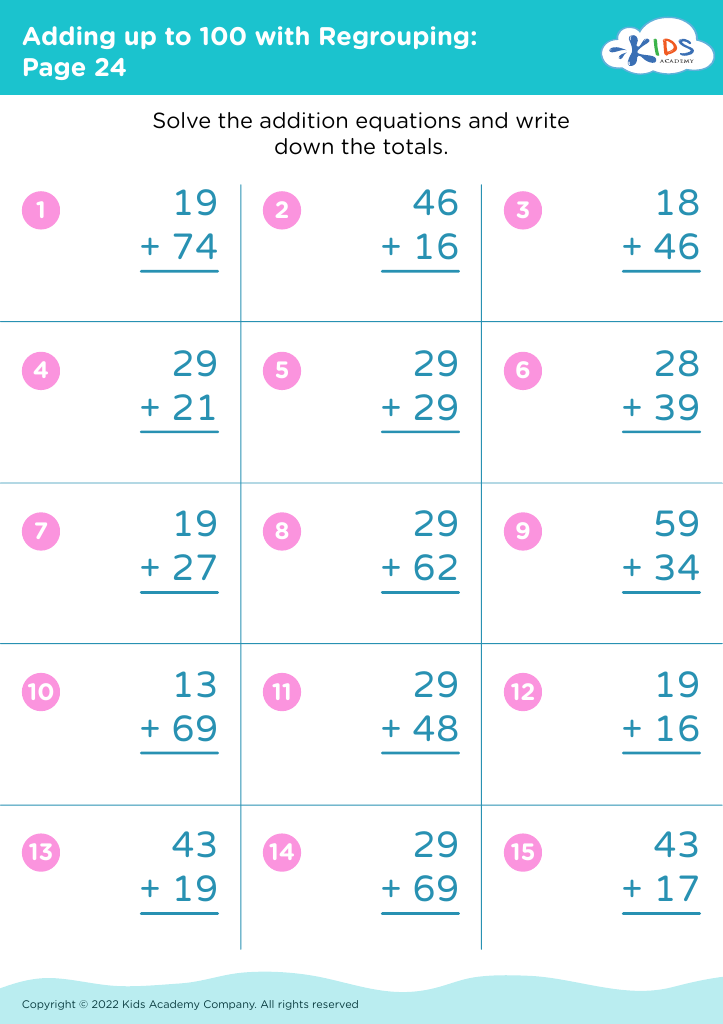
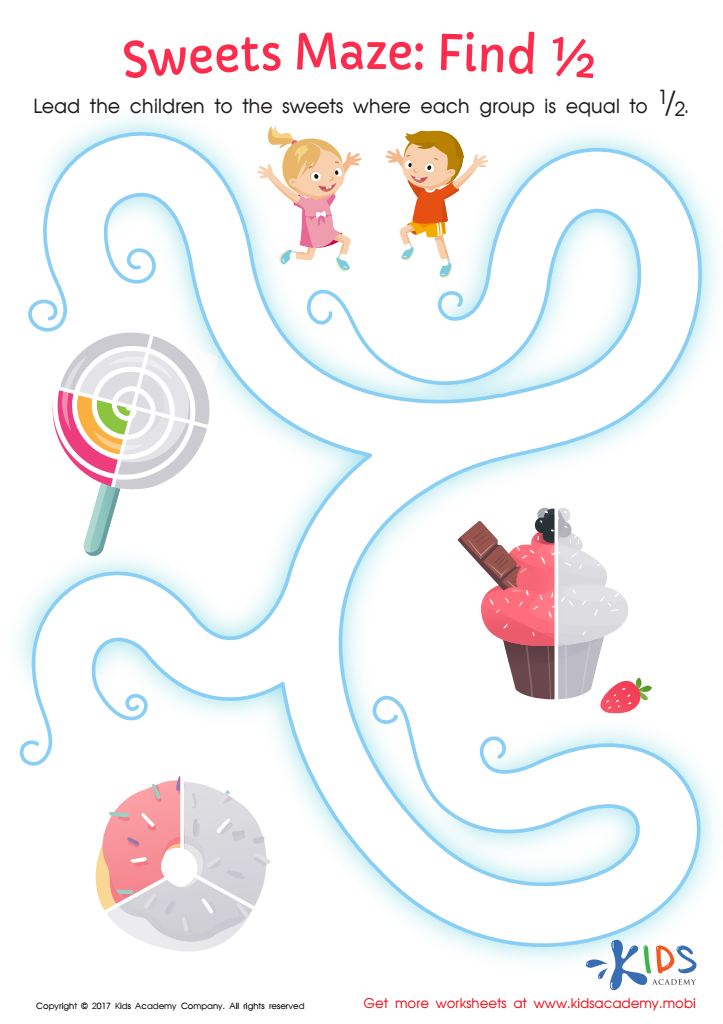
Fractions: Sweets Maze Worksheet
 Assign to My Students
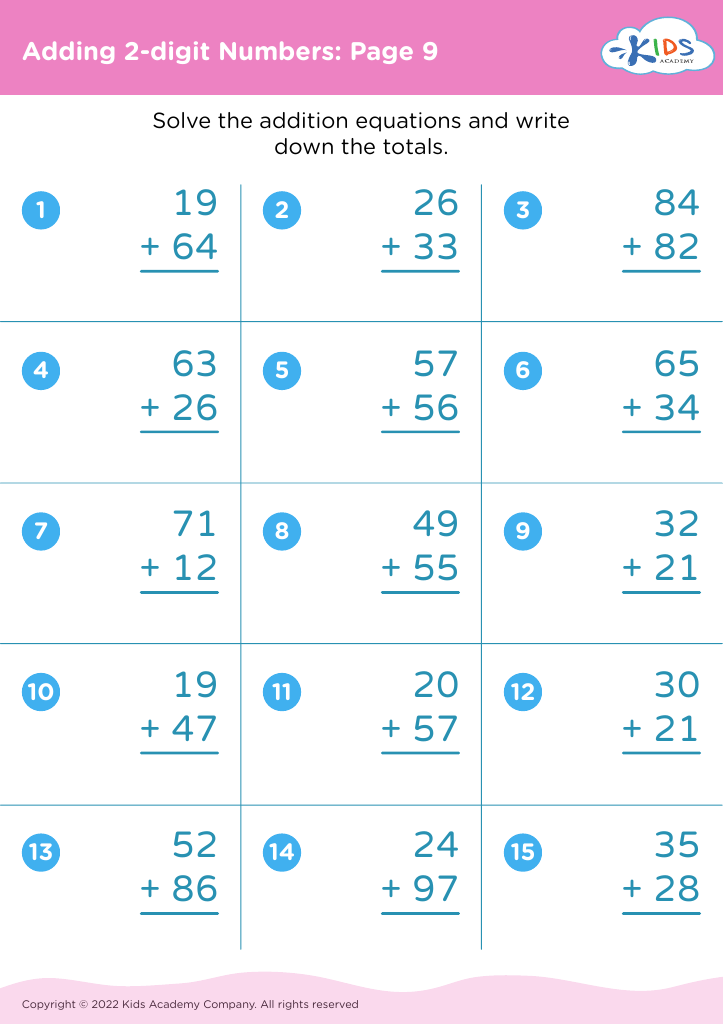
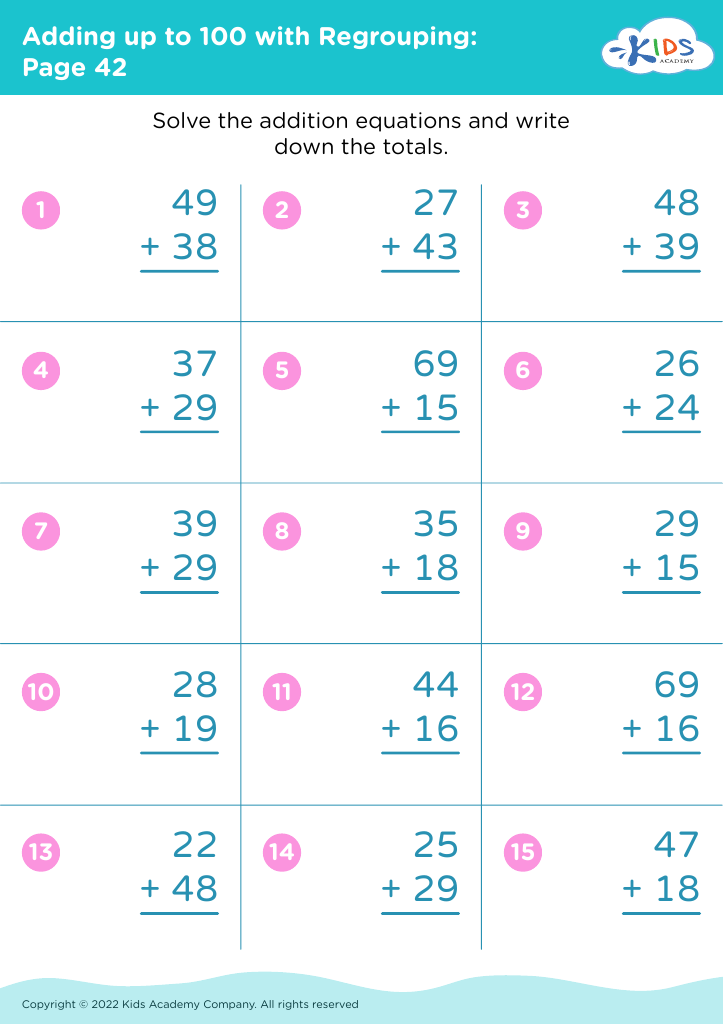








Spatial awareness, the understanding of how objects relate to each other in space, plays a vital role in a child's overall development, particularly in early mathematics. For children aged 4-9, the foundation for addition and subtraction is not just about memorizing numbers; it heavily relies on spatial reasoning skills.
Parents and teachers should care about this because spatial awareness directly influences a child's ability to visualize and manipulate numbers, which is crucial for grasping mathematical concepts. When children understand how numbers interact spatially—like grouping objects together to add or separating them for subtraction—they develop stronger problem-solving skills.
Additionally, fostering spatial awareness through activities like stacking blocks, puzzles, or drawing shapes can make learning math more engaging and relatable. These activities enhance fine motor skills and encourage creative thinking, further supporting cognitive development.
Moreover, strong spatial reasoning is linked to success in later math concepts, such as geometry and measurement, paving the way for academic success. By prioritizing spatial awareness in early education, parents and teachers lay a solid groundwork for children's mathematical understanding and future learning challenges. Engaging children in spatial tasks can turn abstract concepts into tangible experiences, facilitating a deeper comprehension of addition and subtraction.








