
Understand multiplication Addition & Subtraction Worksheets for Ages 4-9
6 filtered results
Difficulty Level
Grade
Age
-
From - To
Subject
Activity
Standards
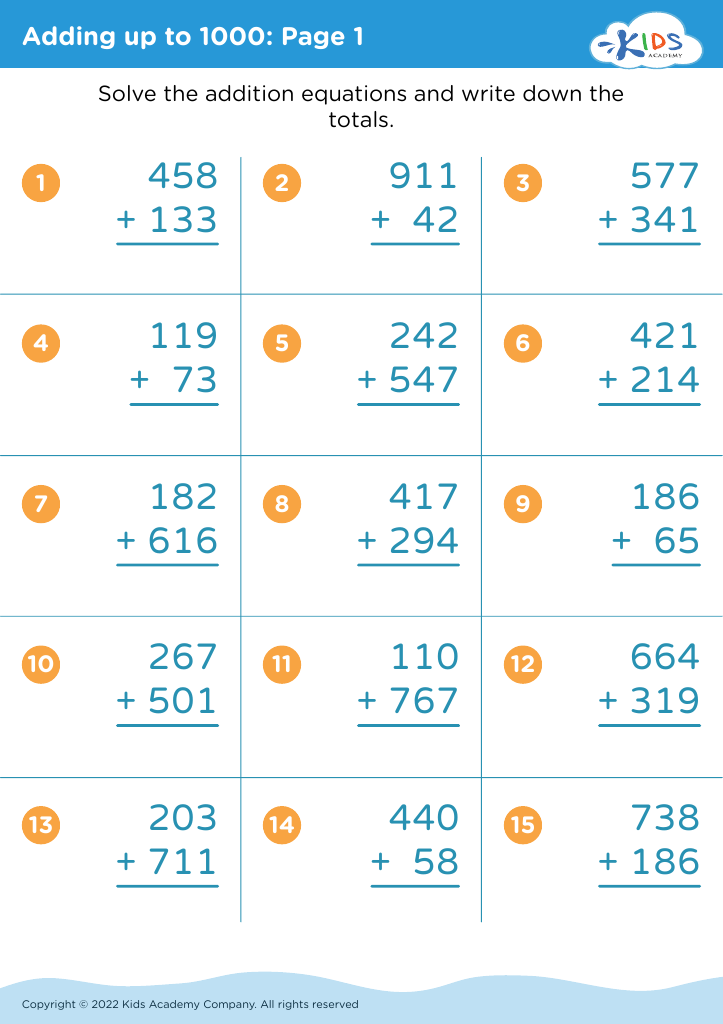
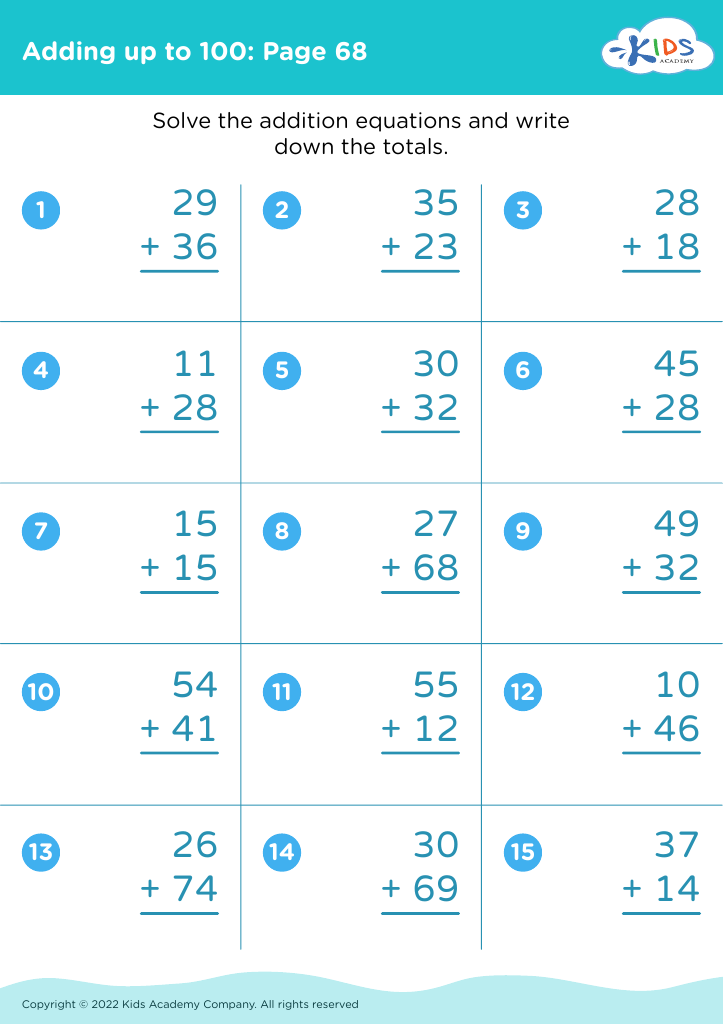
Discover comprehensive worksheets designed to help children ages 4-9 grasp multiplication, addition, and subtraction concepts. Our expertly crafted resources offer engaging exercises that cater to young learners’ developmental stages, ensuring that math becomes fun and accessible. From basic addition and subtraction exercises to introductory multiplication practices, our worksheets support building a strong mathematical foundation. Visual aids and interactive activities foster understanding and retention, enabling children to confidently tackle math challenges. Empower your child with essential math skills needed for academic success. Visit us today and unlock a world of learning possibilities.
Favorites
With answer key
Interactive
Join Kids Academy for Free
Who is primarily going to use this learning content?








Parents and teachers should strongly prioritize helping children aged 4-9 understand the basic concepts of multiplication, addition, and subtraction because these form the foundation for all future mathematical learning. Developing a strong grasp of these essential operations at an early age promotes better problem-solving skills, critical thinking, and numerical fluency. Children who understand these concepts are more likely to experience success and confidence in math, which can positively influence their attitudes towards the subject long-term.
Understanding addition and subtraction allows children to manage everyday tasks, such as counting objects, making purchases, and tracking time. These skills are also pivotal for advanced math topics tackled in higher grades, such as algebra and geometry. Multiplication, which is essentially repeated addition, builds on this knowledge and is particularly important for understanding concepts such as division, exponentiation, and fractions. Early exposure and practice with these operations help children to view math as a logical, predictable system, reducing anxiety and resistance as they face more complex problems later.
Moreover, early proficiency in math correlates with success in other academic areas and even influences cognitive development. By prioritizing these core mathematical skills, parents and teachers can equip children not only for academic achievement but for daily practical problem-solving tasks, fostering lifelong numeracy.








