Understand patterns Addition & Subtraction Worksheets for Ages 4-9
6 filtered results
-
From - To
Discover fun and engaging "Understand Patterns Addition & Subtraction Worksheets" designed for children ages 4-9! These worksheets help young learners grasp the concepts of addition and subtraction through pattern recognition, fostering critical thinking and problem-solving skills. Each worksheet is crafted to encourage children to identify and create patterns while practicing arithmetic operations, making math enjoyable and interactive. Ideal for both classroom and at-home learning, these resources support early math development and build a solid foundation for future success. Explore our variety of worksheets to inspire young minds and enhance their mathematical skills through playful learning!
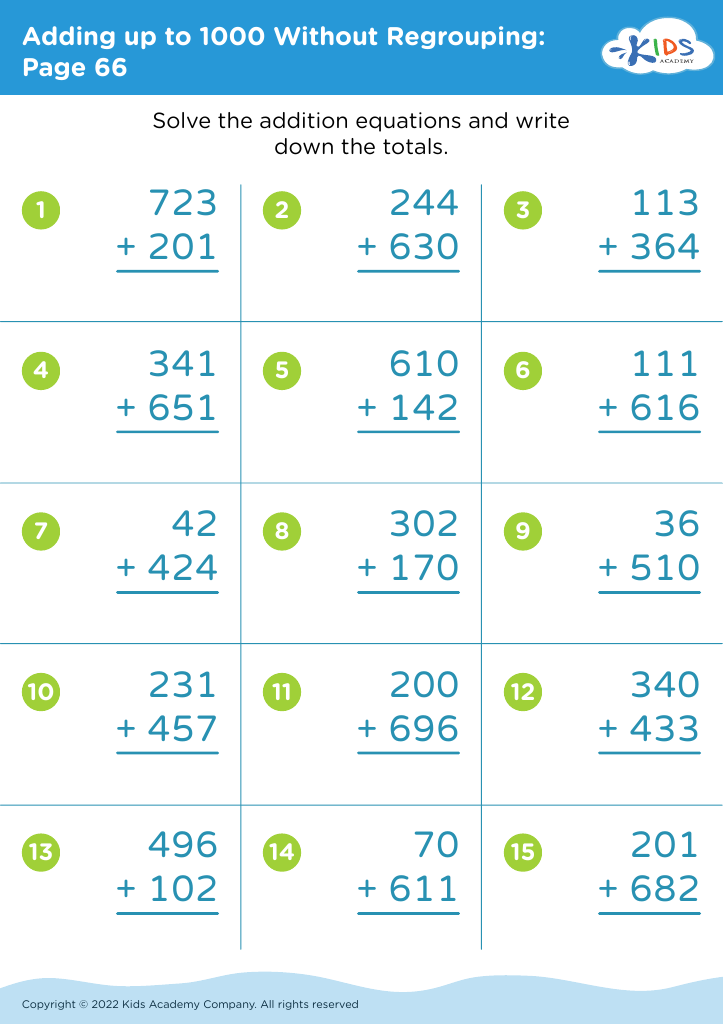
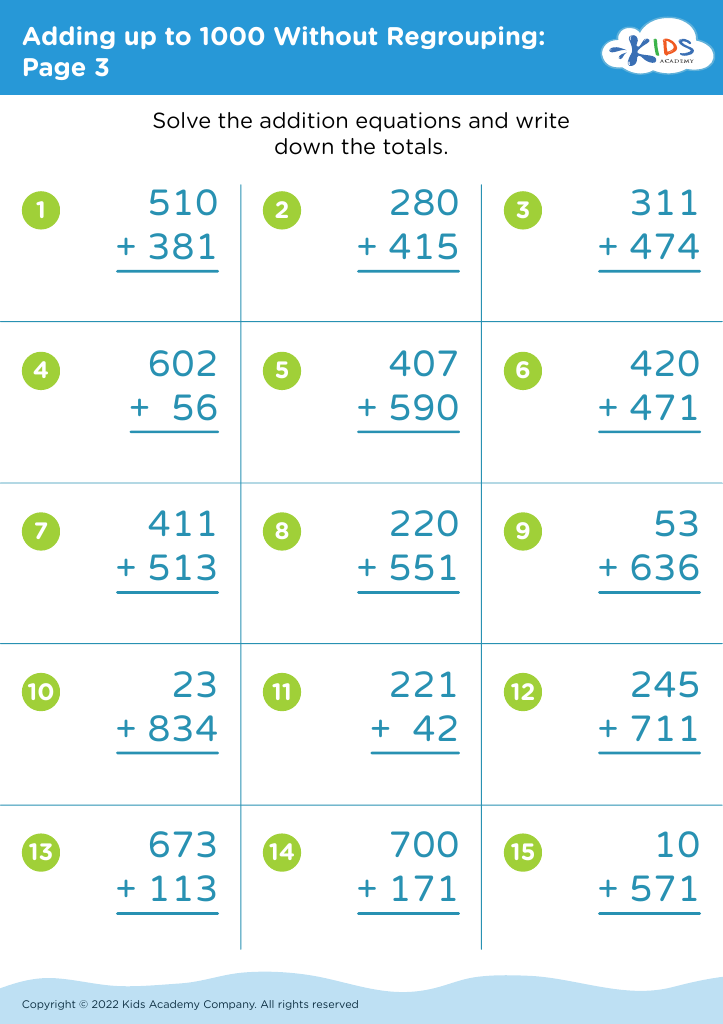
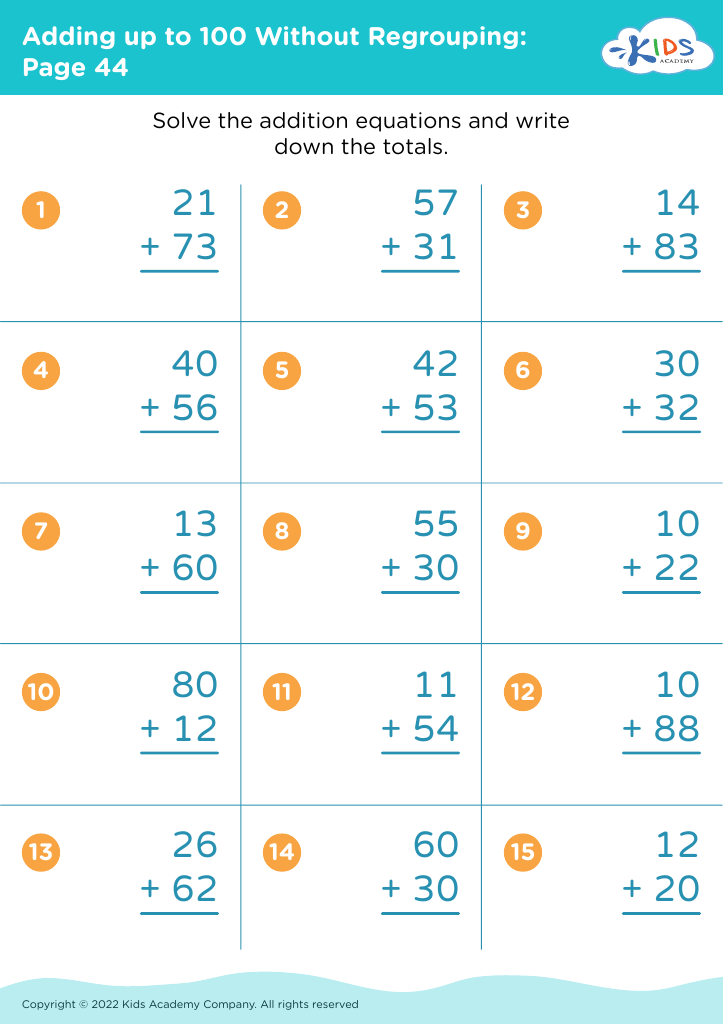
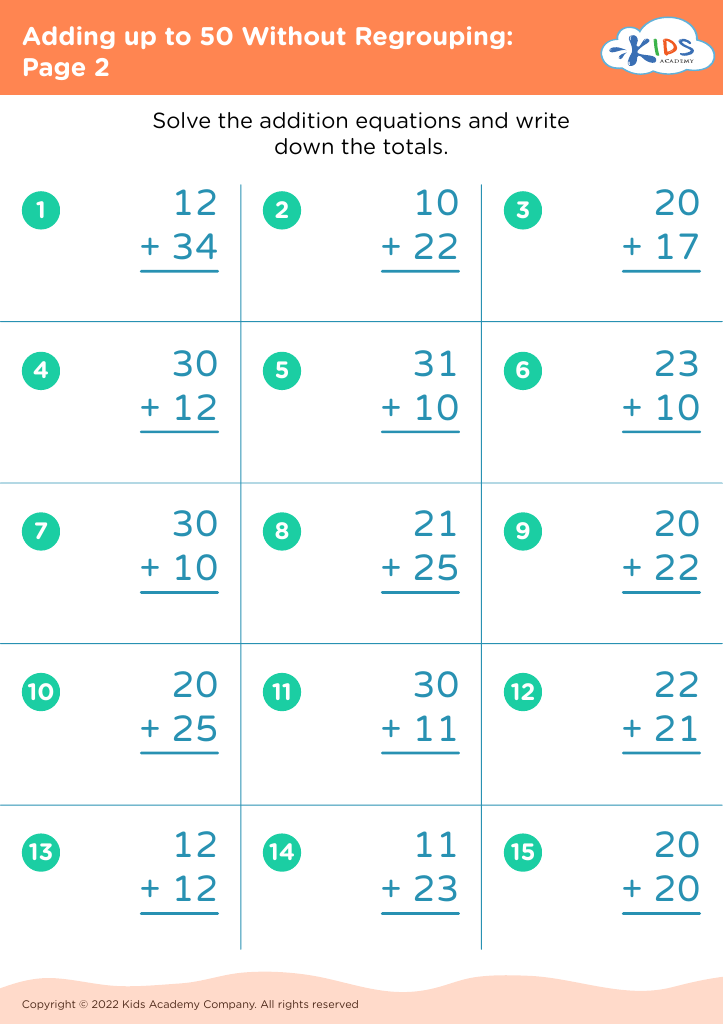
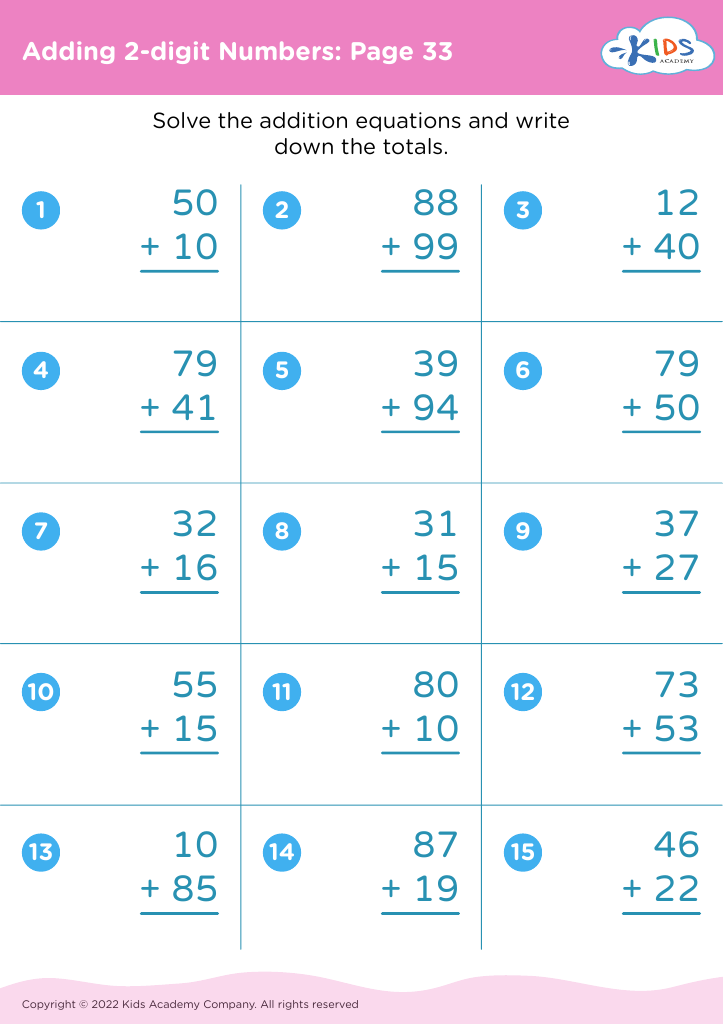
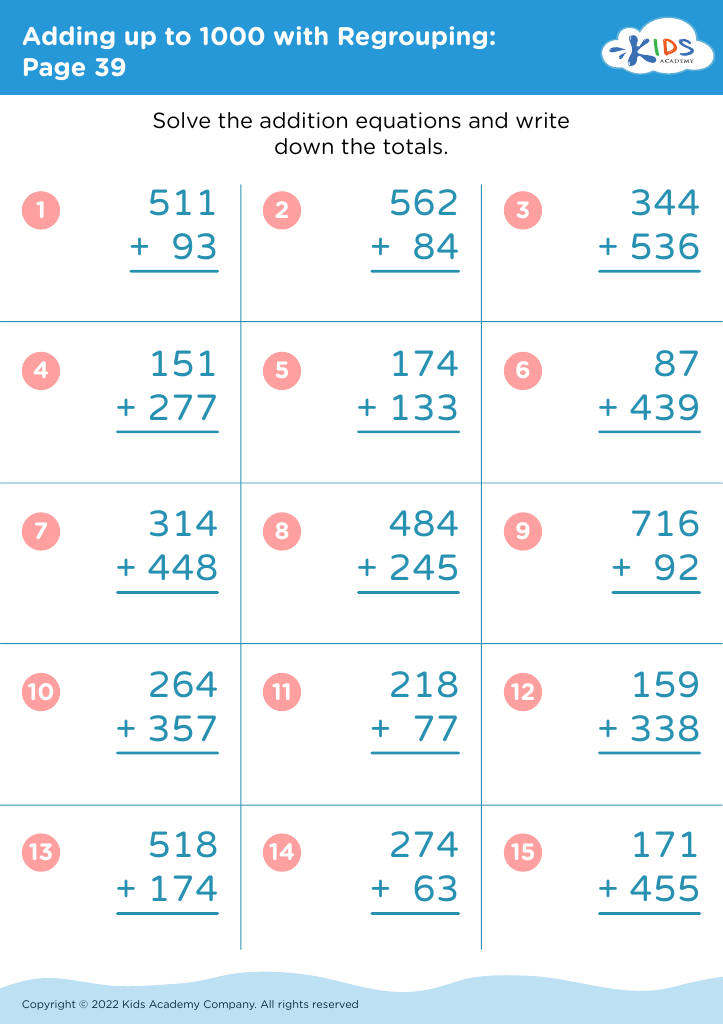








Understanding patterns in addition and subtraction is crucial for children aged 4-9 as it lays the foundation for their mathematical journey. First and foremost, recognizing patterns helps young learners develop critical thinking skills. When children see number sequences or repeated calculations, they can predict outcomes, making math less intimidating and more engaging.
Furthermore, mastery of patterns in addition and subtraction simplifies problem-solving. Children can use their understanding of how numbers work together to break down complex operations into manageable steps, building their confidence in handling increasingly challenging math concepts. This skill is vital not only for formal education but also for everyday situations, such as budgeting and time management.
Additionally, grasping patterns fosters a deeper comprehension of numbers and their relationships, promoting mathematical fluency. As children become comfortable with these concepts, they transition more smoothly into higher-level mathematics, setting the tone for future success.
From an educators’ standpoint, focusing on these skills can lead to a more cohesive classroom environment, as children learn collaboratively through games and activities. Parents play a key role, too; reinforcing these ideas at home can help ensure children internalize these essential mathematical concepts, resulting in a well-rounded educational experience.








