Understanding directions Addition & Subtraction Worksheets for Ages 4-9
3 filtered results
-
From - To
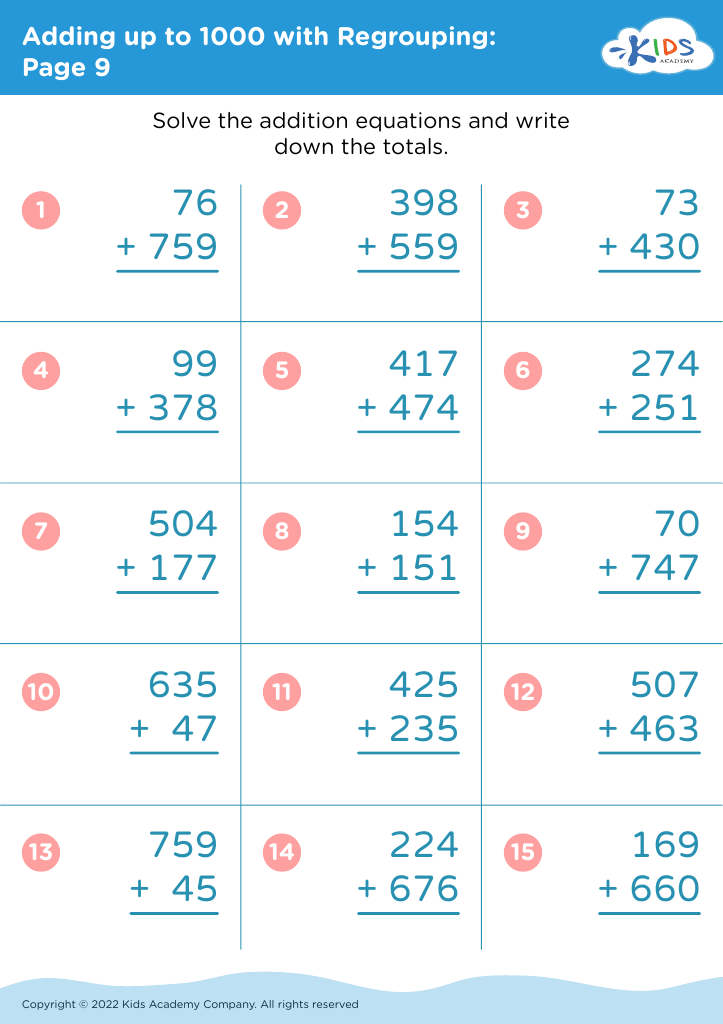
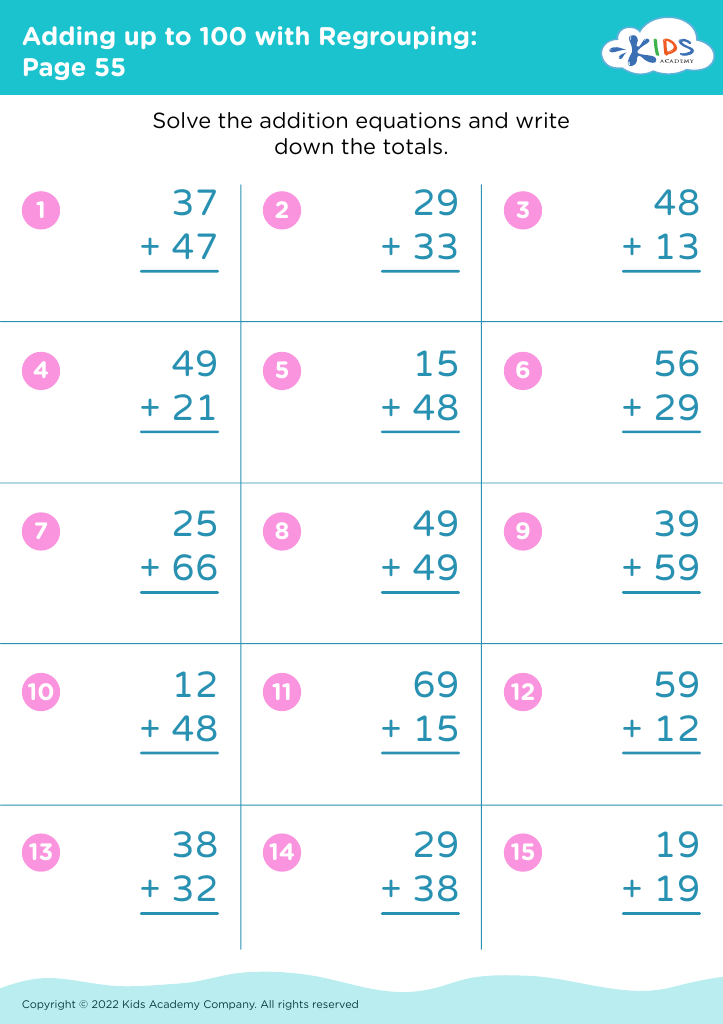
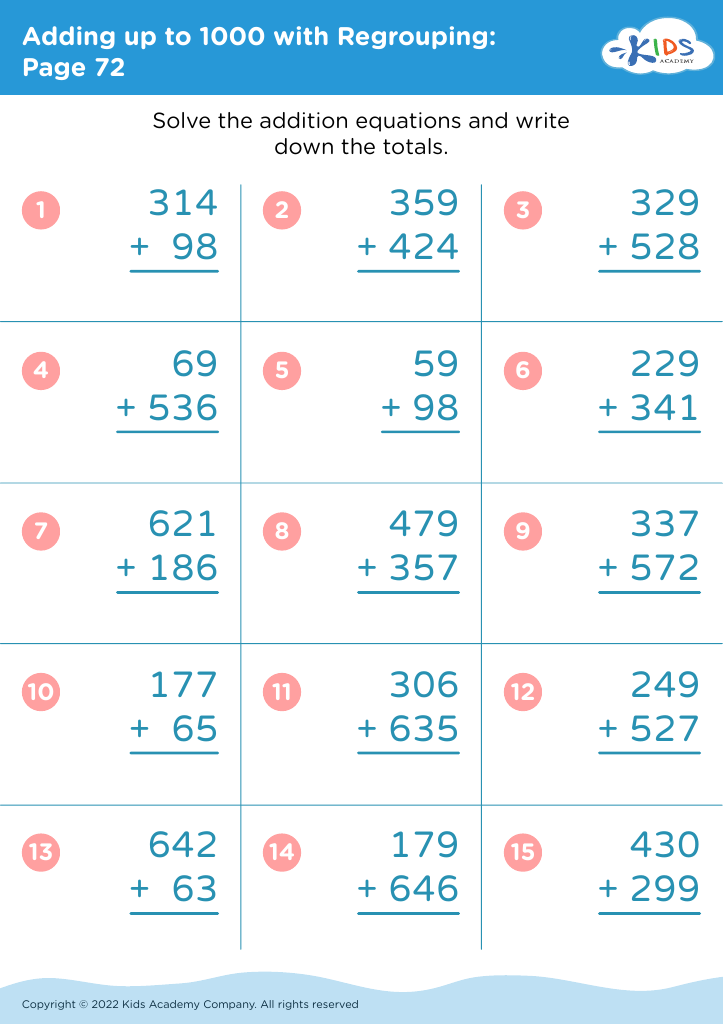
Explore our "Understanding Directions Addition & Subtraction Worksheets" designed specifically for children aged 4-9. These engaging worksheets facilitate the development of essential math skills by helping young learners comprehend directional language through fun and interactive problems. Students will practice addition and subtraction in a context that emphasizes understanding instructions like "above," "below," "next to," and more. Tailored to meet diverse learning needs, our resources support both classroom and home learning environments, fostering confidence and independence in mathematical problem-solving. Perfect for early math educators and parents, these worksheets encourage children to grasp fundamental concepts while honing their directional comprehension skills. Get started today!








Understanding directions in addition and subtraction is crucial for children aged 4-9 for several reasons. Firstly, these foundational math skills are essential for everyday problem-solving, enabling young learners to navigate real-life situations, like counting items or sharing equally. A strong grasp of these concepts sets the stage for more complex mathematical understanding in later years.
Moreover, following directions accurately in math promotes cognitive development. It helps children enhance their critical thinking and analytical skills as they learn to interpret instructions and apply logical reasoning. When parents and teachers emphasize the importance of understanding directions, they foster a positive learning environment that encourages exploration and curiosity.
Additionally, children who excel in addition and subtraction are often more confident in their abilities, leading to a more positive attitude towards learning. Confidence boosts a child’s willingness to tackle new challenges and fosters resilience, which is integral to their long-term academic success.
Lastly, understanding directions helps build communication skills, as children learn to articulate their thought processes and ask questions for clarification. By prioritizing these foundational skills in early education, parents and teachers can lay the groundwork for a lifelong appreciation of mathematics and problem-solving.








