Understanding number relationships Addition & Subtraction Worksheets for Ages 4-9
8 filtered results
-
From - To
Enhance your child's mathematical journey with our "Understanding Number Relationships: Addition & Subtraction Worksheets" designed for ages 4-9. These engaging worksheets help young learners grasp crucial foundational skills in mathematics by exploring how numbers interact through addition and subtraction. Children will practice identifying relationships, making connections, and solving problems in a fun and interactive way. Our user-friendly resources ensure a positive learning experience, encouraging confidence and understanding in young minds. Kick-start your child's arithmetic skills with our thoughtfully crafted activities focused on number concepts. Explore our collection today and foster a love for math that lasts a lifetime!
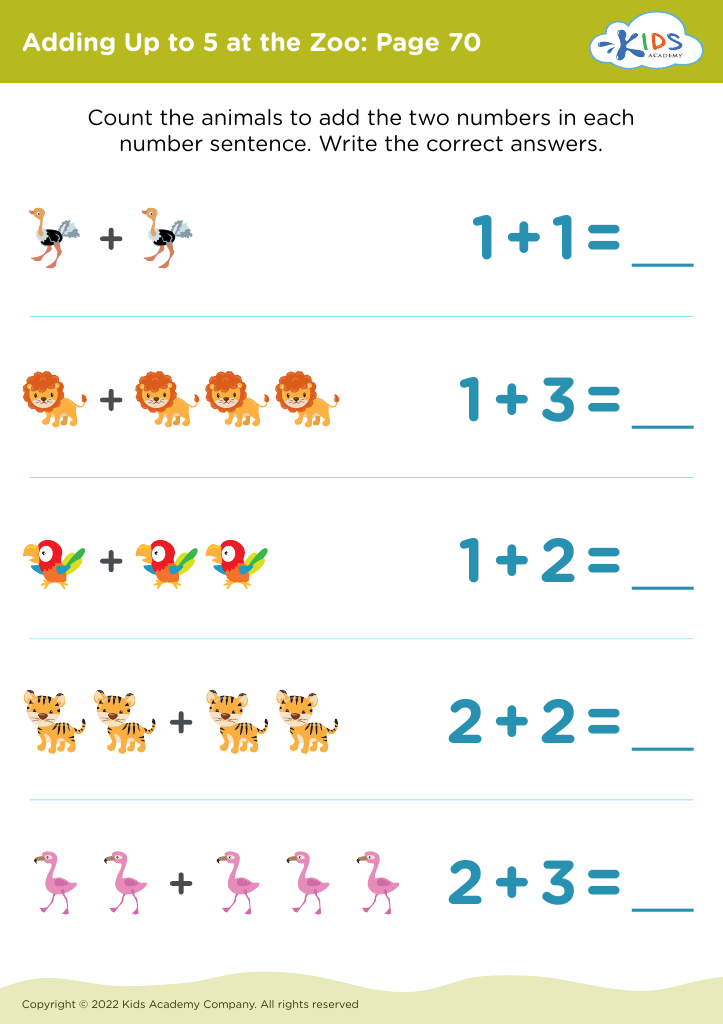
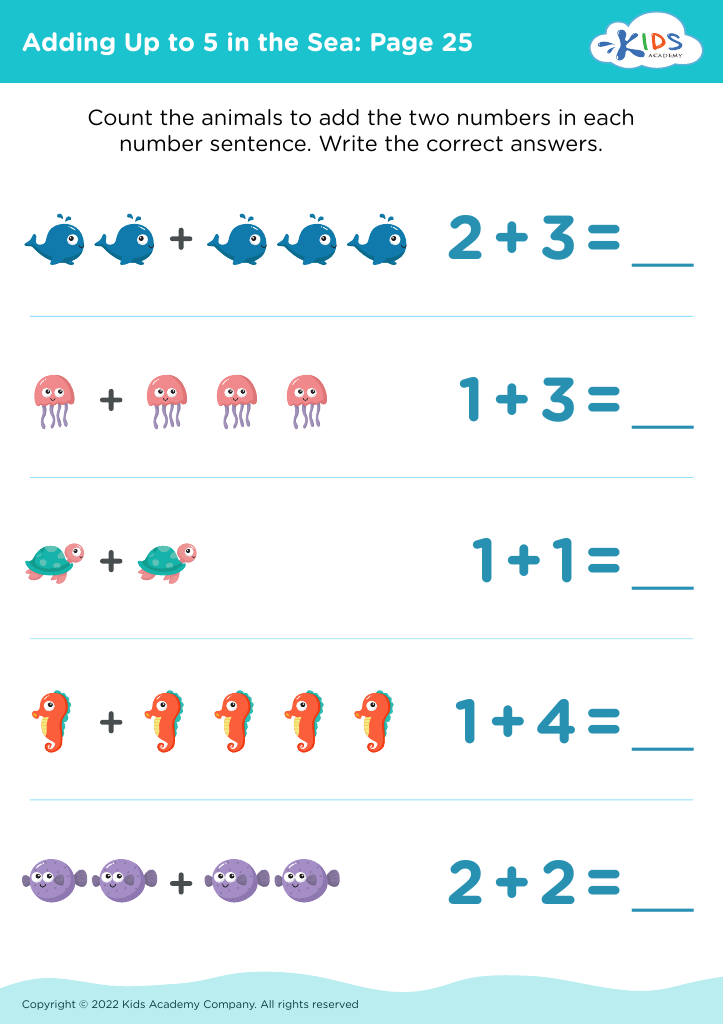
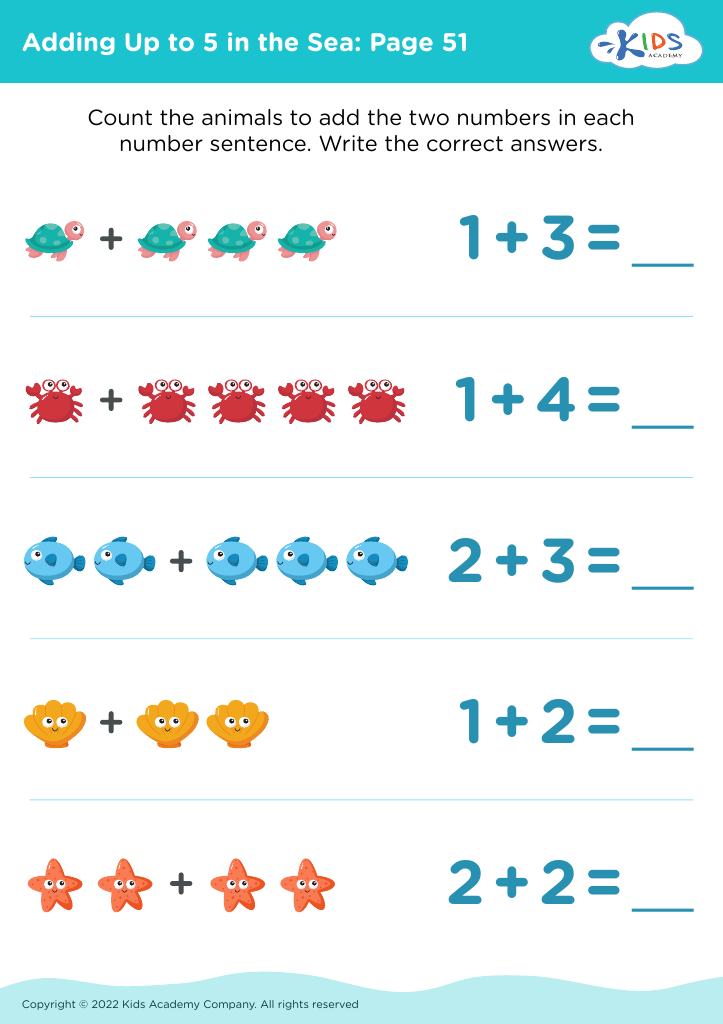
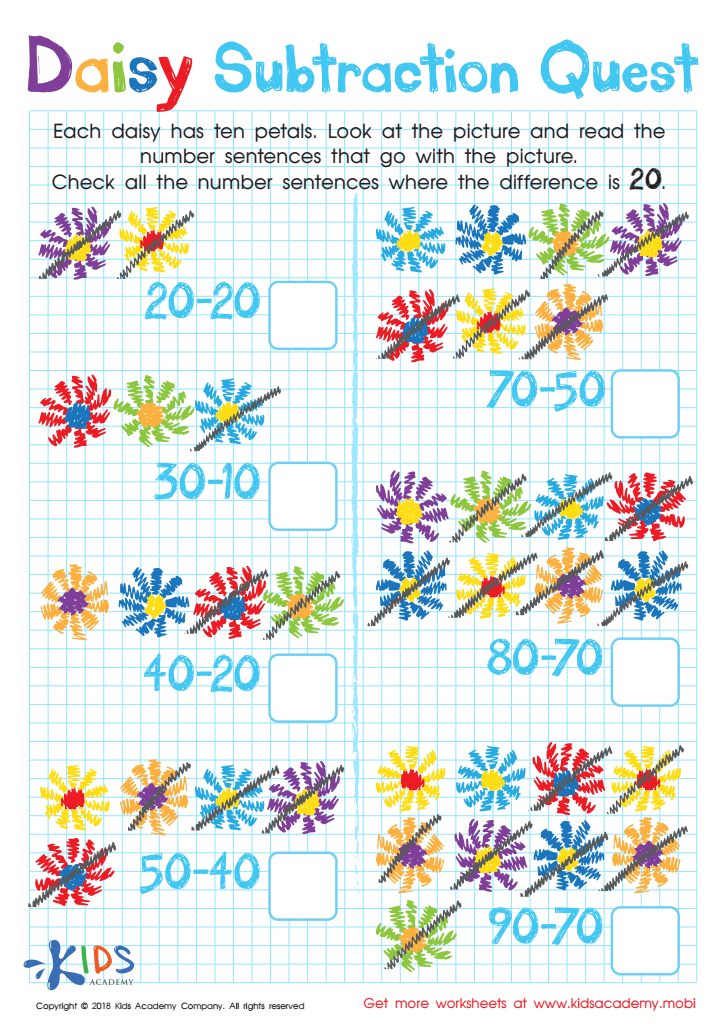
Daisy Subtraction Quest Worksheet
 Assign to My Students
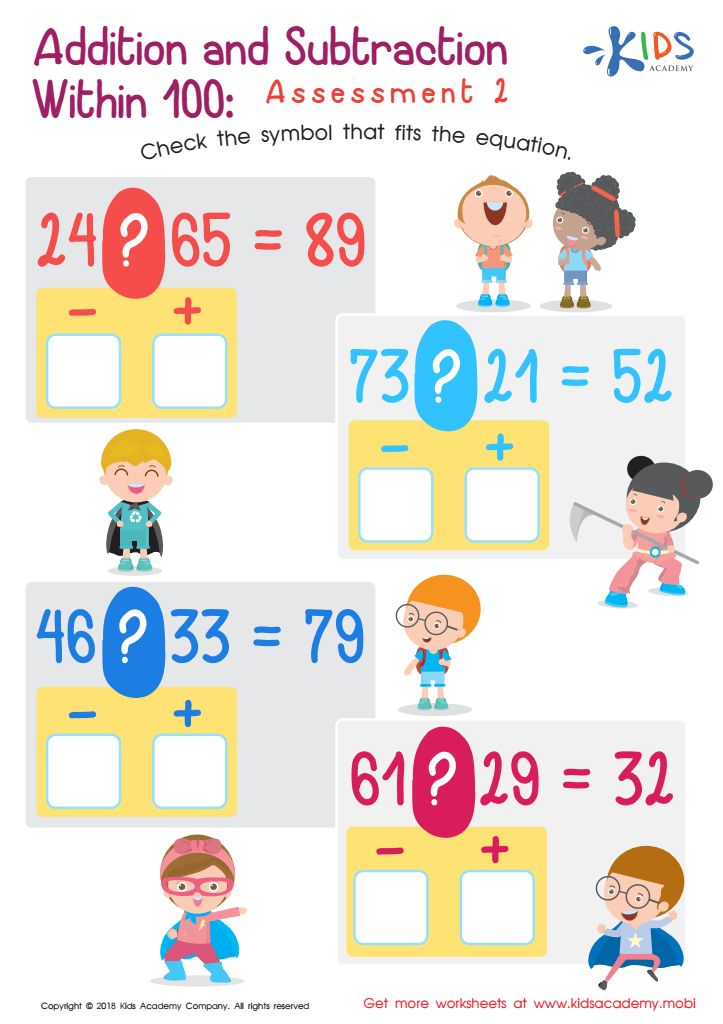
Addition and Subtraction Within 1: Assessment 2 Worksheet
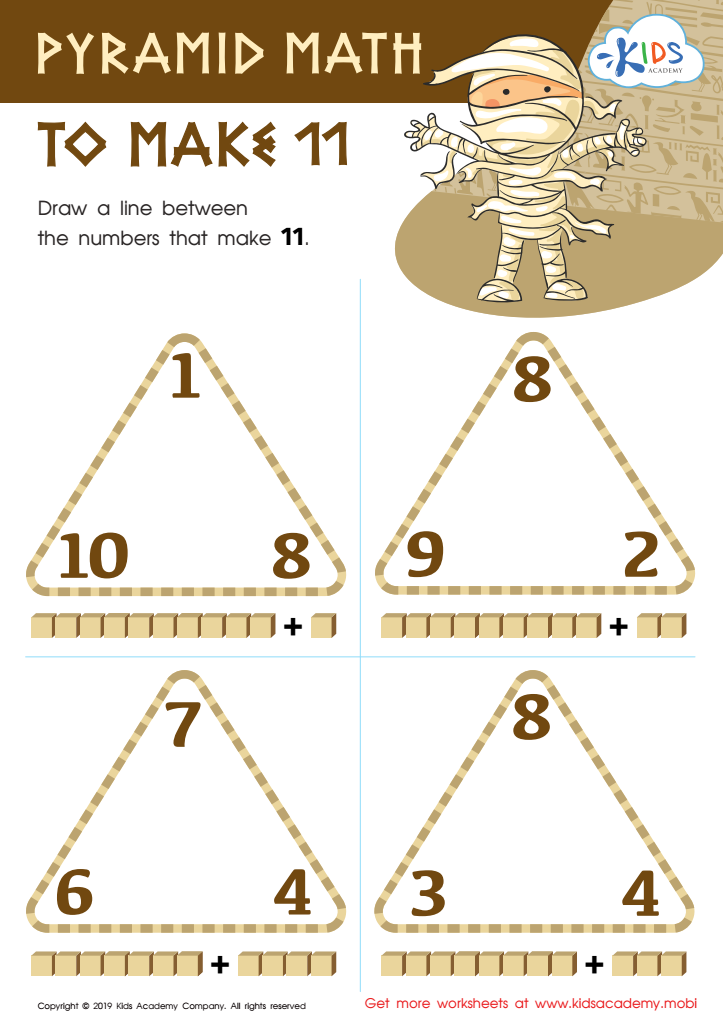
Pyramid Math to Make 11 Worksheet








Understanding number relationships in addition and subtraction is crucial for children aged 4-9, laying a strong foundation for future mathematical skills. During these formative years, children develop their cognitive abilities, and grasping the concepts of addition and subtraction goes beyond rote memorization. Teachers and parents should recognize that these operations are not standalone skills but interconnected processes that enhance logical thinking.
When children understand number relationships, they can recognize patterns, make decisions based on numerical reasoning, and solve problems more flexibly. For instance, knowing that adding two numbers is the same as taking away from a larger number helps them to grasp the inverse relationship between addition and subtraction. This insight is essential as they progress to more complex mathematical concepts, such as multiplication and division.
Additionally, a solid grounding in addition and subtraction aids in developing persistence, resilience, and critical thinking, attributes that are valuable beyond the classroom. Creating a nurturing environment where parents and teachers emphasize these concepts cultivates confidence and a love for mathematics. Ultimately, by fostering a rich understanding of number relationships, caregivers help children become adept problem solvers, laying the groundwork for academic success and lifelong learning in mathematics.








