Understanding sequencing Addition & Subtraction Worksheets for Ages 4-9
7 filtered results
-
From - To
Discover the perfect blend of fun and education with our "Understanding Sequencing Addition & Subtraction Worksheets for Ages 4-9." These comprehensive worksheets are meticulously designed to enhance your child's arithmetic skills through engaging exercises on sequencing, addition, and subtraction. Ideal for young learners, our worksheets promote logical thinking and foster a strong mathematical foundation. Each activity is tailored to help children understand the step-by-step processes involved in solving problems, making math enjoyable and accessible. Equip your child with the necessary skills to succeed in their early math journey. Visit Kids Academy to explore our expertly crafted resources!
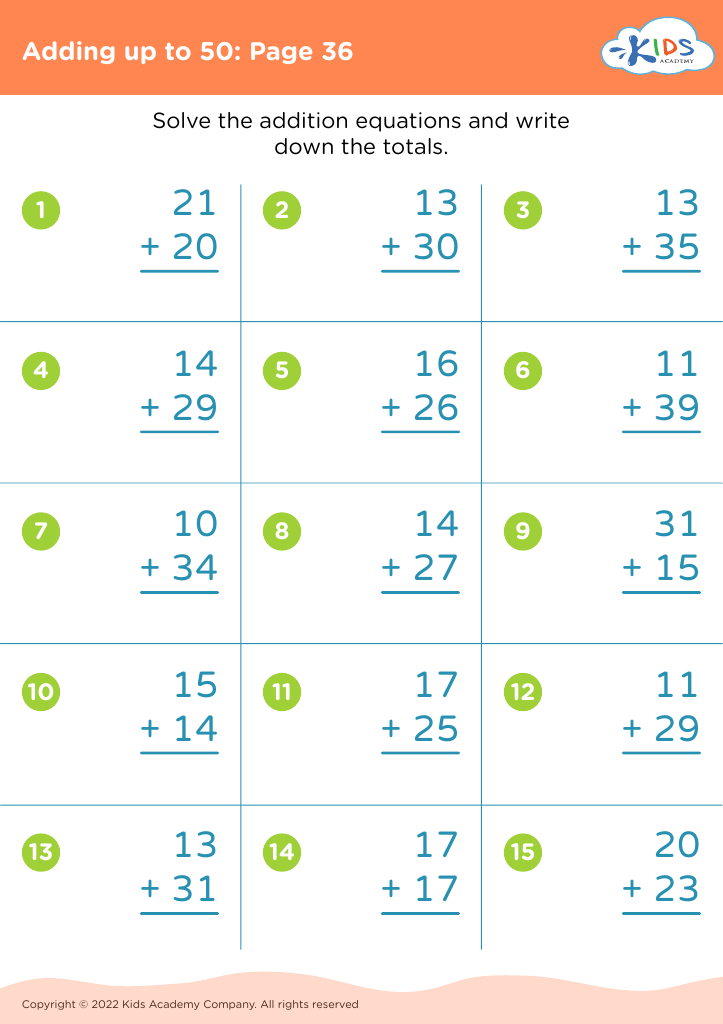
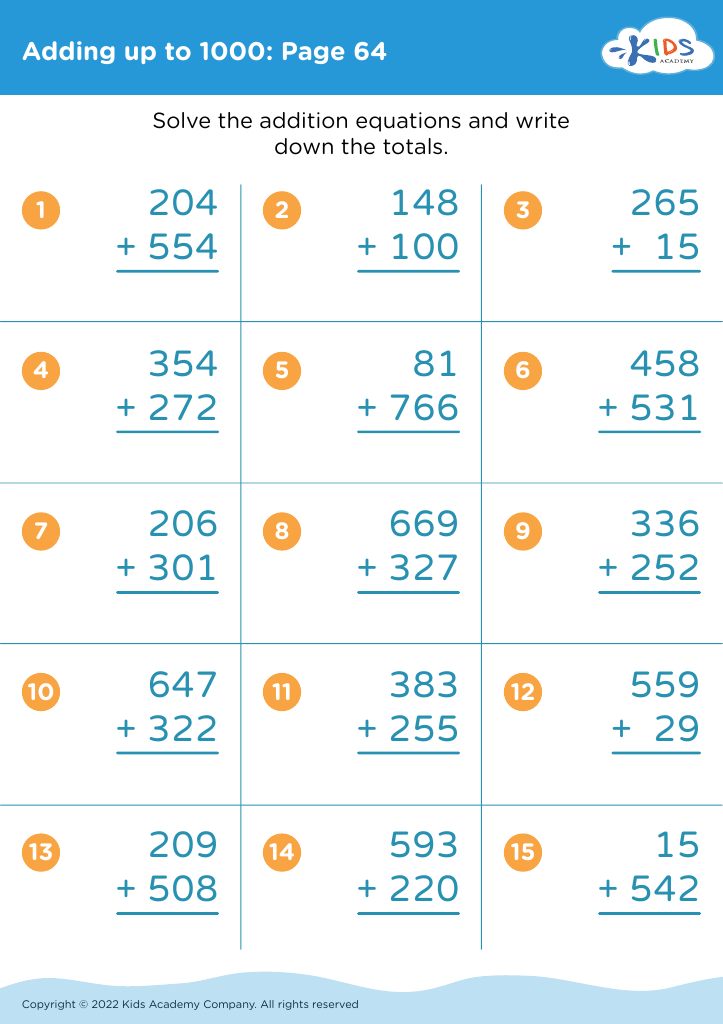
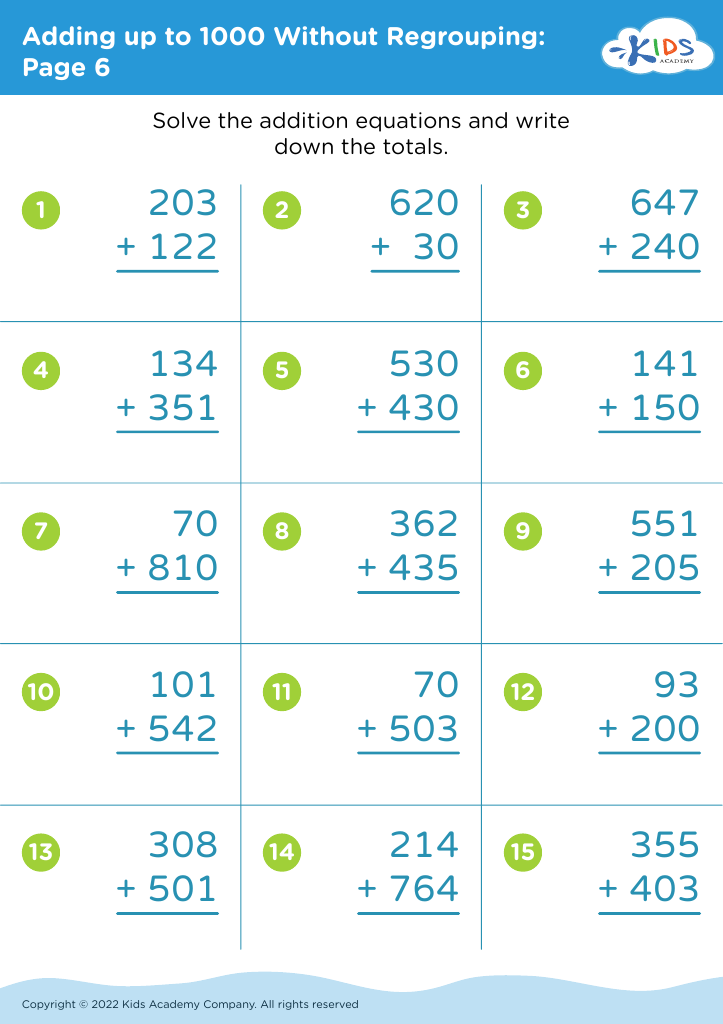
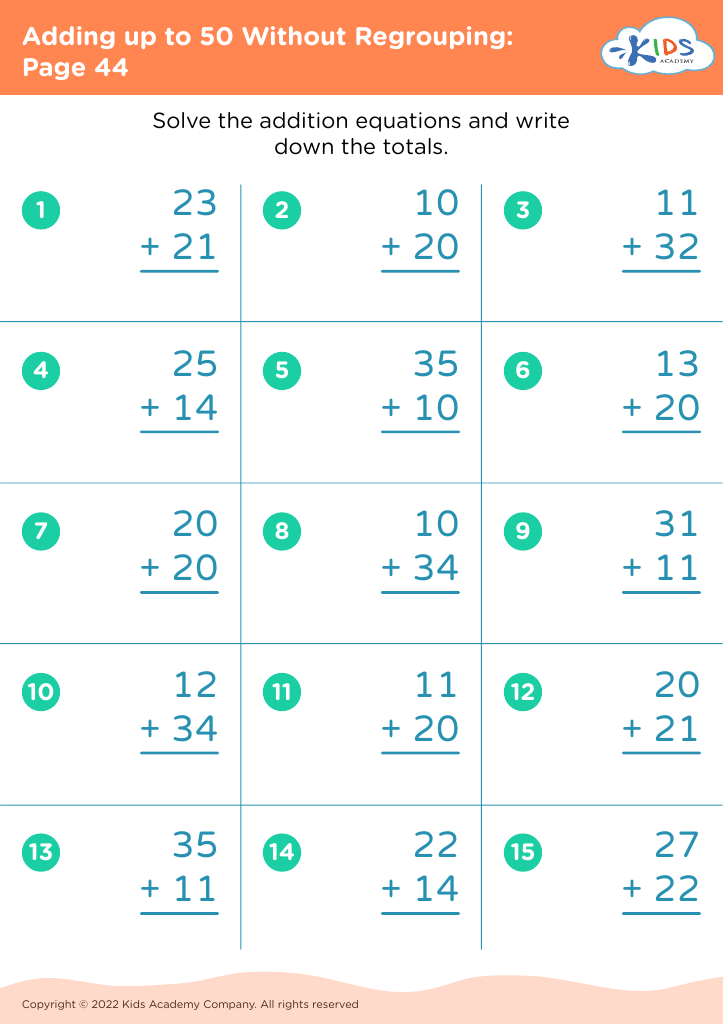








Understanding sequencing in addition and subtraction is essential for children ages 4-9 because it lays the foundation for their future mathematical competencies. During these formative years, children develop key cognitive skills such as problem-solving, logical thinking, and pattern recognition. Sequencing is fundamental to all these skills; it requires children to follow a series of steps in a specific order, a critical aspect of both addition and subtraction.
For instance, when learning addition, a child must understand that the numbers need to be combined sequentially. This isn't an arbitrary process; it aids in comprehending the cumulative nature of sums. Similarly, in subtraction, recognizing the sequential removal or 'taking away' is vital for grasping the concept of difference.
Furthermore, as children become proficient with these basic operations, they enhance their ability to tackle more complex mathematical tasks in higher grades. This foundational knowledge builds their confidence and reduces anxiety related to math.
Parental and teacher involvement is crucial because young children often need guidance and encouragement to practice and master these sequences. Through activities, games, and regular practice, adults can create engaging learning environments that make understanding these concepts intuitive and enjoyable. In doing so, they are not only teaching math but also instilling a love for learning and critical thinking skills that benefit the child beyond the classroom.








