Filters

94 filtered results

Clear all filters
Favorites
With answer key
Interactive

94 filtered results

Difficulty Level

Grade


Check out this FREE Trial Lesson on Addition & Subtraction for age 4-9!

P

Favorites
With answer key
Interactive
  • 4-9
  • Visual Learning
  • Addition & Subtraction
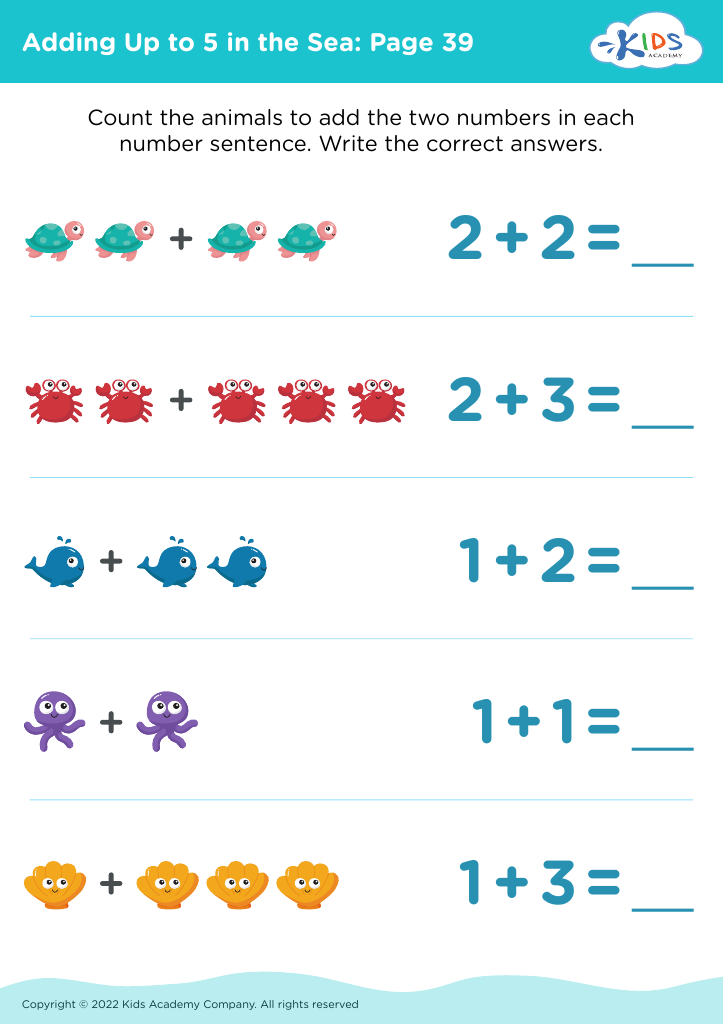
Adding Up to 5 in the Sea: Page 39
Worksheet
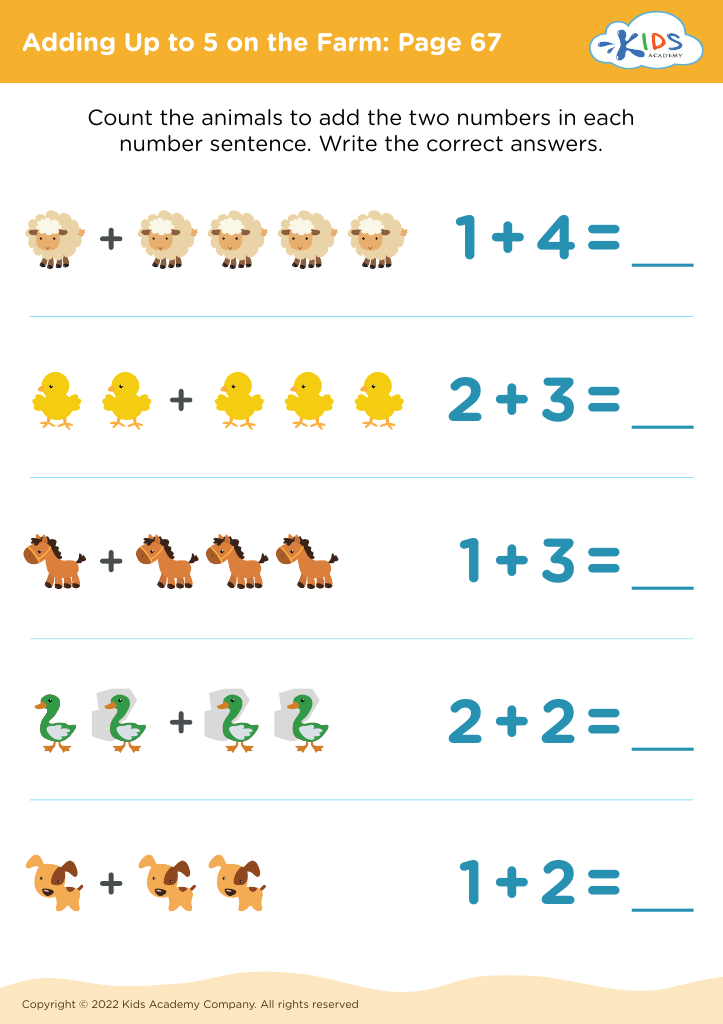
Adding Up to 5 on the Farm: Page 67
Worksheet
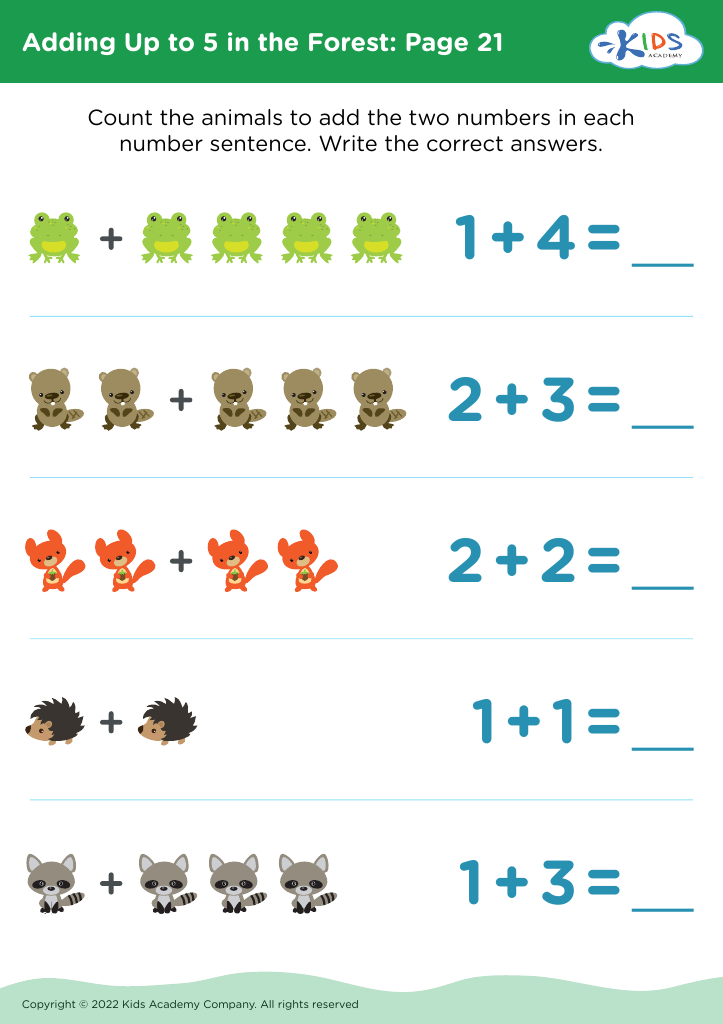
Adding Up to 5 in the Forest: Page 21
Worksheet
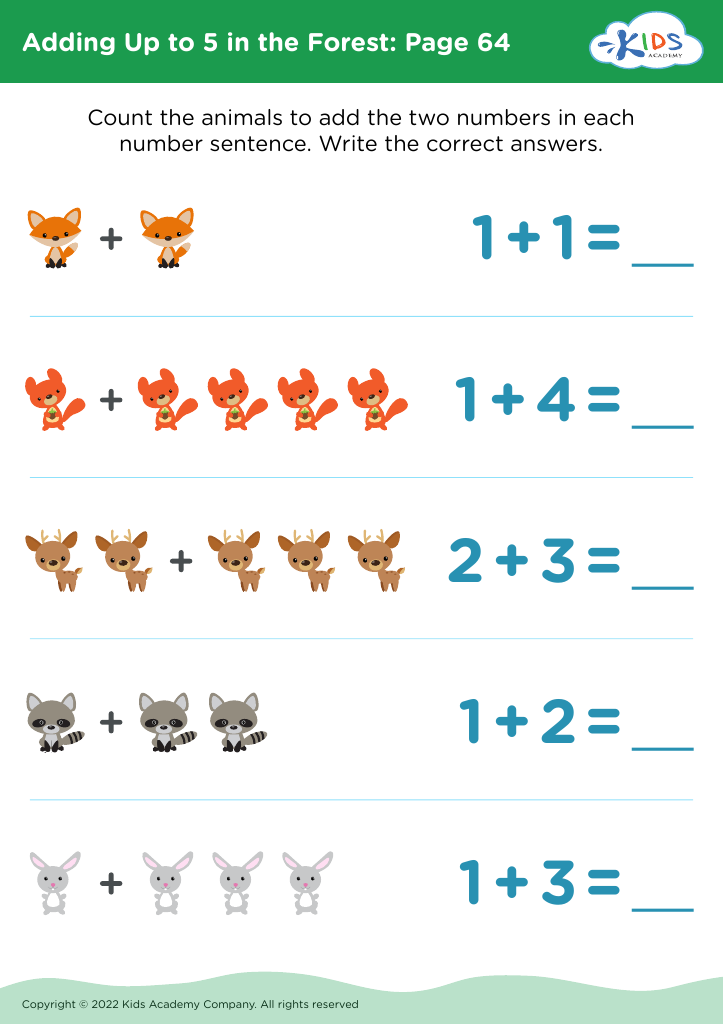
Adding Up to 5 in the Forest: Page 64
Worksheet
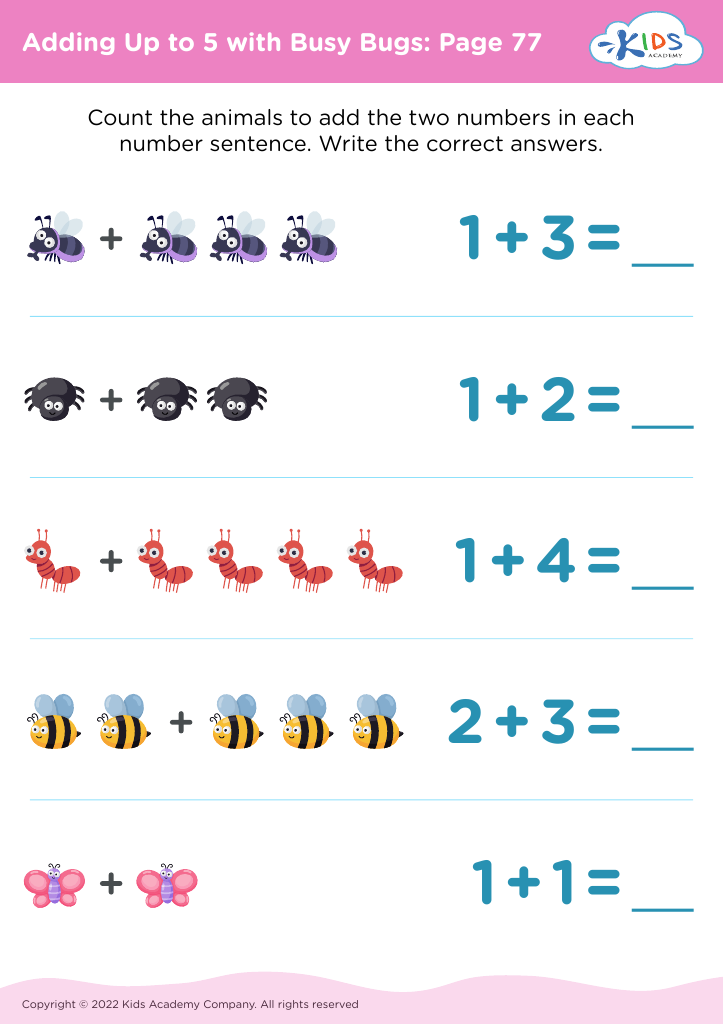
Adding Up to 5 with Busy Bugs: Page 77
Worksheet
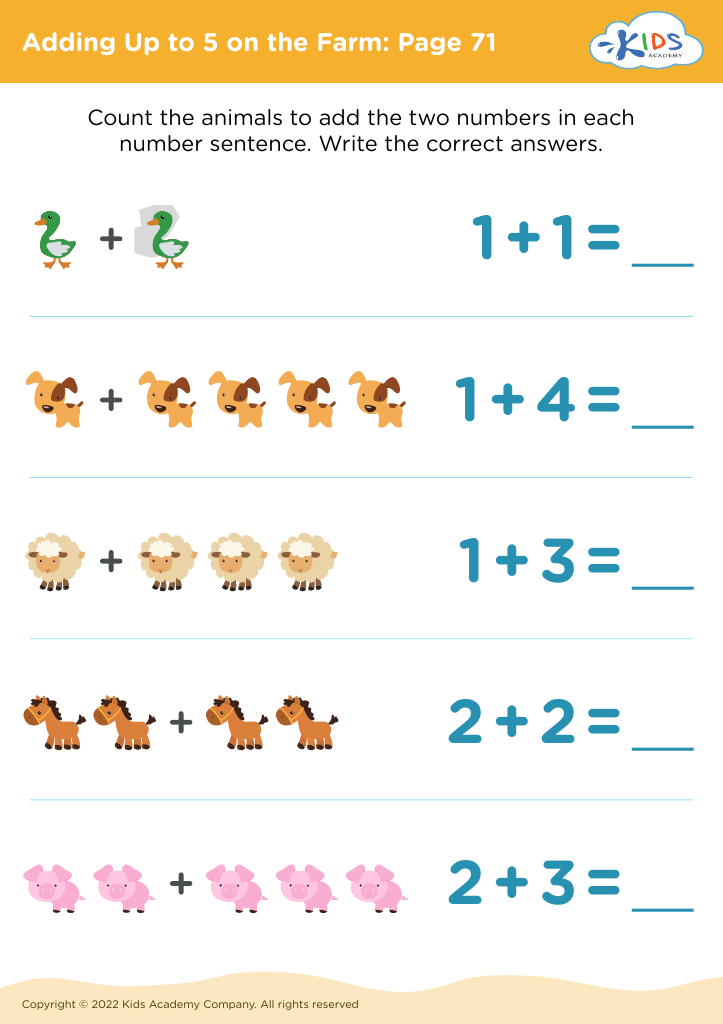
Adding Up to 5 on the Farm: Page 71
Worksheet
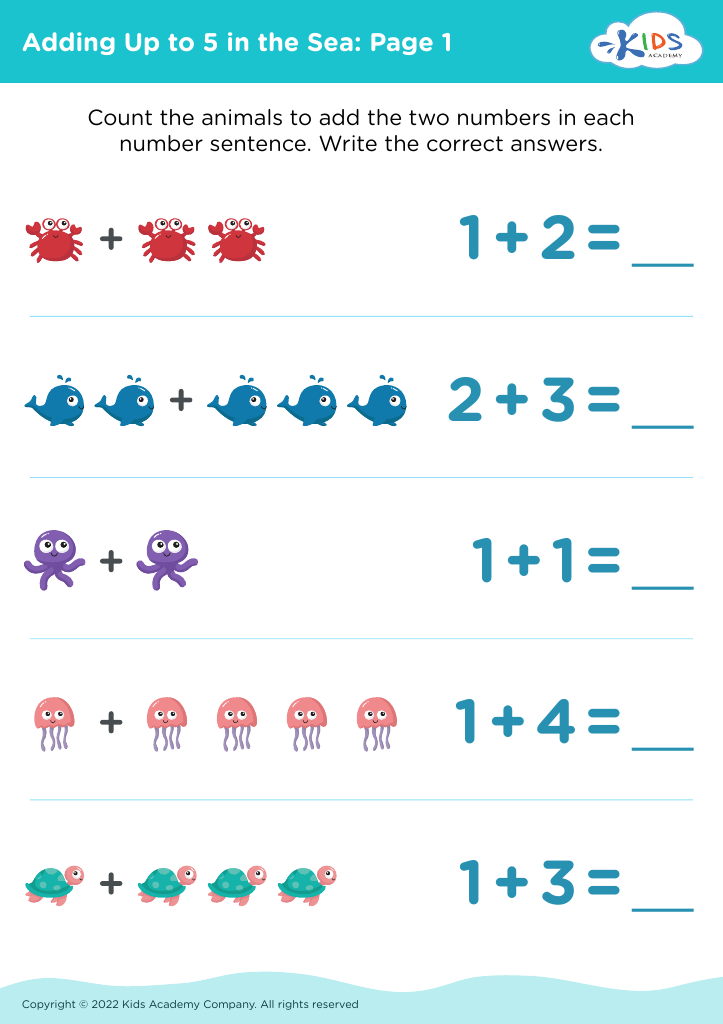
Adding Up to 5 in the Sea: Page 1

Adding Up to 5 in the Sea: Page 1

Adding Up to 5 in the Sea: Page 1
Worksheet
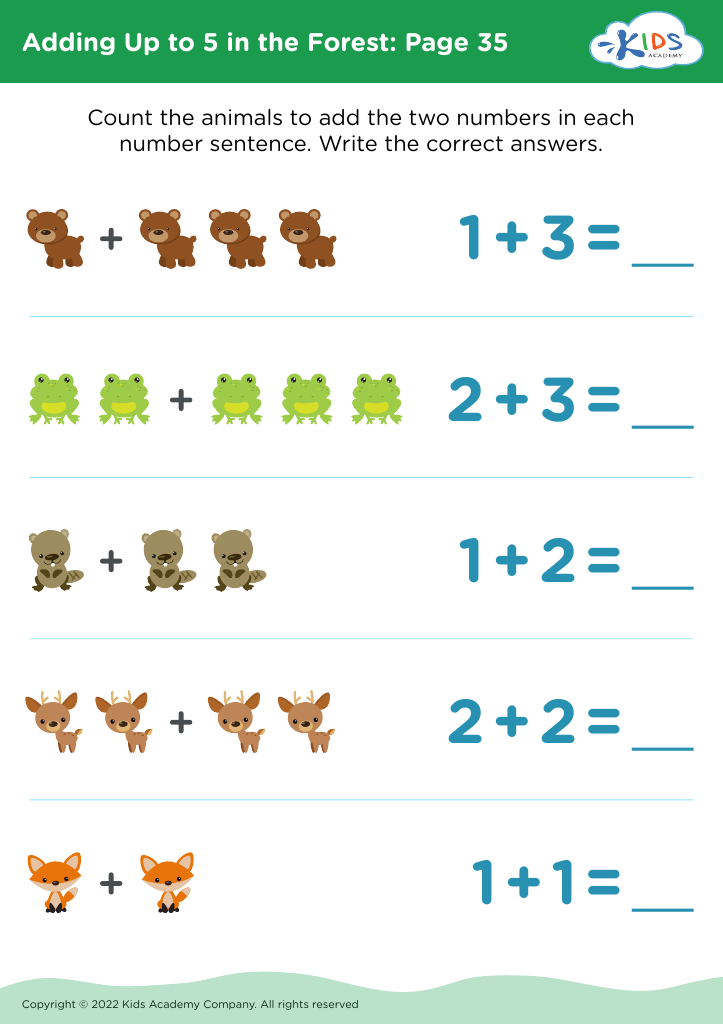
Adding Up to 5 in the Forest: Page 35
Worksheet
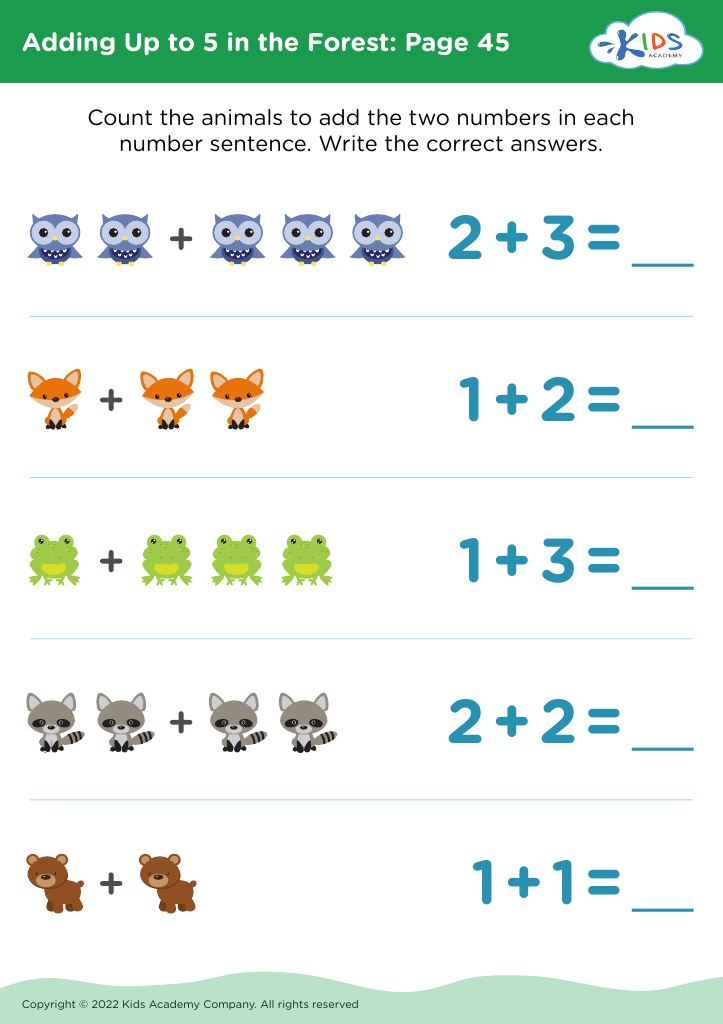
Adding Up to 5 in the Forest: Page 45
Worksheet
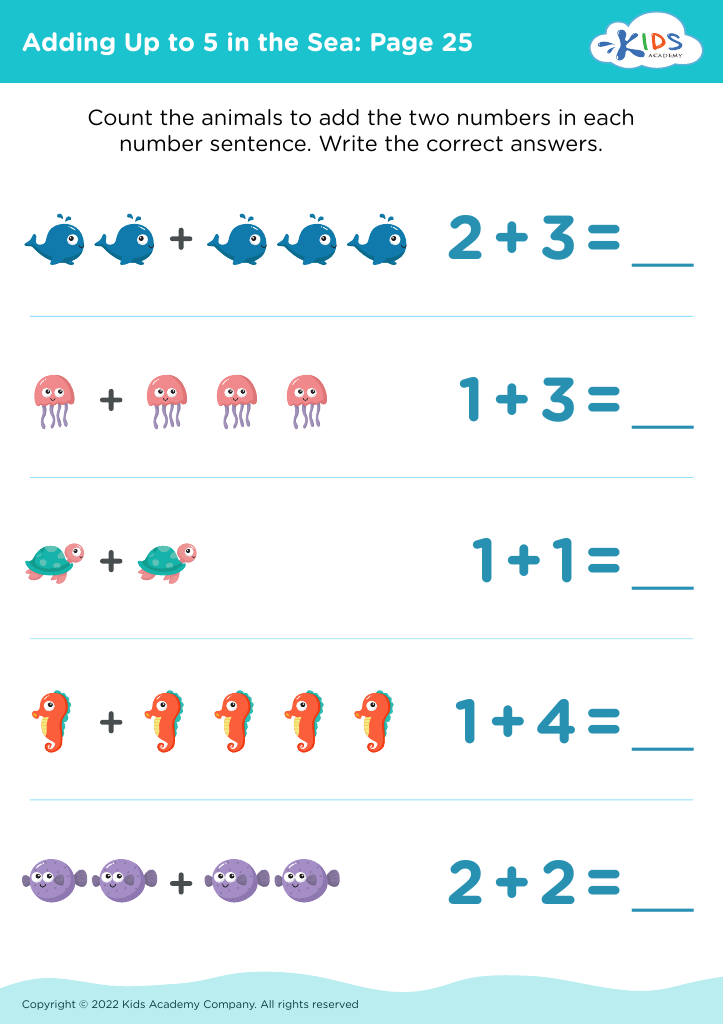
Adding Up to 5 in the Sea: Page 25
Worksheet
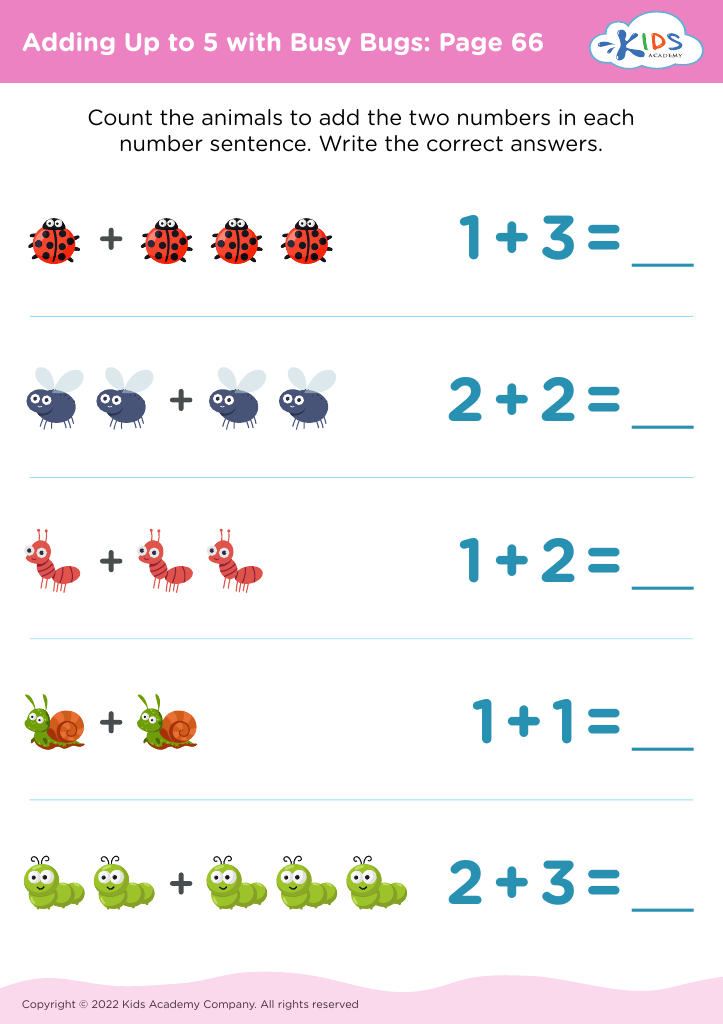
Adding Up to 5 with Busy Bugs: Page 66
Worksheet
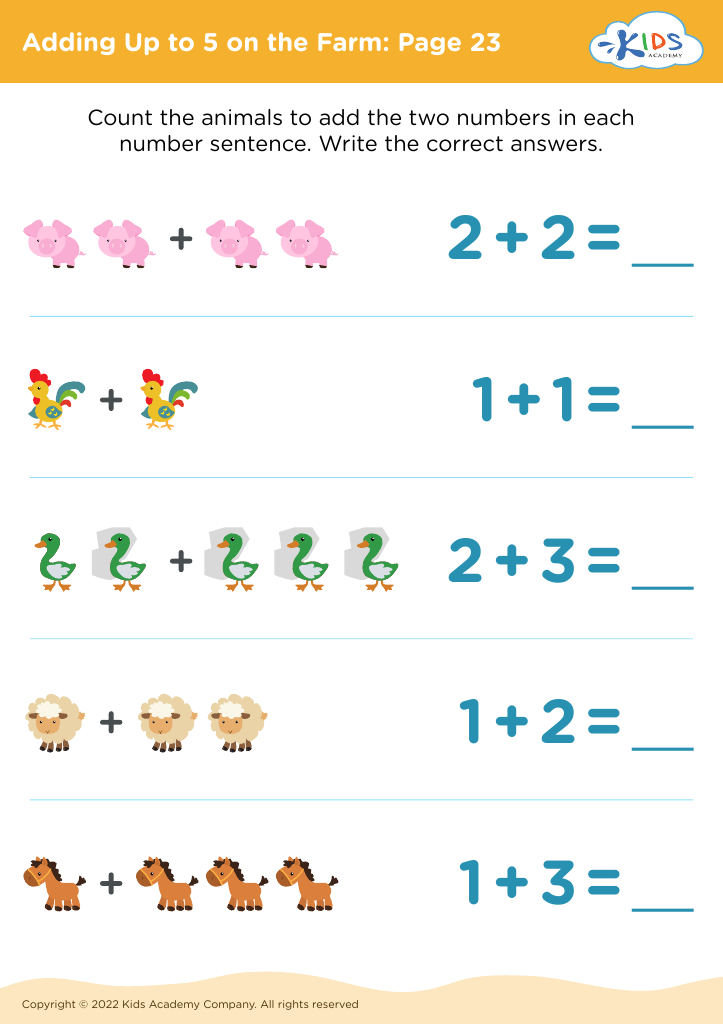
Adding Up to 5 on the Farm: Page 23
Worksheet
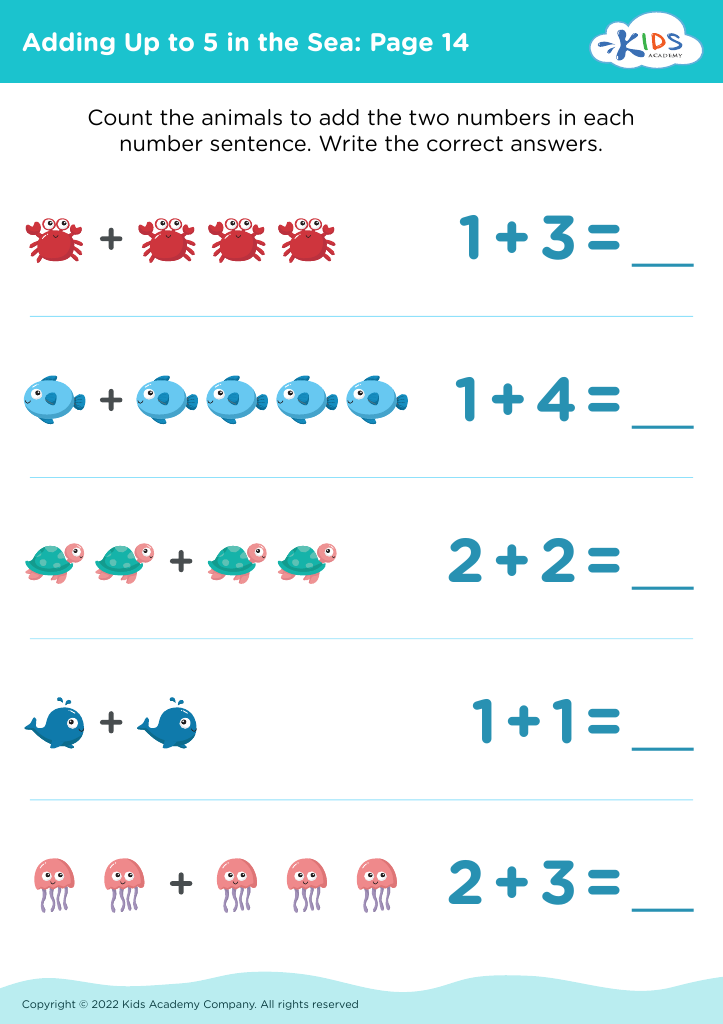
Adding Up to 5 in the Sea: Page 14
Worksheet
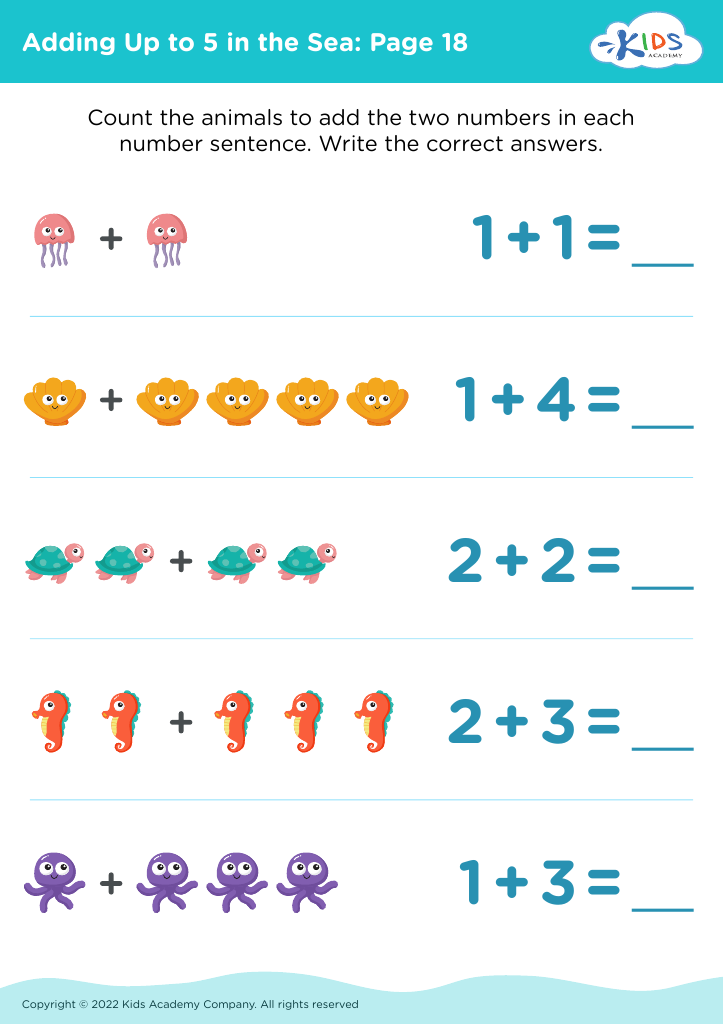
Adding Up to 5 in the Sea: Page 18
Worksheet
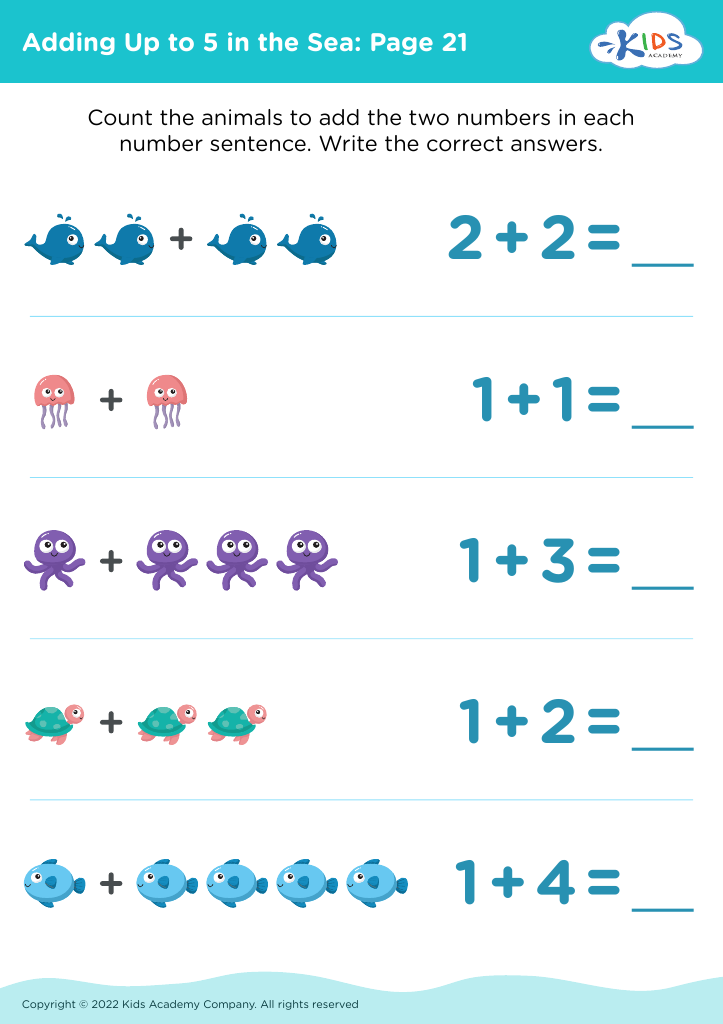
Adding Up to 5 in the Sea: Page 21
Worksheet
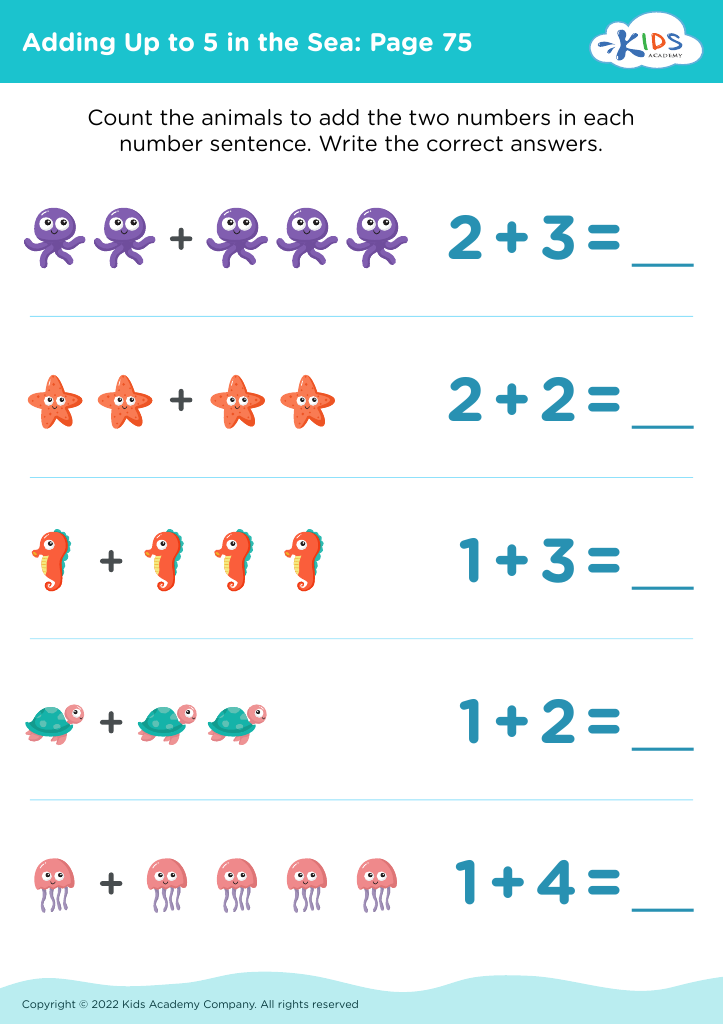
Adding Up to 5 in the Sea: Page 75
Worksheet
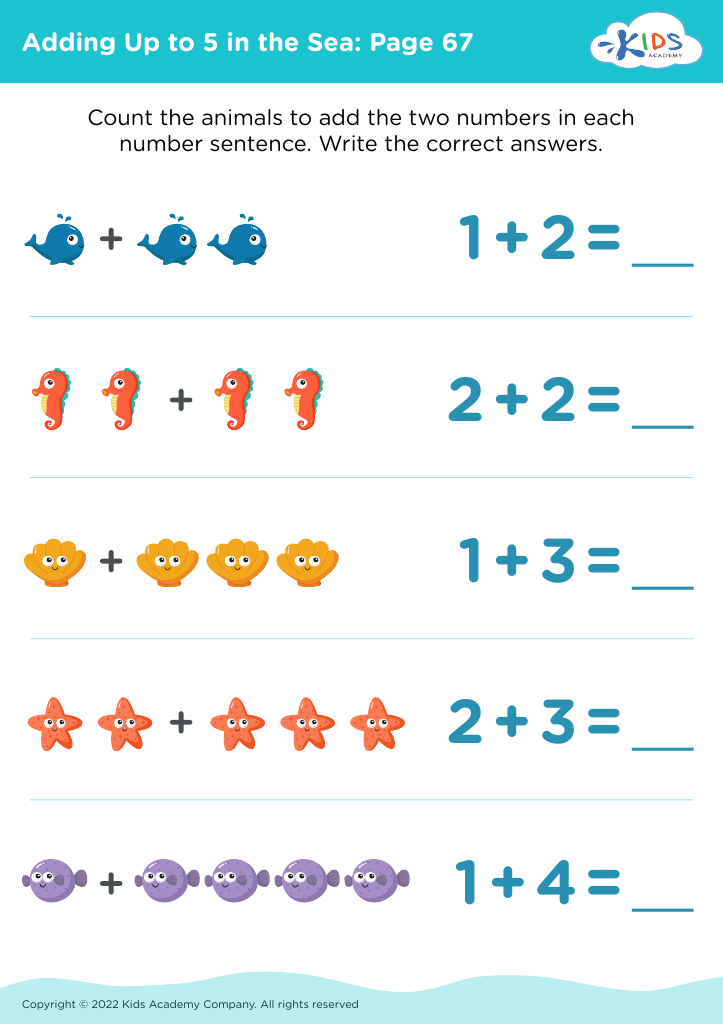
Adding Up to 5 in the Sea: Page 67
Worksheet
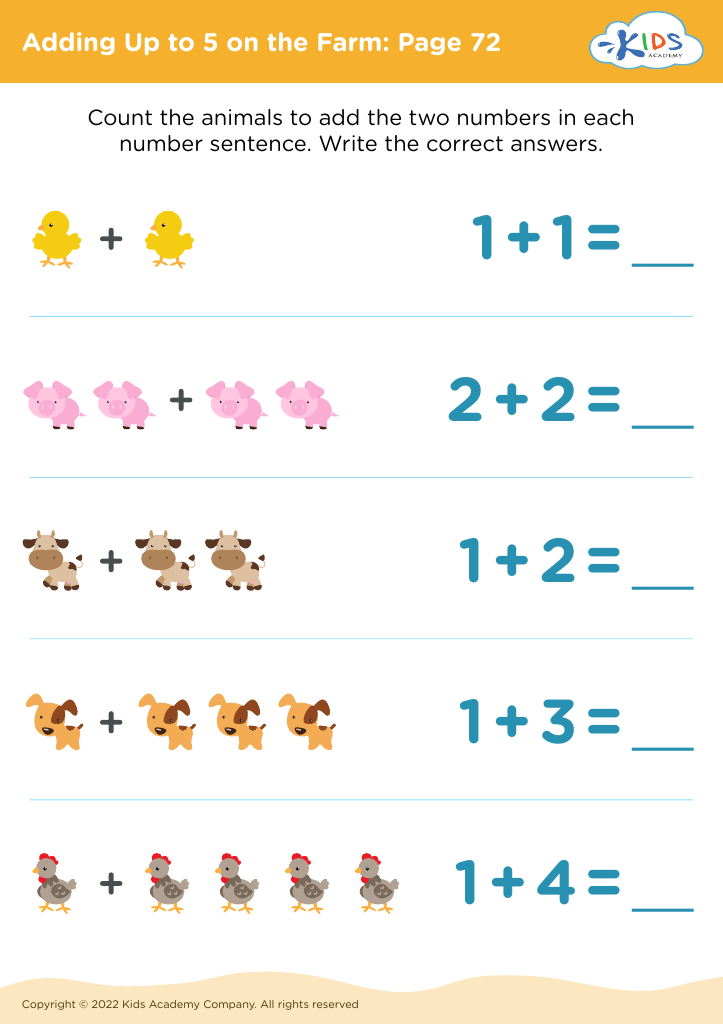
Adding Up to 5 on the Farm: Page 72
Worksheet
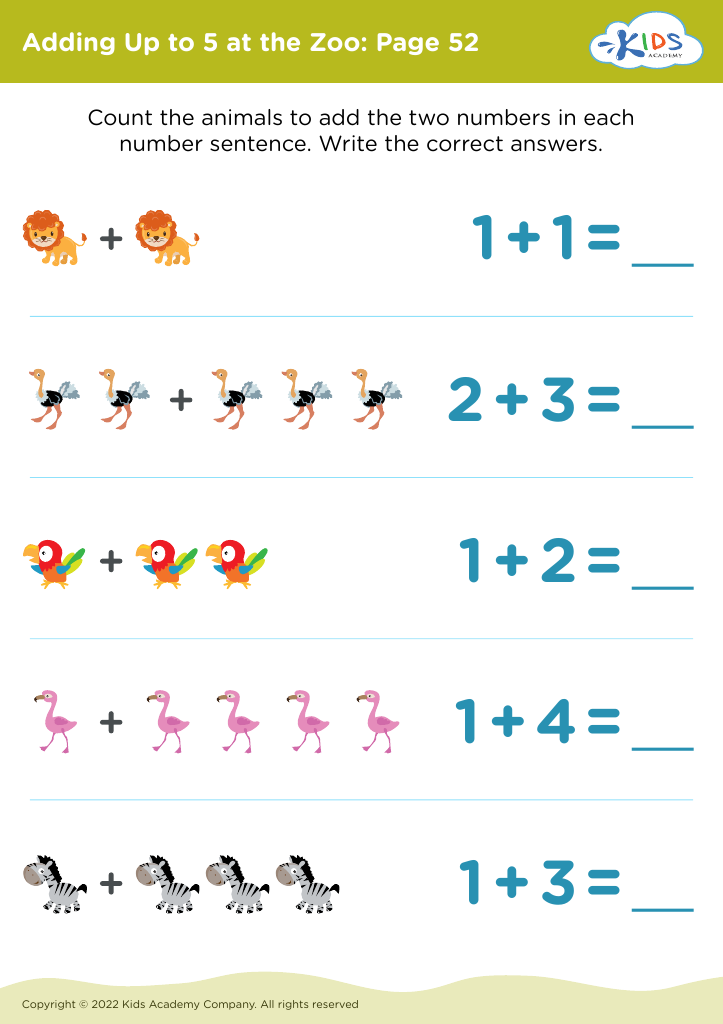
Adding Up to 5 at the Zoo: Page 52
Worksheet
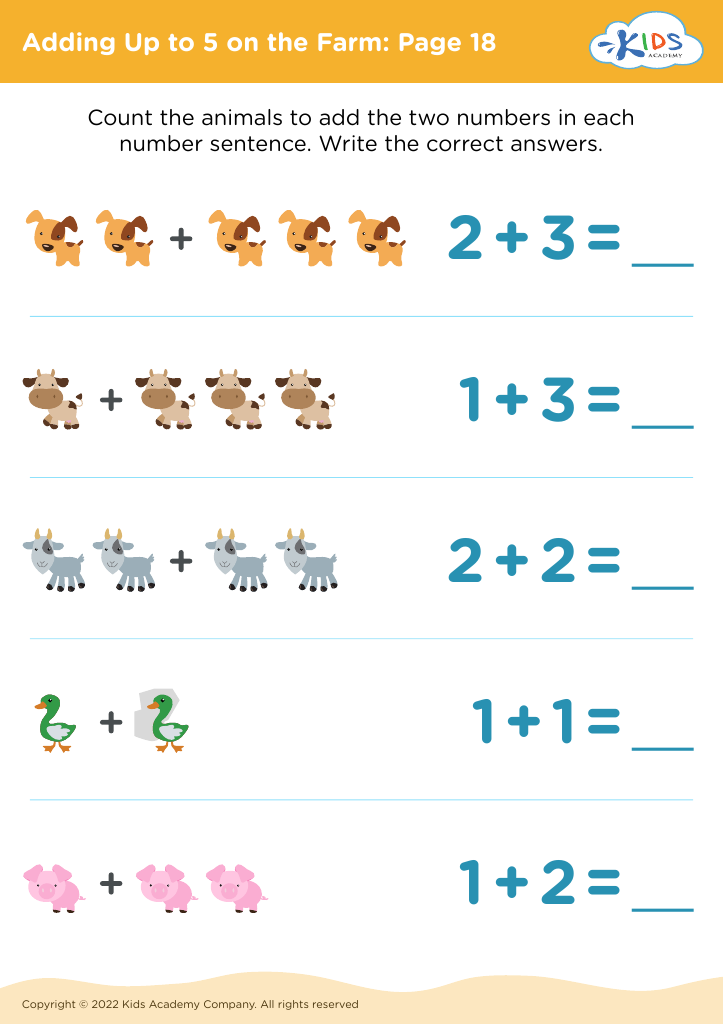
Adding Up to 5 on the Farm: Page 18
Worksheet
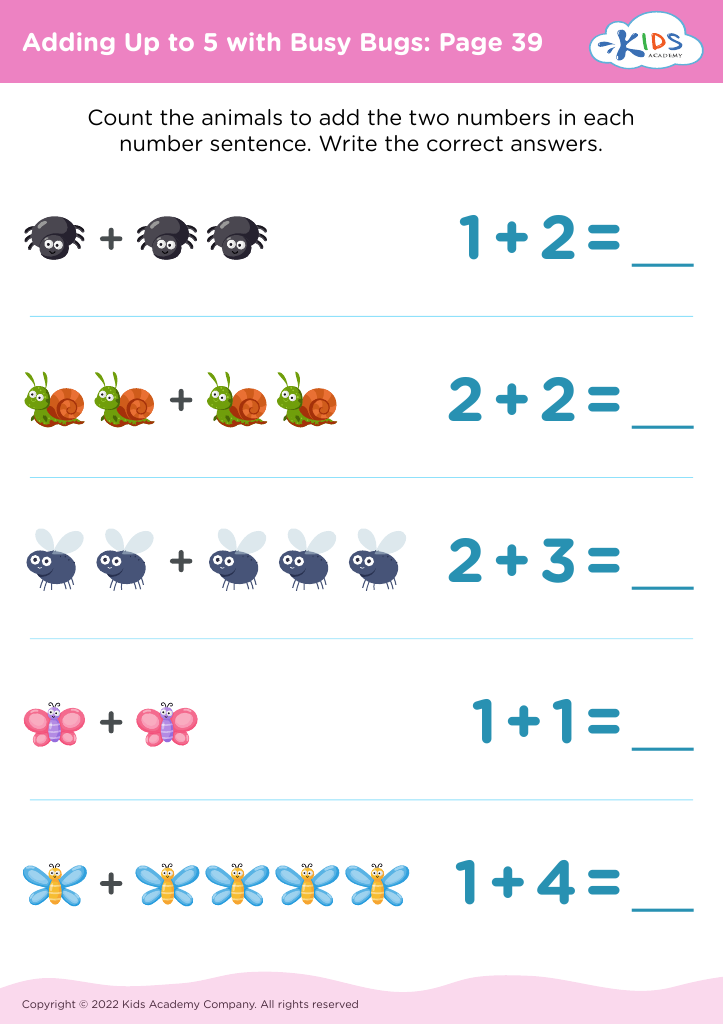
Adding Up to 5 with Busy Bugs: Page 39
Worksheet
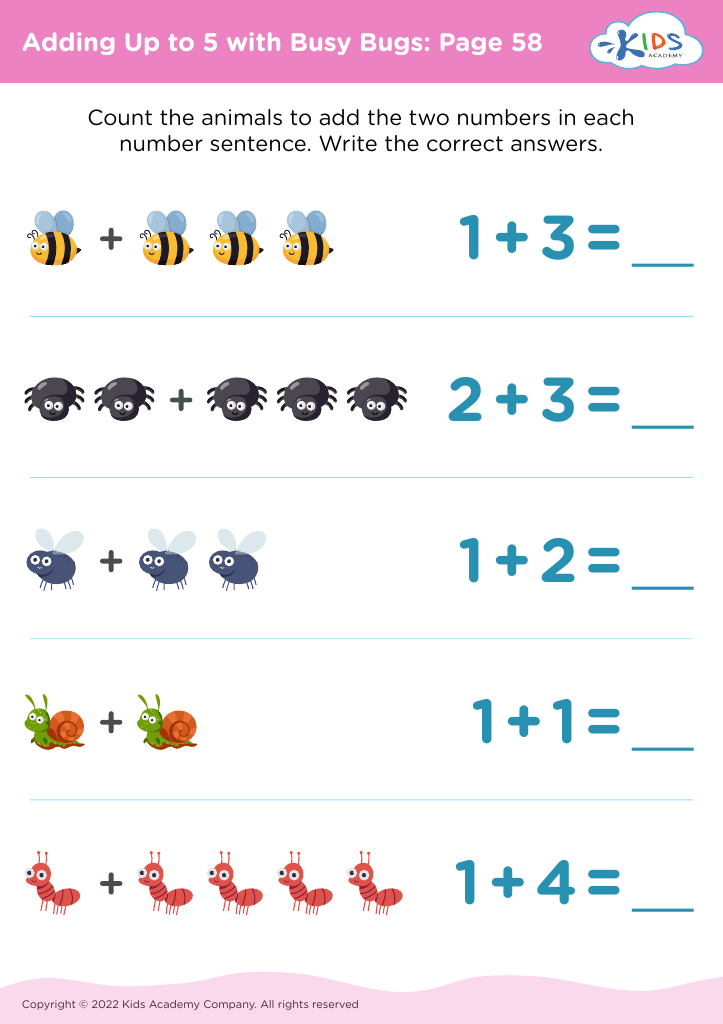
Adding Up to 5 with Busy Bugs: Page 58
Worksheet
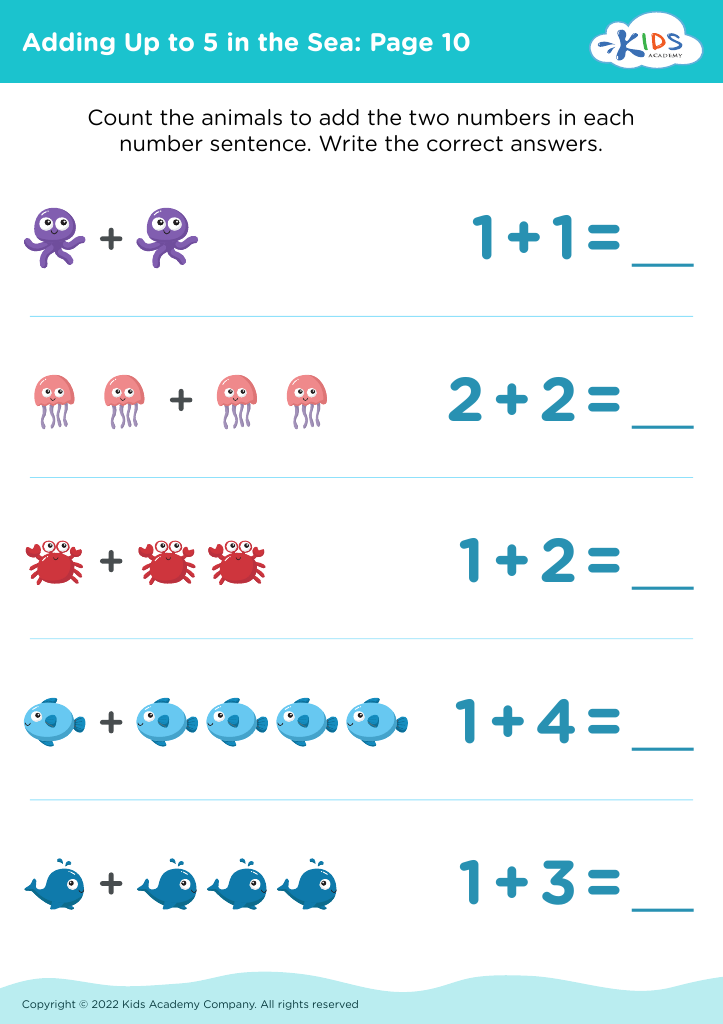
Adding Up to 5 in the Sea: Page 10
Worksheet
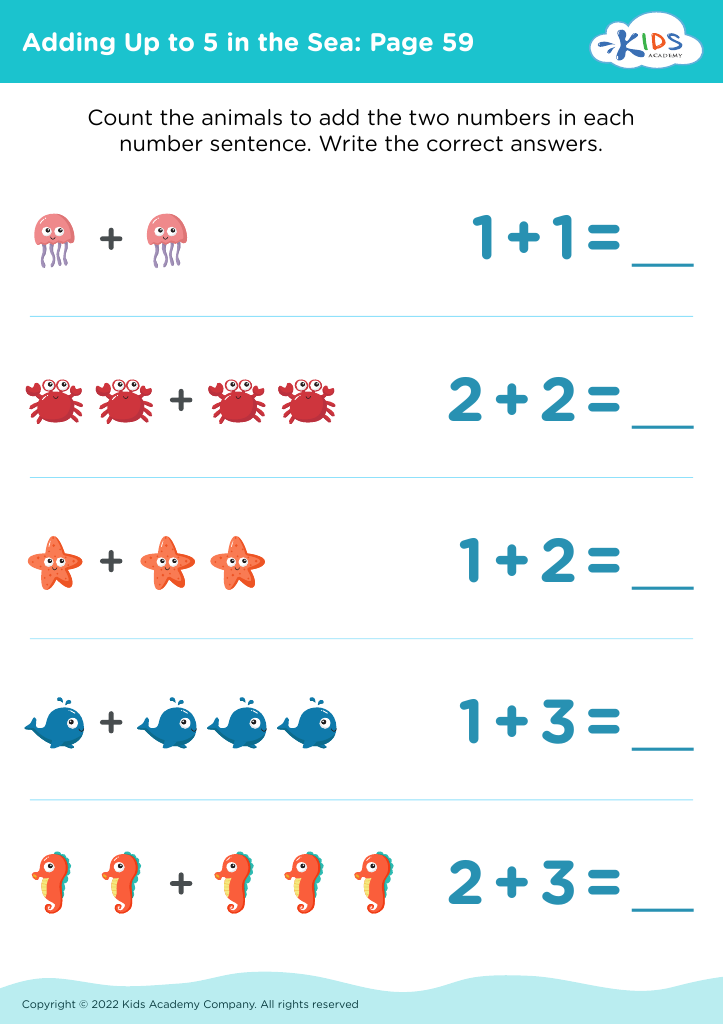
Adding Up to 5 in the Sea: Page 59
Worksheet


Visual learning in mathematics, particularly addition and subtraction, is crucial for children aged 4-9 as it enhances comprehension and retention. Young learners often grasp concepts better with concrete visual aids, such as counters, number lines, or drawings, which make abstract numerical concepts more tangible. Through visual representation, children can easily see and manipulate quantities, fostering a deeper understanding of mathematical principles.

Supporting visual learning can also boost confidence and reduce anxiety around math, creating a more positive learning experience. When children can visualize problems, they develop problem-solving skills and a stronger numerical sense, laying the groundwork for more complex mathematical concepts in the future.

Moreover, using varied visual tools allows for differentiated instruction, catering to diverse learning styles. Children who may struggle with conventional approaches can engage meaningfully through pictures and models.

Parents and teachers who emphasize visual learning not only facilitate academic success but also nurture critical thinking skills. Creating patterns, identifying relationships, and predicting outcomes through visual frameworks encourages exploration and curiosity about math, essential skills for lifelong learning. Ultimately, promoting visual learning in addition and subtraction lays a solid foundation for a child's future educational endeavors.