Visual representation comprehension Addition & Subtraction Worksheets for Ages 4-9
5 filtered results
-
From - To
Enhance your child's math skills with our engaging Visual Representation Comprehension Worksheets, specifically designed for ages 4-9. These worksheets focus on breaking down addition and subtraction concepts through colorful visuals and interactive techniques. By incorporating images, children can visualize mathematical problems, making it easier for them to grasp and solve addition and subtraction tasks. Parents and educators will find these resources invaluable for promoting understanding and retention while building confidence in young learners. Ideal for home or classroom use, our worksheets foster a love for math by turning learning into a fun and imaginative experience! Explore educational worksheets today.
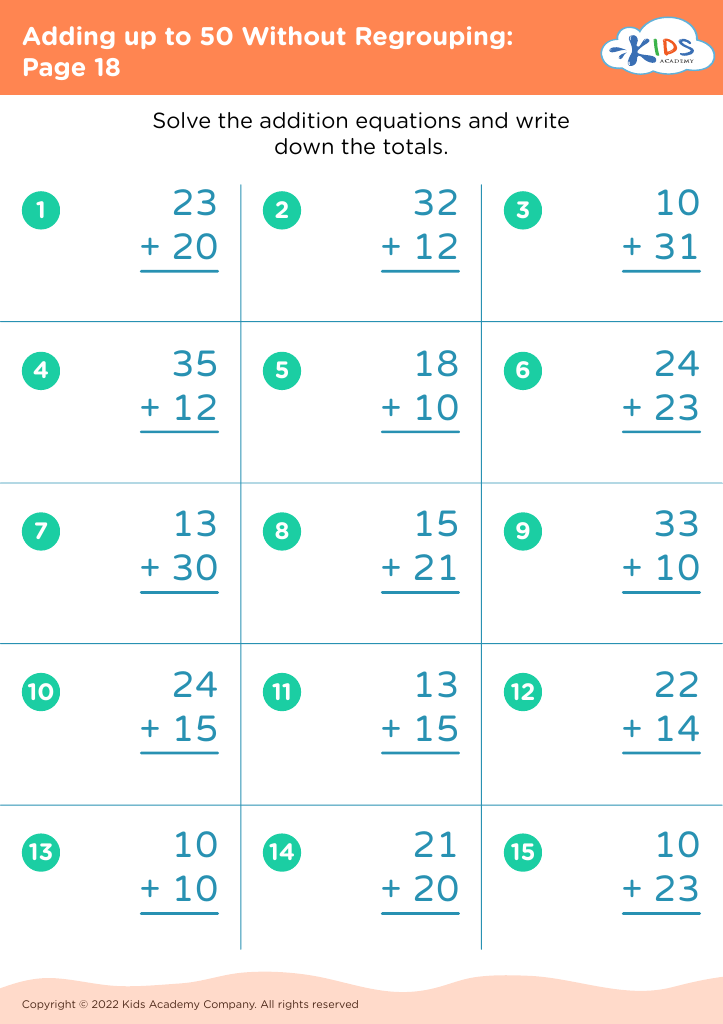
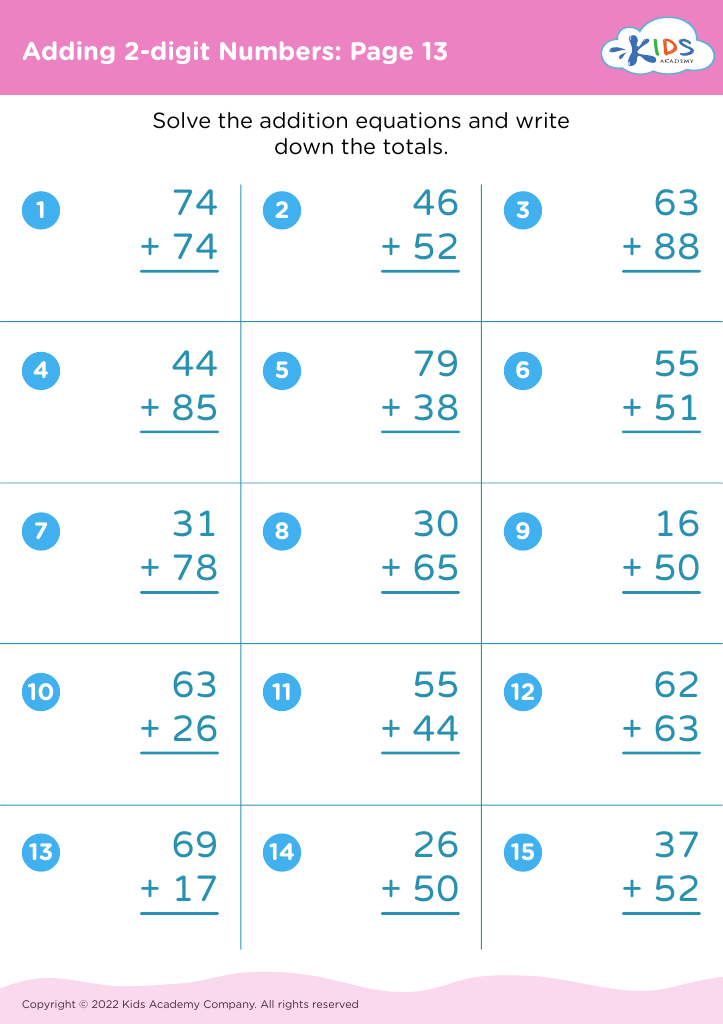
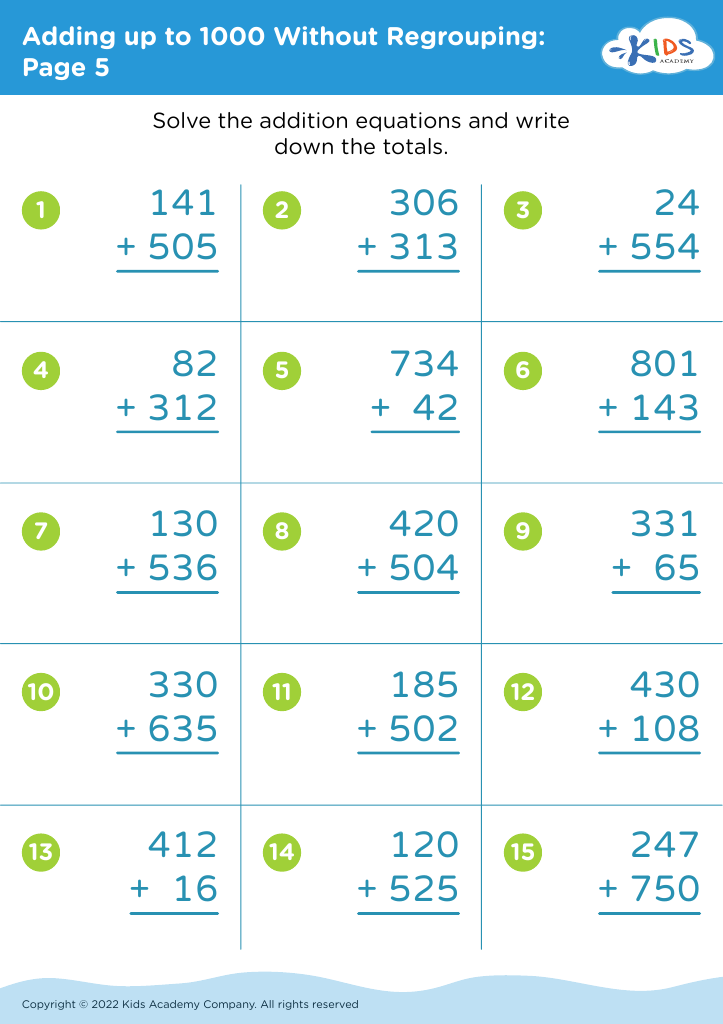
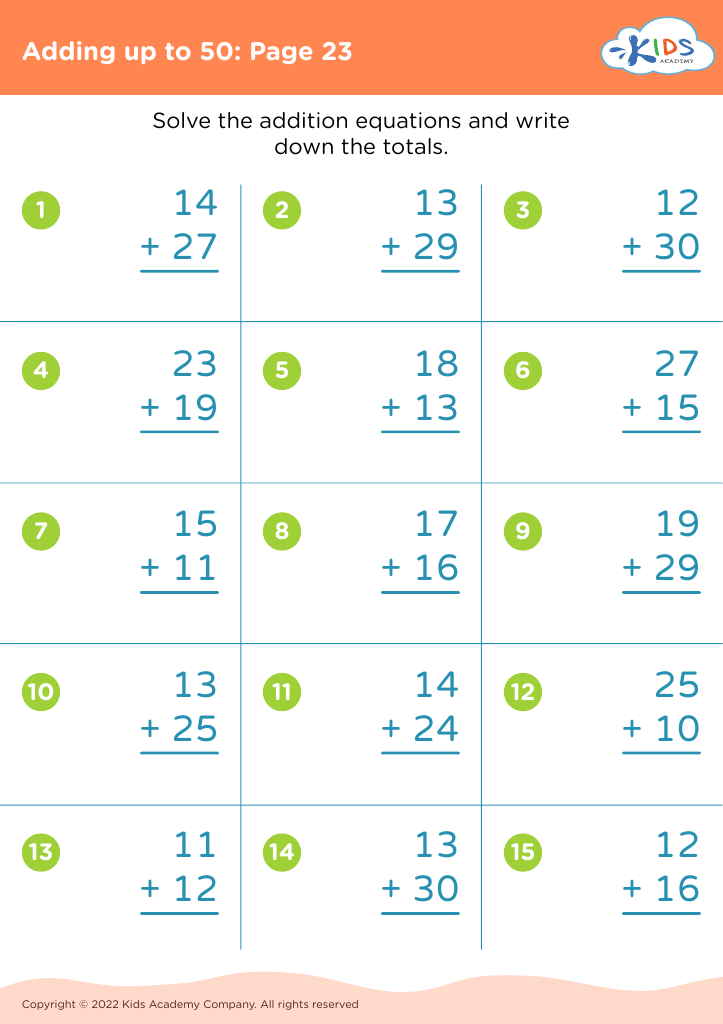
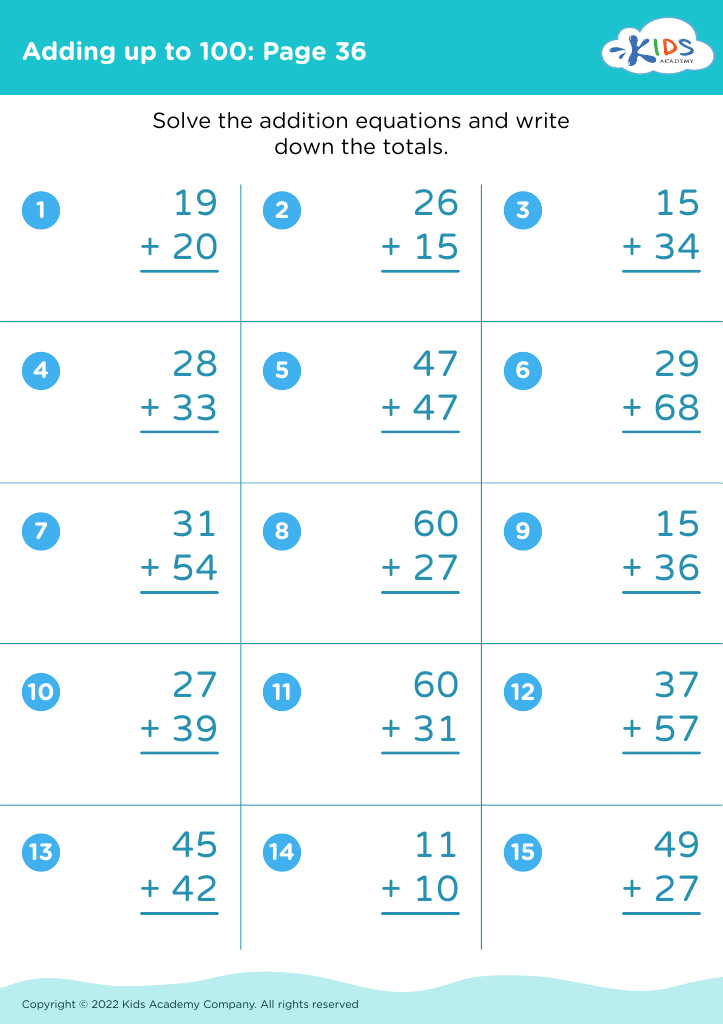








Visual representation comprehension is crucial for teaching addition and subtraction to children ages 4-9, as it lays the foundation for mathematical understanding and problem-solving. At this age, children are naturally curious and eager to explore concepts through visuals such as pictures, charts, and manipulatives. Utilizing visual representation helps to make abstract mathematical ideas concrete, allowing young learners to grasp the principles of addition and subtraction more effectively.
When parents and teachers employ visual tools, they assist children in developing critical cognitive skills. Visual representations simplify complex concepts, making them easier to understand. For instance, using objects like blocks or counters can illustrate how numbers interact and relate, reinforcing the idea that addition is about combining quantities while subtraction is about separating them.
Moreover, developing strong visual comprehension skills can enhance children’s confidence in their mathematical abilities. Early positive experiences with math create a foundation for future learning and foster a lifelong appreciation for the subject.
Incorporating visual representation not only makes learning engaging and interactive but also supports diverse learning styles. Supporting children in this stage encourages a progressive journey toward mathematical proficiency, essential for academic success in subsequent grades.








