Filters

95 filtered results

Clear all filters
Favorites
With answer key
Interactive

95 filtered results

Difficulty Level

Grade


Check out this FREE Trial Lesson on Addition for age 4-9!

Z

Favorites
With answer key
Interactive
  • 4-9
  • Animal recognition
  • Addition
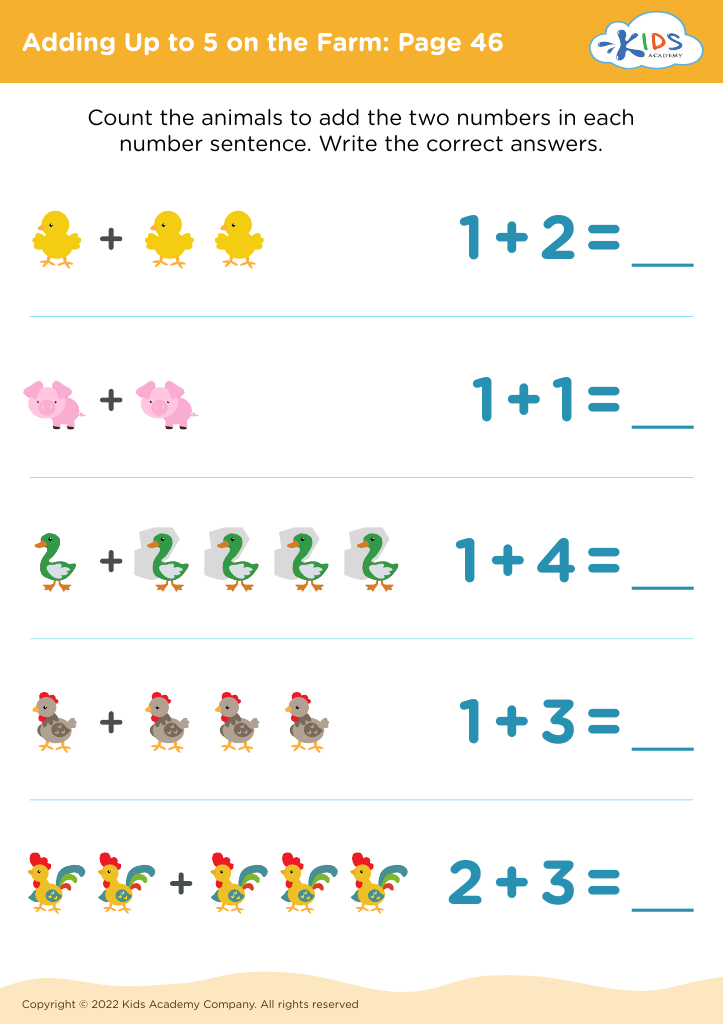
Adding Up to 5 on the Farm: Page 46
Worksheet
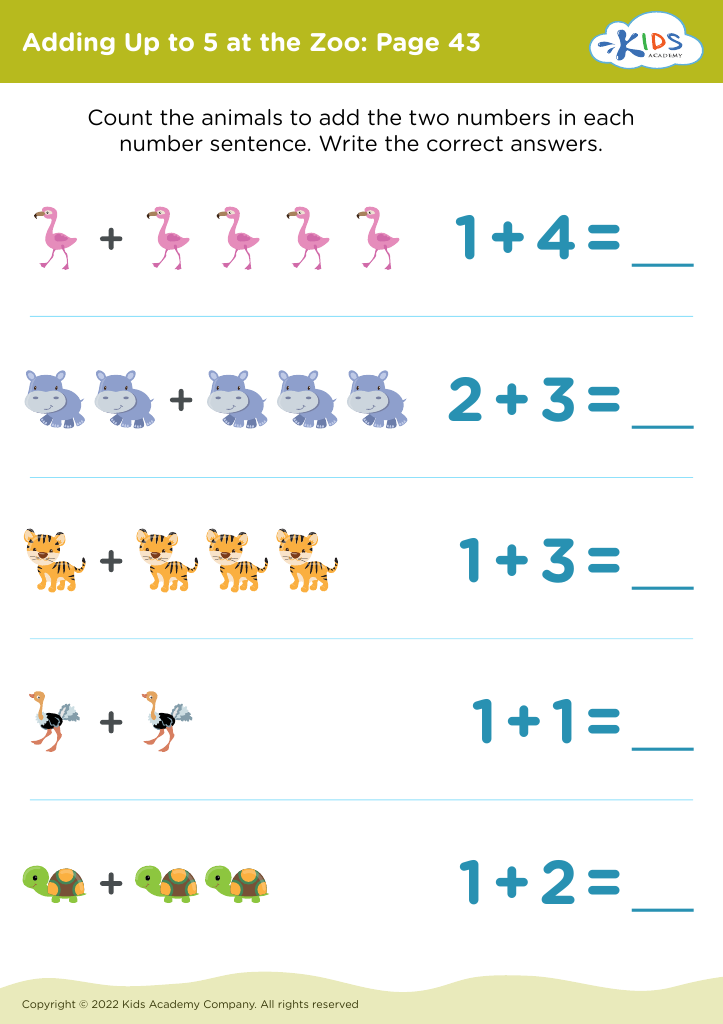
Adding Up to 5 at the Zoo: Page 43
Worksheet
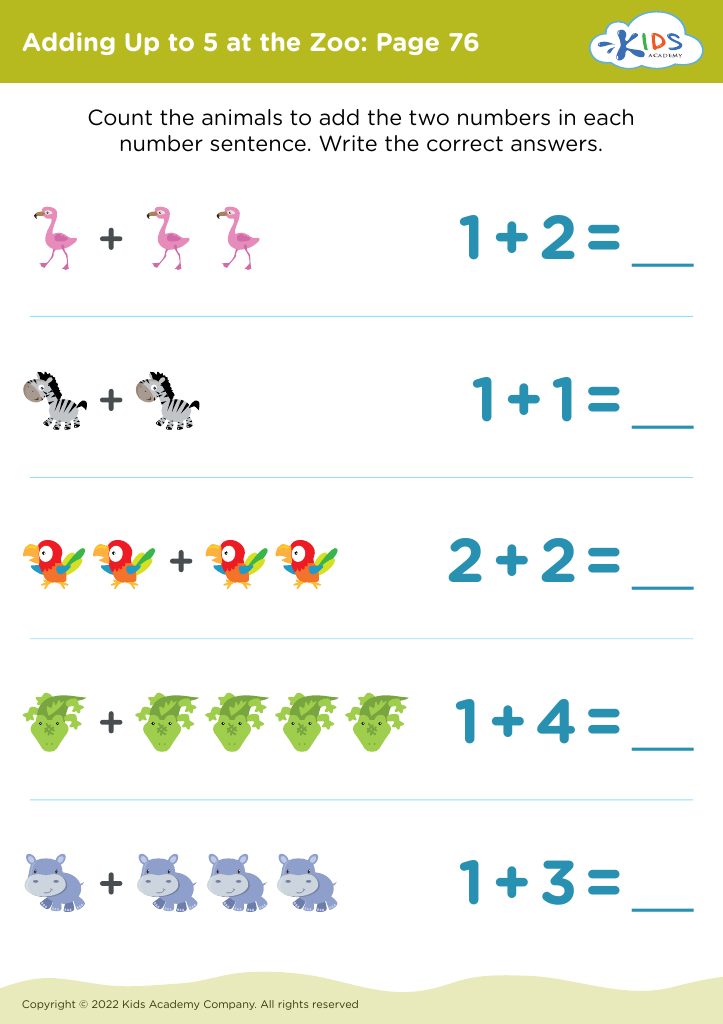
Adding Up to 5 at the Zoo: Page 76
Worksheet
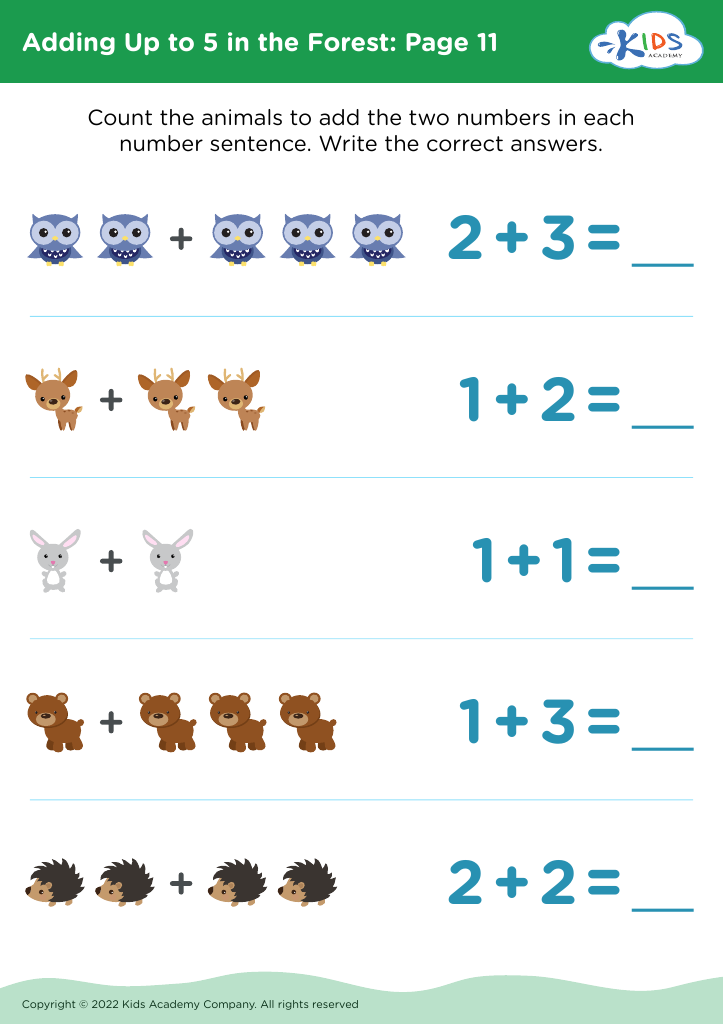
Adding Up to 5 in the Forest: Page 11
Worksheet
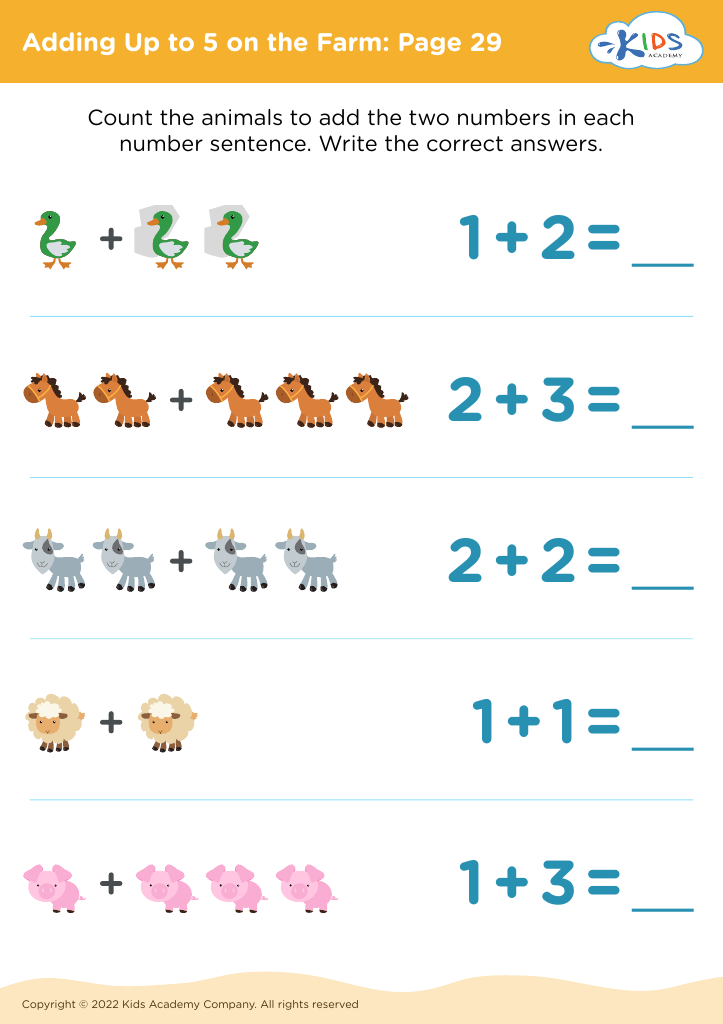
Adding Up to 5 on the Farm: Page 29
Worksheet
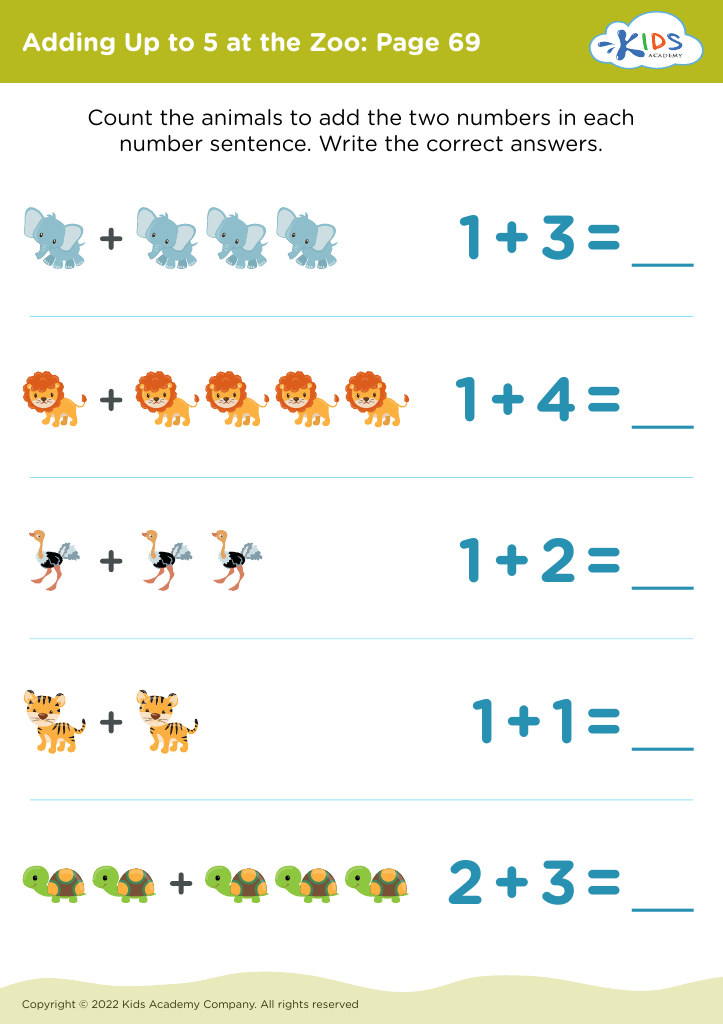
Adding Up to 5 at the Zoo: Page 69
Worksheet
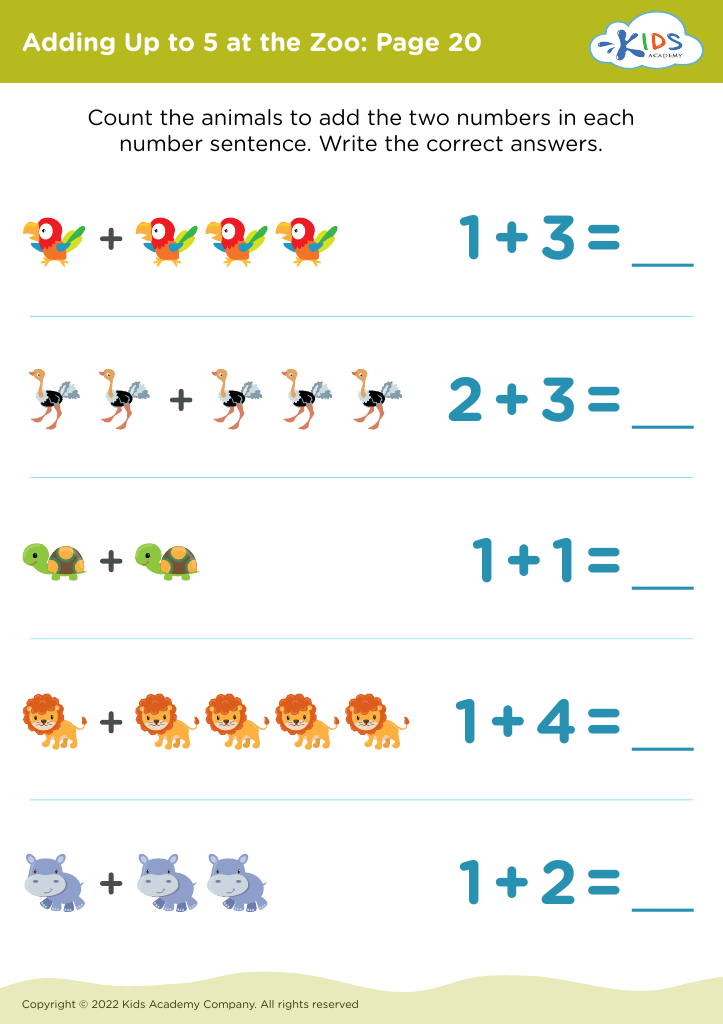
Adding Up to 5 at the Zoo: Page 20
Worksheet
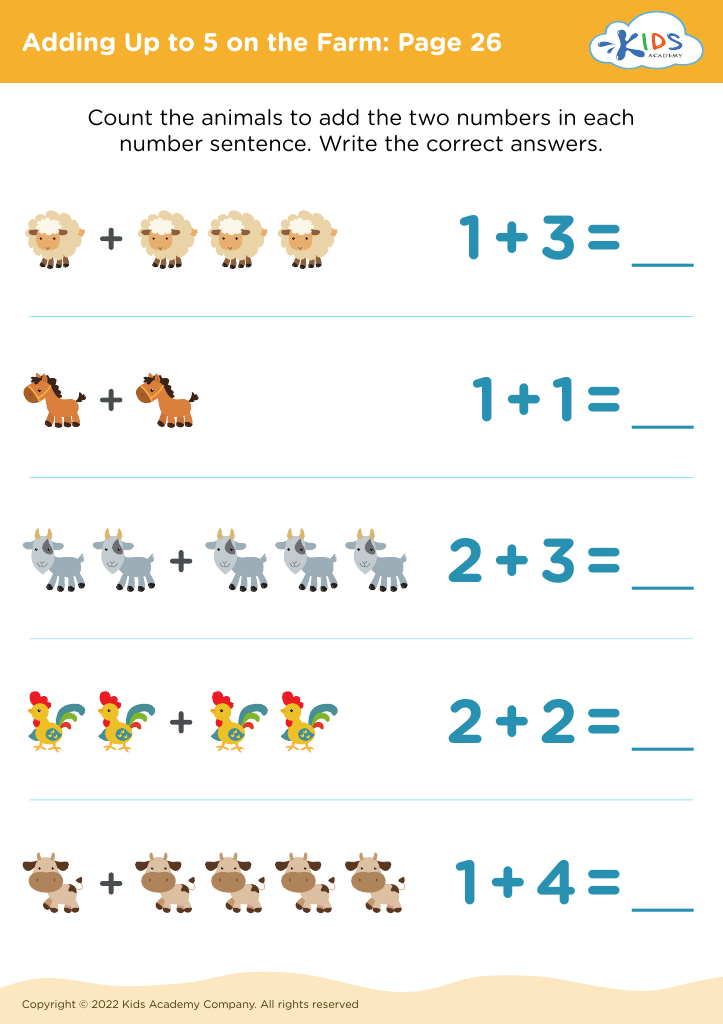
Adding Up to 5 on the Farm: Page 26
Worksheet
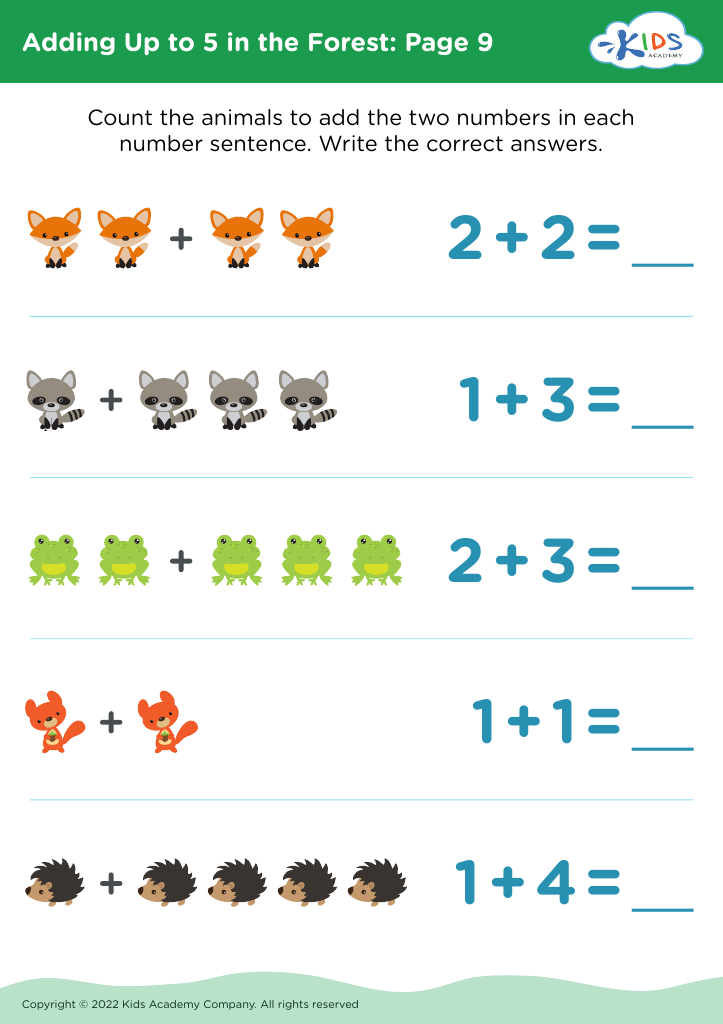
Adding Up to 5 in the Forest: Page 9
Worksheet
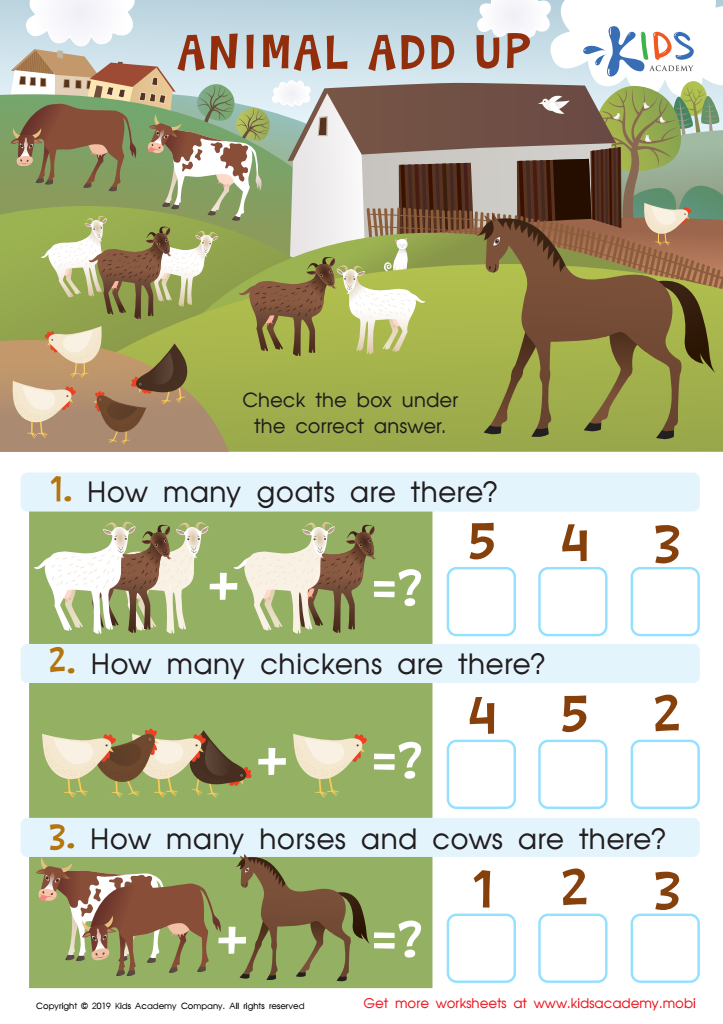
Animal Add Up Worksheet

Animal Add Up Worksheet

Animals are fun to observe and interact with. They can be seen at the zoo, parks, farms and in homes with pets. This worksheet helps kids identify animals, and build addition skills. Look at the picture with them and help name each animal. After that, add the animals up and check the box for the correct answer. 80 words.
Animal Add Up Worksheet
Worksheet
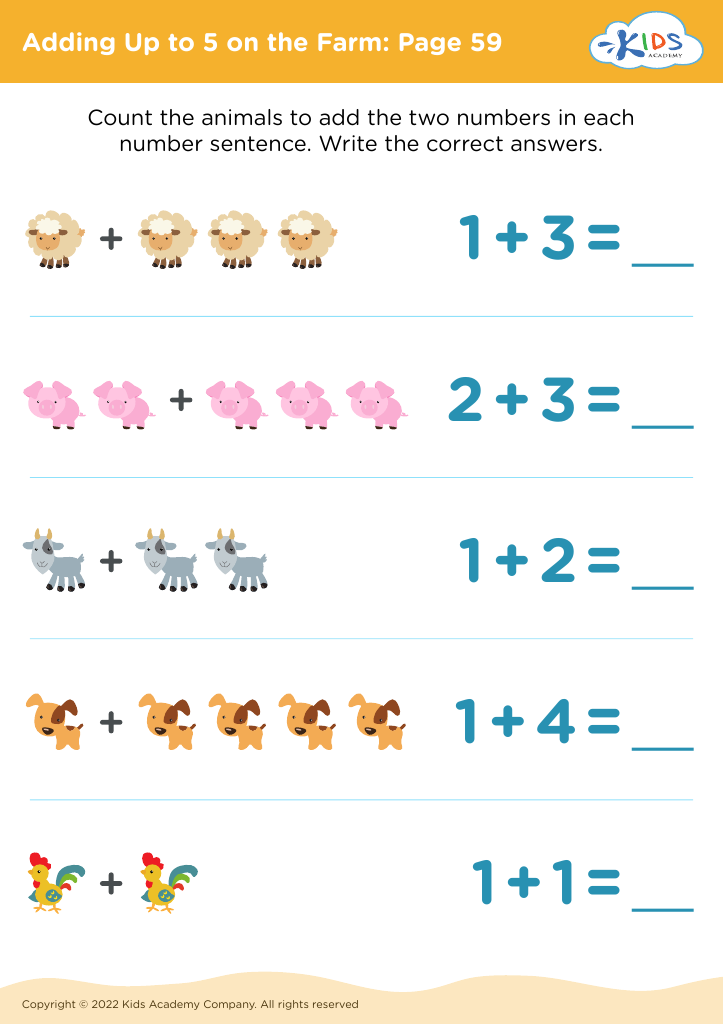
Adding Up to 5 on the Farm: Page 59
Worksheet
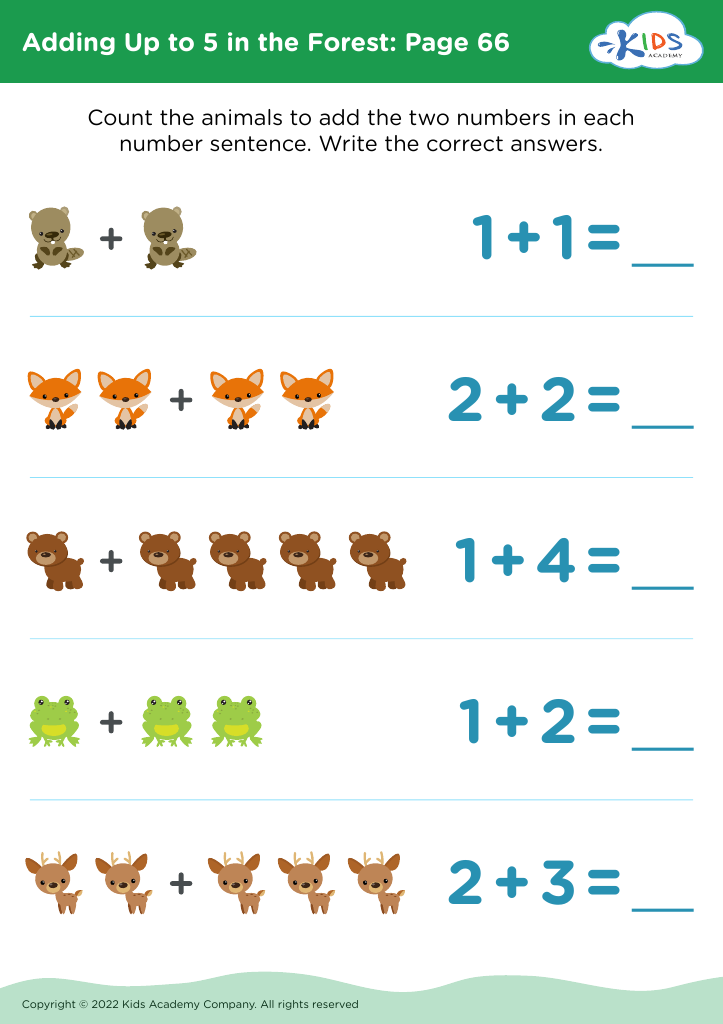
Adding Up to 5 in the Forest: Page 66
Worksheet
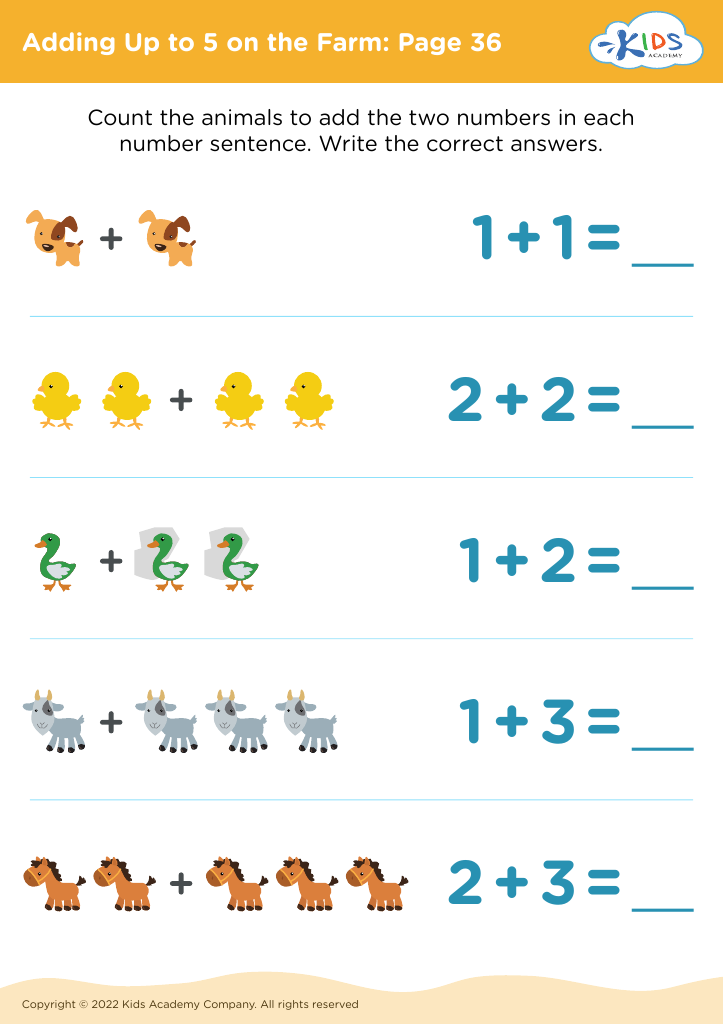
Adding Up to 5 on the Farm: Page 36
Worksheet
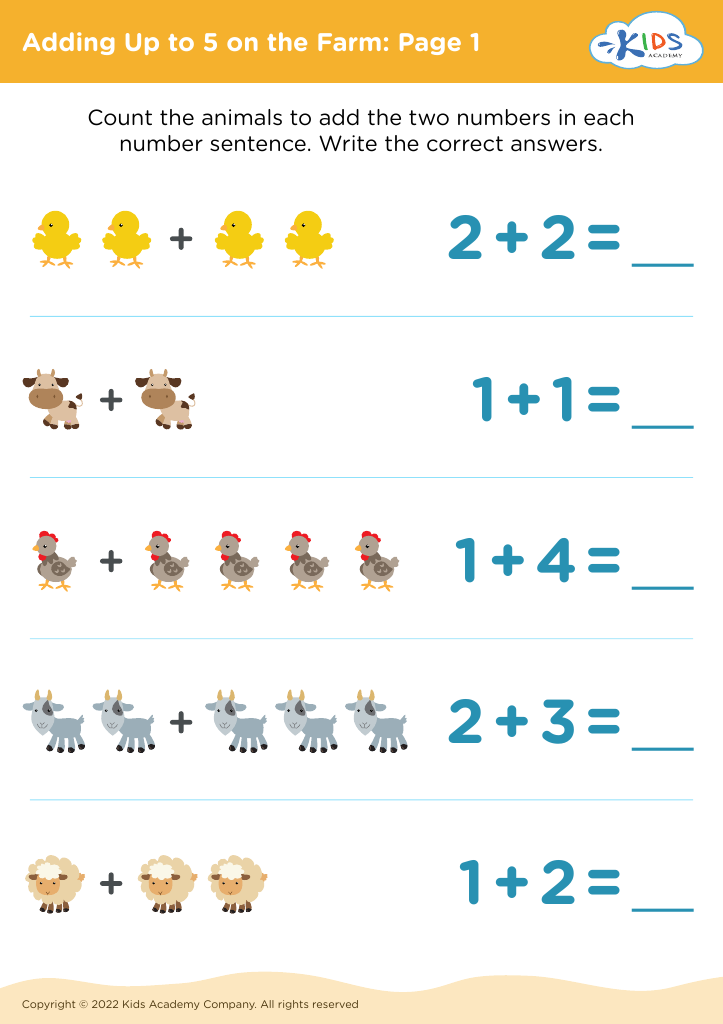
Adding Up to 5 on the Farm: Page 1
Worksheet
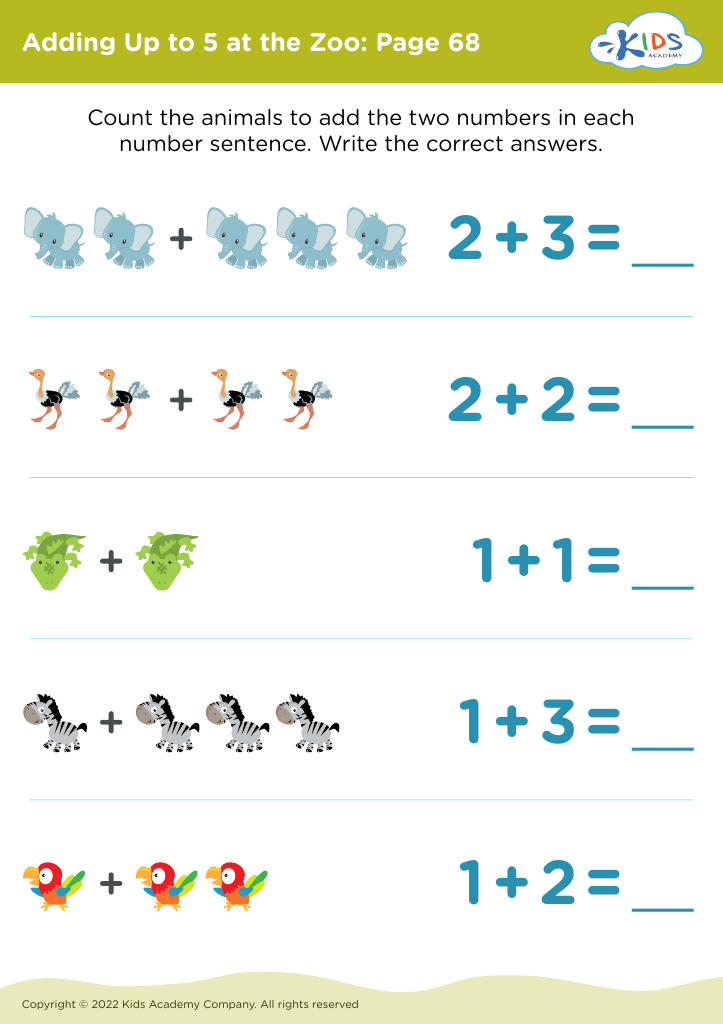
Adding Up to 5 at the Zoo: Page 68
Worksheet
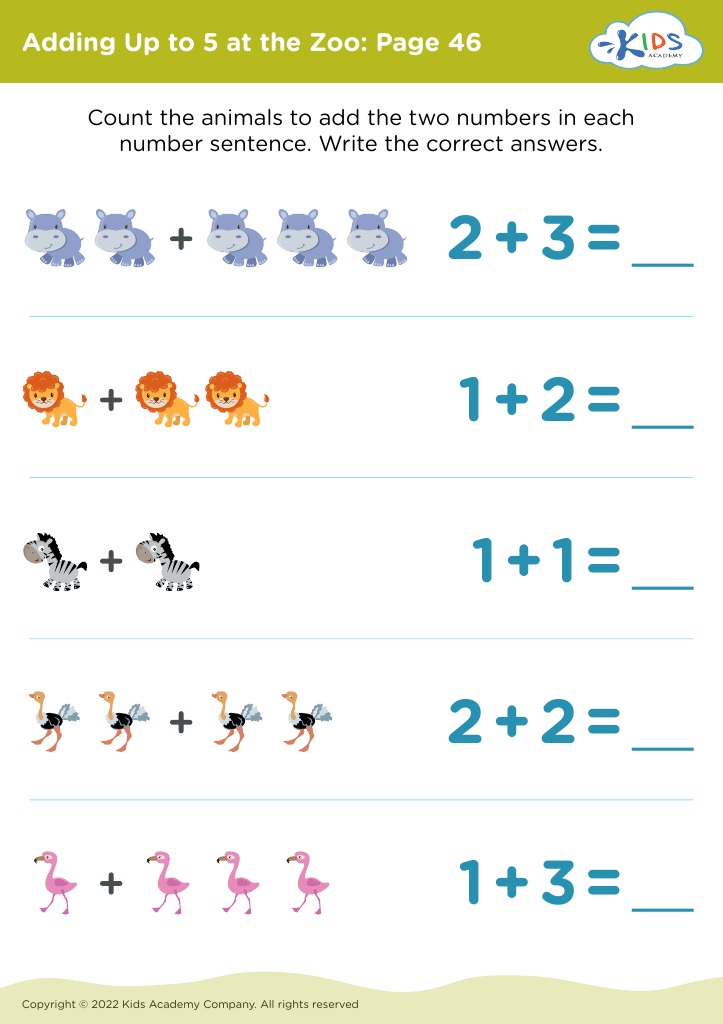
Adding Up to 5 at the Zoo: Page 46
Worksheet
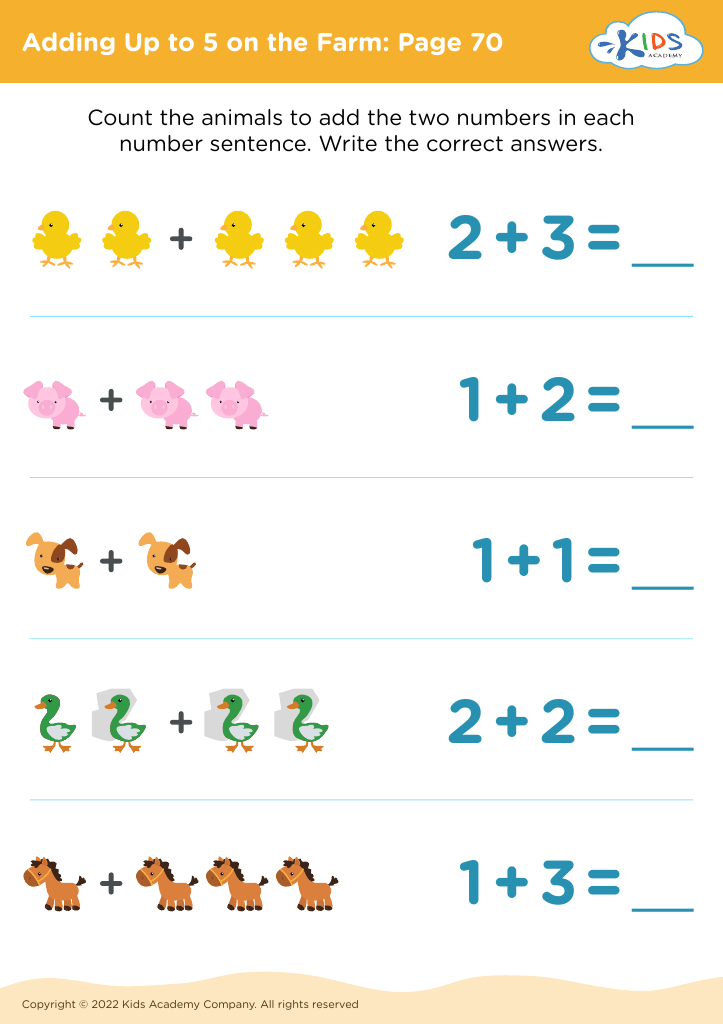
Adding Up to 5 on the Farm: Page 70
Worksheet
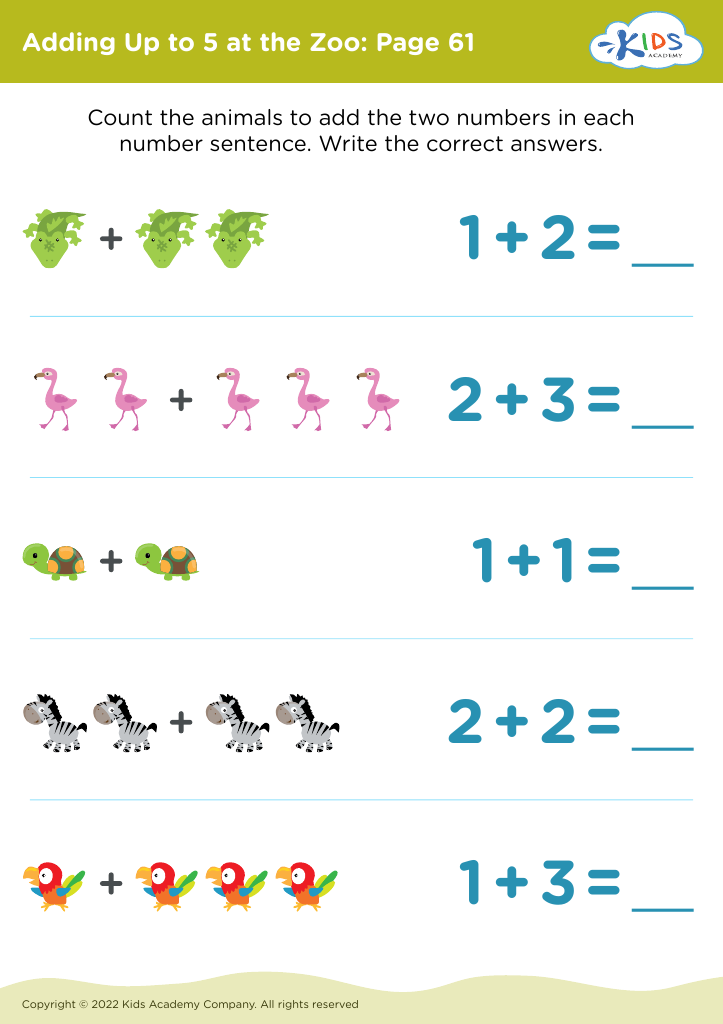
Adding Up to 5 at the Zoo: Page 61
Worksheet
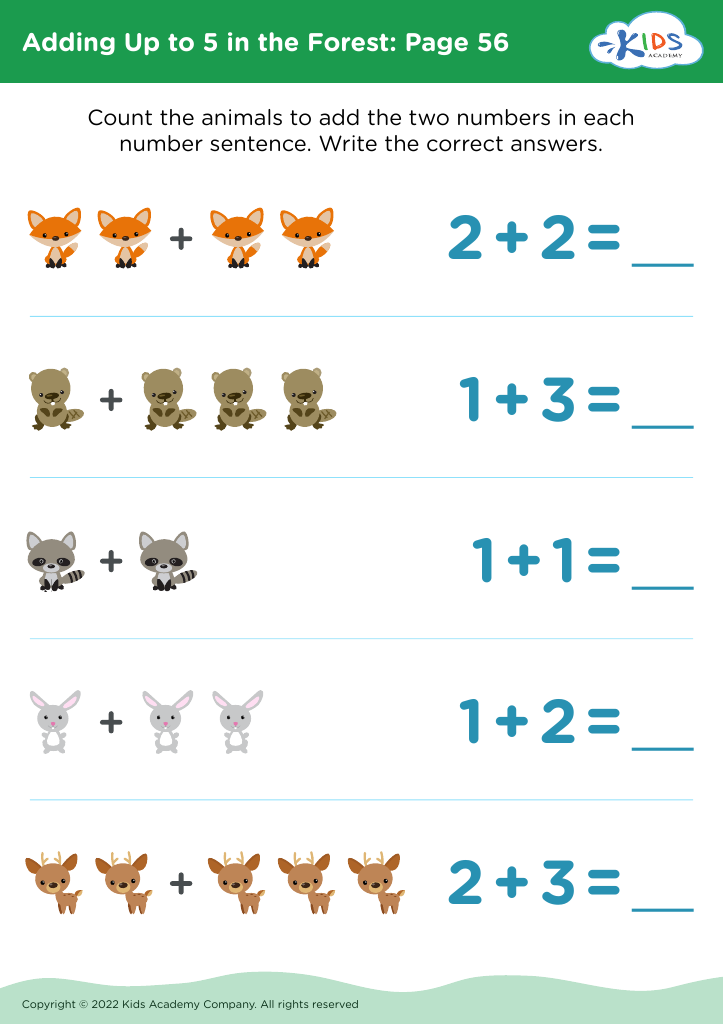
Adding Up to 5 in the Forest: Page 56
Worksheet
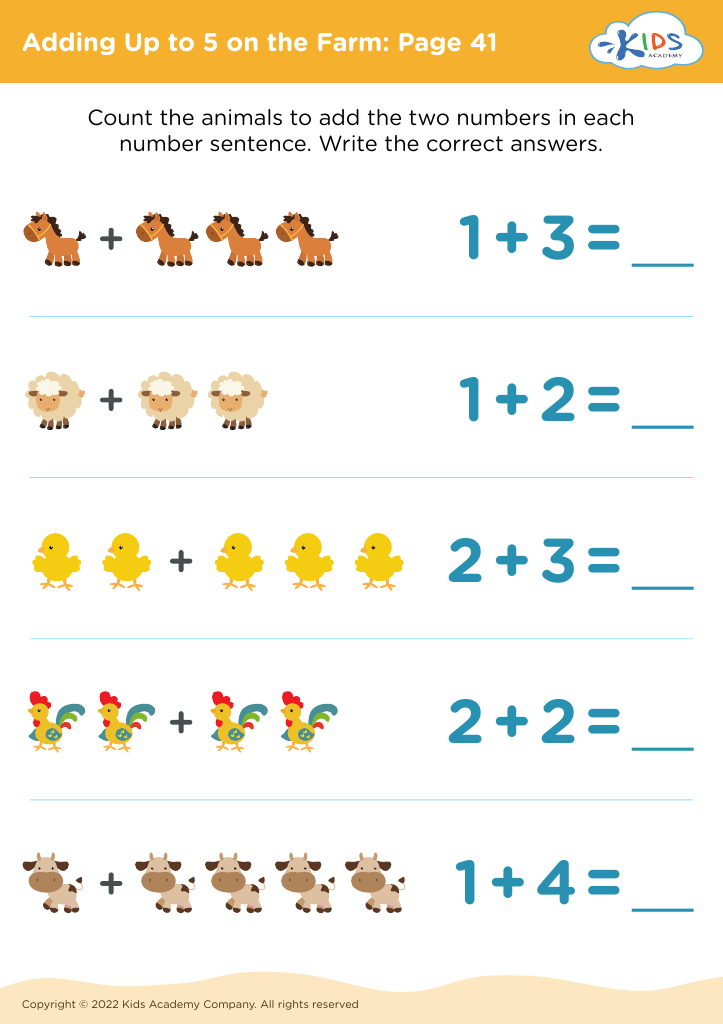
Adding Up to 5 on the Farm: Page 41
Worksheet
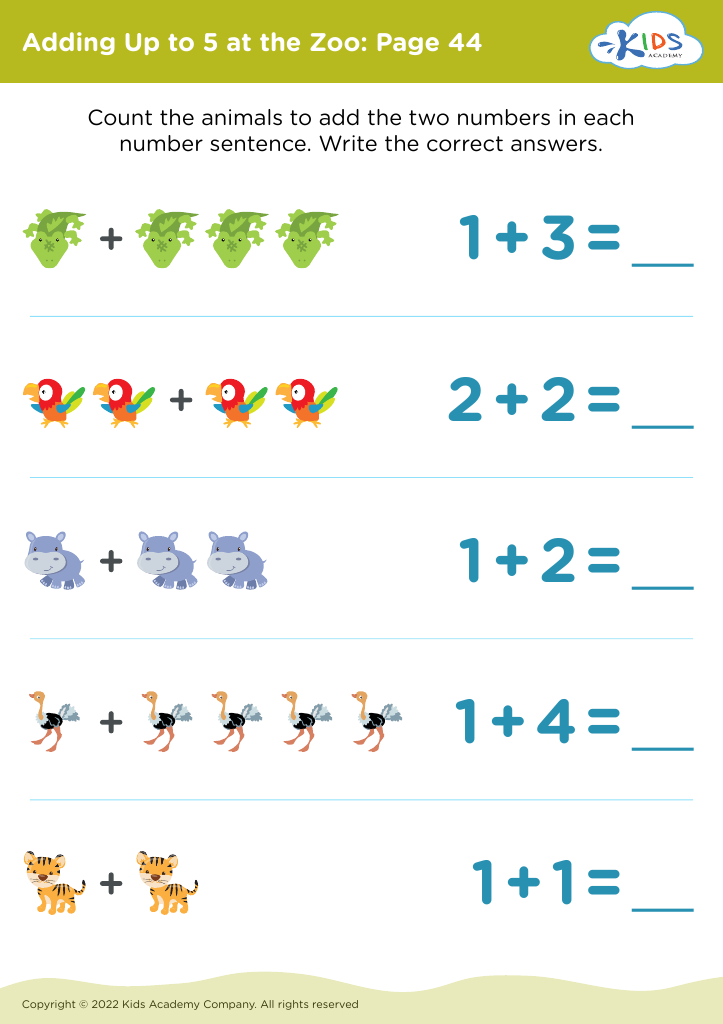
Adding Up to 5 at the Zoo: Page 44
Worksheet
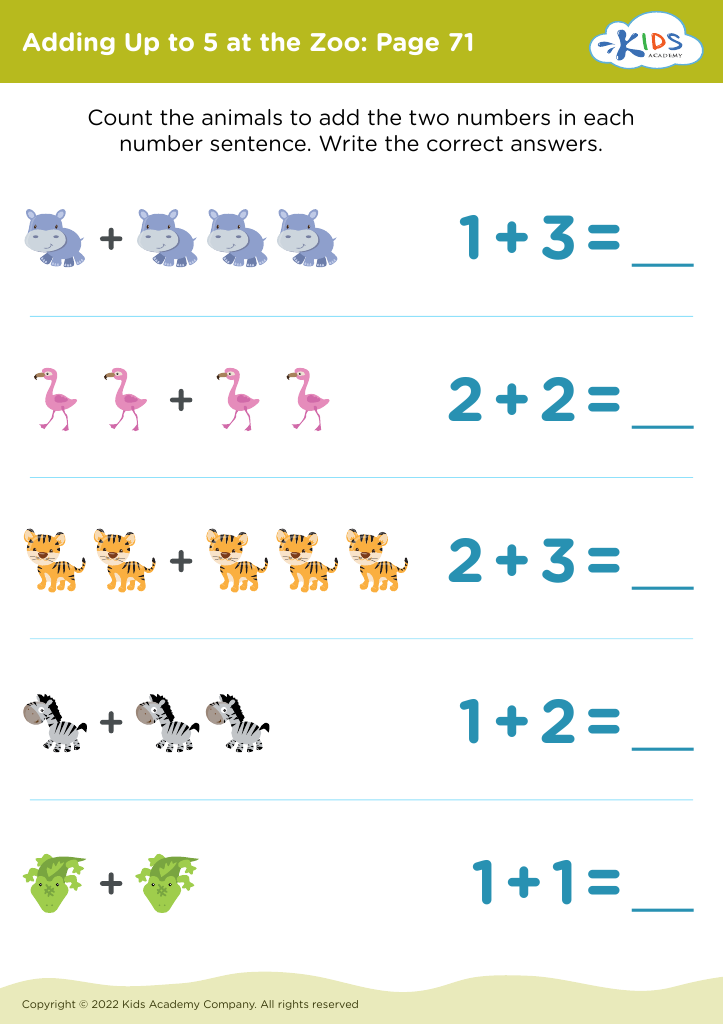
Adding Up to 5 at the Zoo: Page 71
Worksheet
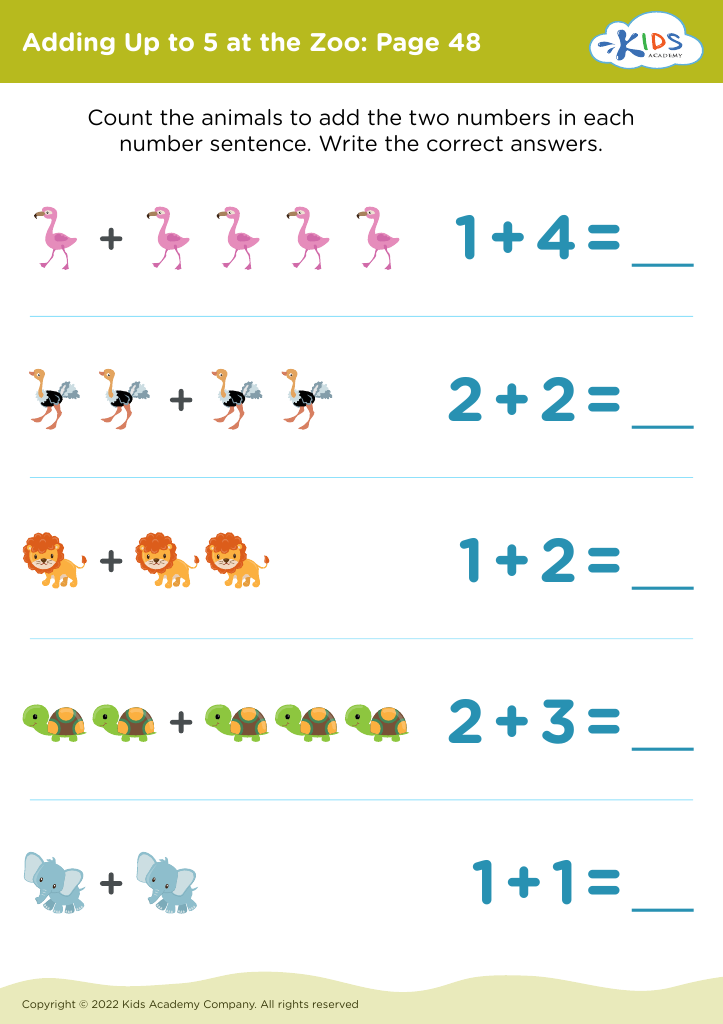
Adding Up to 5 at the Zoo: Page 48
Worksheet
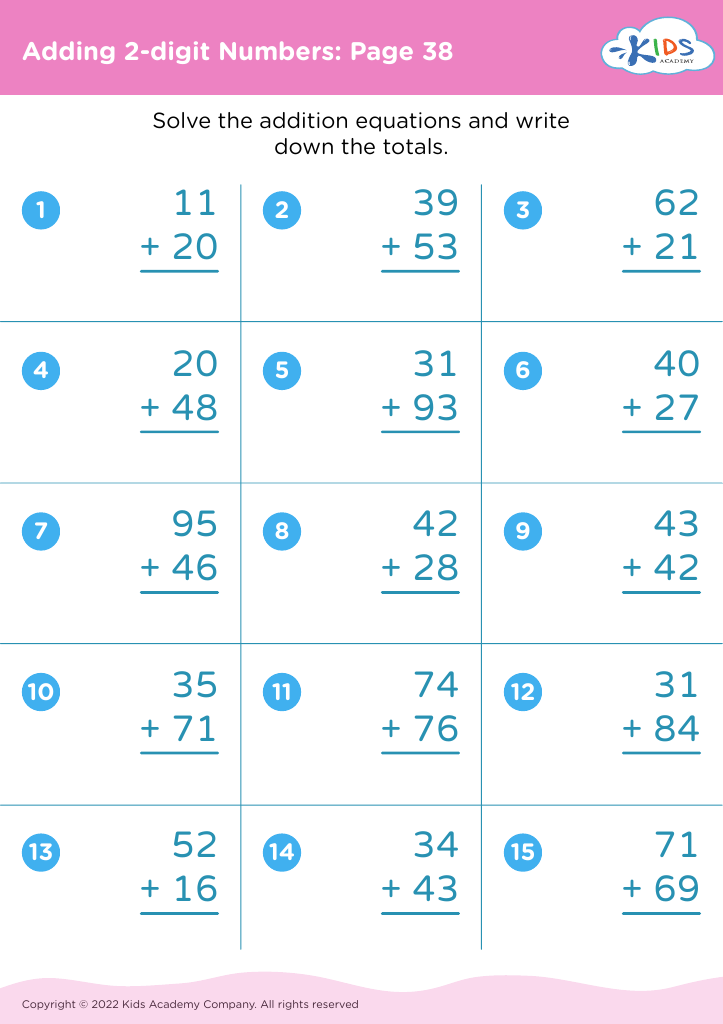
Adding 2-digit Numbers: Page 38

Adding 2-digit Numbers: Page 38

Adding 2-digit Numbers: Page 38
Worksheet


Animal recognition addition is a crucial educational activity for children aged 4-9 because it seamlessly combines learning mathematics with engaging content. At this age, children are in a critical developmental stage where they begin to explore the world around them, and incorporating animals—something many kids are genuinely interested in—makes learning enjoyable and relatable.

By introducing addition through familiar animals, educators and parents can capture children's attention more effectively. This technique harnesses the natural curiosity of young learners, making mathematical concepts more tangible and less abstract. For instance, using illustrations or counting toys that feature various animals can help children visualize numbers and understand the notion of quantity.

Additionally, animal recognition addition promotes cognitive and language skills. As children identify different animals while solving addition problems, they enhance their vocabulary and knowledge about the animal kingdom. Furthermore, this activity supports critical thinking and problem-solving abilities, providing a solid foundation for future mathematical learning.

Ultimately, prioritizing activities like animal recognition addition helps to create a stimulating and positive learning environment. It fosters a love for math and learning that can shape children's academic journeys, making the role of parents and teachers pivotal in guiding this enriching experience.