Filters

18 filtered results

Clear all filters
Favorites
With answer key
Interactive

18 filtered results

Difficulty Level

Grade


Enhance your child's math skills with our Basic Addition Practice Worksheets designed for ages 4-9. These printable worksheets offer engaging exercises that make mastering addition fun and easy! Each worksheet is carefully crafted to build foundational skills and boost confidence in young learners. Children will enjoy a variety of activities, from simple problems to colorful illustrations, ensuring they stay motivated and excited about learning. Perfect for classroom use or at-home practice, our resources encourage independent learning while developing critical thinking skills. Start enriching your child's education today with these essential addition worksheets that pave the way for lifelong math success!
Check out this FREE Trial Lesson on Addition for age 4-9!

Exactly the Same, or Not

Favorites
With answer key
Interactive
  • 4-9
  • Basic addition practice
  • Addition
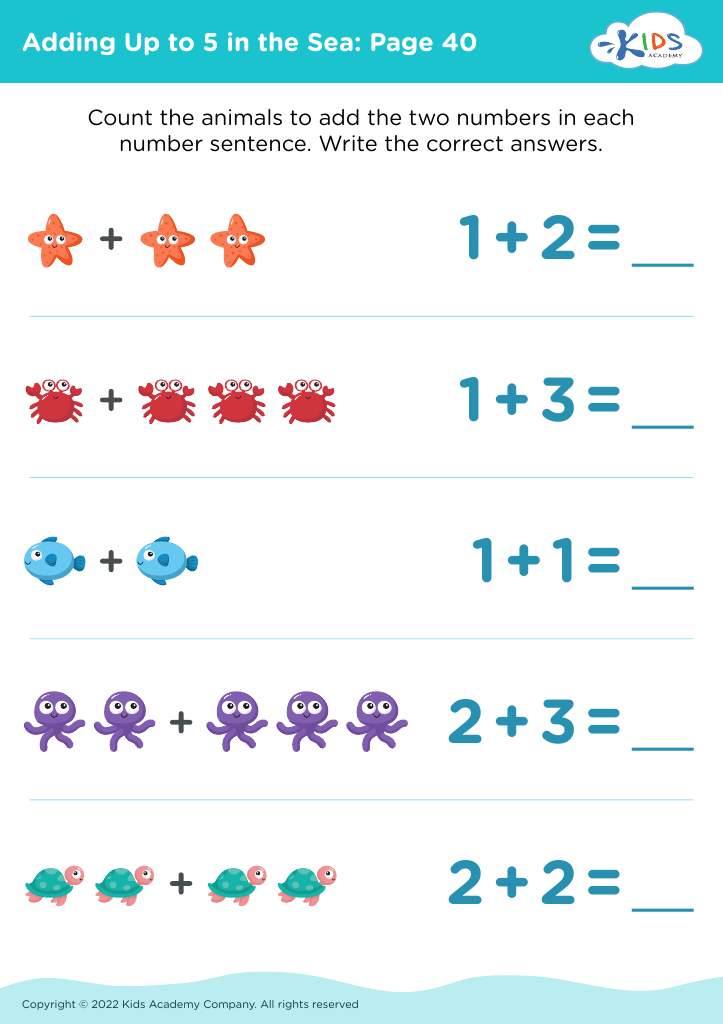
Adding Up to 5 in the Sea: Page 40
Worksheet
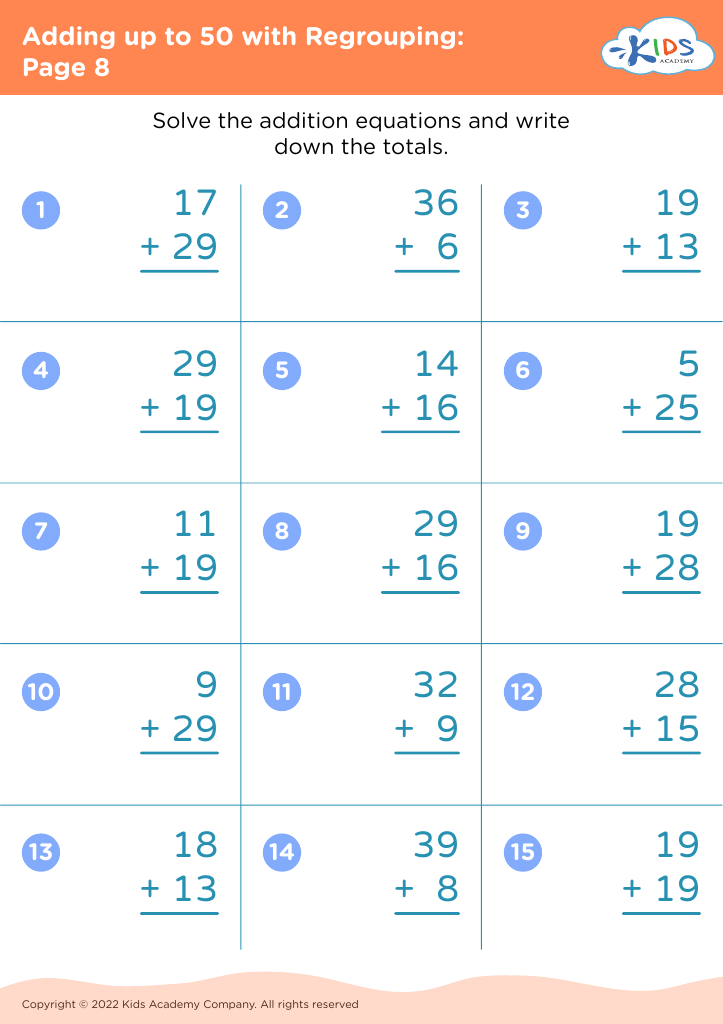
Adding up to 50 with Regrouping: Page 8
Worksheet
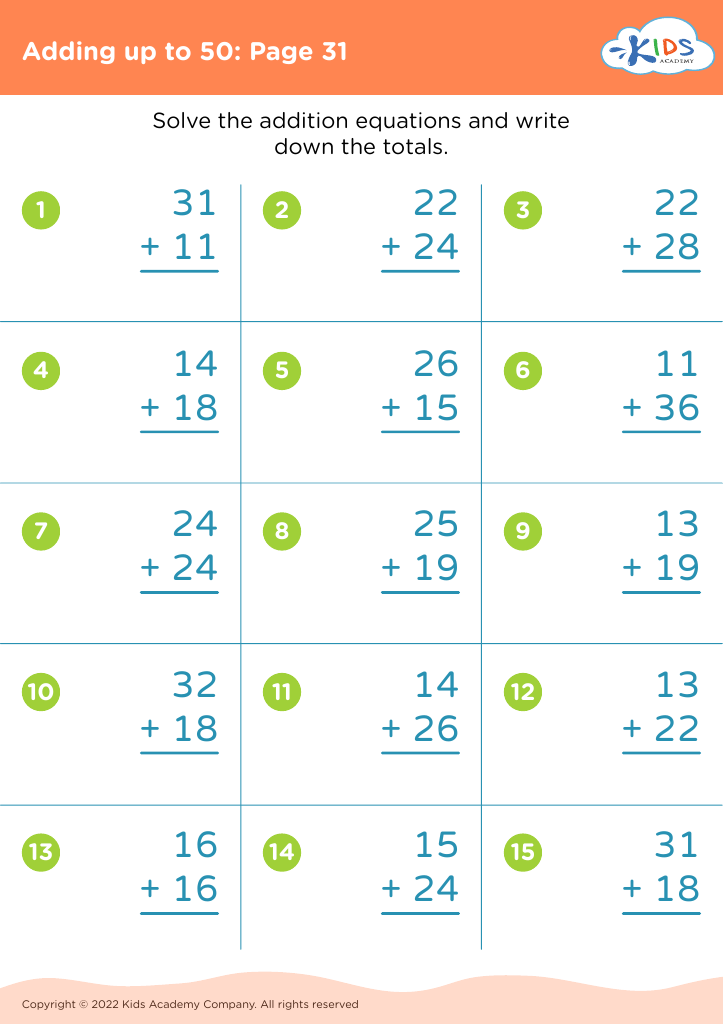
Adding up to 50: Page 31

Adding up to 50: Page 31

Adding up to 50: Page 31
Worksheet
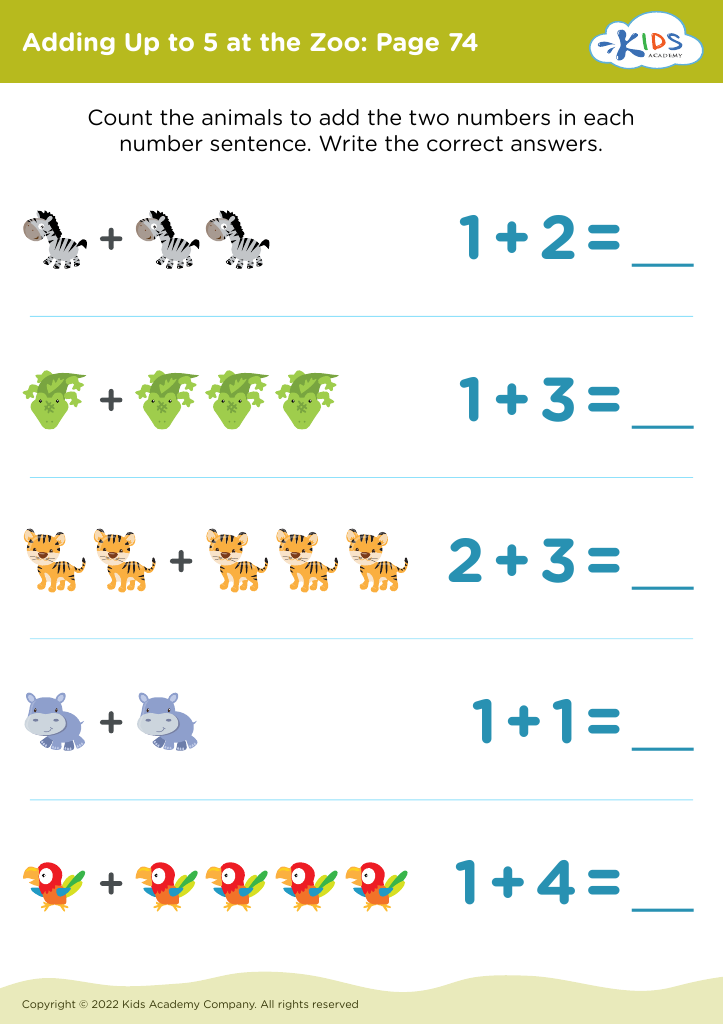
Adding Up to 5 at the Zoo: Page 74
Worksheet
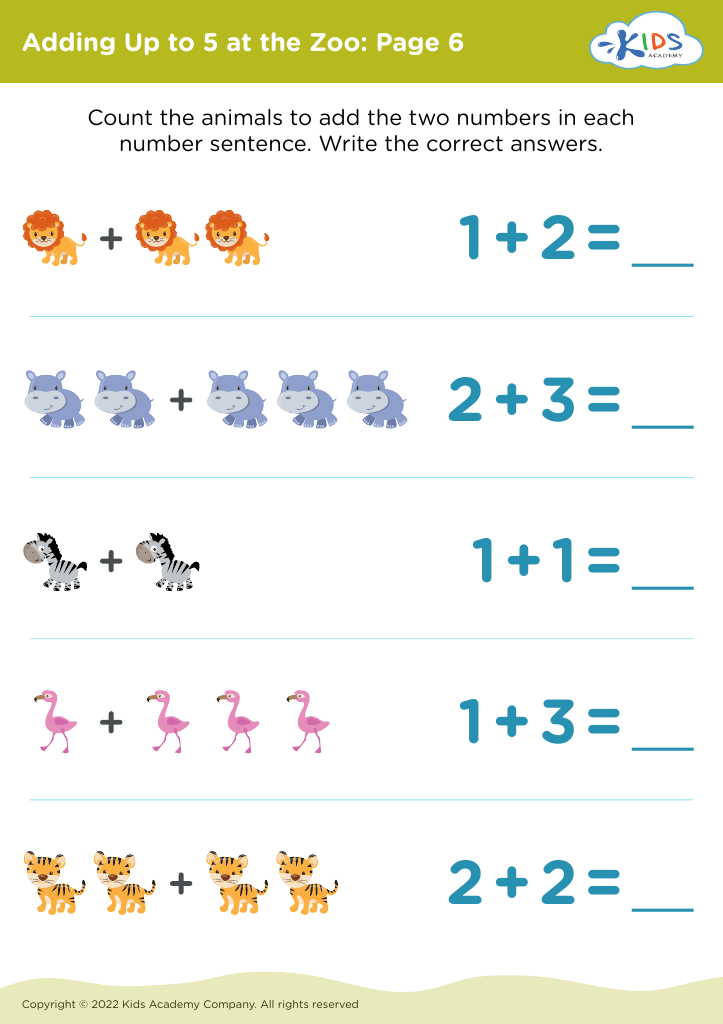
Adding Up to 5 at the Zoo: Page 6

Adding Up to 5 at the Zoo: Page 6

Adding Up to 5 at the Zoo: Page 6
Worksheet
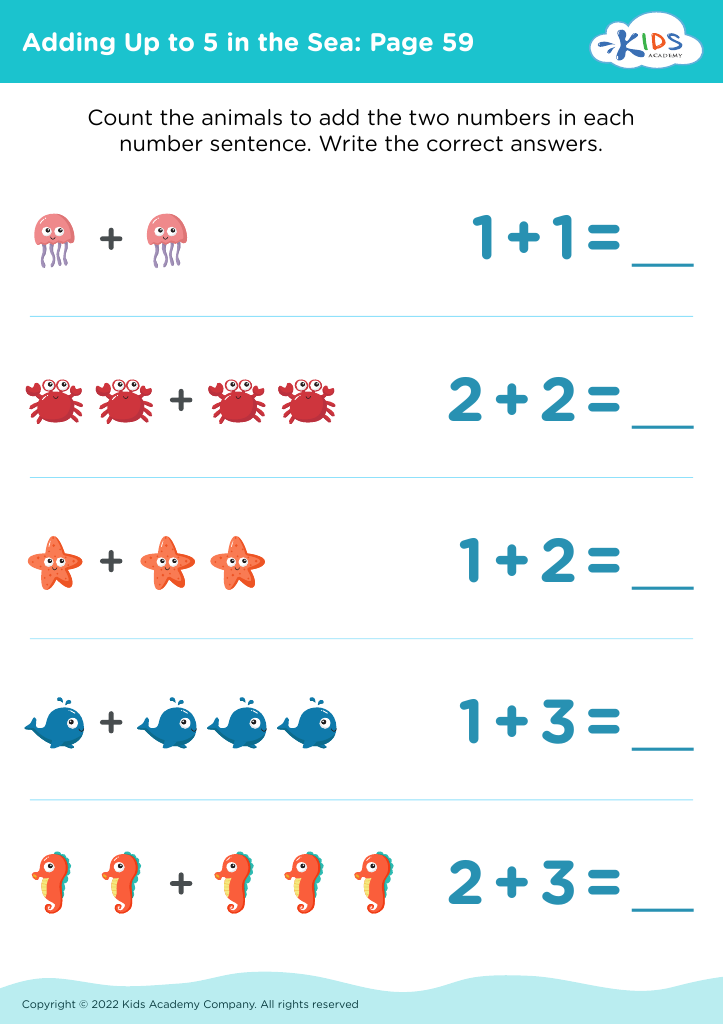
Adding Up to 5 in the Sea: Page 59
Worksheet
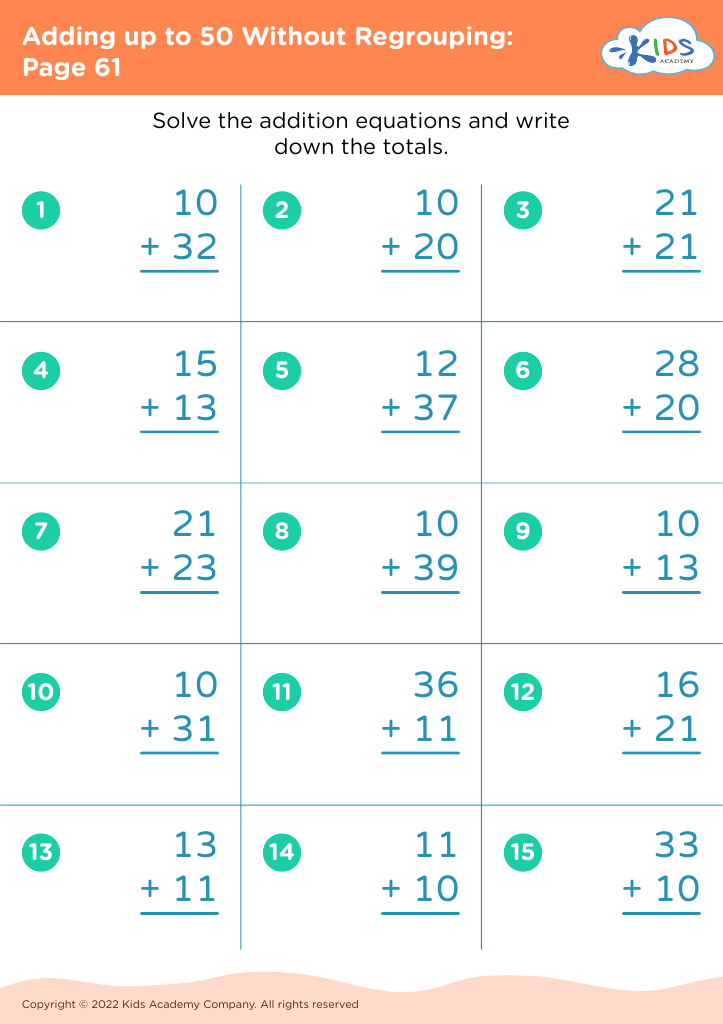
Adding up to 50 Without Regrouping: Page 61
Worksheet
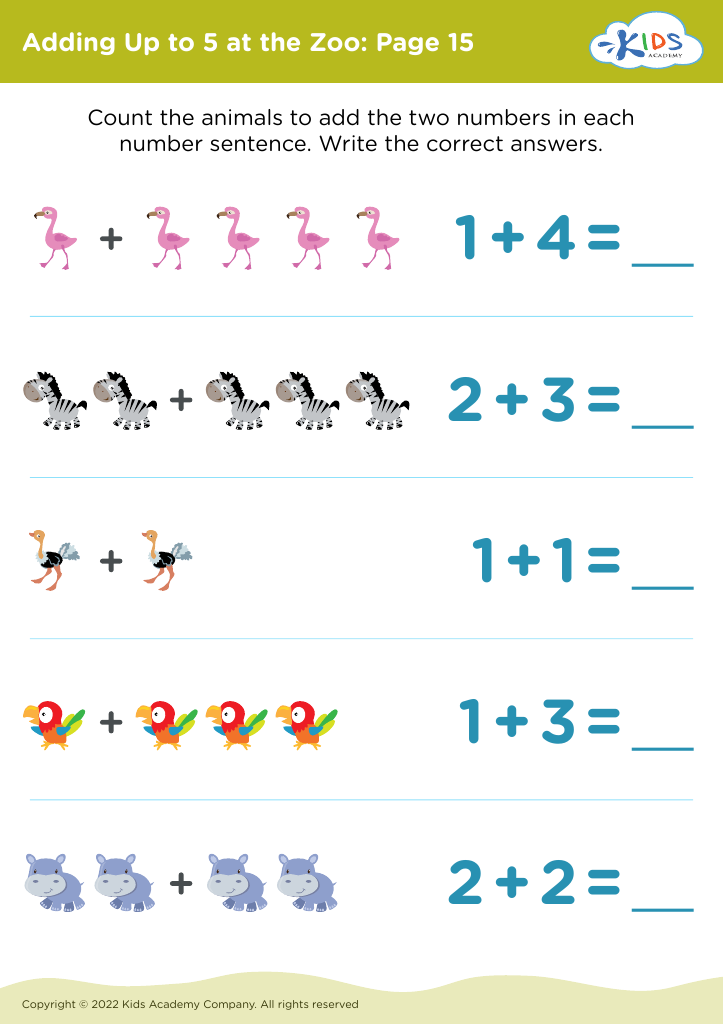
Adding Up to 5 at the Zoo: Page 15
Worksheet
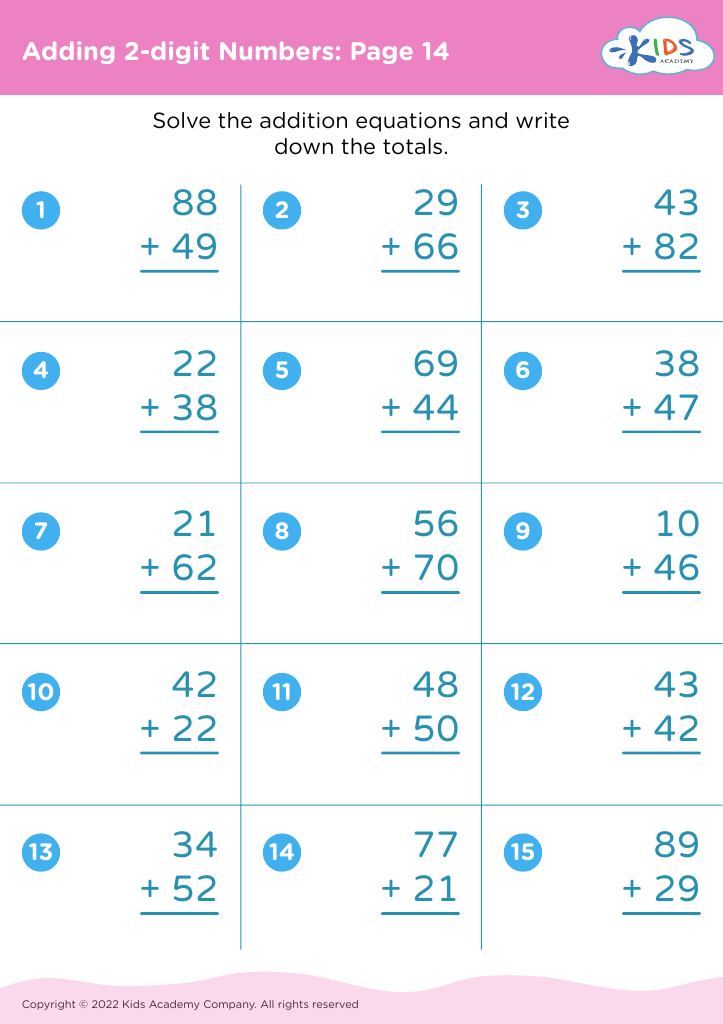
Adding 2-digit Numbers: Page 14

Adding 2-digit Numbers: Page 14

Adding 2-digit Numbers: Page 14
Worksheet
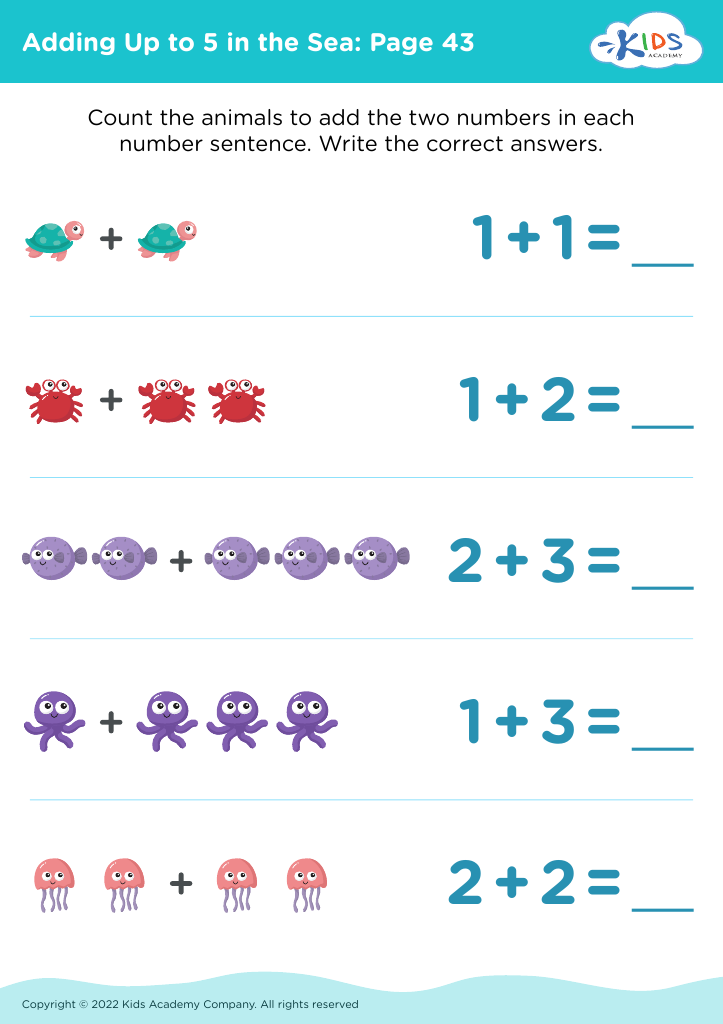
Adding Up to 5 in the Sea: Page 43
Worksheet
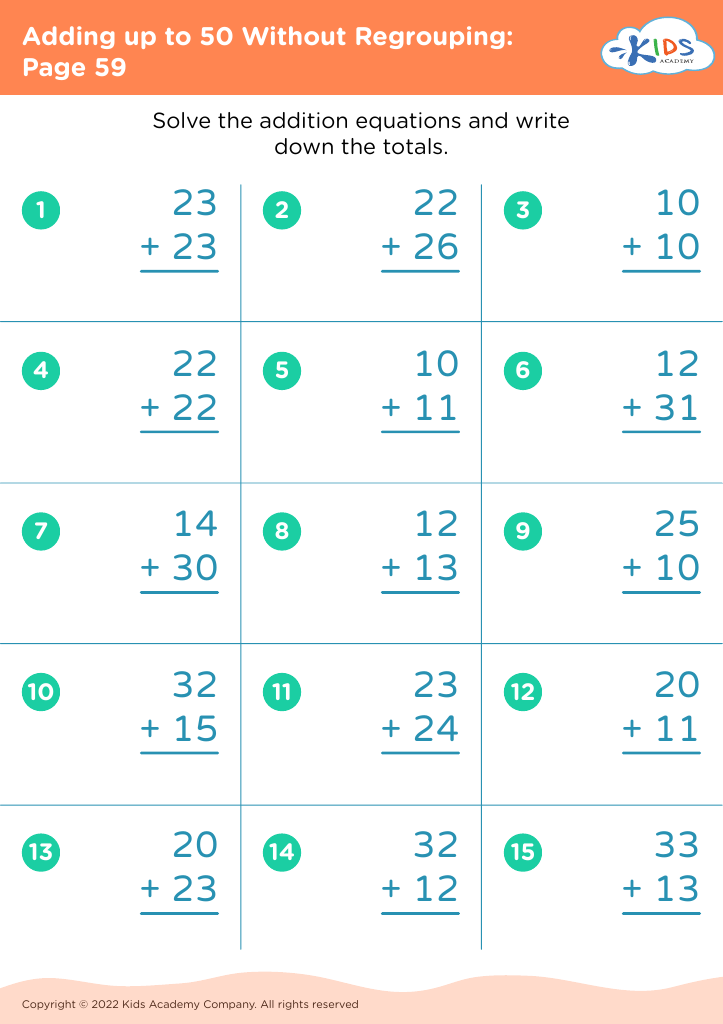
Adding up to 50 Without Regrouping: Page 59
Worksheet
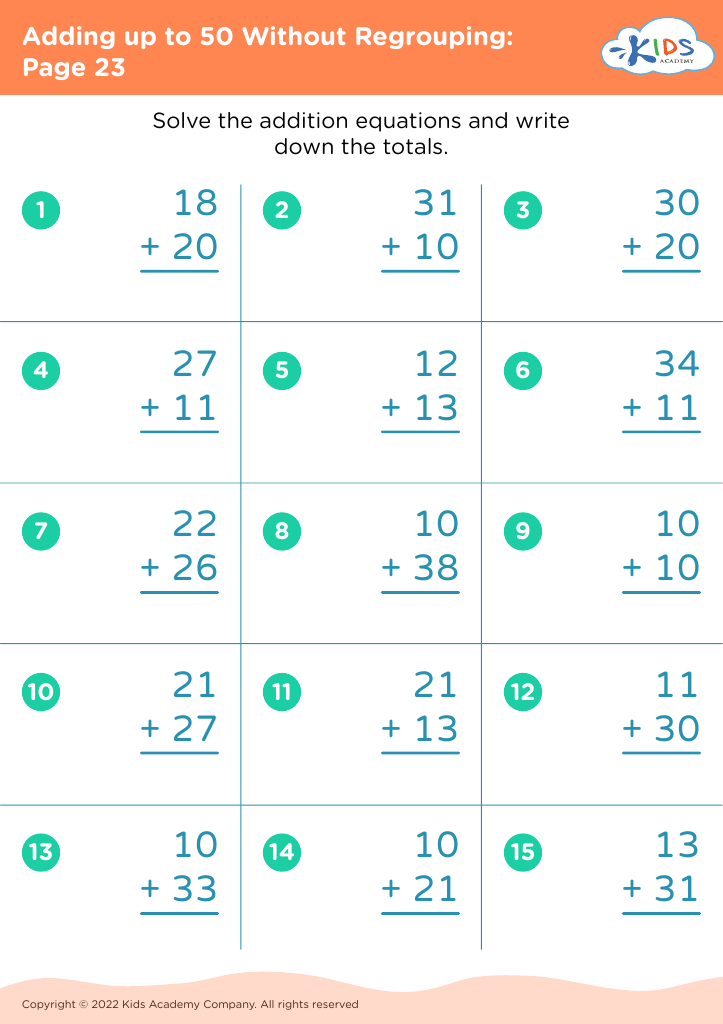
Adding up to 50 Without Regrouping: Page 23
Worksheet
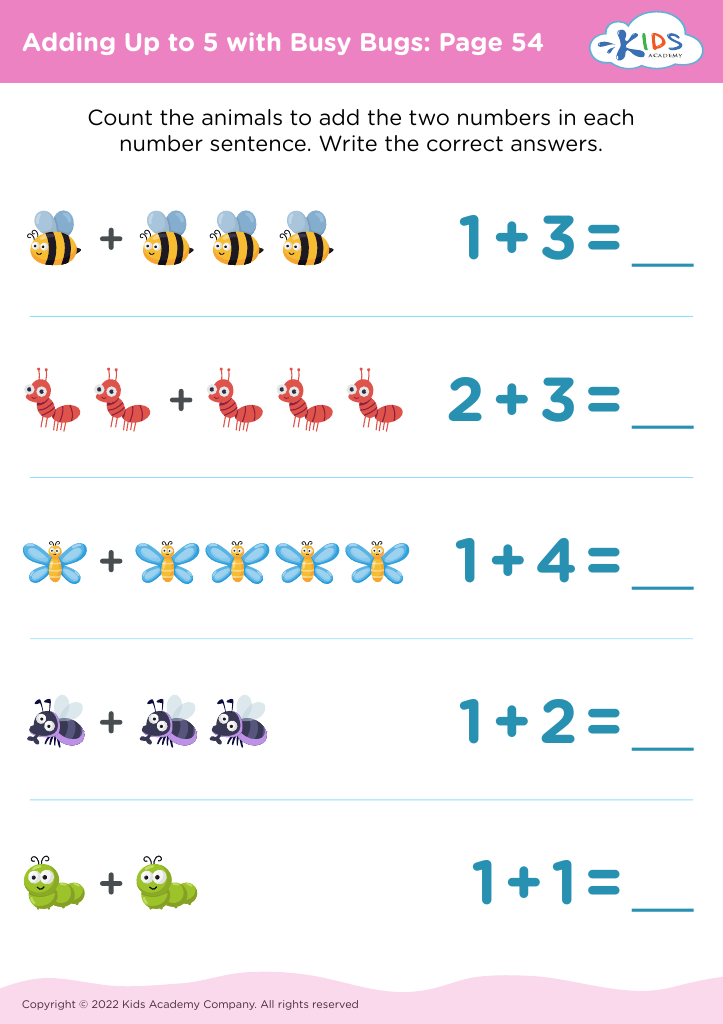
Adding Up to 5 with Busy Bugs: Page 54
Worksheet
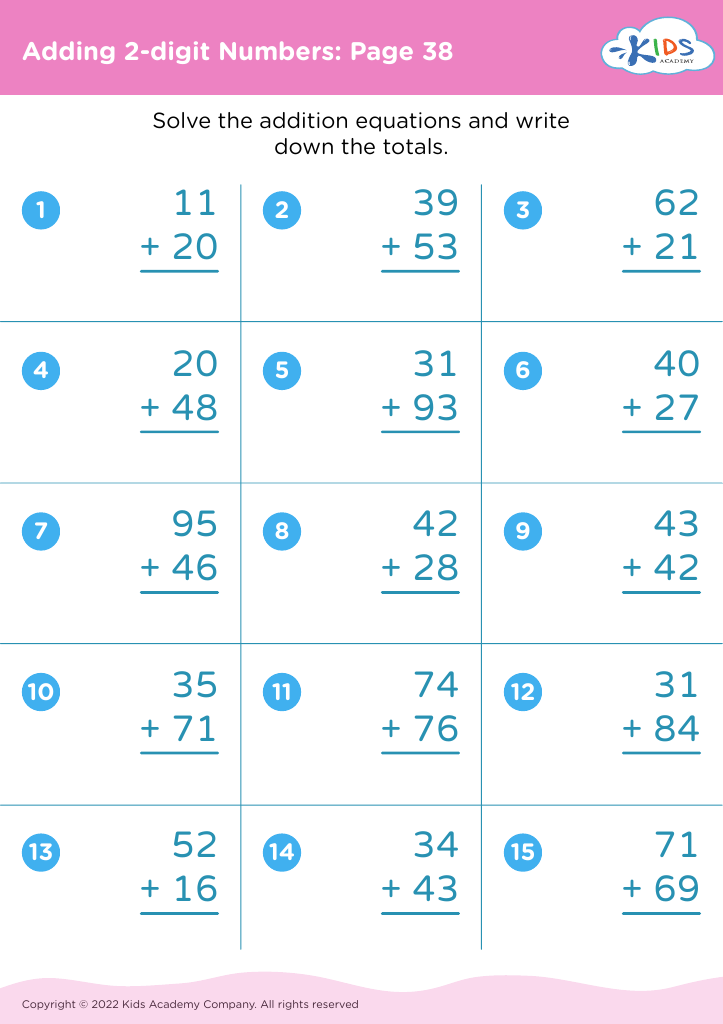
Adding 2-digit Numbers: Page 38

Adding 2-digit Numbers: Page 38

Adding 2-digit Numbers: Page 38
Worksheet
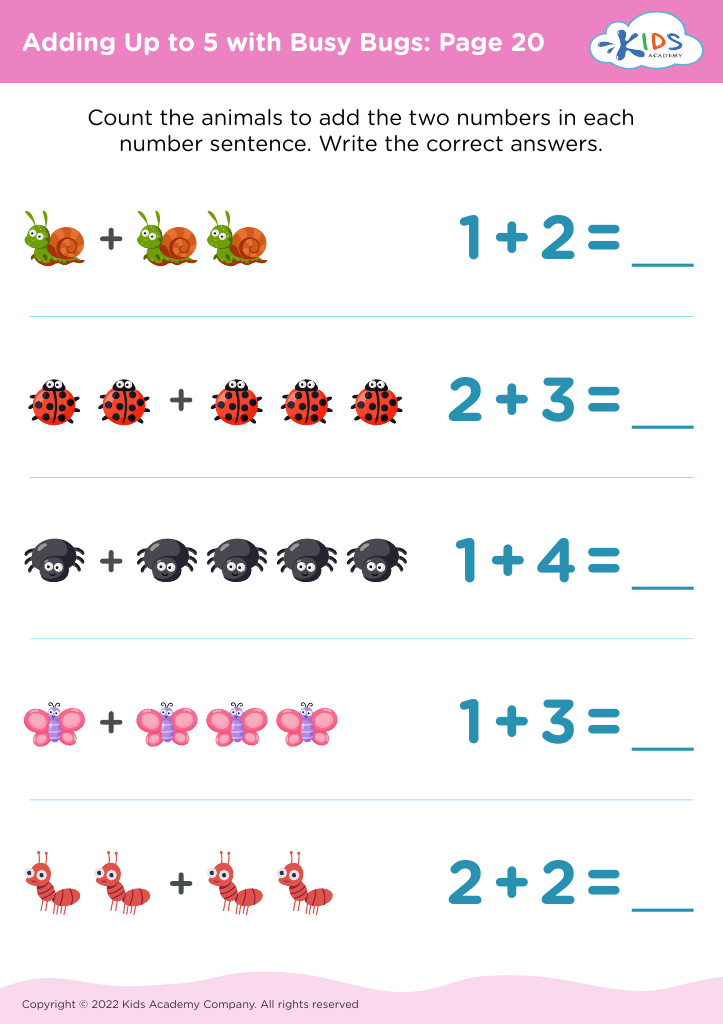
Adding Up to 5 with Busy Bugs: Page 20
Worksheet
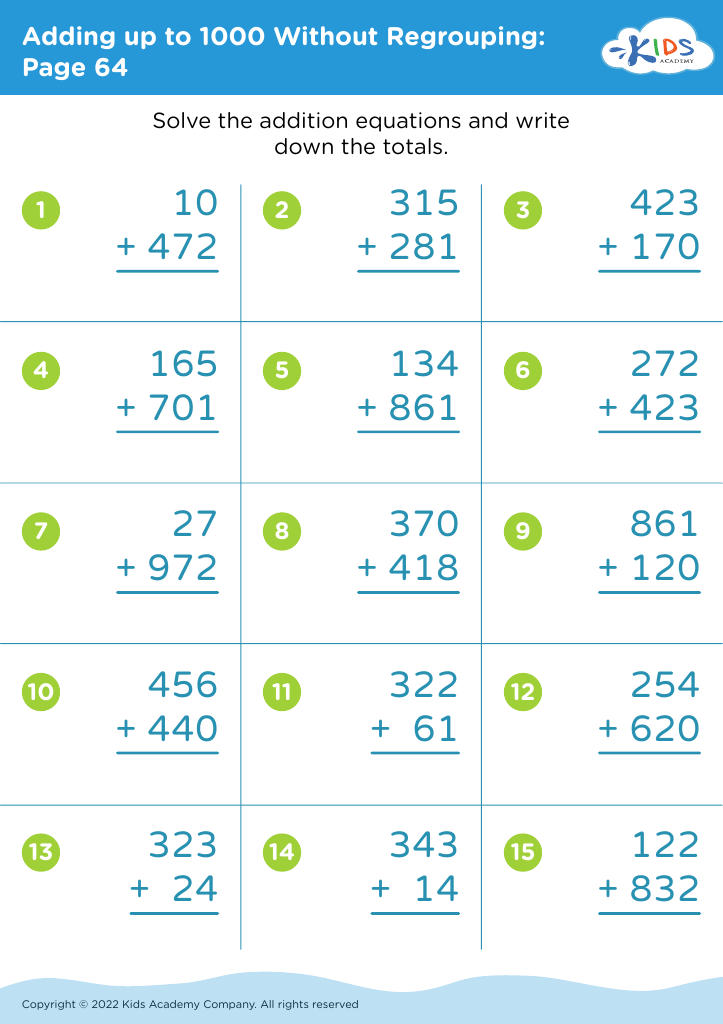
Adding up to 1000 Without Regrouping: Page 64
Worksheet
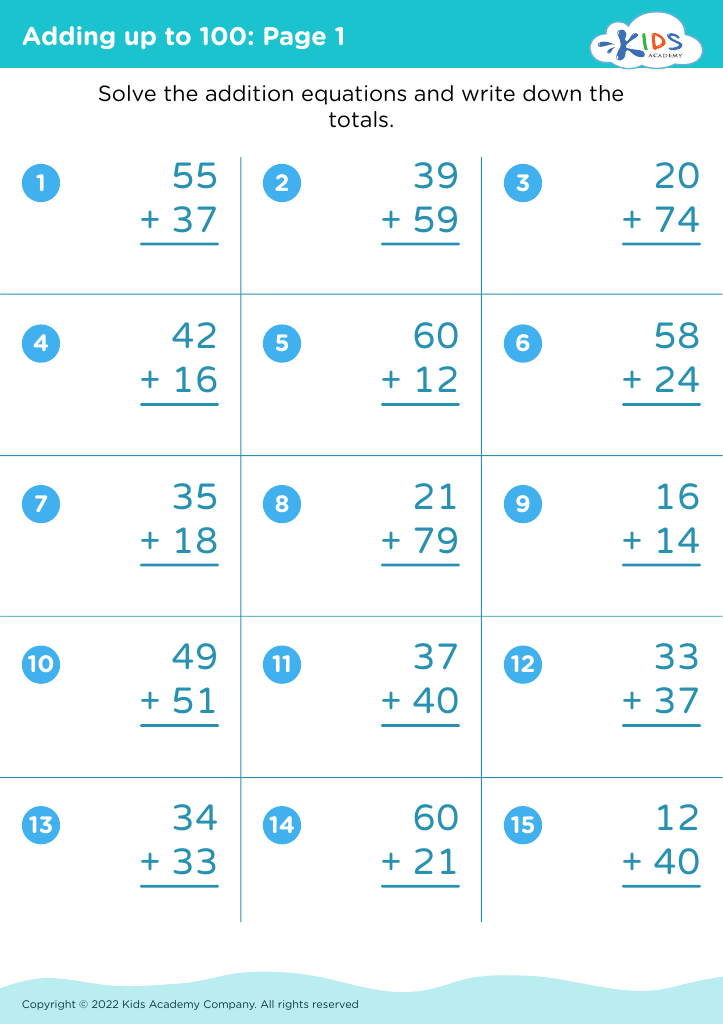
Adding up to 100: Page 1

Adding up to 100: Page 1

Adding up to 100: Page 1
Worksheet
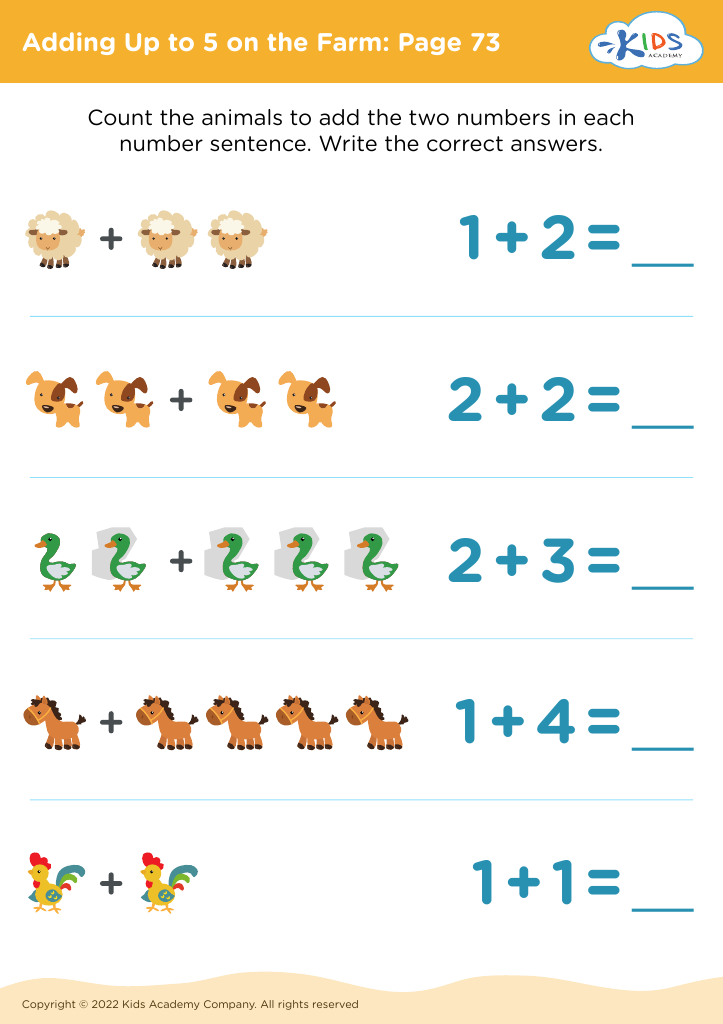
Adding Up to 5 on the Farm: Page 73
Worksheet


Basic addition practice is crucial for children aged 4-9 as it lays a solid foundation for their mathematical skills and overall cognitive development. At this young age, children are like sponges, eagerly absorbing new concepts. Mastering basic addition helps enhance their problem-solving abilities and critical thinking. It fosters a sense of achievement and boosts their confidence, encouraging a positive attitude toward math.

Moreover, addition is often the building block for more complex mathematical operations, such as subtraction, multiplication, and division. Early practice can significantly ease the journey to understanding these advanced concepts later on. Furthermore, engaging parents and teachers in fun, interactive addition exercises can strengthen the relationship between home and school learning.

Incorporating basic addition in everyday contexts, such as cooking or shopping, helps children see the practical applications of math, making learning more relevant and enjoyable. This hands-on approach not only solidifies skills but also cultivates a lifelong love of learning. Ultimately, by prioritizing basic addition practice, parents and teachers are investing in children’s future academic success and equipping them with essential life skills.