
Basic Mathematics Addition Worksheets for Ages 4-9
3 filtered results
Difficulty Level
Grade
Age
-
From - To
Subject
Activity
Standards
Discover our engaging collection of Basic Mathematics Addition Worksheets designed for children aged 4-9. Our expertly crafted worksheets help young learners build a strong foundation in addition, enhancing their problem-solving skills and mathematical confidence. Each worksheet is packed with visually stimulating and age-appropriate exercises, guiding children step-by-step through the basics of addition. Perfect for classroom use or at-home practice, these resources make learning addition fun and effective. Support your child's educational journey with our carefully designed worksheets and watch them thrive in mathematics. Explore today to inspire a lifelong love of learning!
Favorites
With answer key
Interactive
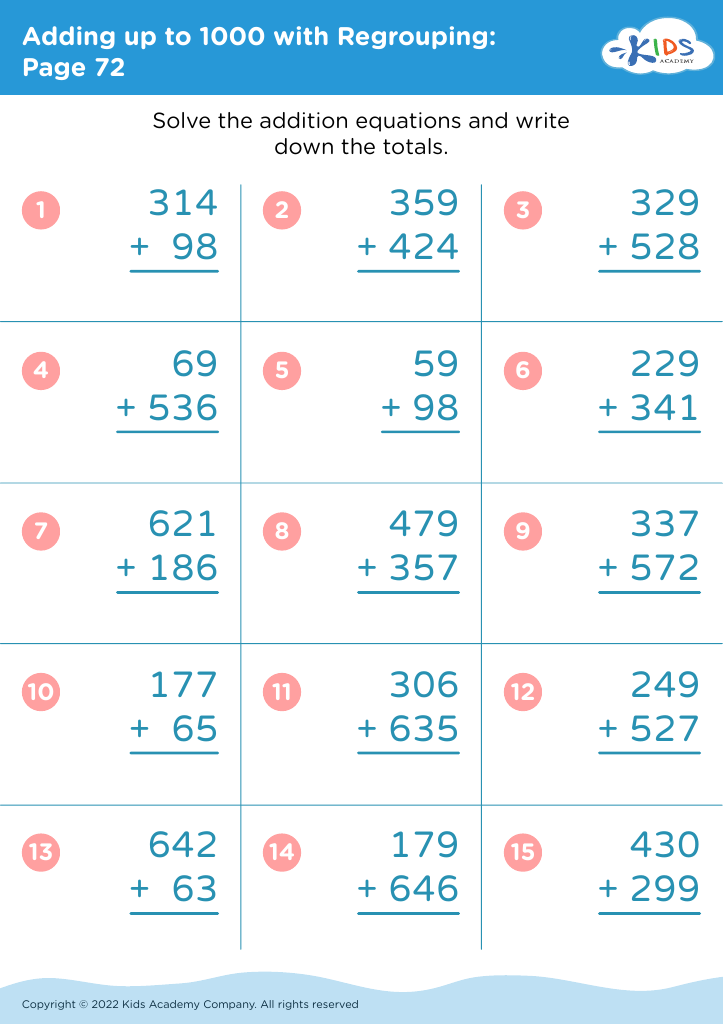
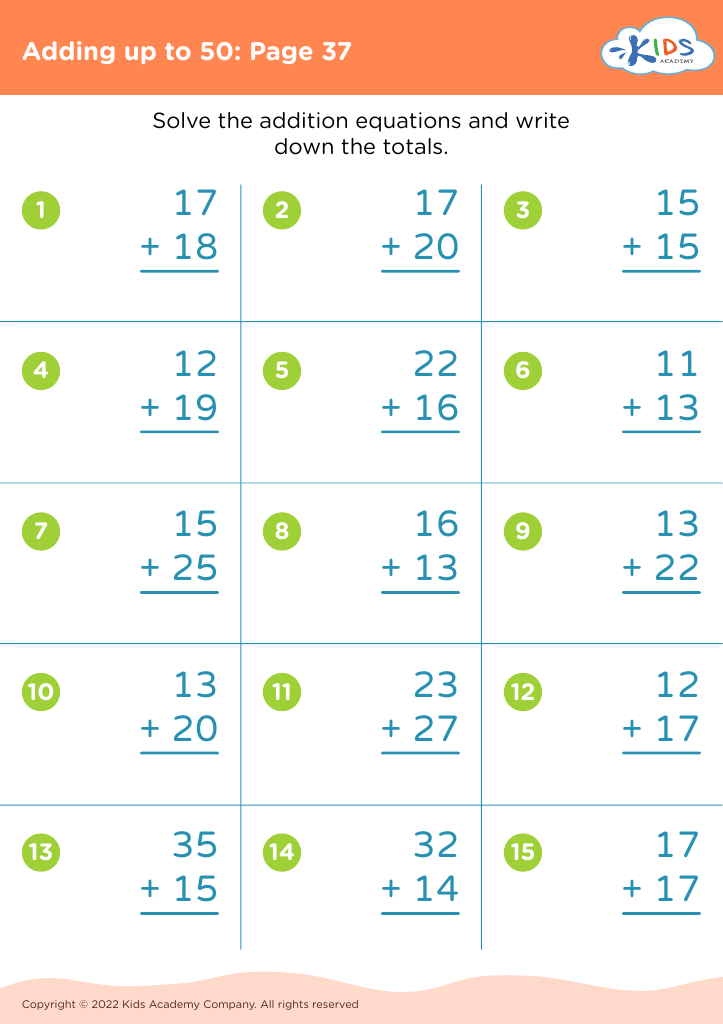
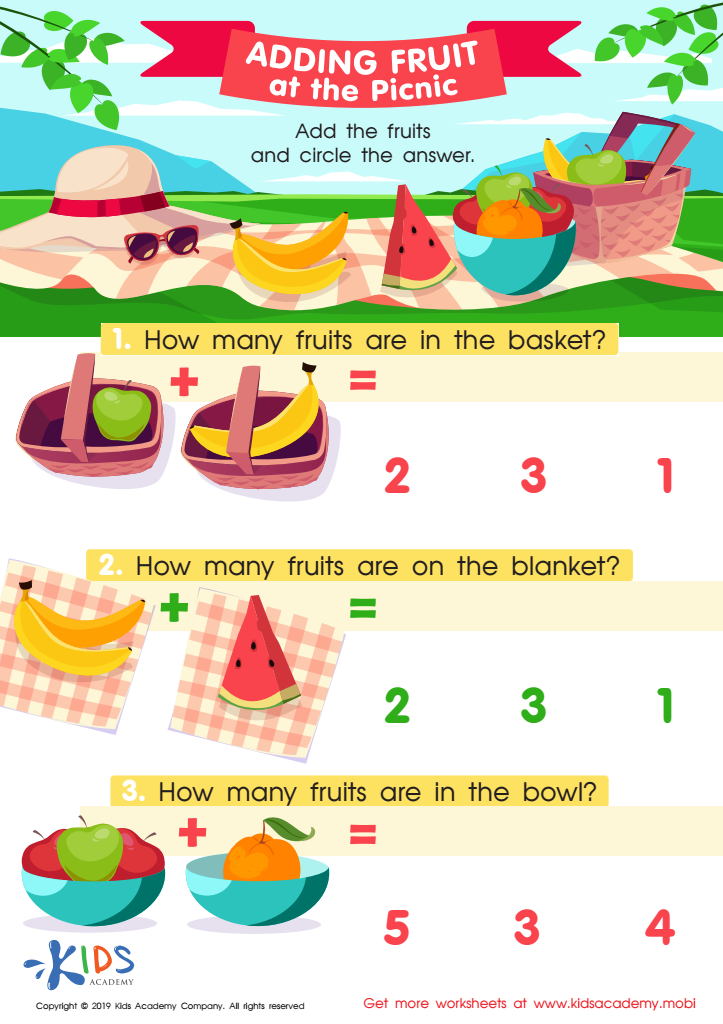
Adding Fruit at the Picnic Worksheet
Picnics are a great way for the family to enjoy a fun day in the sun! Get your kids involved by having them help load the picnic basket and do this worksheet to practice their math skills while they get ready. Identify the fruits in the picture, add them up, and circle the correct answer.
 Assign to My Students
Adding Fruit at the Picnic Worksheet
Worksheet
Join Kids Academy for Free
Who is primarily going to use this learning content?








Basic Mathematics, especially addition, is crucial for children aged 4-9 as it lays the foundation for all future math skills. At this age, children rapidly develop cognitive abilities that form the basis of critical thinking and problem-solving. Understanding addition helps them make sense of the world around them, from figuring out how many toys they have to splitting treats among friends.
First, mastering addition enhances children's numeracy skills, making them comfortable with numbers and arithmetic operations. This confidence boosts their enthusiasm and interest in learning more complex math concepts as they grow.
Moreover, basic addition skills foster logical thinking and the ability to recognize patterns. For example, when children learn that 2 + 3 = 5, they begin to see the consistency and reliability of math. This understanding is critical for higher-level mathematics, such as multiplication or algebra, which rely on these fundamental principles.
In addition, basic arithmetic promotes practical life skills. It helps children manage tasks like counting money, telling time, and measuring ingredients. These capabilities are essential for independent living and responsible decision-making.
Overall, a strong grasp of basic math addition not only supports academic success but also equips children with essential skills they will use throughout their lives. Thus, parents and teachers have every reason to prioritize teaching addition during these formative years.








