Categorization skills Addition Worksheets for Ages 4-9
3 filtered results
-
From - To
Enhance your child's learning experience with our Categorization Skills Addition Worksheets designed specifically for ages 4-9. These engaging and interactive activities help young learners develop essential categorization skills while practicing addition. Our worksheets combine fun, colorful visuals with challenging exercises, making math enjoyable and accessible. By sorting and categorizing objects, children strengthen their problem-solving abilities and gain confidence in their math skills. Perfect for homeschool or classroom environments, these worksheets cater to various learning styles and ensure kids are actively involved in their education. Explore our collection today and watch as your child's addition and categorization skills flourish!
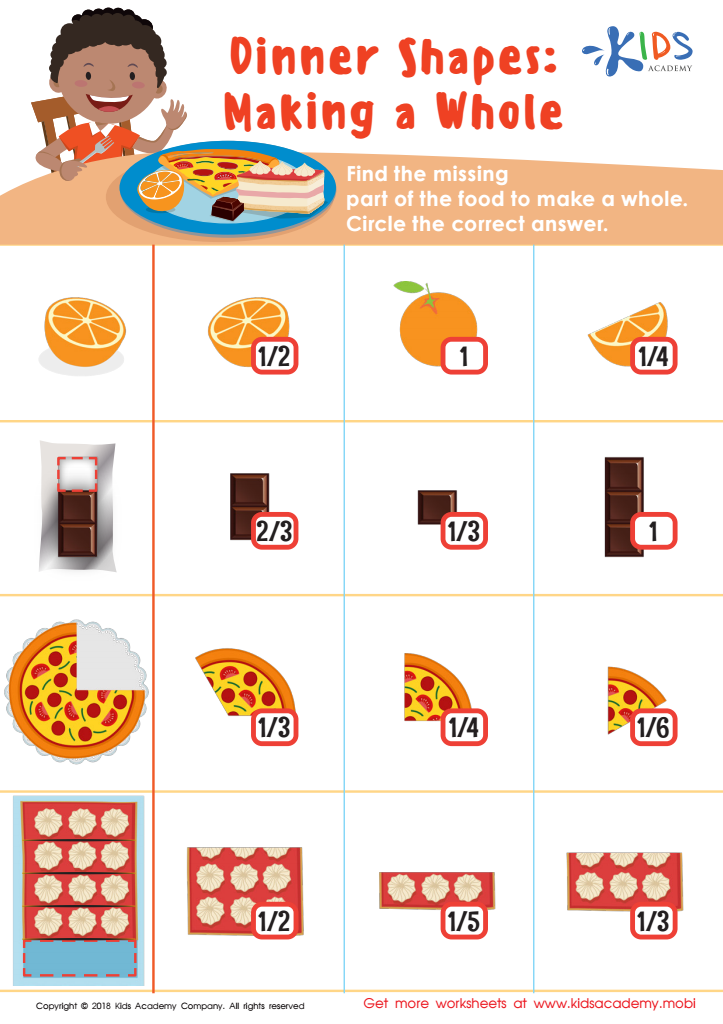
Dinner Shapes: Making a Whole Worksheet
 Assign to My Students
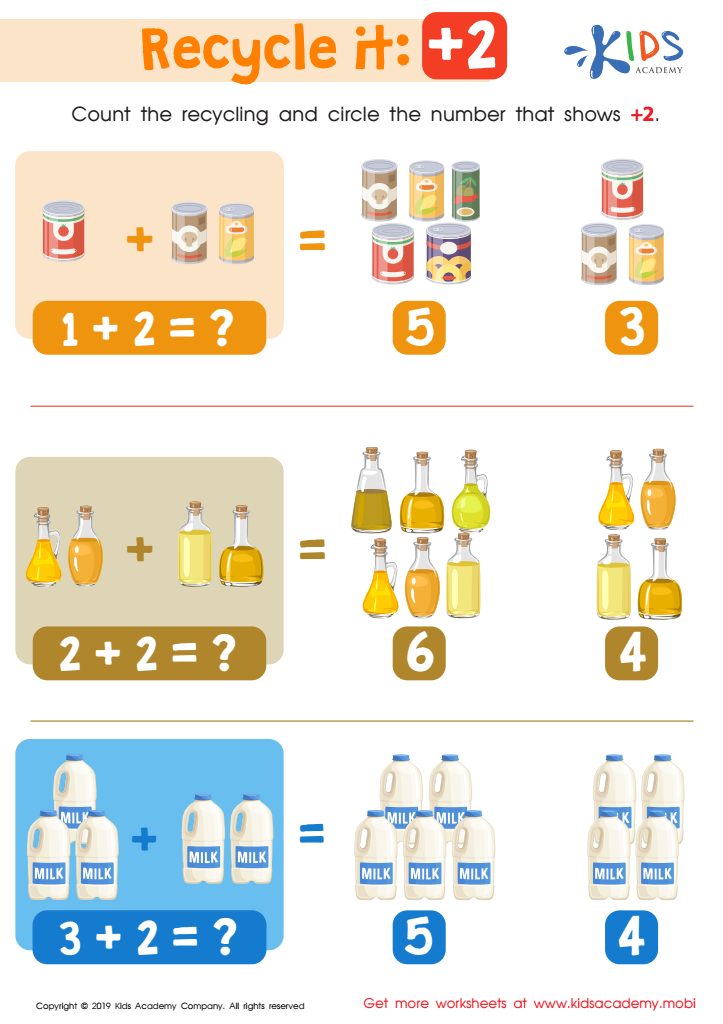
Recycle It: +2 Worksheet








Categorization skills, particularly in the context of addition, are essential for children aged 4-9 as they lay the foundation for mathematical understanding and cognitive development. At this age, children are eagerly exploring patterns, relationships, and quantities in their environment. Teaching them to categorize objects based on shared attributes enhances their problem-solving abilities and critical thinking skills.
When children learn to categorize, they better understand how to group numbers and objects, which is vital for mastering addition concepts such as combining sets or counting on. For instance, recognizing that three apples and two oranges can be grouped into one set for addition fosters an intuitive grasp of quantity comparison and combination.
Furthermore, strong categorization skills can reduce anxiety around math. By recognizing patterns or categories within addition problems, children can approach complex calculations with confidence and creativity.
Parents and teachers play a crucial role in this development by introducing engaging categorization activities, such as sorting items or using visual aids, fostering a playful yet educational environment. In cultivating these skills, they prepare children for more advanced mathematical concepts, thereby building a solid and lasting foundation for lifelong learning. Understanding categorization enriches not only math skills but also overall cognitive growth.








