Filters

83 filtered results

Clear all filters
Favorites
With answer key
Interactive

83 filtered results

Difficulty Level

Grade


Check out this FREE Trial Lesson on Addition for age 4-9!

L

Favorites
With answer key
Interactive
  • 4-9
  • Comparing Fractions
  • Addition
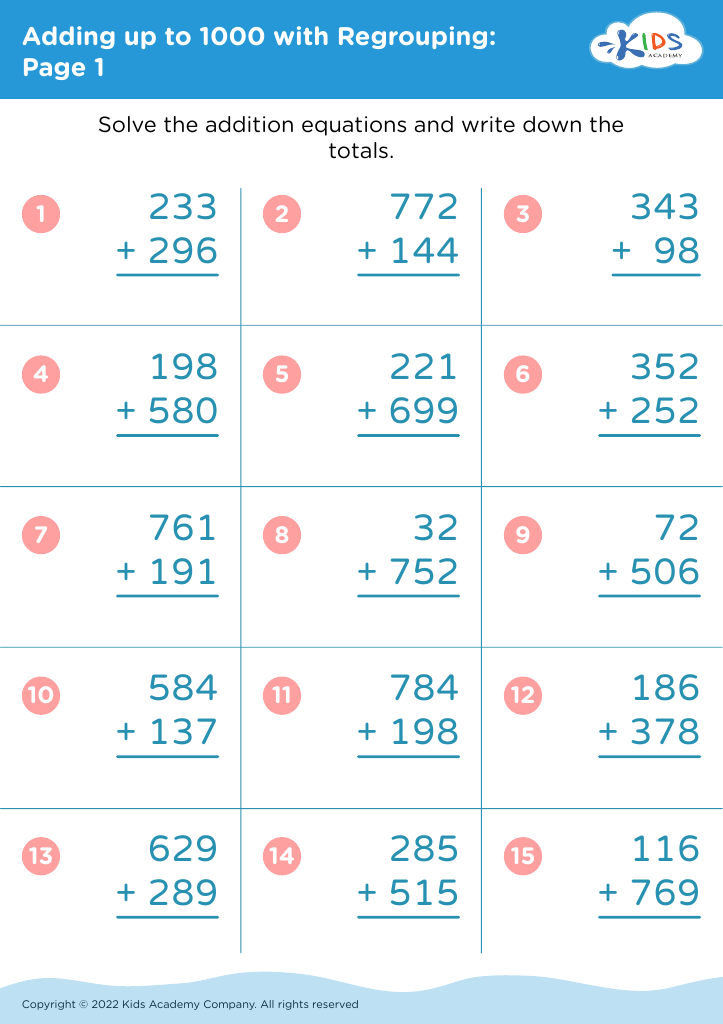
Adding up to 1000 with Regrouping: Page 1
Worksheet
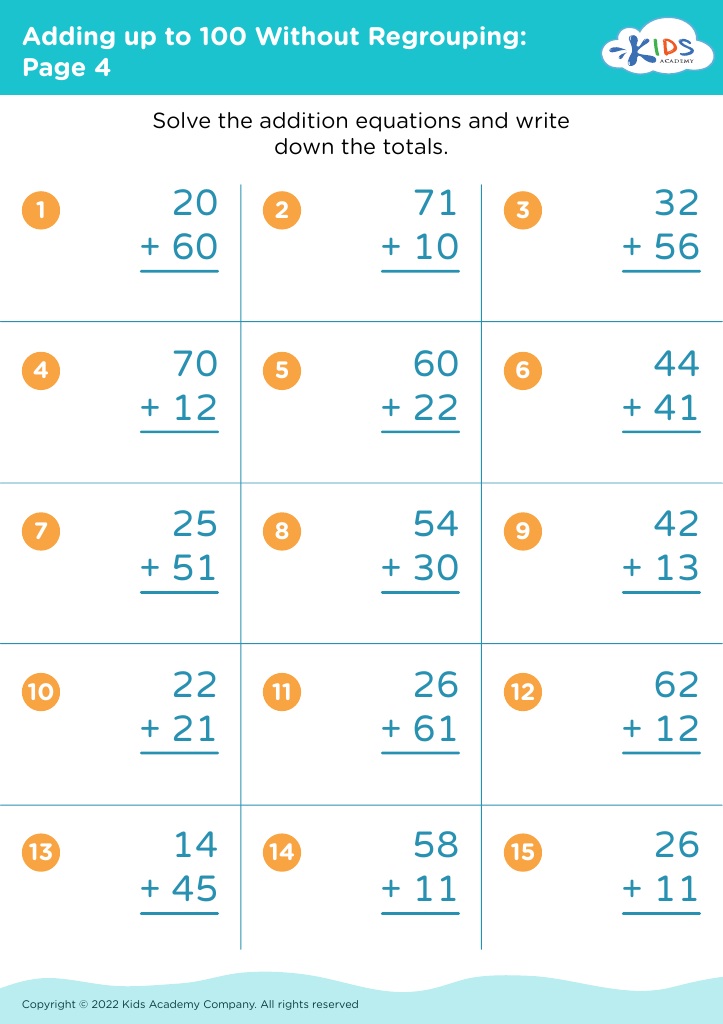
Adding up to 100 Without Regrouping: Page 4
Worksheet
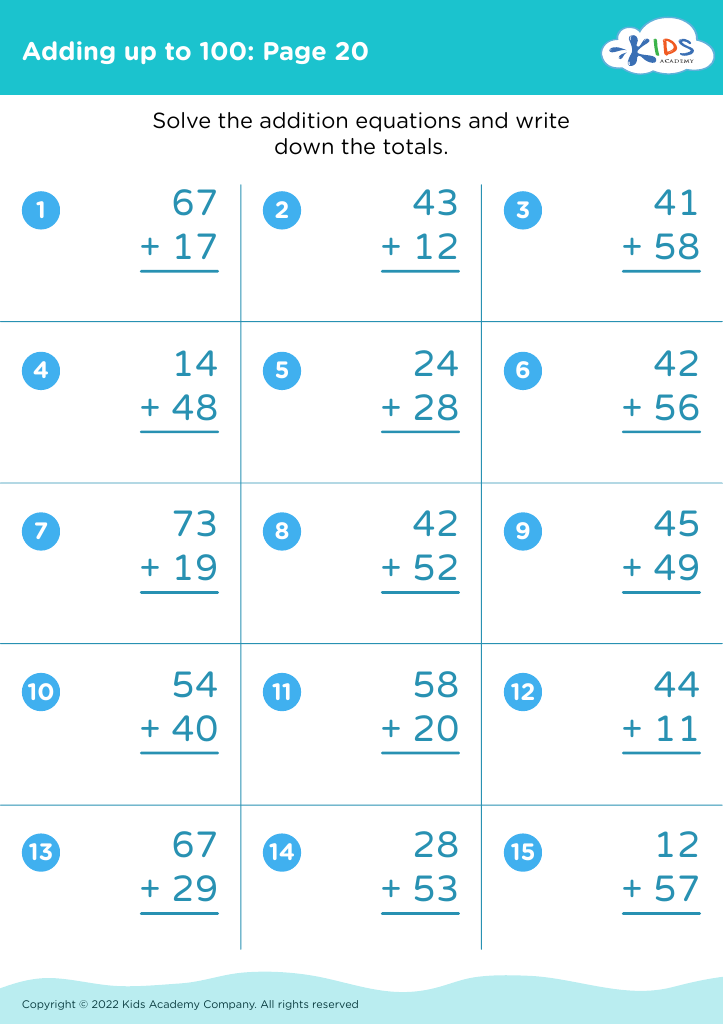
Adding up to 100: Page 20

Adding up to 100: Page 20

Adding up to 100: Page 20
Worksheet
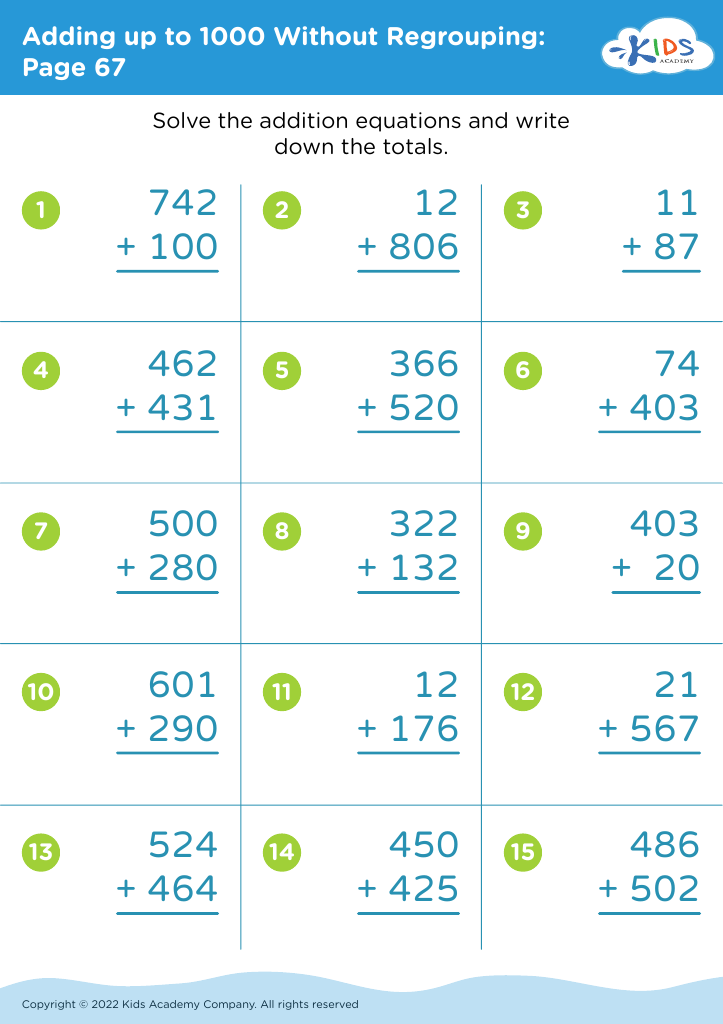
Adding up to 1000 Without Regrouping: Page 67
Worksheet
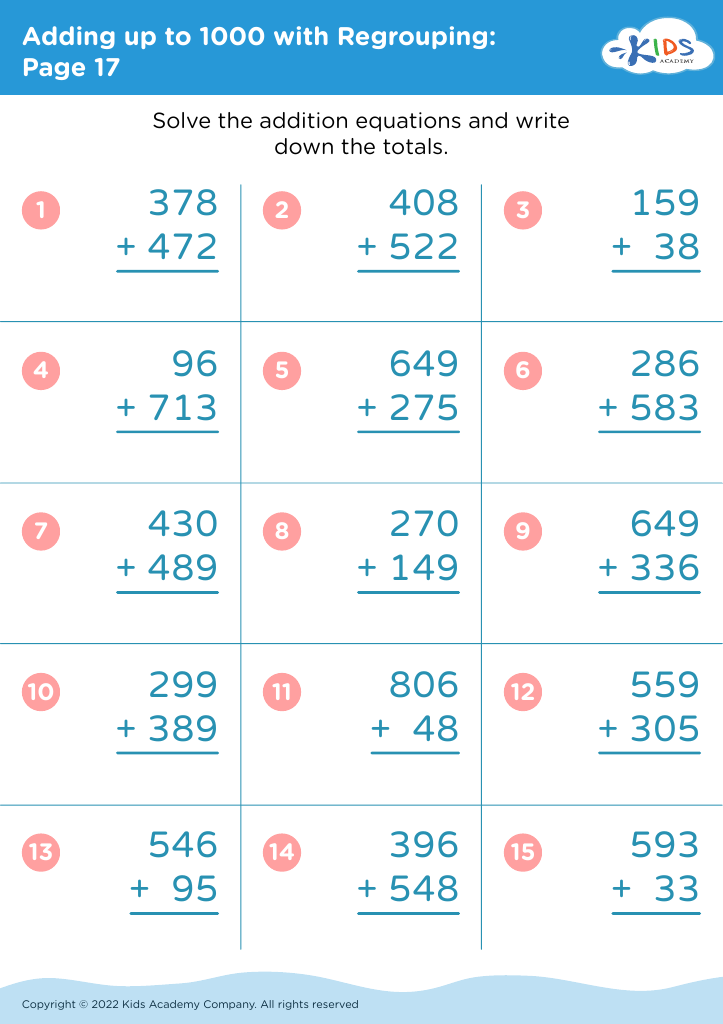
Adding up to 1000 with Regrouping: Page 17
Worksheet
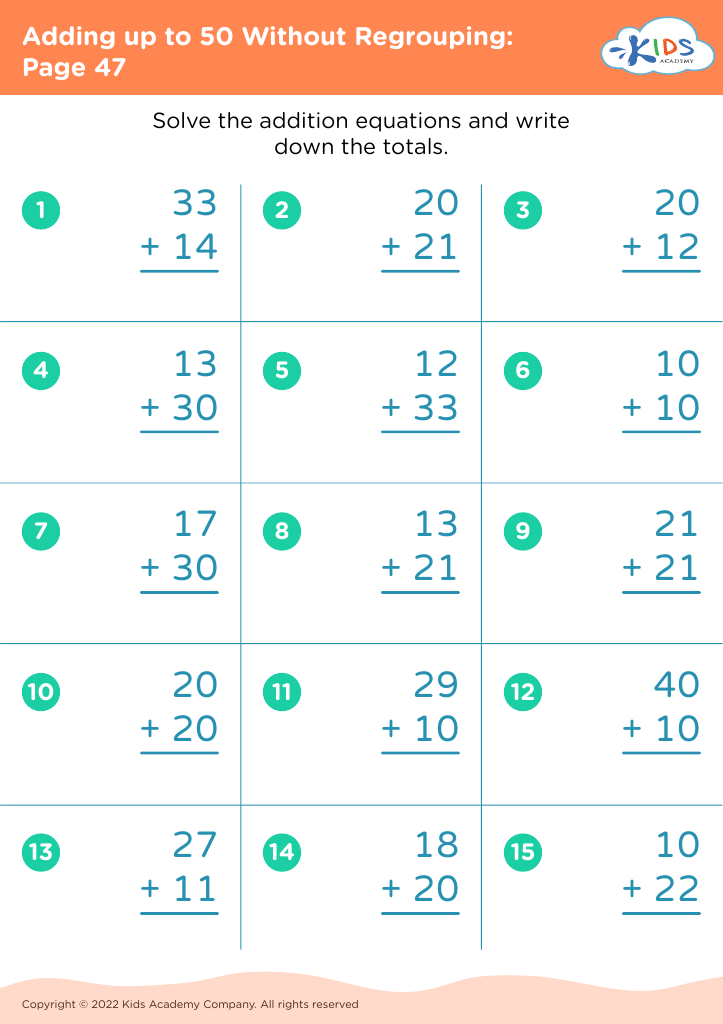
Adding up to 50 Without Regrouping: Page 47
Worksheet
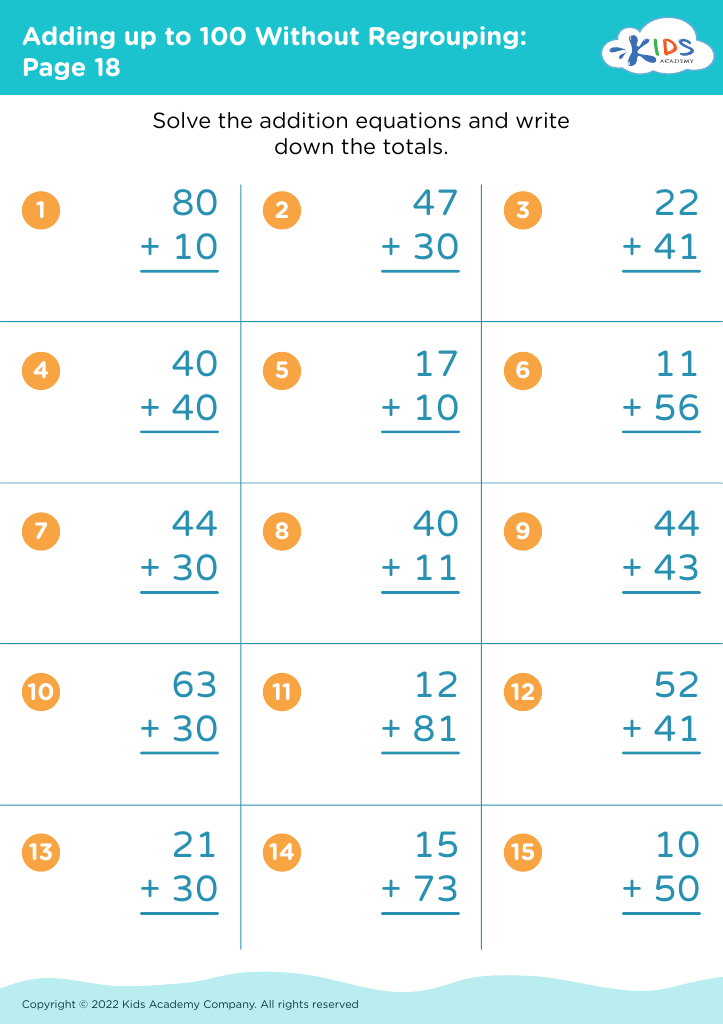
Adding up to 100 Without Regrouping: Page 18
Worksheet
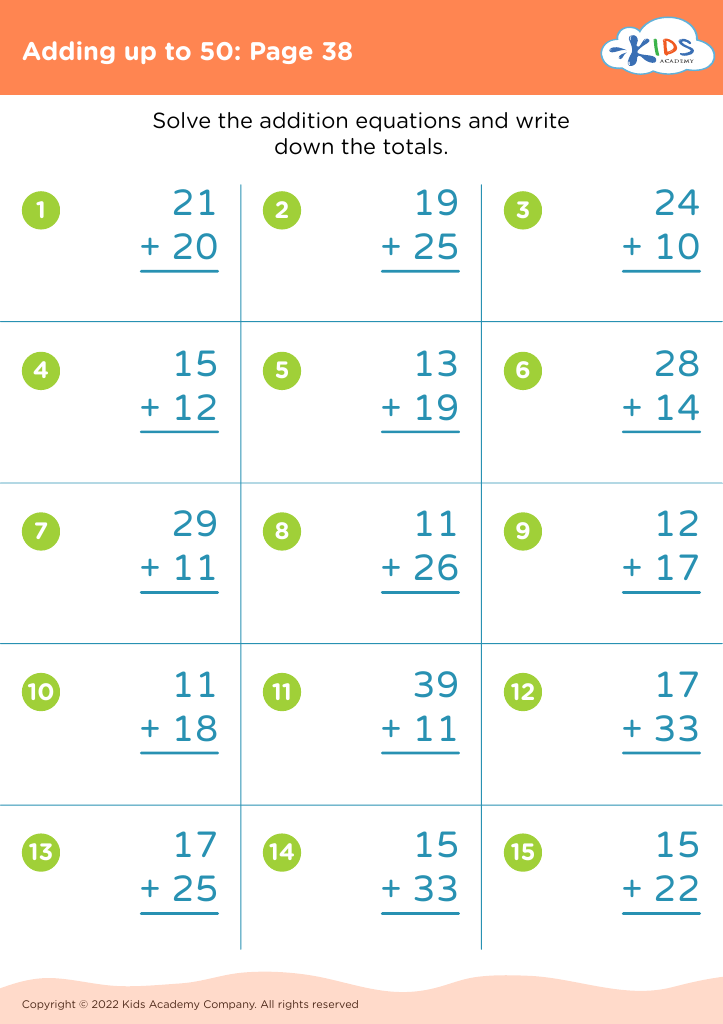
Adding up to 50: Page 38

Adding up to 50: Page 38

Adding up to 50: Page 38
Worksheet
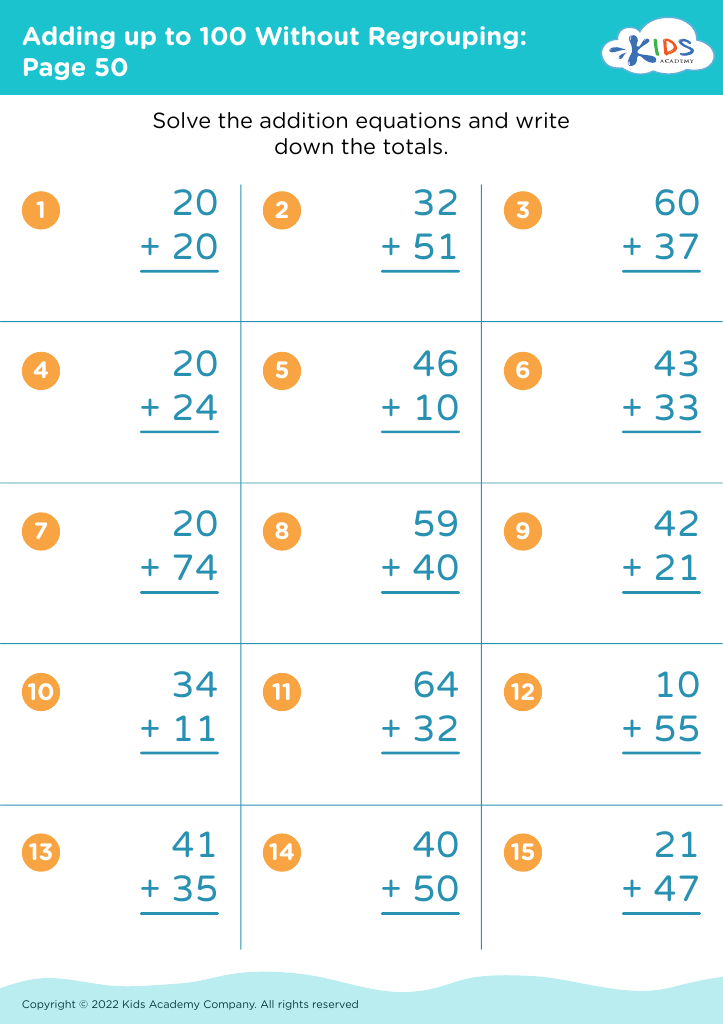
Adding up to 100 Without Regrouping: Page 50
Worksheet
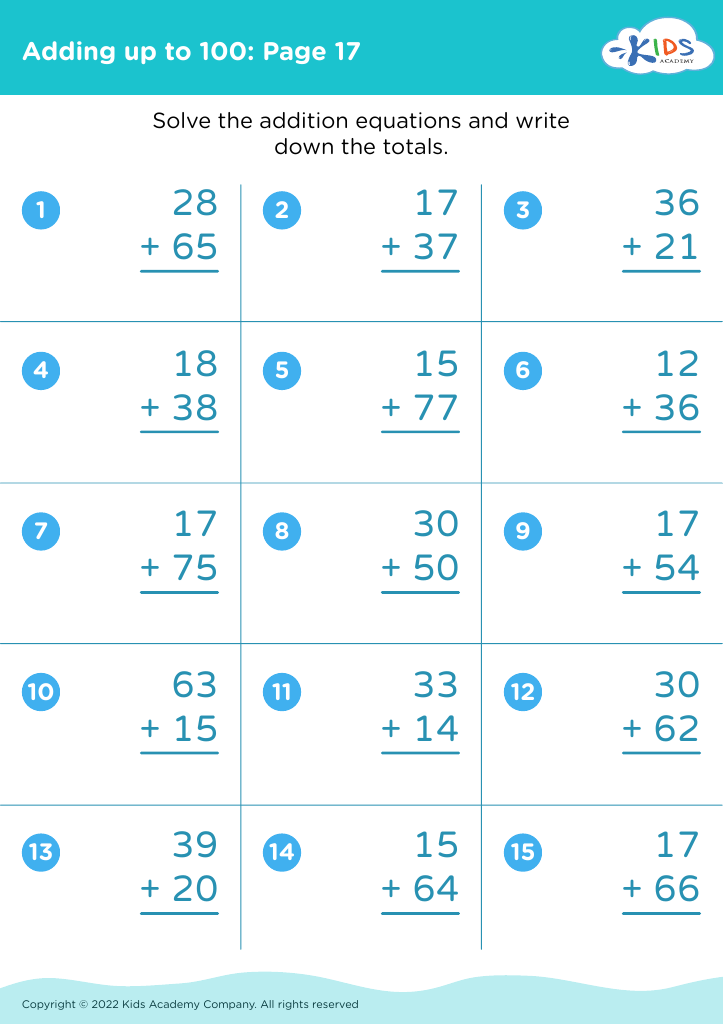
Adding up to 100: Page 17

Adding up to 100: Page 17

Adding up to 100: Page 17
Worksheet
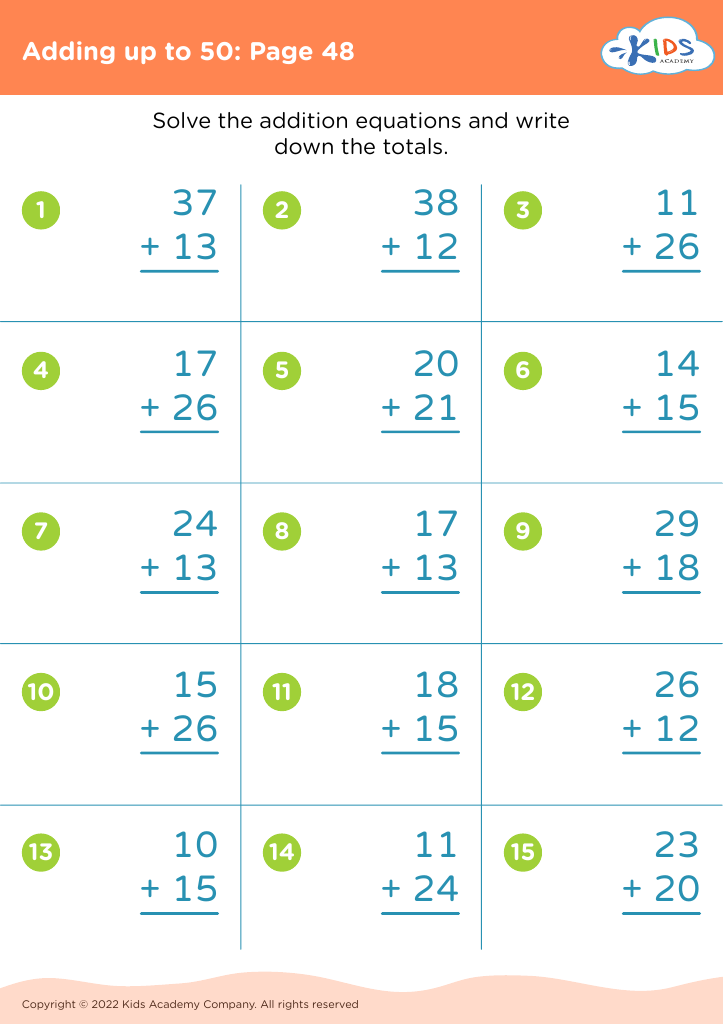
Adding up to 50: Page 48

Adding up to 50: Page 48

Adding up to 50: Page 48
Worksheet
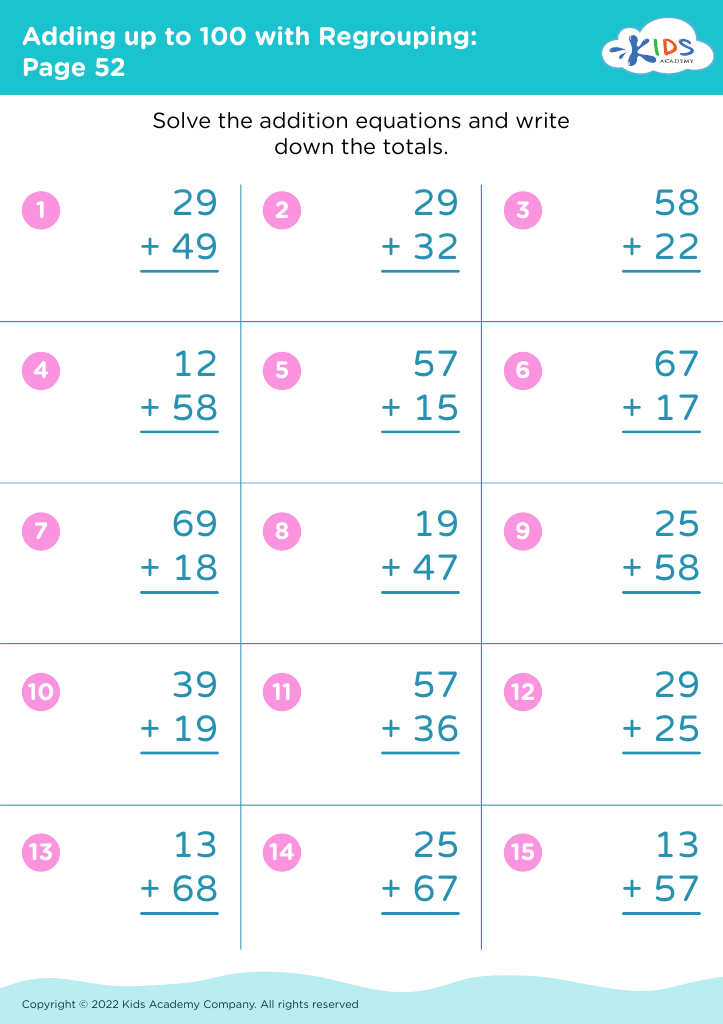
Adding up to 100 with Regrouping: Page 52
Worksheet
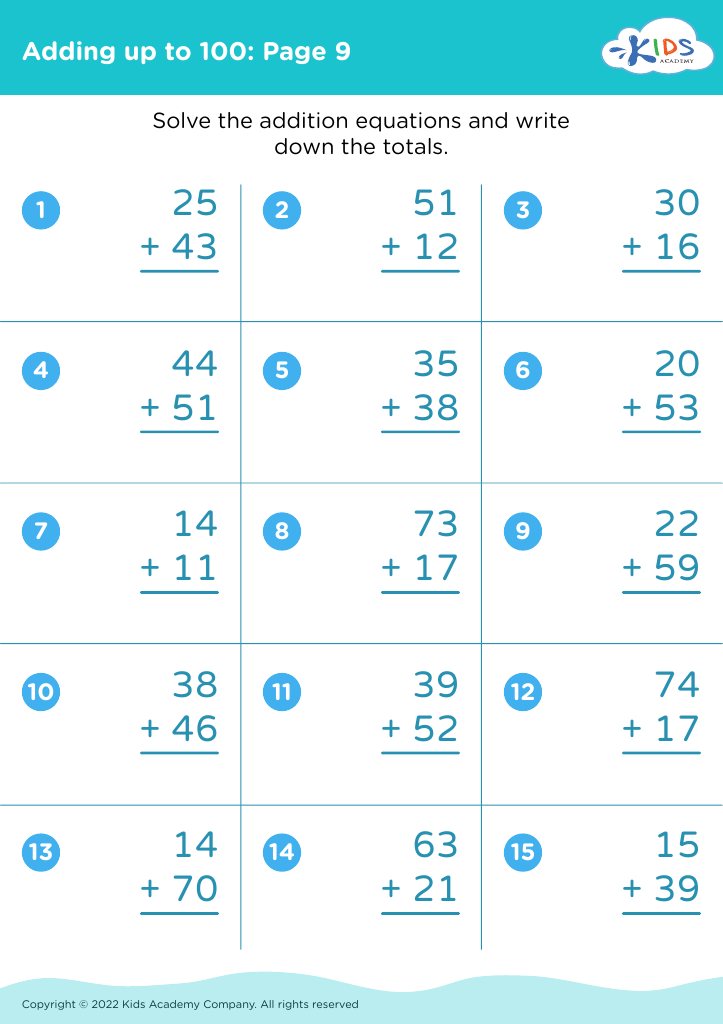
Adding up to 100: Page 9

Adding up to 100: Page 9

Adding up to 100: Page 9
Worksheet
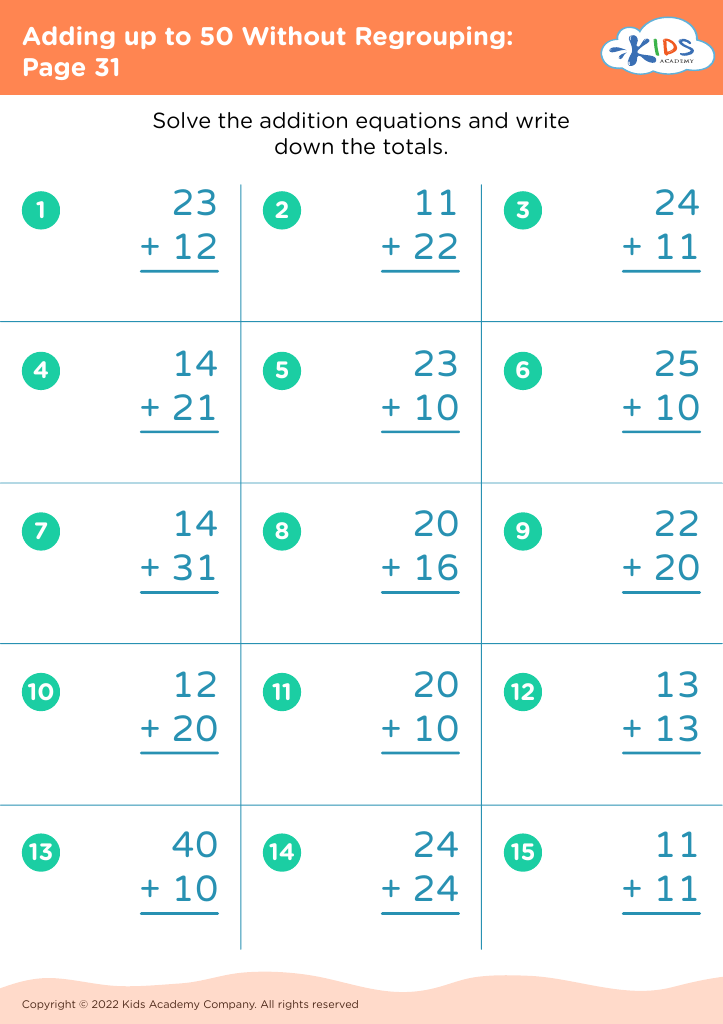
Adding up to 50 Without Regrouping: Page 31
Worksheet
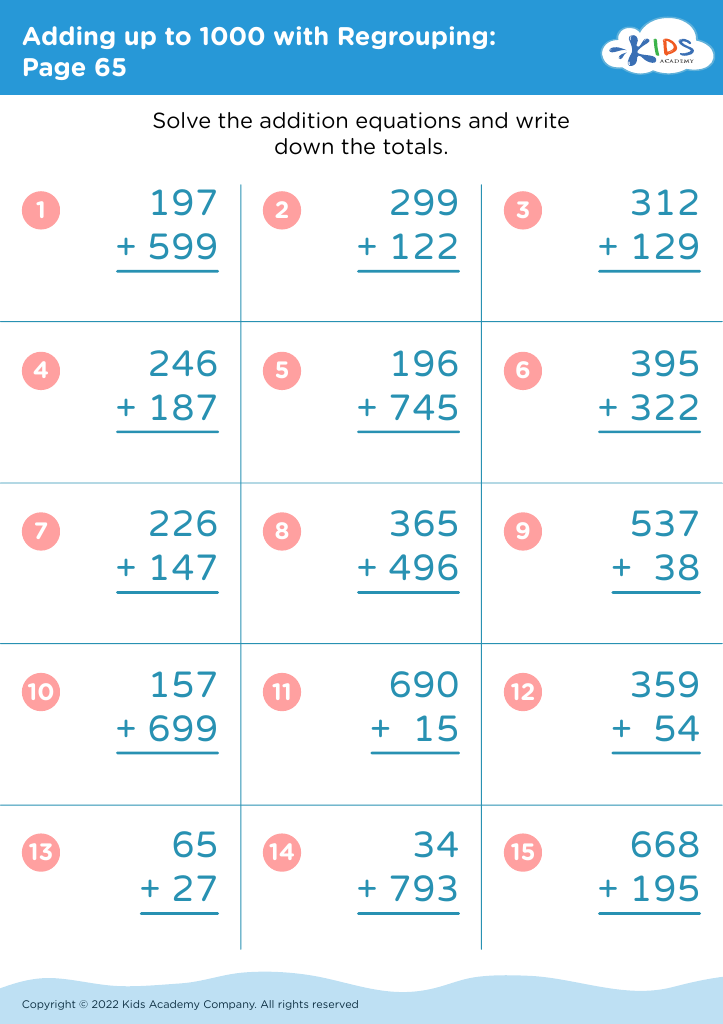
Adding up to 1000 with Regrouping: Page 65
Worksheet
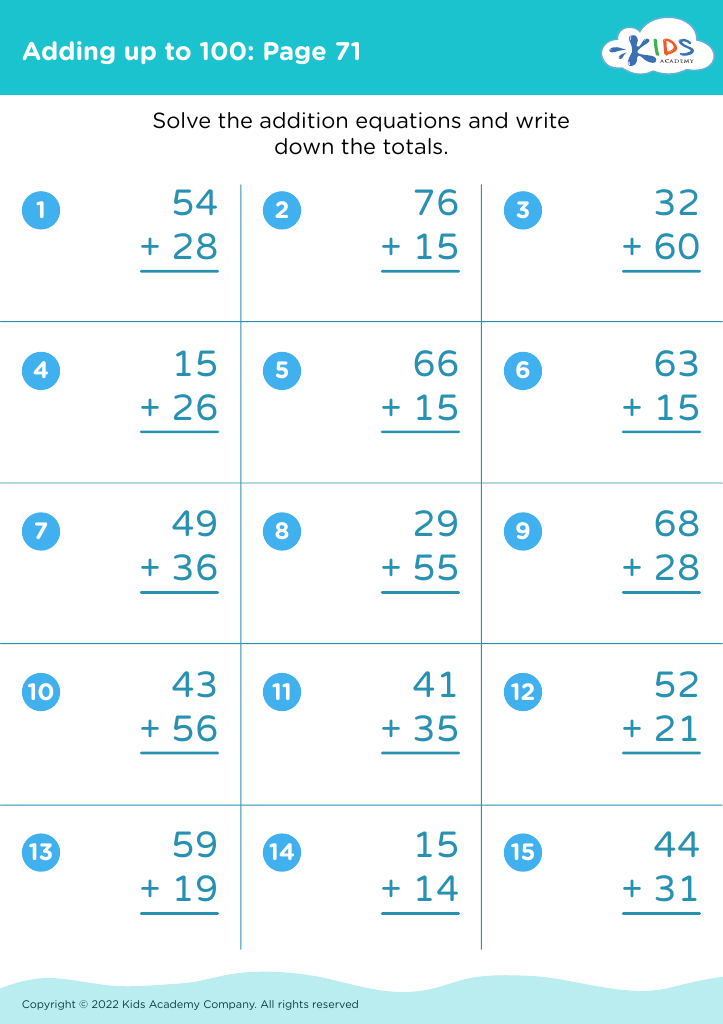
Adding up to 100: Page 71

Adding up to 100: Page 71

Adding up to 100: Page 71
Worksheet
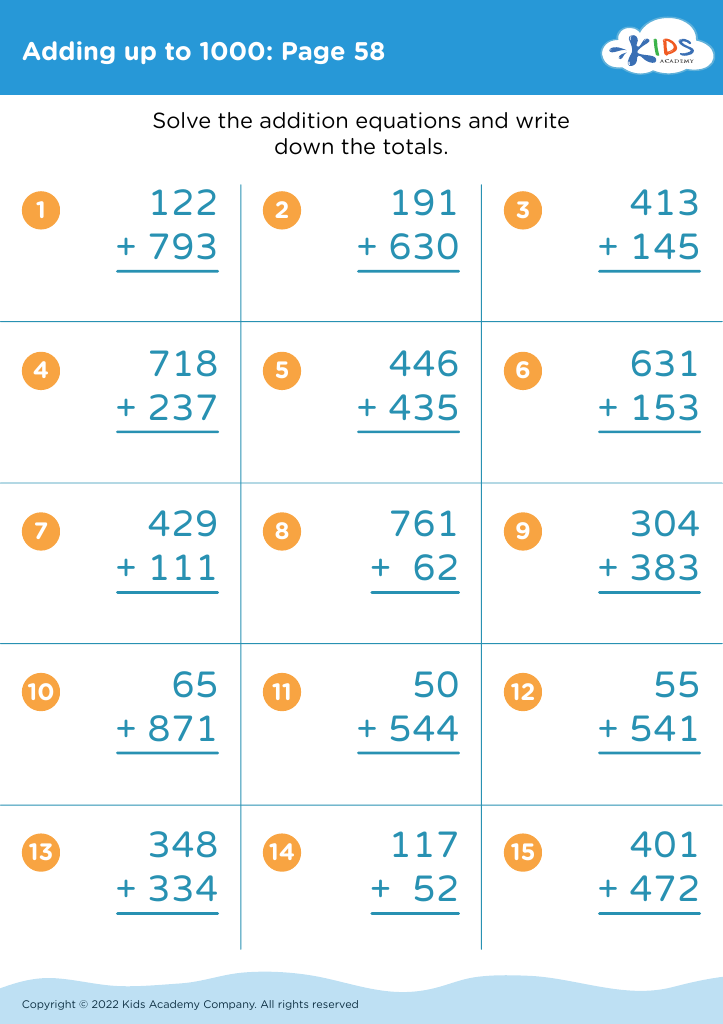
Adding up to 1000: Page 58

Adding up to 1000: Page 58

Adding up to 1000: Page 58
Worksheet
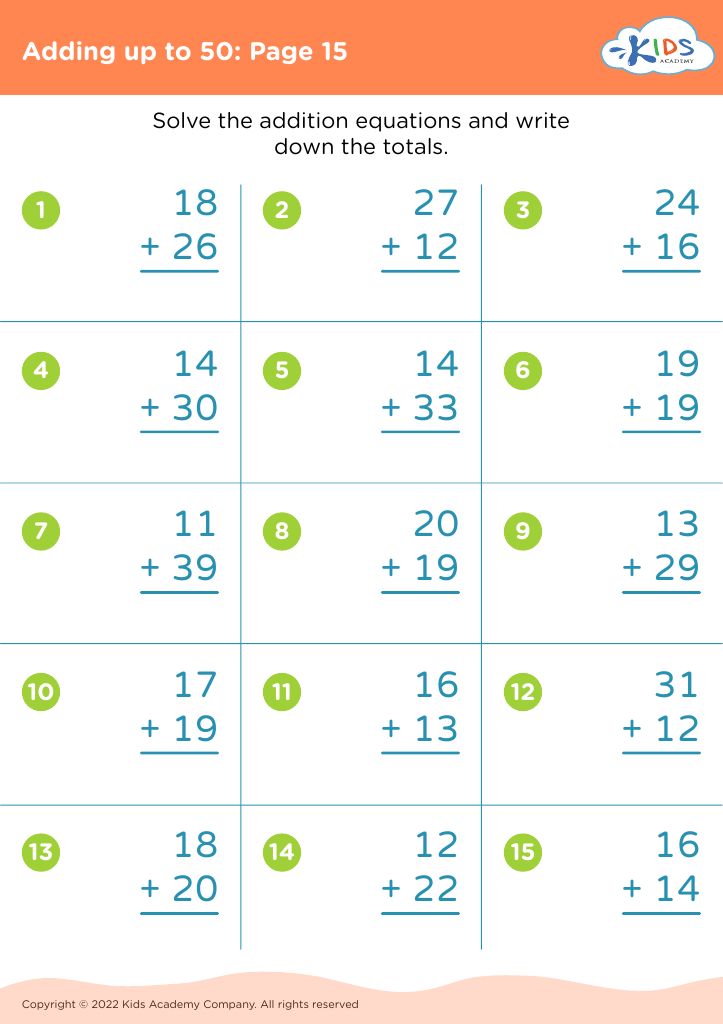
Adding up to 50: Page 15

Adding up to 50: Page 15

Adding up to 50: Page 15
Worksheet
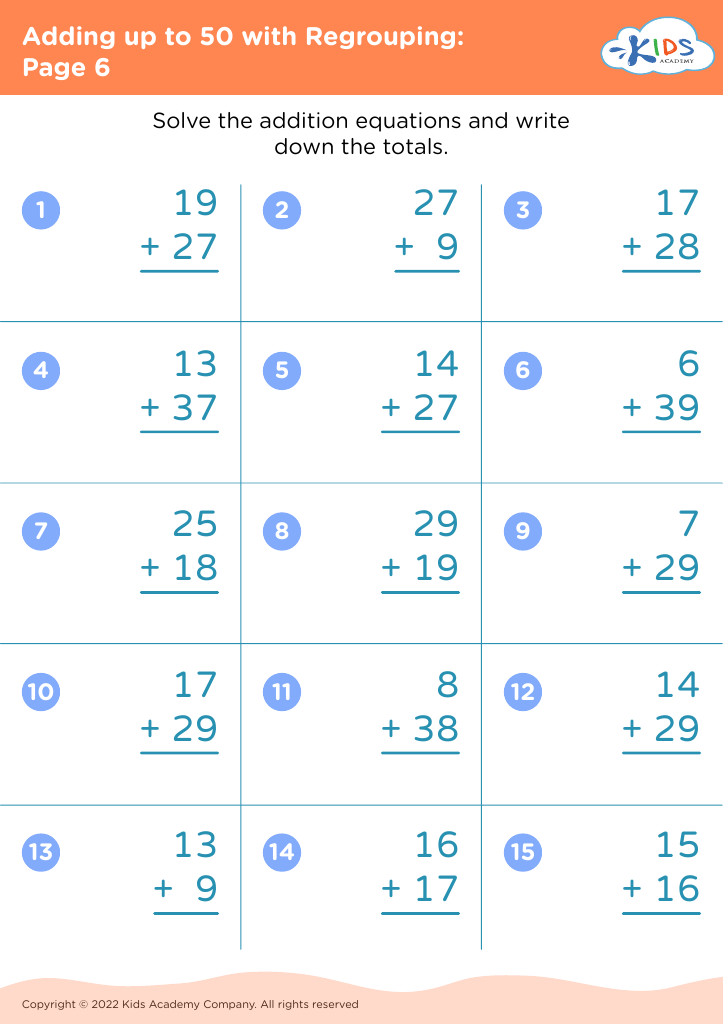
Adding up to 50 with Regrouping: Page 6
Worksheet
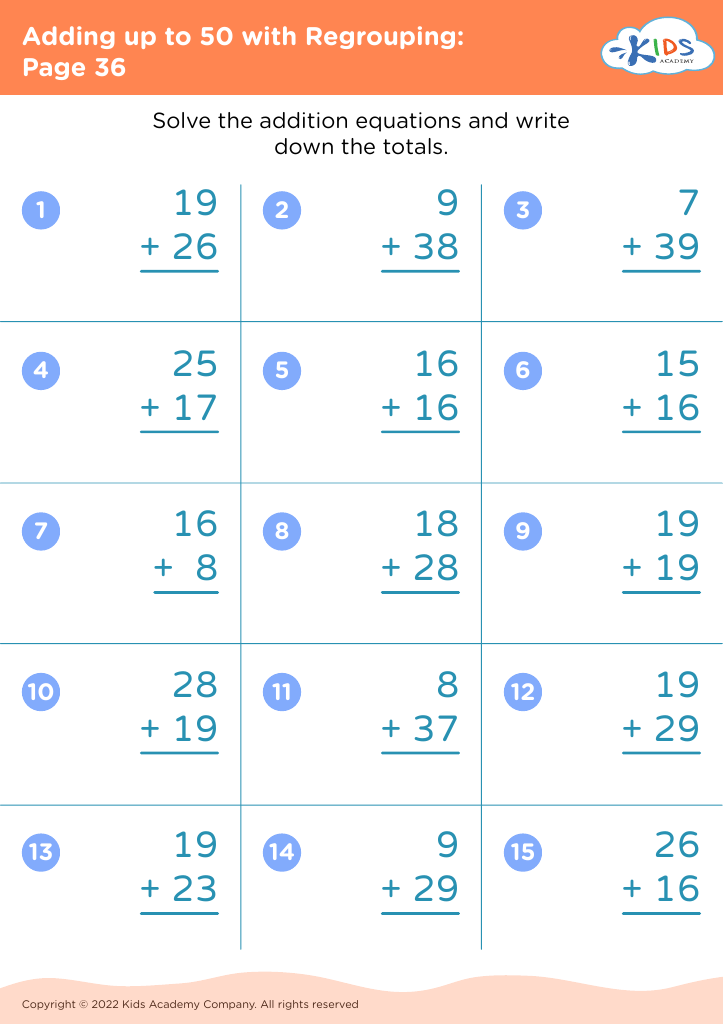
Adding up to 50 with Regrouping: Page 36
Worksheet
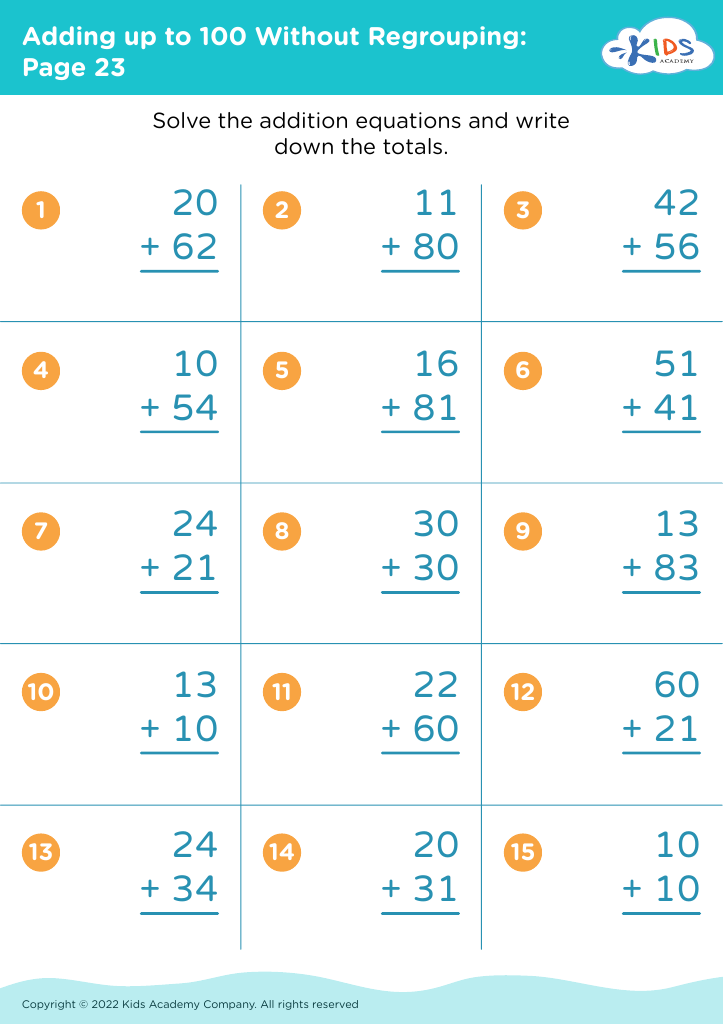
Adding up to 100 Without Regrouping: Page 23
Worksheet
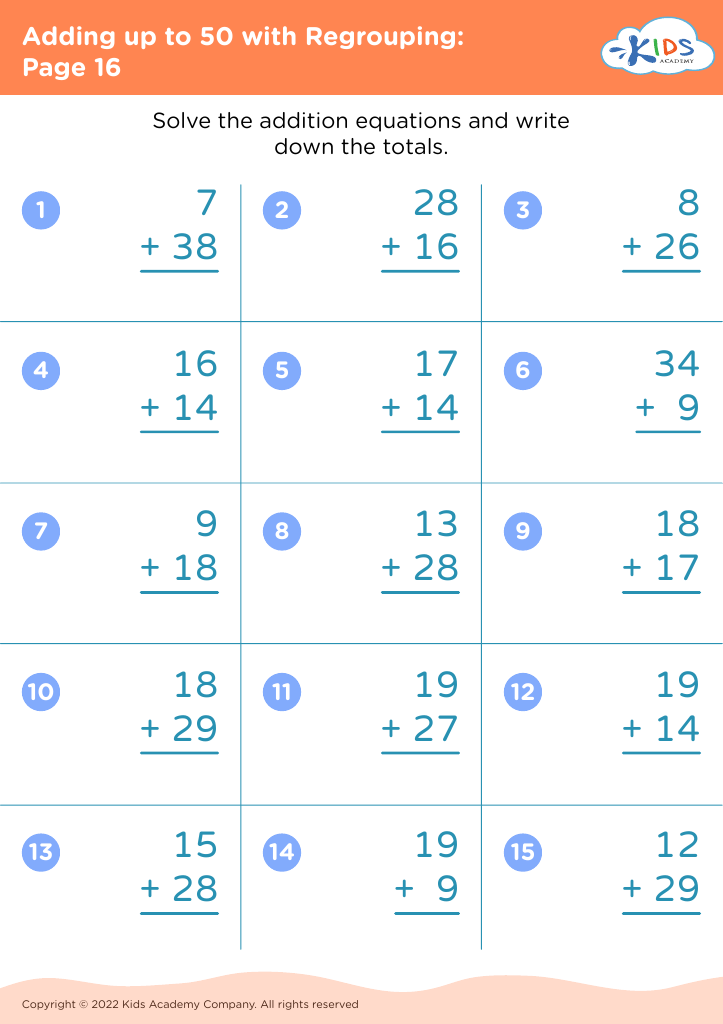
Adding up to 50 with Regrouping: Page 16
Worksheet
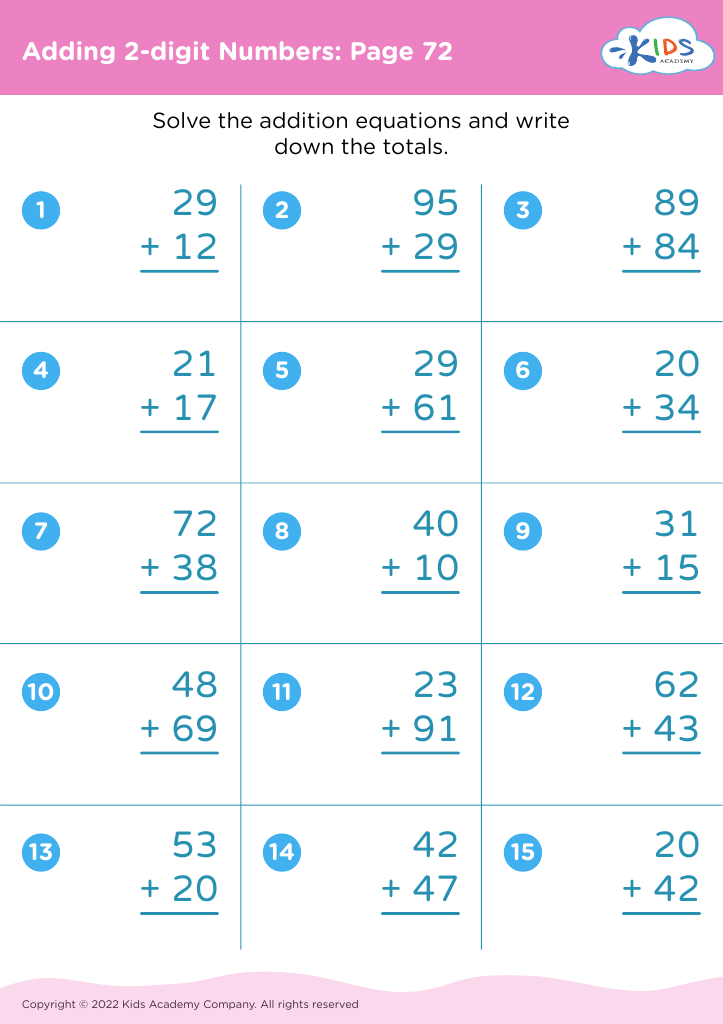
Adding 2-digit Numbers: Page 72

Adding 2-digit Numbers: Page 72

Adding 2-digit Numbers: Page 72
Worksheet
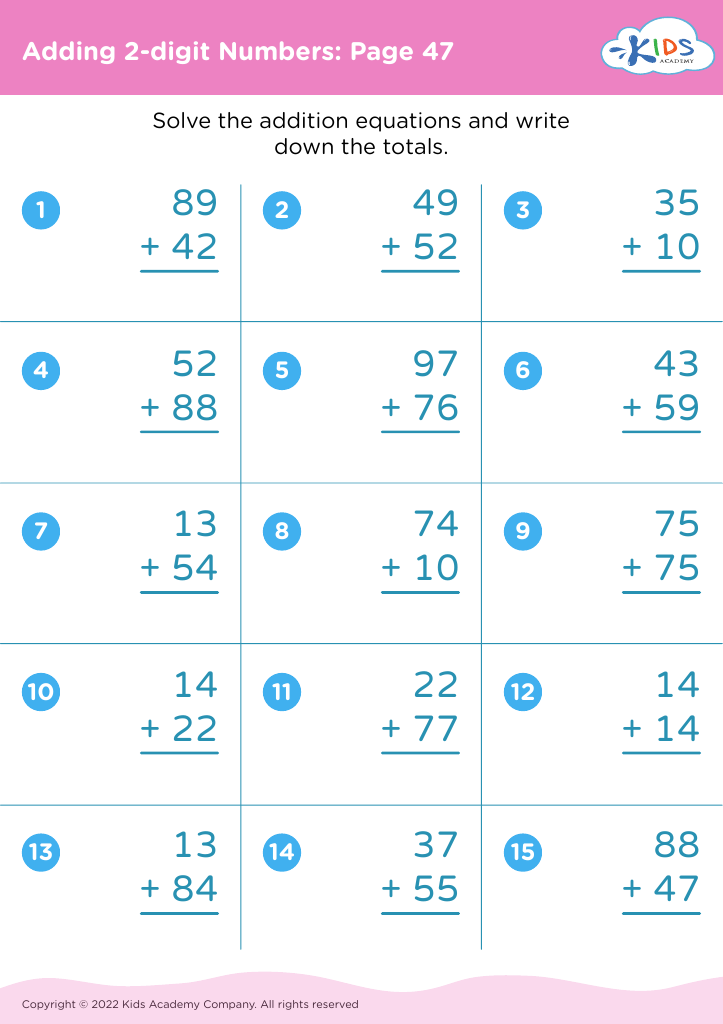
Adding 2-digit Numbers: Page 47

Adding 2-digit Numbers: Page 47

Adding 2-digit Numbers: Page 47
Worksheet


Comparing fractions addition for children ages 4-9 is pivotal in laying a strong mathematical foundation. At this developmental stage, young minds are rapidly absorbing and understanding new concepts, and introducing fractions helps in nurturing their numerical intuition and problem-solving abilities. Teaching children to compare fractions and add them improves their grasp of proportionality, equivalence, and parts of a whole, concepts that are central in advanced mathematics and everyday decision-making.

When parents and teachers invest time in teaching these skills, they contribute to the development of critical thinking and logical reasoning. Children learn to analyze relationships between numbers and recognize patterns, which are essential abilities across various subjects, not just mathematics. Early exposure to fractions also facilitates a smoother transition to more complex math topics in later grades, such as algebra and geometry.

Moreover, mastering fractions encourages perseverance and boosts confidence. When children succeed in understanding challenging concepts, they develop a positive attitude toward learning and a growth mindset that empowers them in all academic areas. Engaging activities that involve visuals, such as fraction bars or pie charts, make learning interactive and enjoyable, reinforcing the idea that math is fun and accessible. In summary, comparing fractions addition is crucial for cognitive and academic development, fostering a lifelong appreciation and competence in mathematics.