Develop problem-solving skills Addition Worksheets for Ages 4-9
7 filtered results
-
From - To
Unlock your child's potential with our Addition Worksheets tailored for ages 4-9. Designed by educational experts, these engaging activities help young learners develop essential problem-solving skills while mastering basic addition concepts. Our worksheets offer a variety of fun and challenging exercises that foster critical thinking, logical reasoning, and analytical abilities. Suitable for early learners and those ready to enhance their math proficiency, our resources make learning enjoyable and effective. Empower your child with the confidence and skills necessary for academic success. Start their journey towards math excellence with our thoughtfully crafted, age-appropriate addition worksheets!
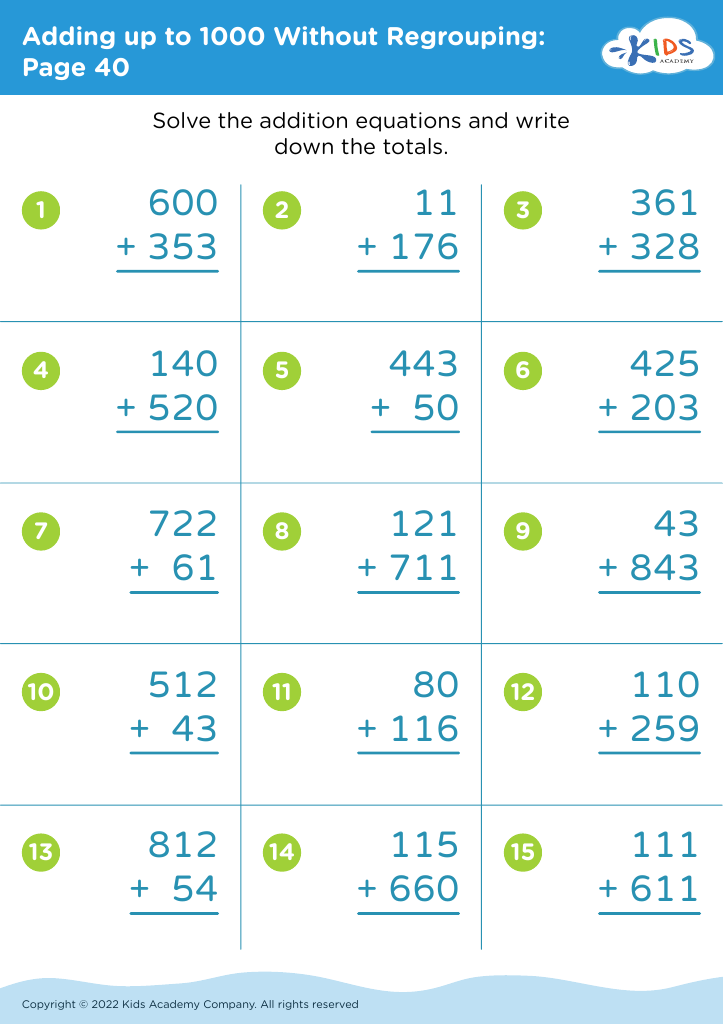
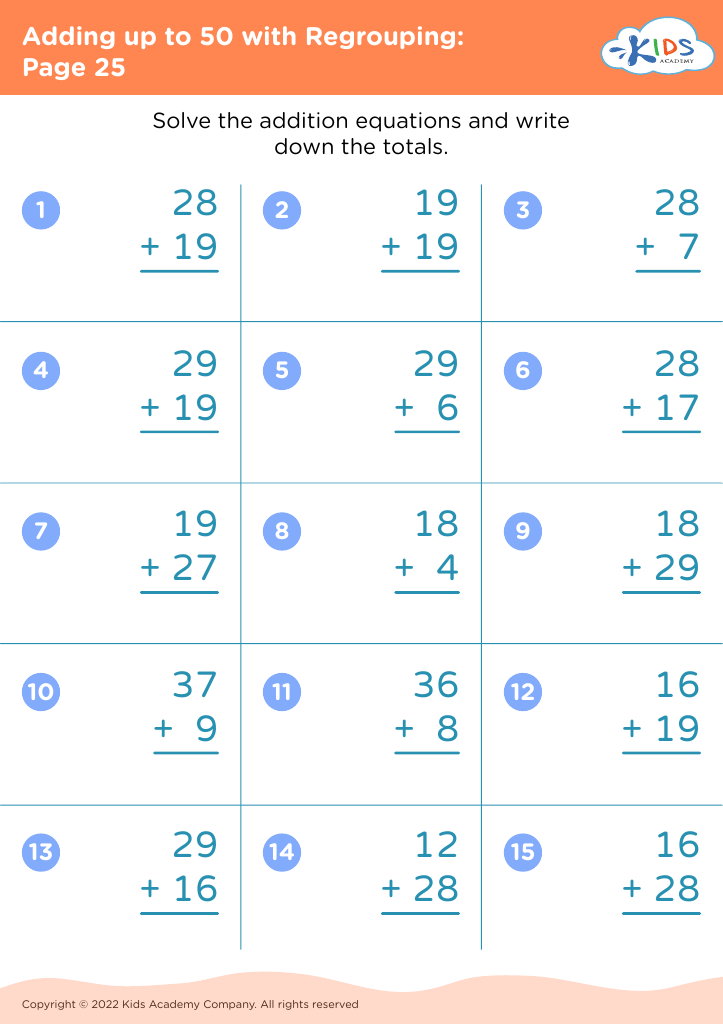
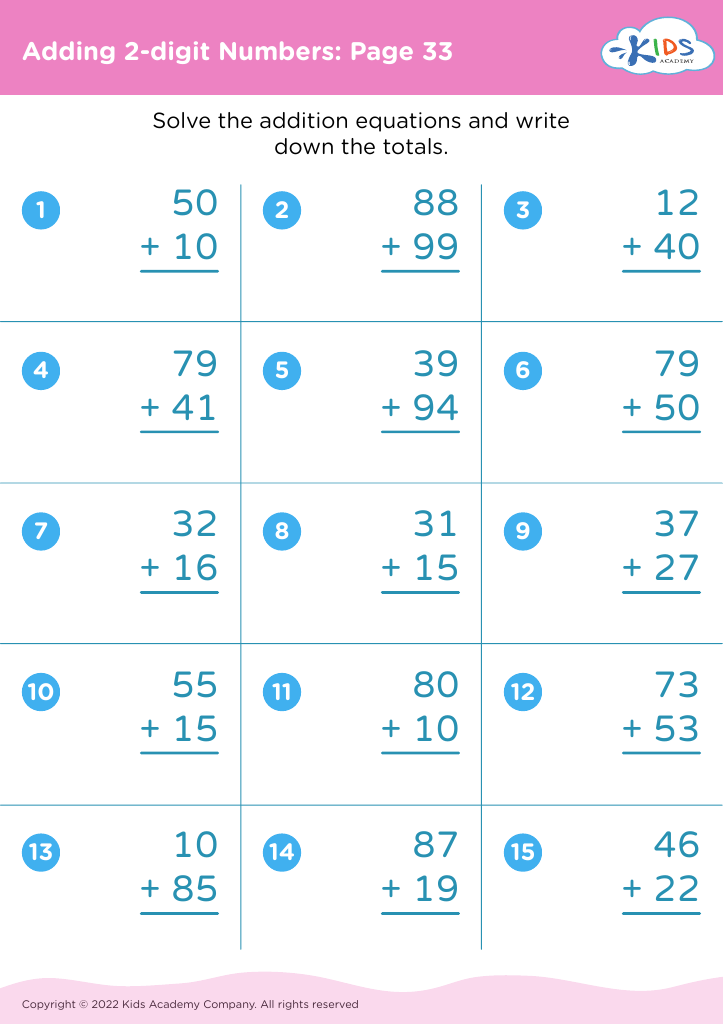
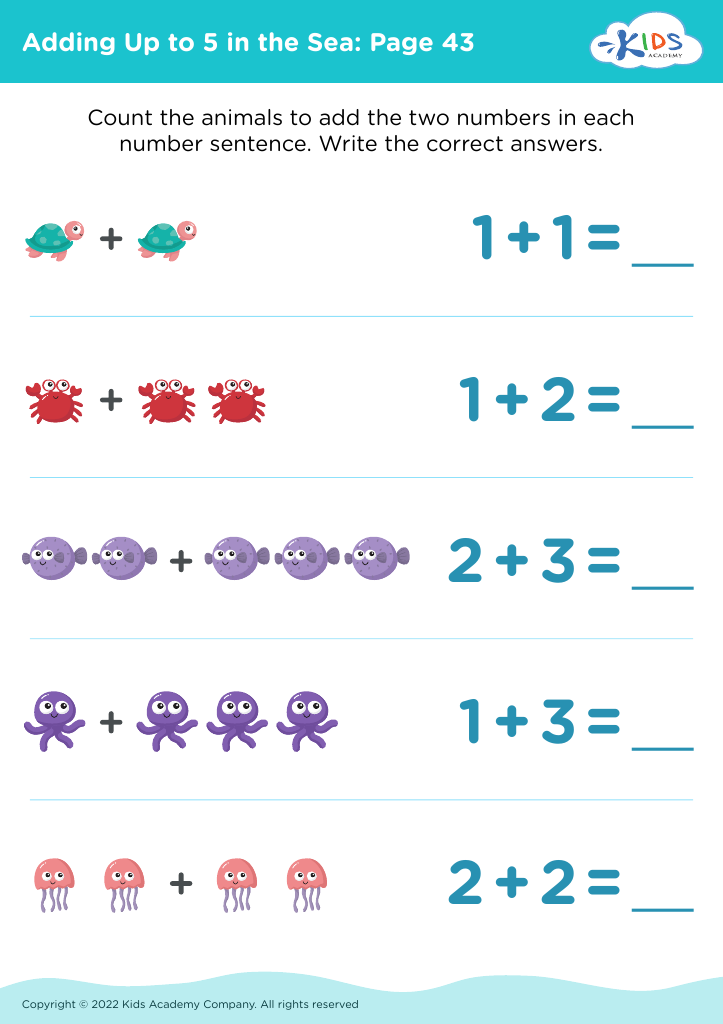
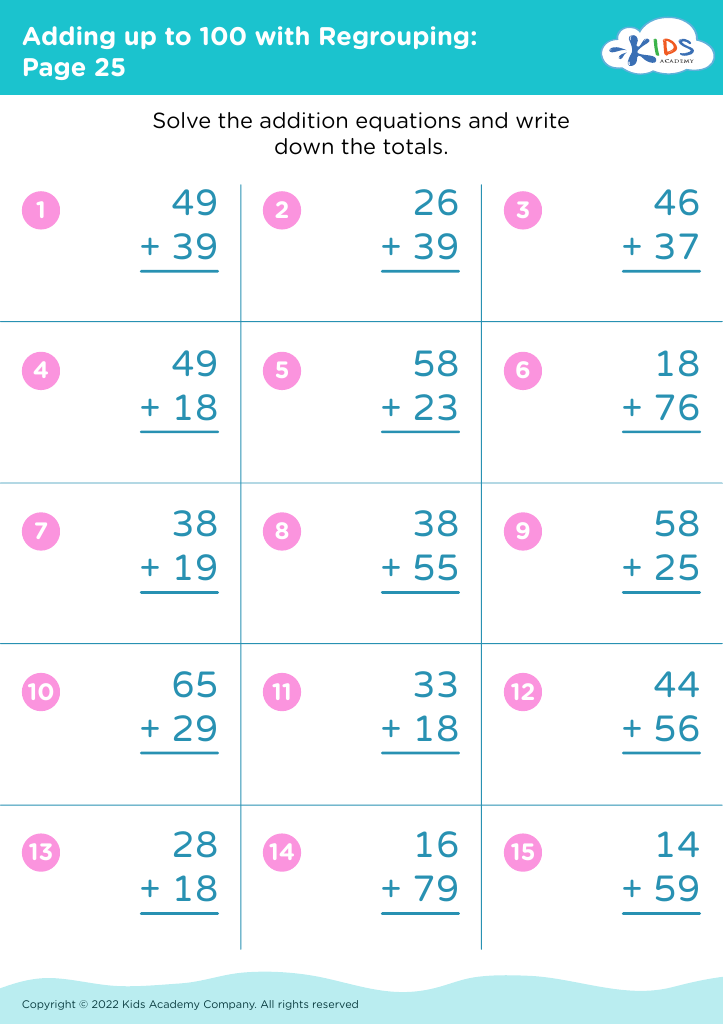
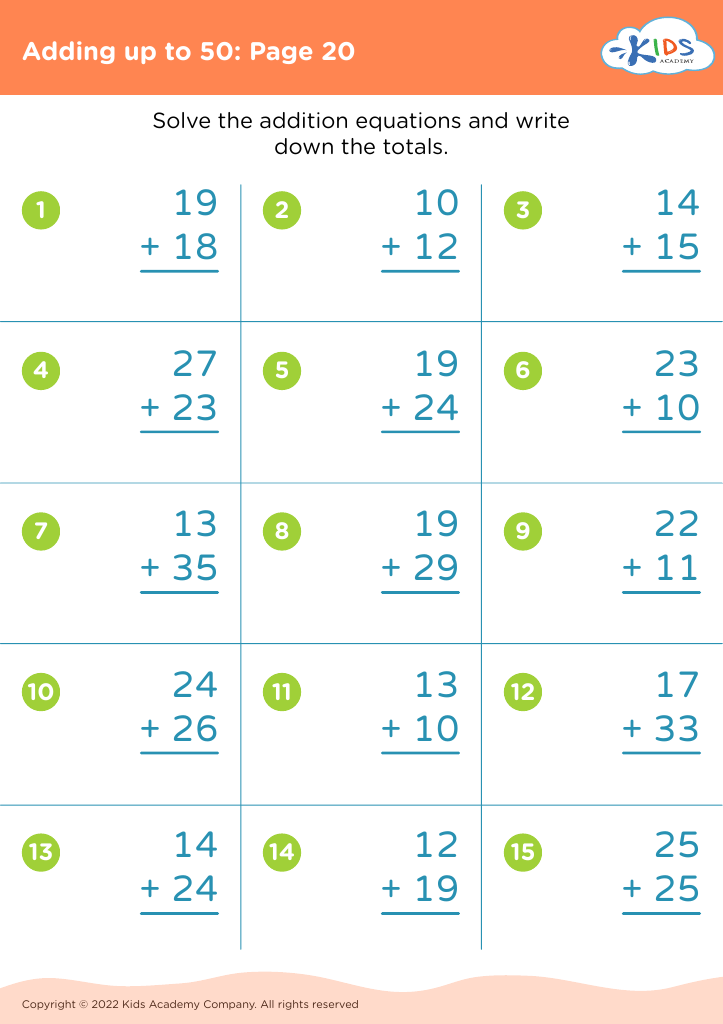
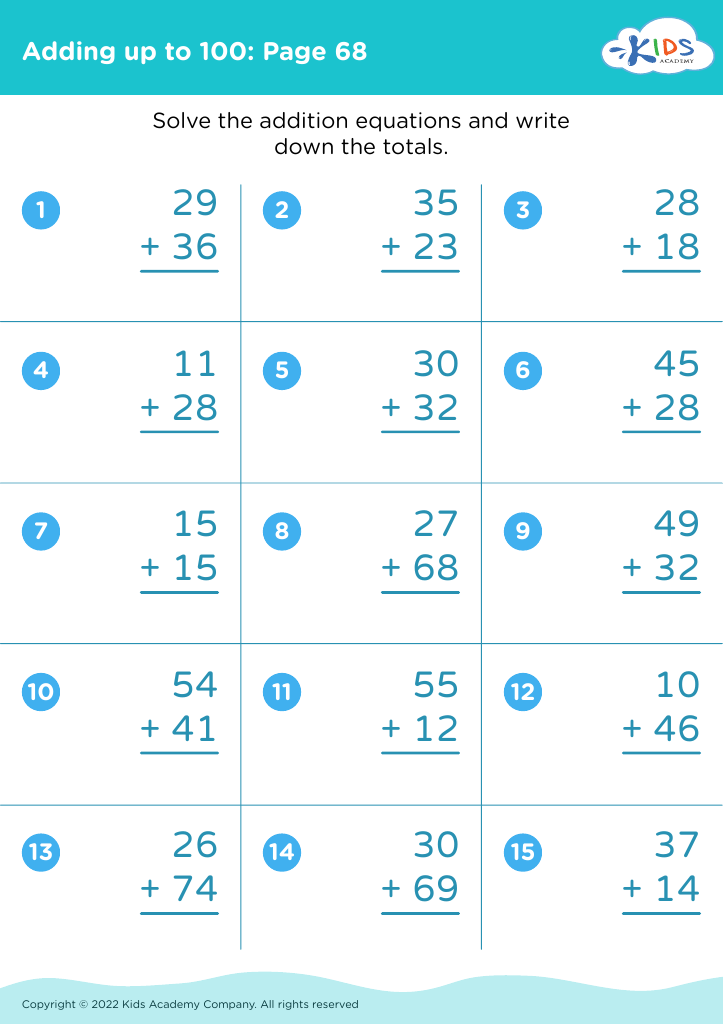








Developing problem-solving skills in young children, especially through learning addition, is fundamental for their cognitive and social growth. Between the ages of 4-9, children's brains are exceptionally receptive to acquiring new skills, making it an ideal period to introduce foundational concepts such as addition, which is crucial for future mathematical understanding.
Firstly, learning addition fosters cognitive development. When children engage in addition exercises, they practice logical thinking and pattern recognition, both of which are key aspects of problem-solving. These skills are not limited to math but extend to other academic subjects and everyday life situations, enhancing general intellectual capabilities.
Secondly, problem-solving through addition supports social development. Working on addition problems can encourage collaboration when done in group settings, as children communicate and share strategies with one another. This collaboration builds teamwork and communication skills, which are essential for successful interactions in all areas of life.
Finally, developing problem-solving skills, including addition, boosts self-confidence. When children solve addition problems successfully, they experience a sense of accomplishment, motivating them to tackle more challenges. This positive reinforcement builds resilience and a growth mindset, attitudes that are beneficial throughout one's education and beyond.
In sum, emphasizing the development of addition skills at an early age equips children with essential cognitive and social tools, fostering a well-rounded, problem-solving mindset crucial for their future success.








