Developing logical thinking Addition Worksheets for Ages 4-9
4 filtered results
-
From - To
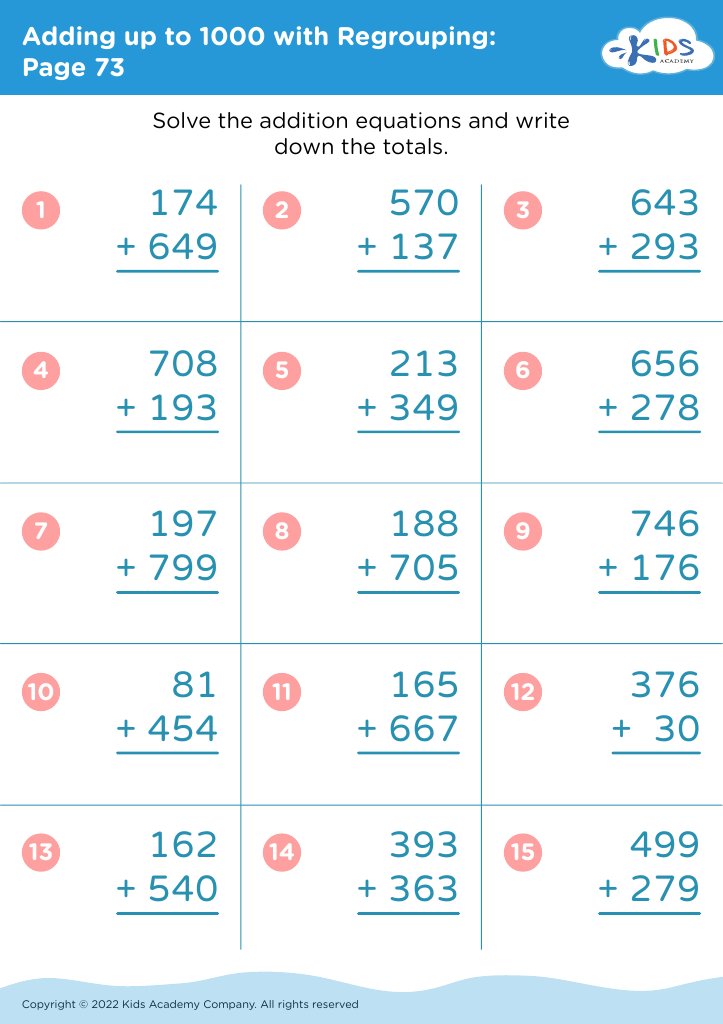
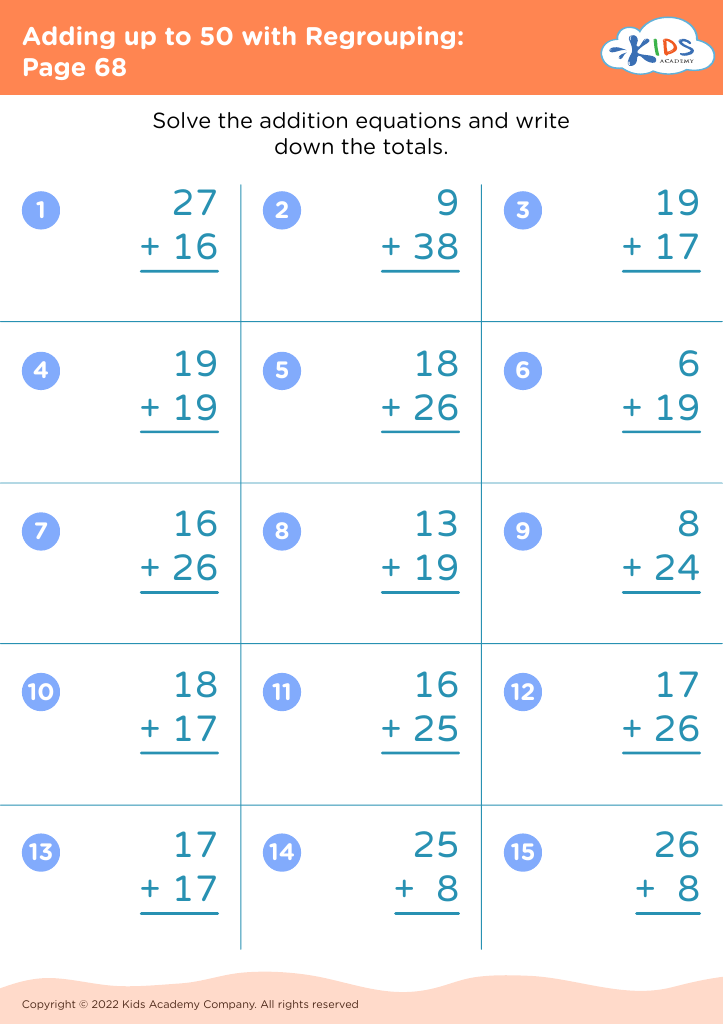
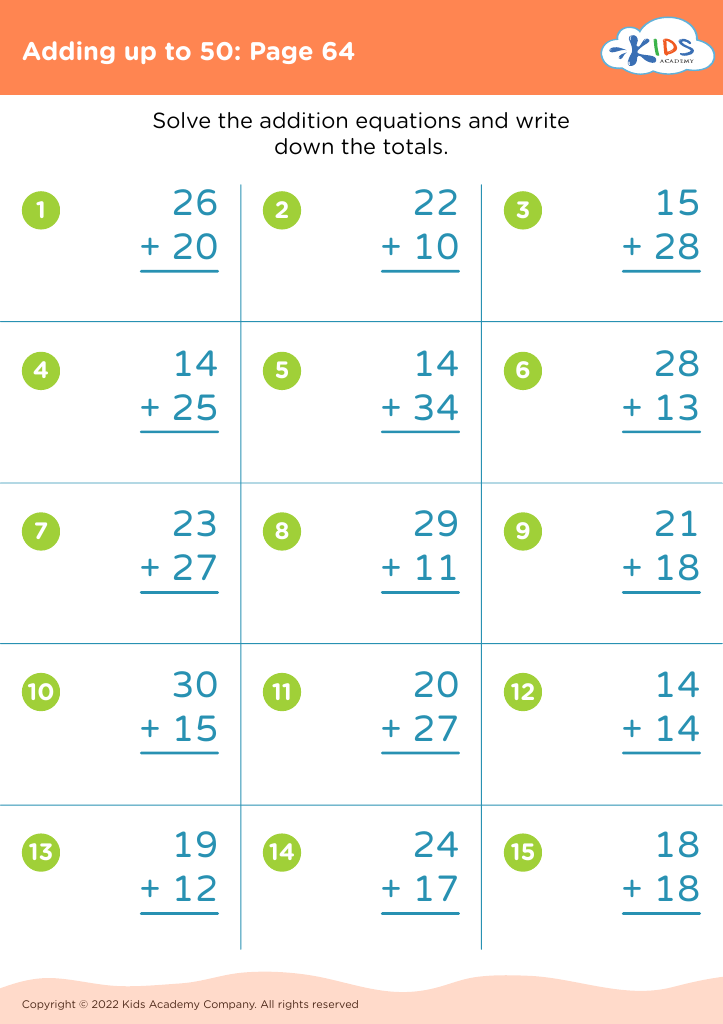
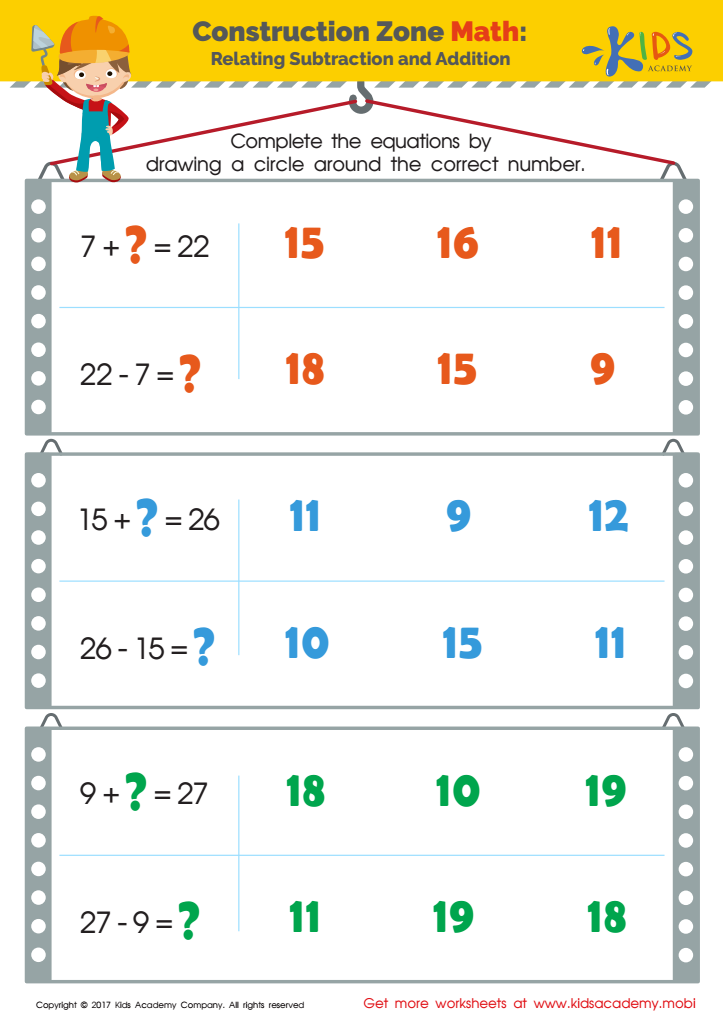
Enhance your child's logical thinking skills with our engaging addition worksheets designed for ages 4-9. These worksheets blend fun and education, providing a variety of activities that promote critical thinking and problem-solving abilities. Each worksheet encourages kids to analyze patterns, make connections, and apply addition in real-world scenarios. By solving these enjoyable challenges, children will gain confidence in their math skills while developing a strong foundation for future learning. Ideal for both classroom settings and at-home practice, our resources offer interactive learning experiences that make mastering addition exciting. Dive into our collection today and watch your child's mathematical journey flourish!
Related Addition and Subtraction Facts Worksheet
 Assign to My Students








Developing logical thinking skills through addition is crucial for children aged 4-9 as it lays the foundation for their overall cognitive development. During these formative years, children begin to understand and manipulate numbers, which enhances their ability to reason, solve problems, and make informed decisions. Logical thinking in addition not only helps students to tackle more complex mathematical concepts later on but also fosters critical life skills such as planning, organization, and abstract reasoning.
For parents and teachers, nurturing these skills encourages a positive attitude toward math, often alleviating math anxiety and promoting confidence. Furthermore, incorporating logical thinking into learning promotes engagement and creativity in problem-solving, making math feel less intimidating and more accessible to young learners. Additionally, these skills translate beyond academics; children learn to approach everyday situations logically, enhancing their decision-making abilities in real-life contexts.
By focusing on developing logical thinking alongside addition, parents and teachers provide children with essential tools not only for math but for lifelong learning and adaptability in an increasingly complex world. Investing time and resources into fostering these skills ensures that children are well-prepared for future academic challenges and are able to navigate everyday scenarios effectively.








