Identifying Animals Addition Worksheets for Ages 4-9
5 filtered results
-
From - To
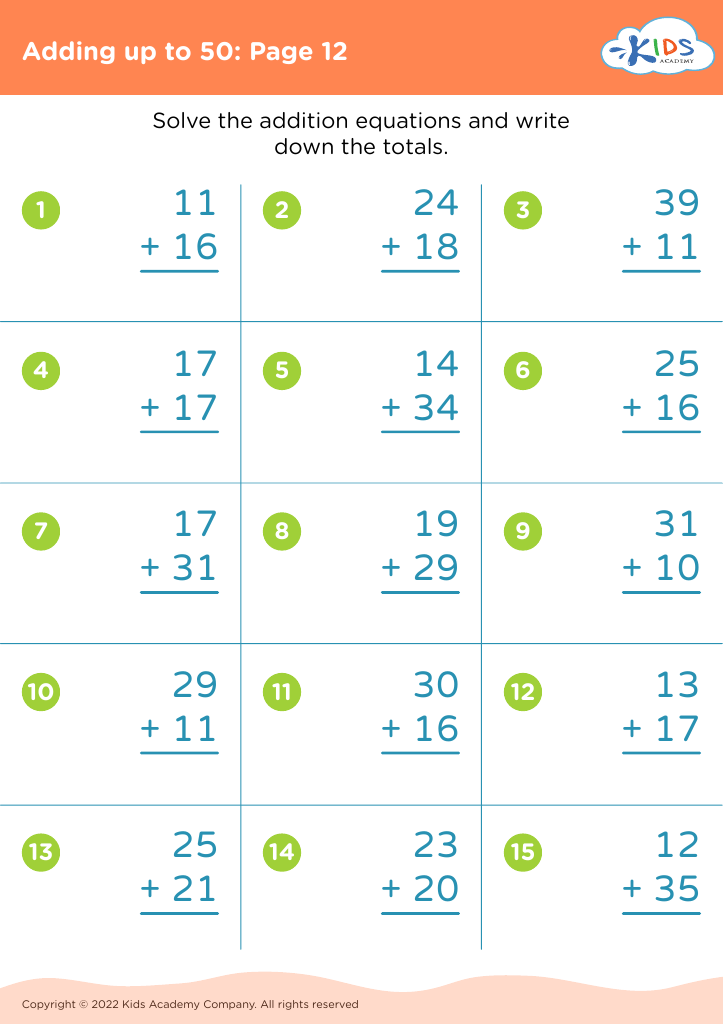
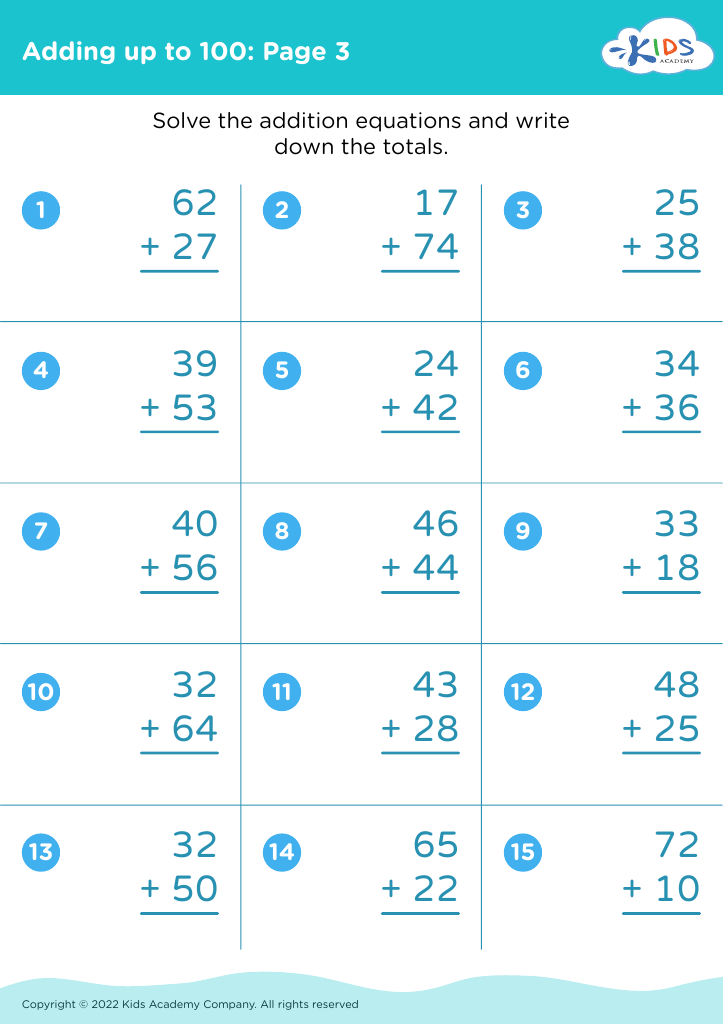
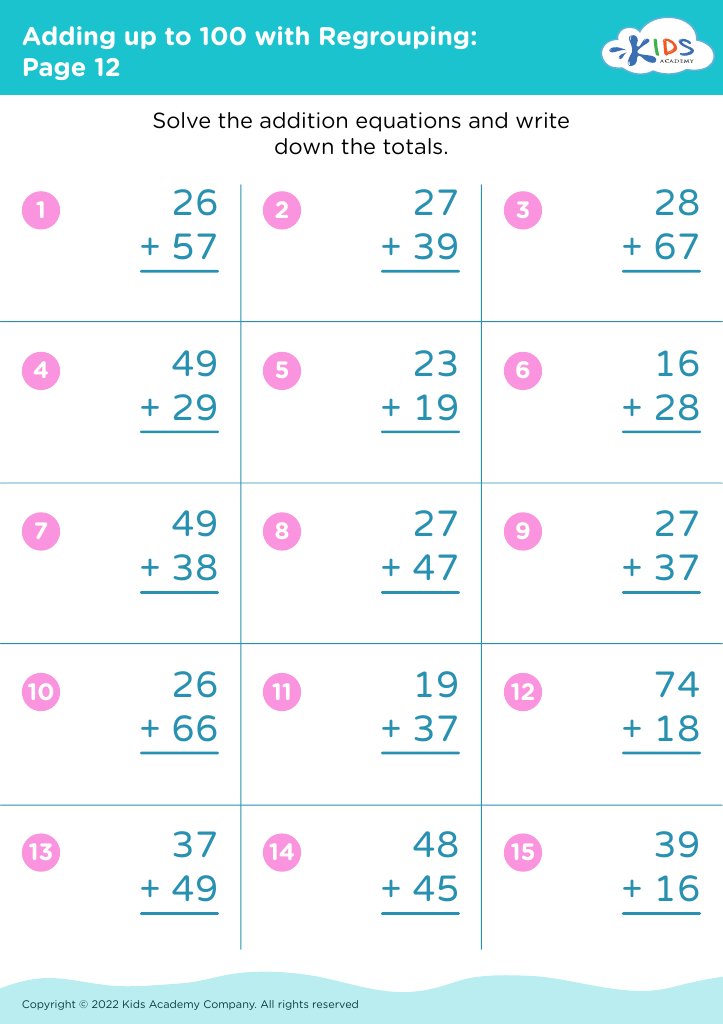
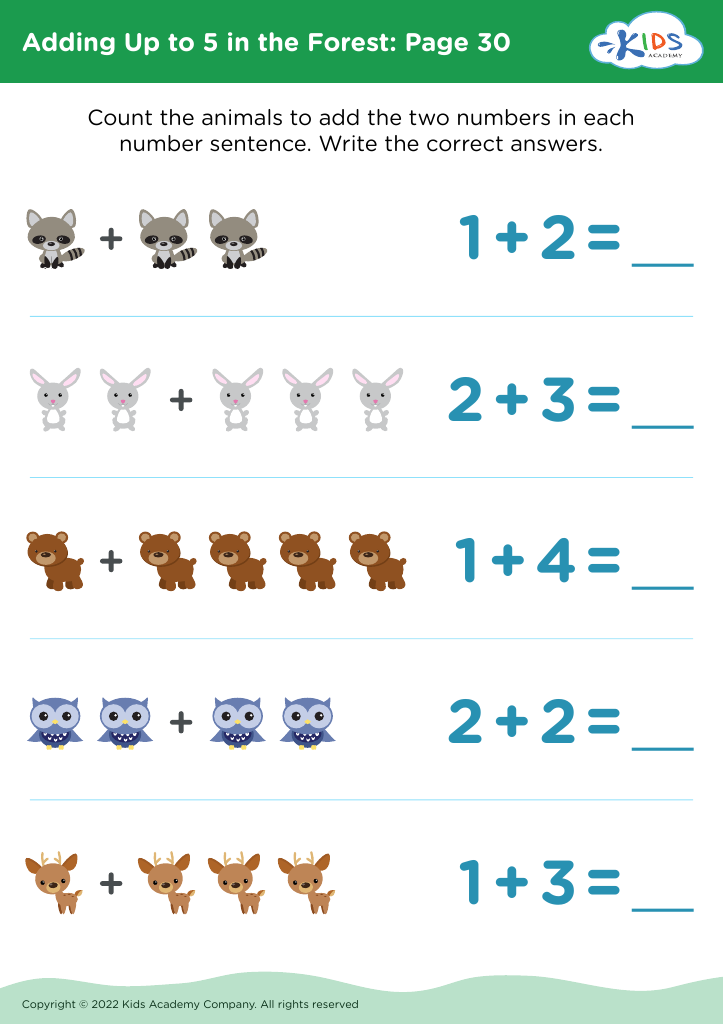
Introduce young learners to the captivating world of animals while improving their addition skills with our "Identifying Animals Addition Worksheets for Ages 4-9". Designed to engage and educate, these worksheets pair vibrant animal images with fun math problems. Perfect for children aged 4 to 9, each activity encourages honing counting abilities and addition accuracy. Parents and teachers will find these worksheets ideal for classroom use or at-home practice, fostering both mathematical and observational skills. Watch as your child explores different animals and develops a strong foundation in addition. Visit our site to unlock the fun and educational potential of these unique math resources!
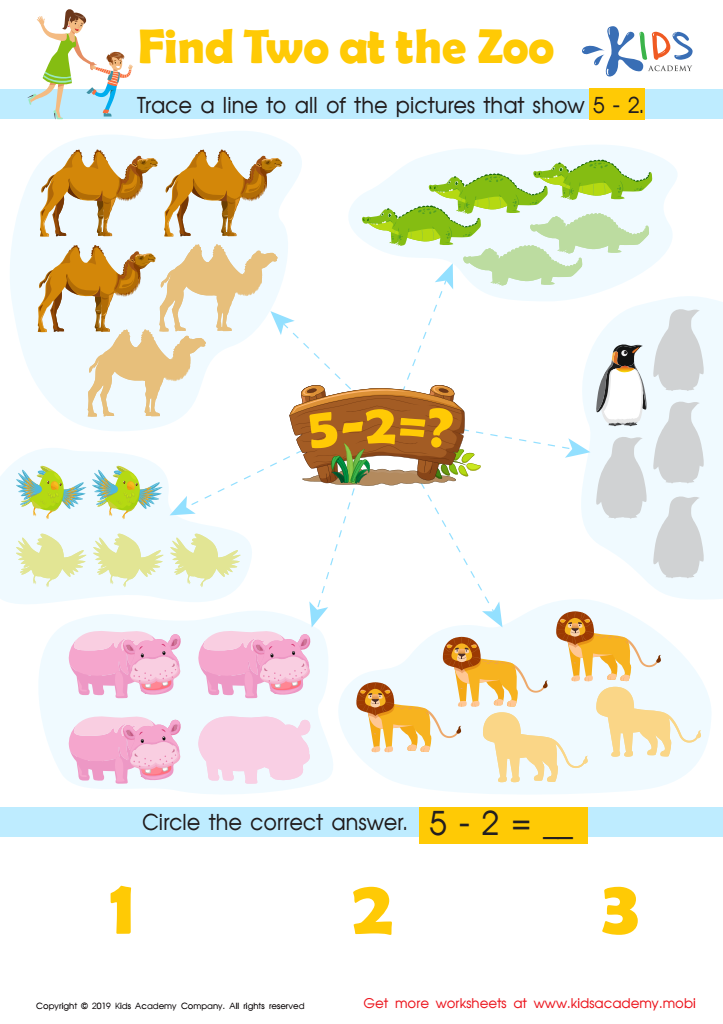
Find Two at the Zoo Worksheet
 Assign to My Students


.jpg)





Identifying animals while practicing addition for ages 4-9 combines fundamental math and science skills in a fun and engaging way, providing numerous benefits for young learners. By integrating these concepts, parents and teachers can nurture a child’s cognitive and observational abilities, promoting both analytical thinking and curiosity about the natural world.
At this developmental stage, children are naturally curious and eager to explore the environment around them. Identifying animals taps into this curiosity, making learning more interactive and enjoyable. Meanwhile, addition builds crucial numeracy skills necessary for future academic success.
Using animal identification in math problems encourages children to make connections across different subject areas, reinforcing their learning. For instance, solving a problem like “If you see 3 rabbits and 2 deer in the forest, how many animals did you see?” enhances both arithmetic practice and wildlife recognition simultaneously.
These activities also foster a hands-on, inquiry-based approach to learning. Parents and teachers can use real-world experiences, such as visits to a zoo or nature walks, to observe animals and apply math skills in counting and addition, making learning tangible and meaningful.
Ultimately, integrating animal identification with addition helps build a well-rounded educational foundation, preparing children not only for future academic challenges but also shaping them into observant, thoughtful, and confident learners and problem solvers at an early age.








