Pattern recognition Addition Worksheets for Ages 4-9
6 filtered results
-
From - To
Explore our engaging Pattern Recognition Addition Worksheets designed for kids aged 4-9! These worksheets foster essential math skills by combining pattern recognition with fun addition problems, helping young learners develop critical thinking and problem-solving abilities. Children will enjoy completing exciting exercises that utilize shapes, colors, and sequences, enhancing their understanding of addition while recognizing patterns. Ideal for preschool and early elementary settings, our resources provide a perfect blend of education and entertainment, ensuring effective learning experiences. Boost your child's confidence in math and set a solid foundation for future success with our printable worksheets today!
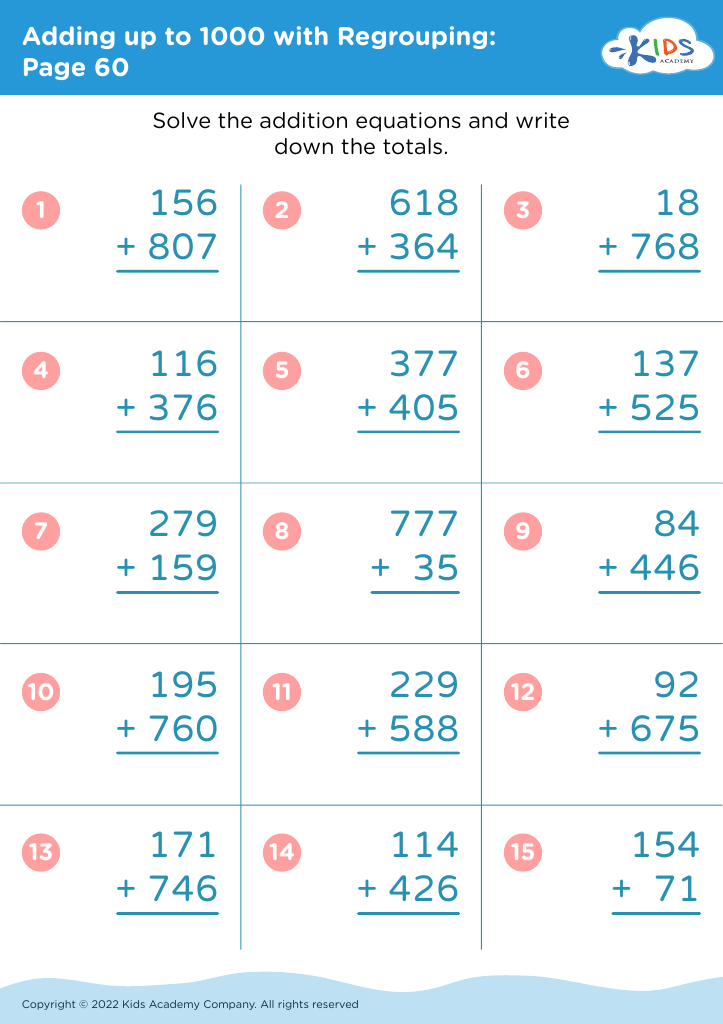
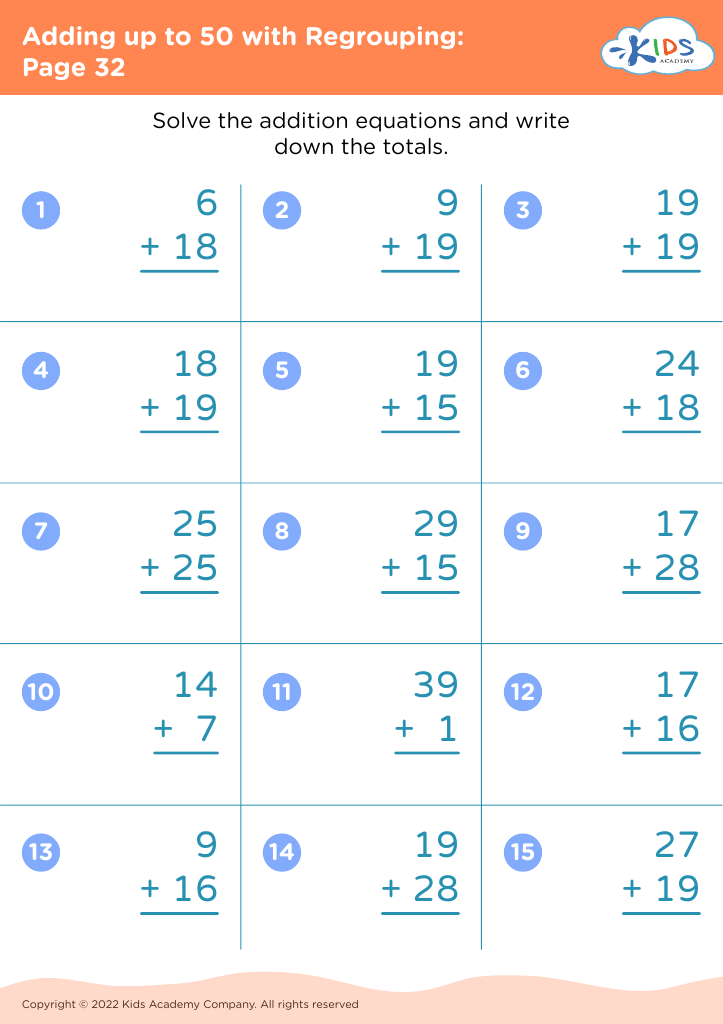
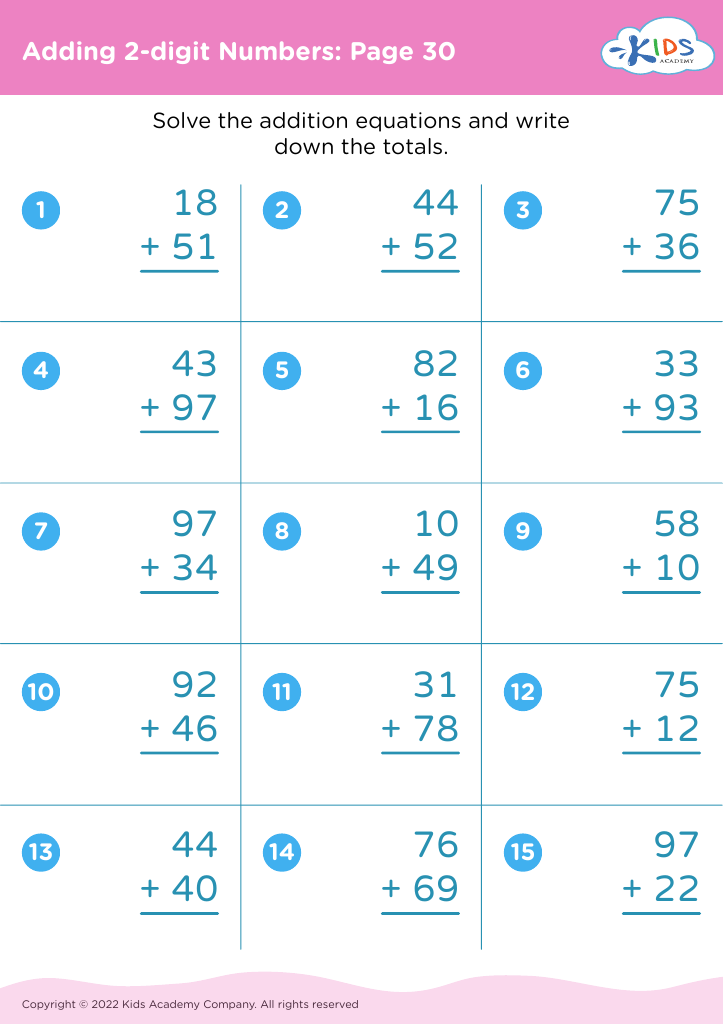
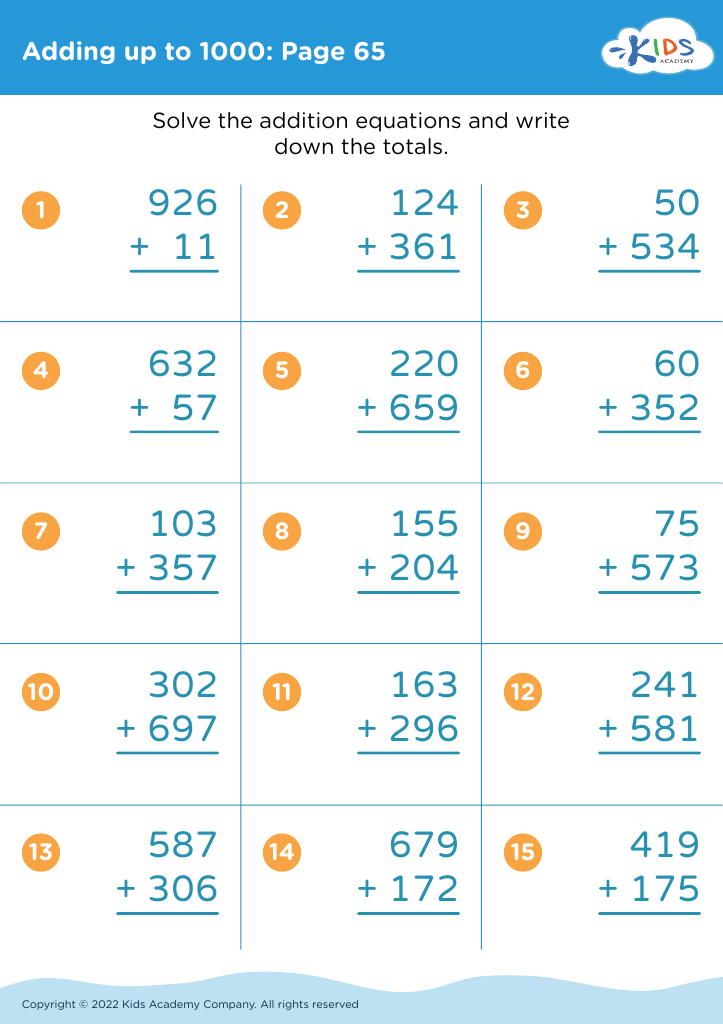
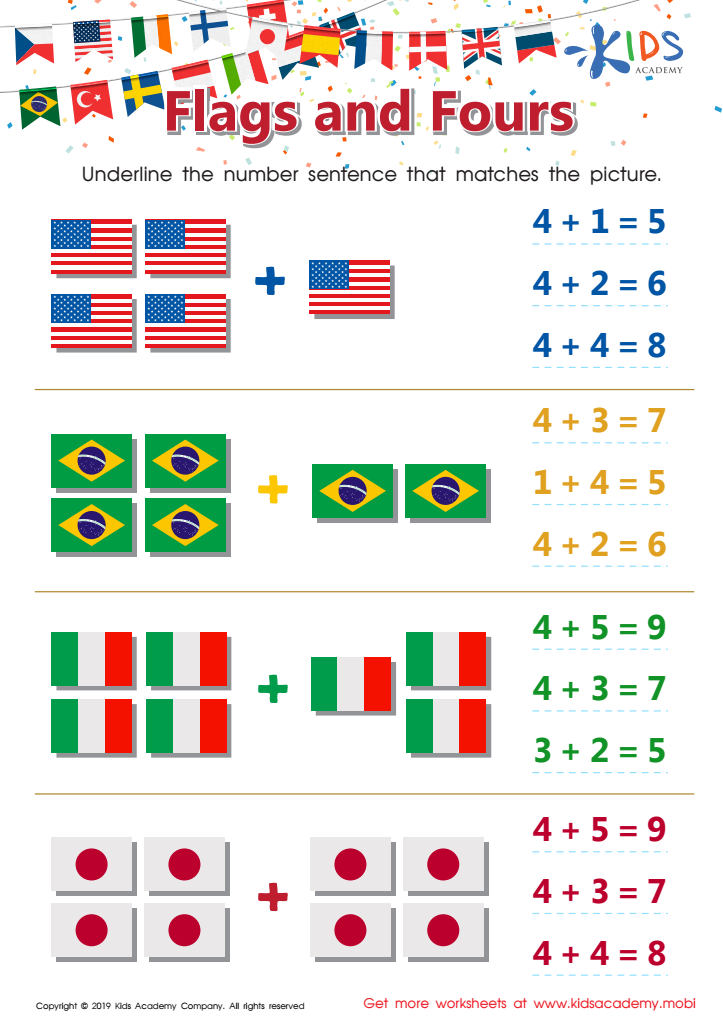
Flags and Fours Worksheet
 Assign to My Students
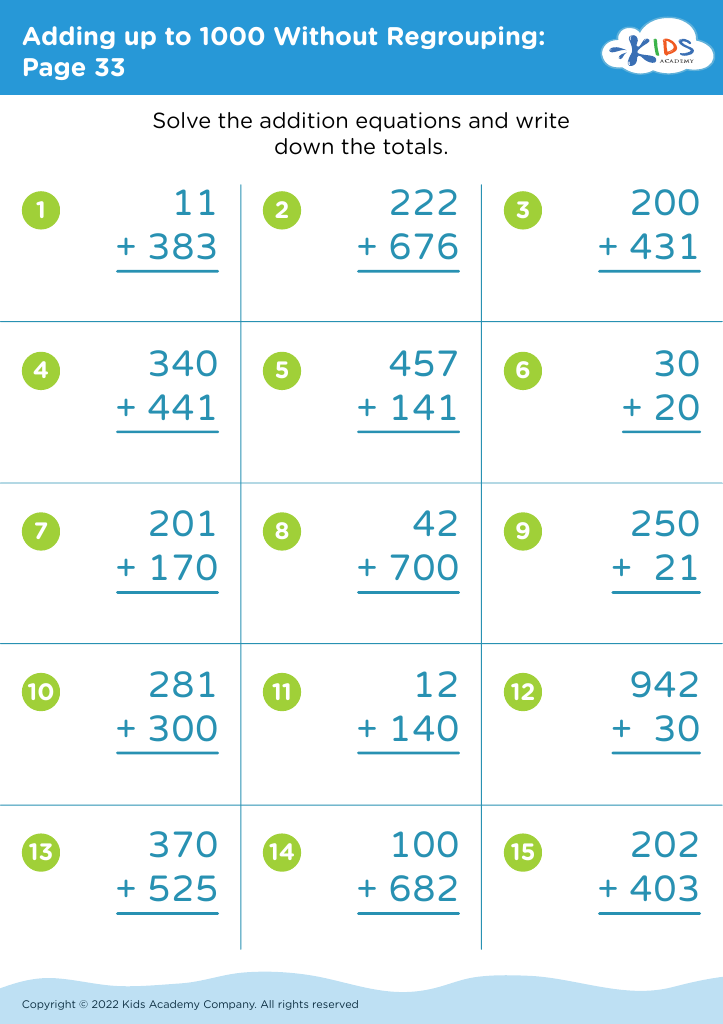








Pattern recognition in addition is vital for children aged 4-9 as it lays the foundation for more complex mathematical concepts. Recognizing patterns encourages critical thinking and helps children identify relationships between numbers, fostering a deeper understanding of mathematical operations. When children learn to observe patterns, they become adept at solving problems efficiently, which boosts their confidence and engagement with mathematics.
Understanding patterns also prepares students for concepts such as addition and subtraction techniques. For example, children can learn to identify pairs of numbers that add up to a certain total, making mental addition quicker and easier. This skill translates to better performance in higher-level math, as well as in real-life scenarios, such as budgeting or measuring.
Furthermore, pattern recognition enhances cognitive development. By engaging in activities that promote this skill, children improve their focus, improve their ability to categorize information, and develop analytical skills essential for various academic subjects. For parents and teachers, encouraging pattern recognition in addition not only supports mathematical proficiency but also nurtures an overall mindset of curiosity and inquiry that extends beyond the classroom. Emphasizing this skill will help children build a robust mathematical foundation ultimately fostering a lifelong appreciation for learning.








