Practice subtraction Addition Worksheets for Ages 4-9
5 filtered results
-
From - To
Welcome to our specially designed Practice Subtraction Addition Worksheets for children aged 4-9! Our engaging, colorful worksheets aim to make math learning fun while helping young learners sharpen their addition and subtraction skills. Tailored for early learners, these resources encourage number recognition, enhance problem-solving abilities, and build a solid foundation in mathematics. Whether you’re at home or in the classroom, our worksheets cater to various learning styles, providing step-by-step guidance to foster confidence and competency. Explore our collection today and see your child excel in math while enjoying the learning process! Ideal for parents and teachers alike.
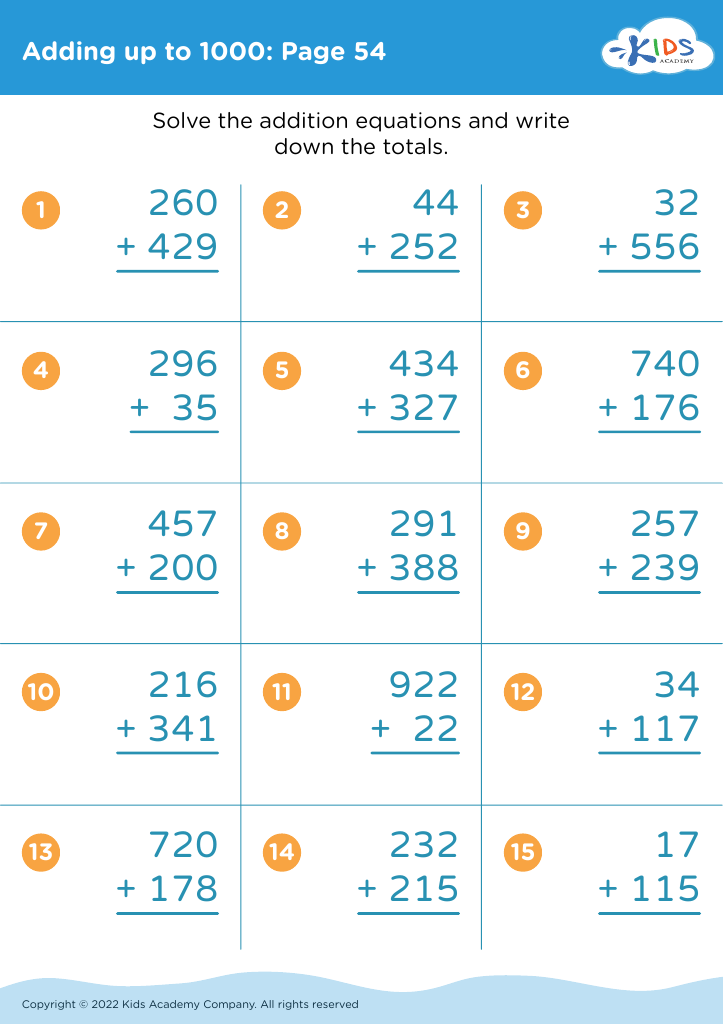
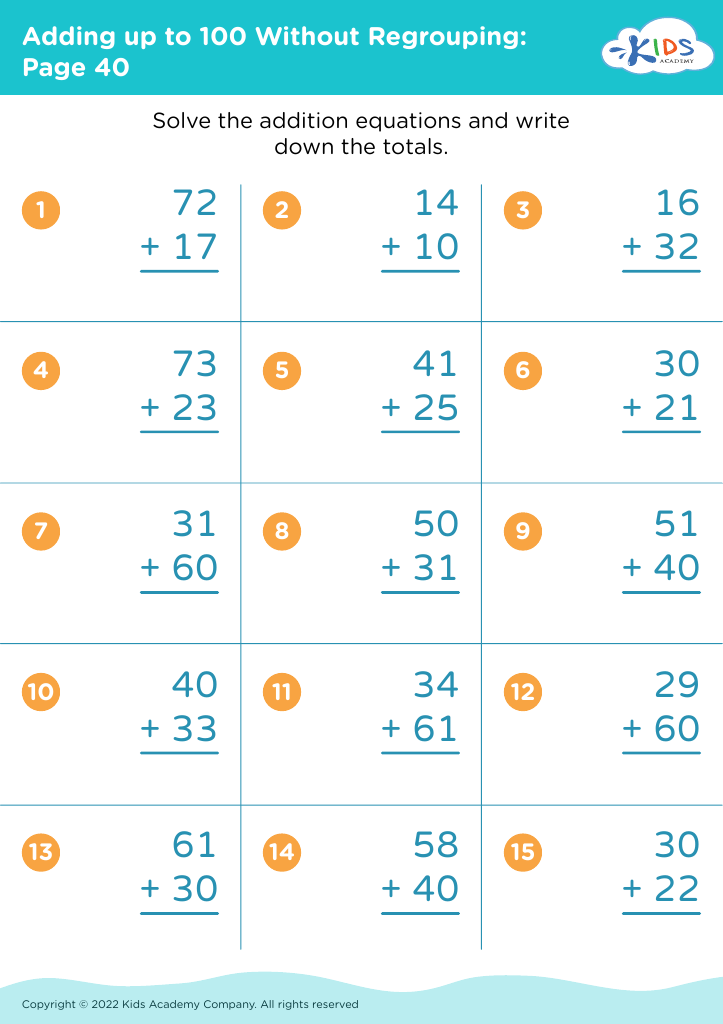
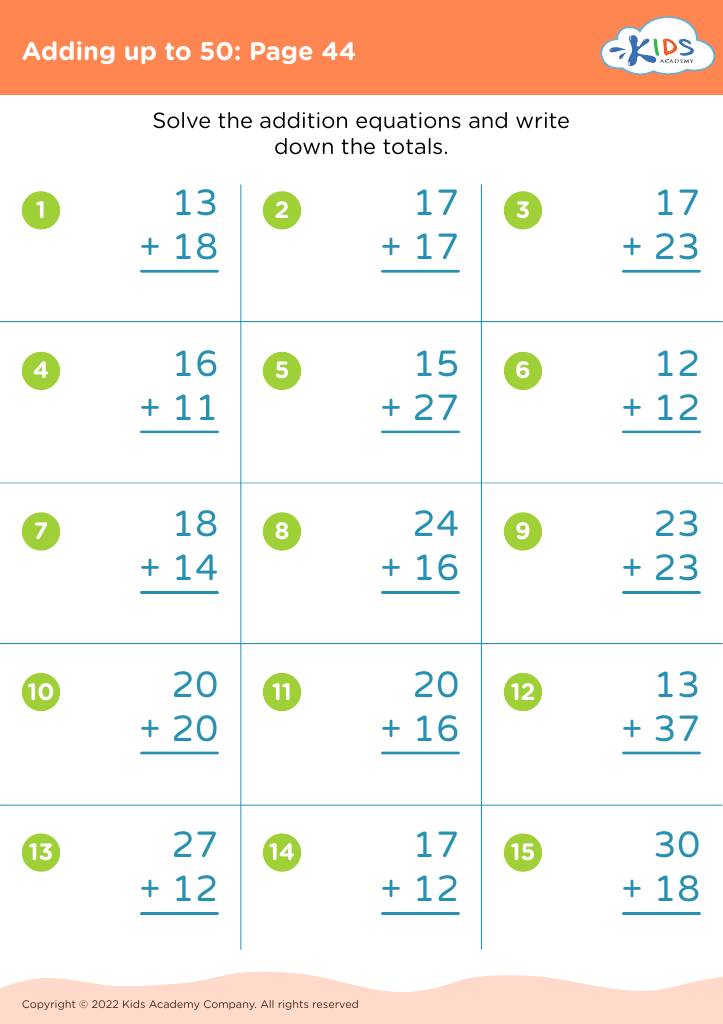
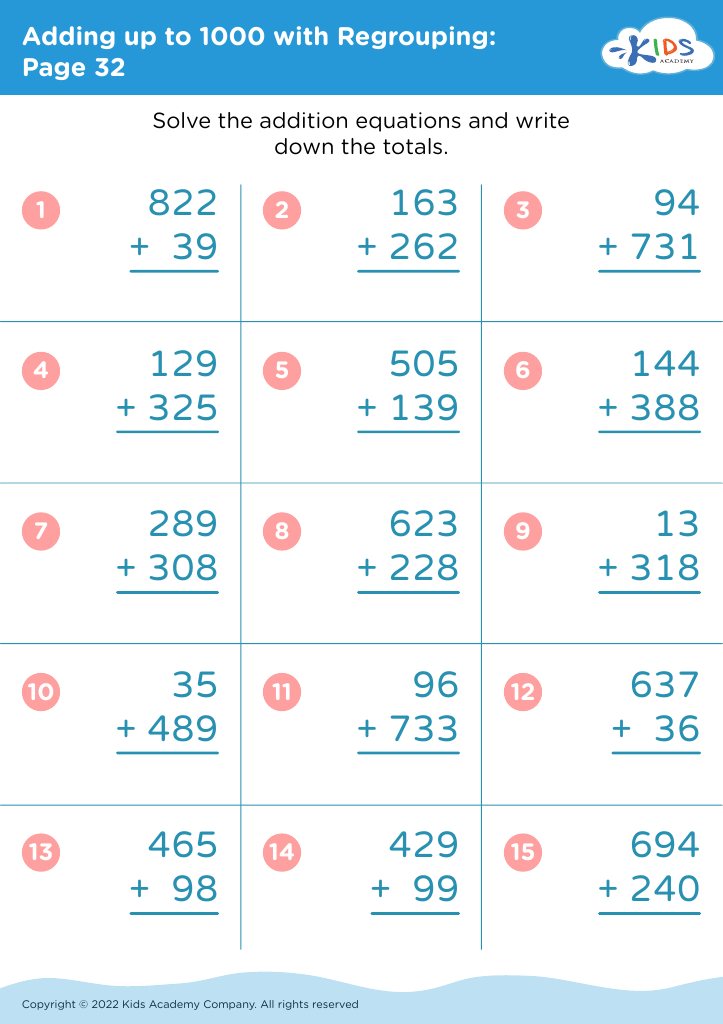
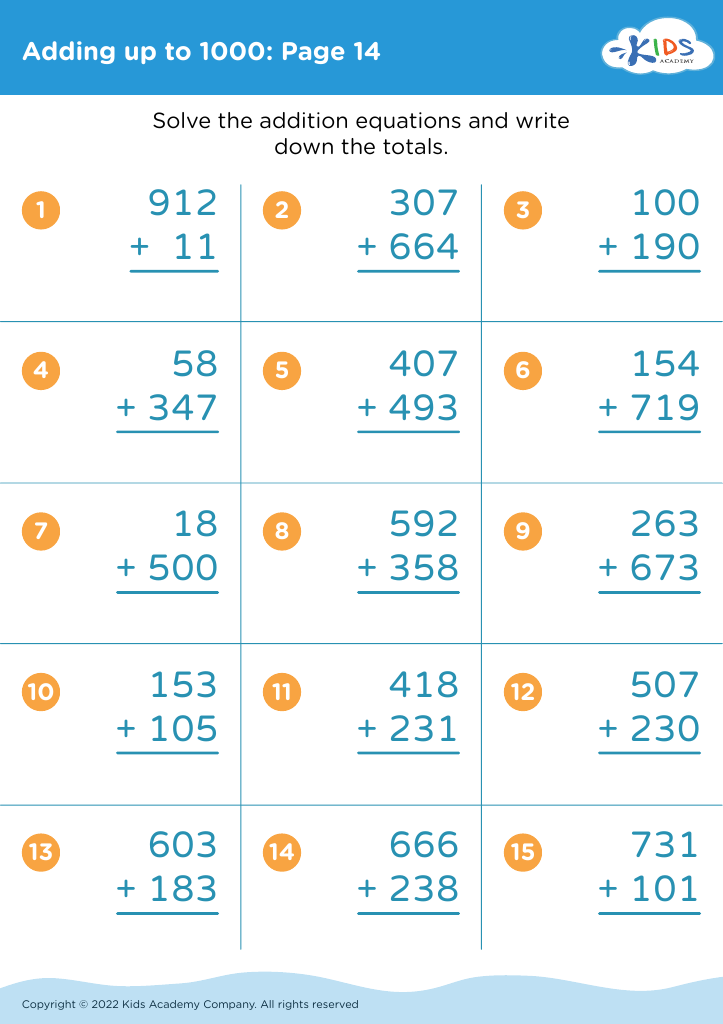








Practicing addition and subtraction for children ages 4-9 is essential for several reasons. Firstly, these foundational math skills develop critical thinking and problem-solving abilities, which are vital not only in academics but also in everyday life. Mastery of basic arithmetic enhances cognitive development and resilience, as it encourages children to tackle challenges and learn from their mistakes.
Furthermore, fluency in addition and subtraction fosters confidence in students. As they grasp these concepts, they develop a positive attitude toward math, which is crucial for success in higher-level math later on. Early intervention can prevent math anxiety, as children who struggle with basic operations may find advanced topics daunting.
This stage is also where children begin to form mathematical connections; recognizing patterns, comprehension of number relationships, and understanding the concept of quantity become particularly important. By emphasizing subtraction and addition through engaging and interactive methods—such as games, hands-on activities, and real-world scenarios—parents and teachers can nurture a love for math.
Ultimately, strengthening these skills not only equips children for future academic challenges but also equips them with the tools necessary for logical reasoning and decision-making throughout their lives. Investing in these early skills lays the groundwork for a positive educational experience.








