Recognizing equivalent fractions Addition Worksheets for Ages 4-9
5 filtered results
-
From - To
Discover fun and educational recognizing equivalent fractions addition worksheets designed for children ages 4-9. These engaging sheets from Kids Academy help young learners grasp fundamental math concepts with interactive activities. Ideal for preschoolers through third graders, our carefully crafted exercises blend fraction recognition with basic addition, making learning enjoyable and effective. Each worksheet is tailored to build essential math skills progressively, ensuring children gain confidence while mastering fractions and addition. With colorful visuals and age-appropriate challenges, these worksheets provide an excellent foundation for future math success. Encourage your child’s mathematical journey with our free, printable resources today!
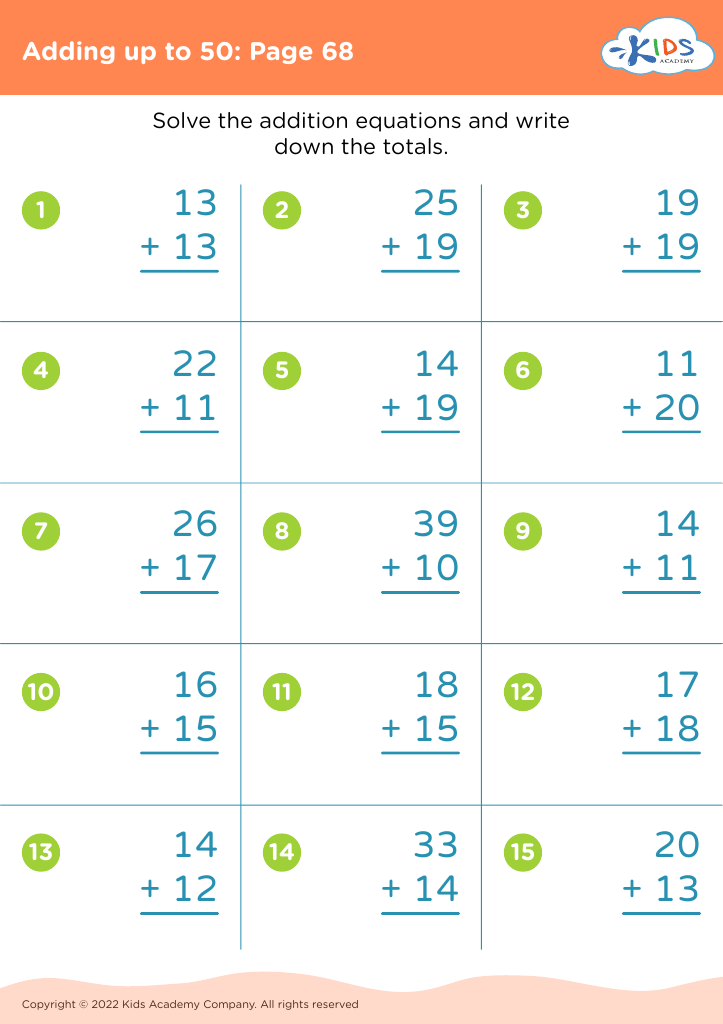
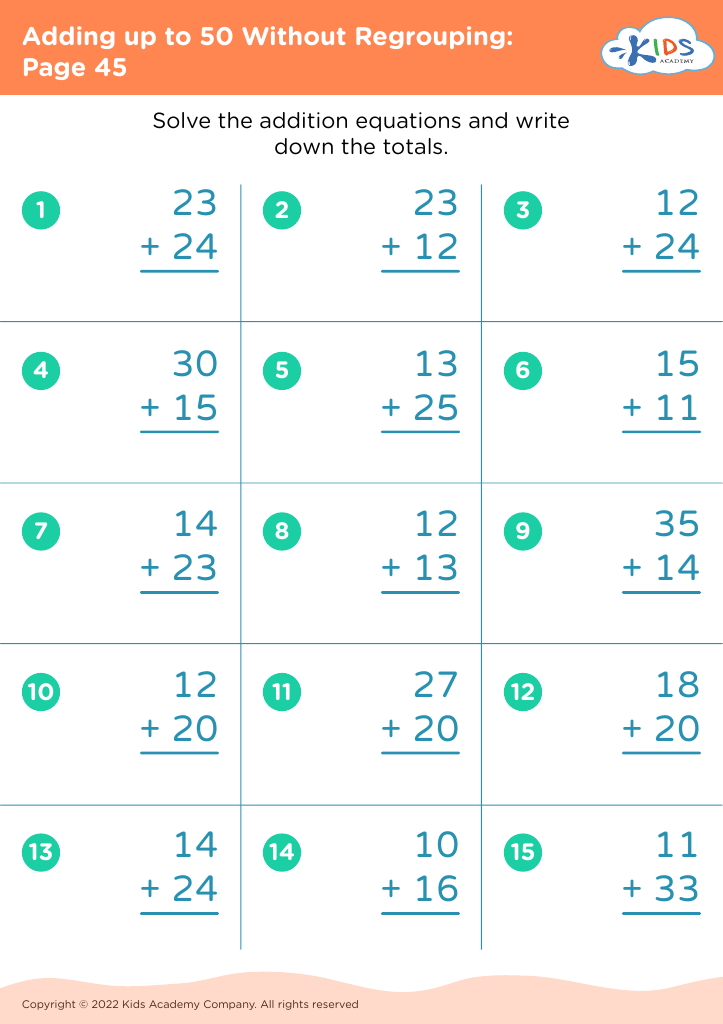
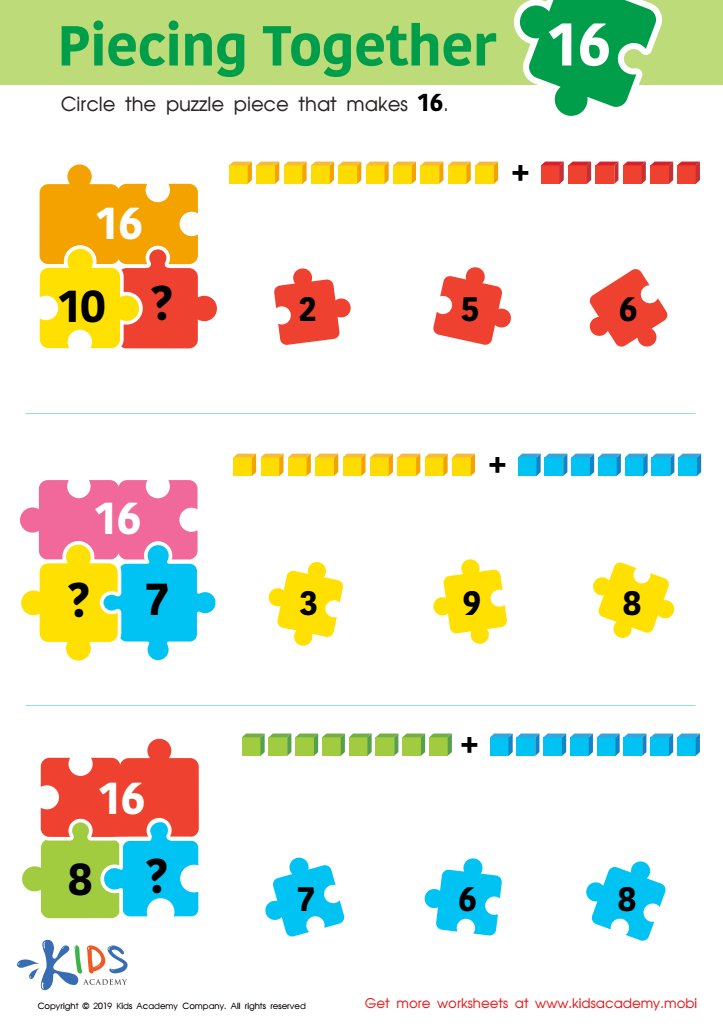
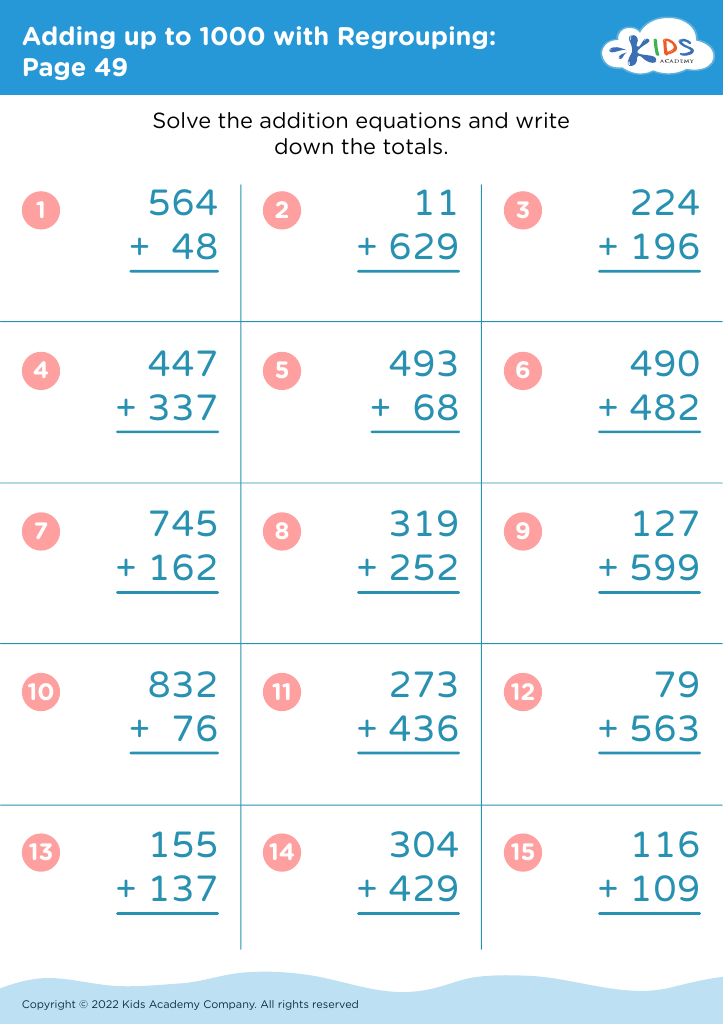
Piecing Together 16 Worksheet
 Assign to My Students





.jpg)


Recognizing equivalent fractions and understanding fraction addition are essential skills for young children, usually starting around age 6-9. These skills lay a critical foundation for more advanced mathematical concepts they will encounter in later grades. For starters, understanding equivalent fractions helps children grasp the idea that different fractions can represent the same part of a whole, which is fundamental for developing number sense.
Why should parents and teachers care? First, learning these skills early boosts a child's confidence in math and promotes a positive attitude toward learning. It enables kids to tackle more complex fractions, percentages, and ratios seamlessly. Second, fractions are not confined to the classroom; they appear in everyday situations like cooking, sports, and sharing. Imagine a child understanding that 1/2 of a pizza is the same as 2/4, thereby making decisions and comprehension easier in real life.
Third, grasping fractions involves problem-solving and critical thinking, valuable life skills outside mathematics. Enhancing these abilities at a young age prepares children for balanced cognitive development. For teachers and parents, encouraging the recognition of equivalent fractions and basic addition involves simple, engaging activities that make learning fun and intuitive, setting children up for future academic success.








