Understanding addition Addition Worksheets for Ages 4-9
8 filtered results
-
From - To
Discover our "Understanding Addition Worksheets" for children aged 4-9, perfect for developing early math skills. These engaging, printable worksheets are designed to introduce young learners to the fundamental principles of addition through fun and interactive exercises. Each worksheet offers a range of problems, utilizing visual aids such as number lines and colorful illustrations to simplify the learning process. Our resources help nurture problem-solving abilities and mathematical thinking, making addition concepts easy and enjoyable. Start your young mathematician’s journey with our expertly crafted worksheets, fostering a strong foundation in mathematics and inspiring a lifelong love of learning.
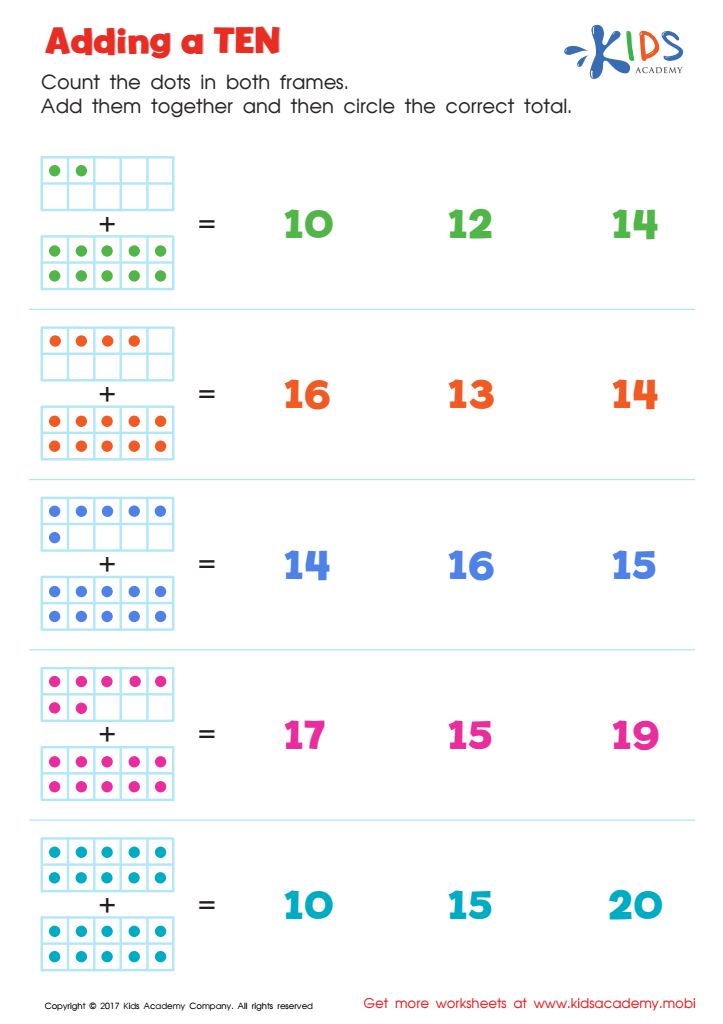
Adding a Ten Worksheet
 Assign to My Students
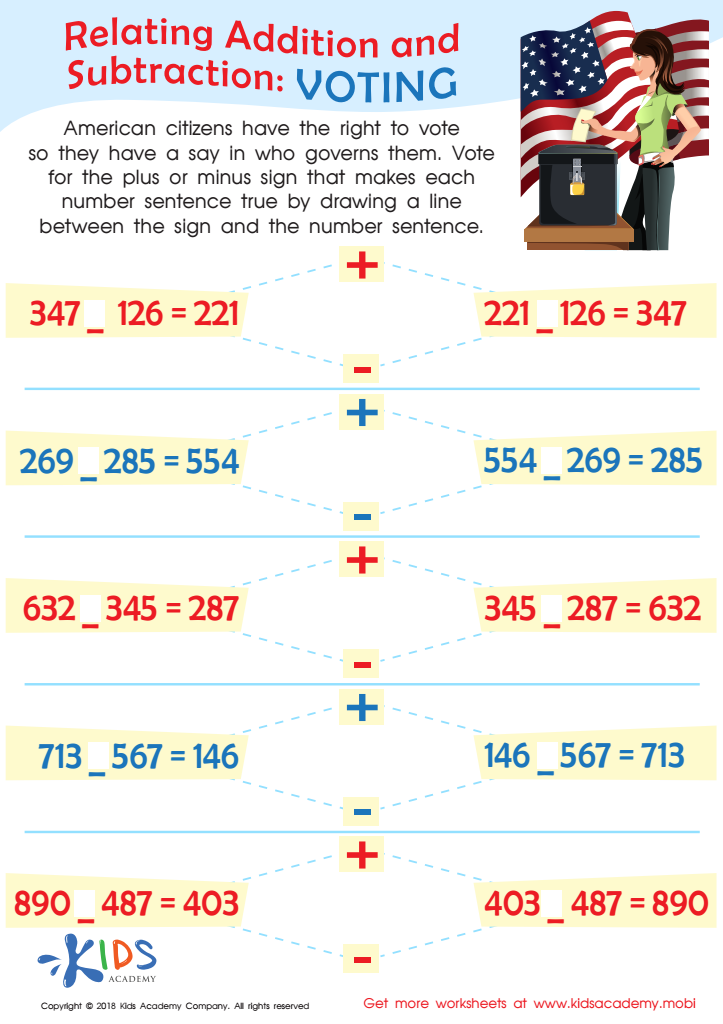
Voting Worksheet
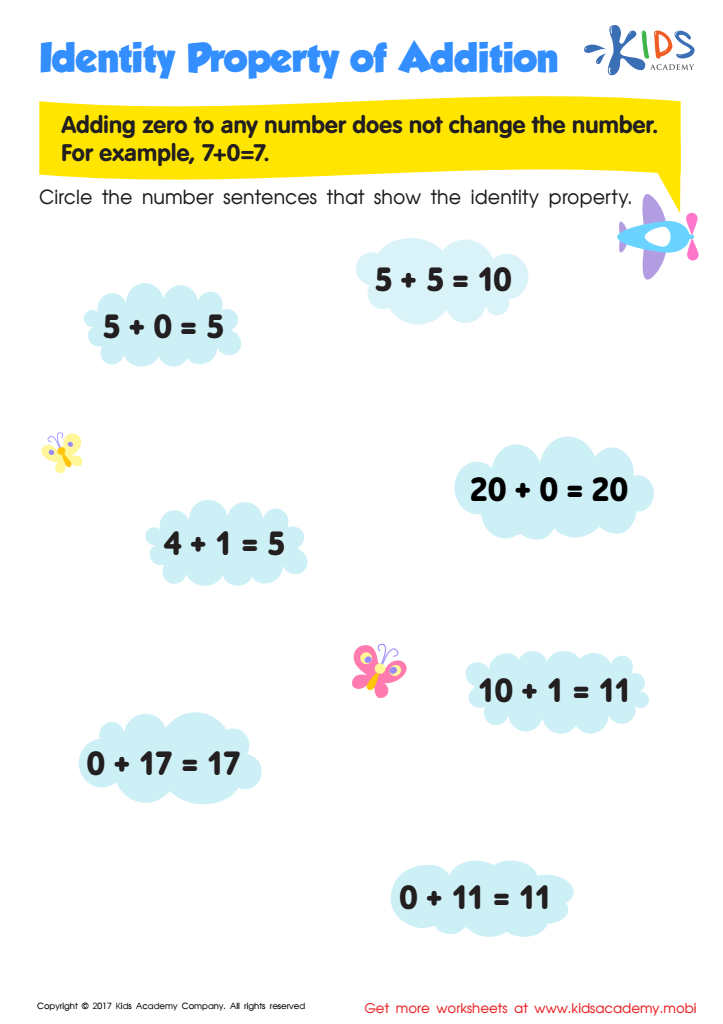
Identity Property of Addition Worksheet
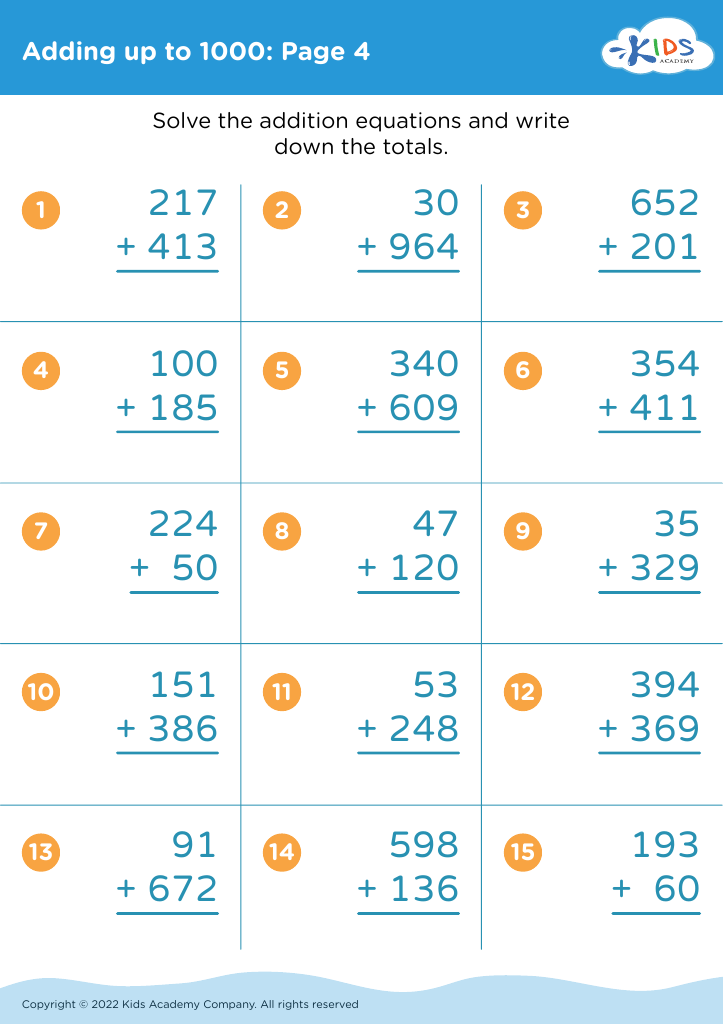
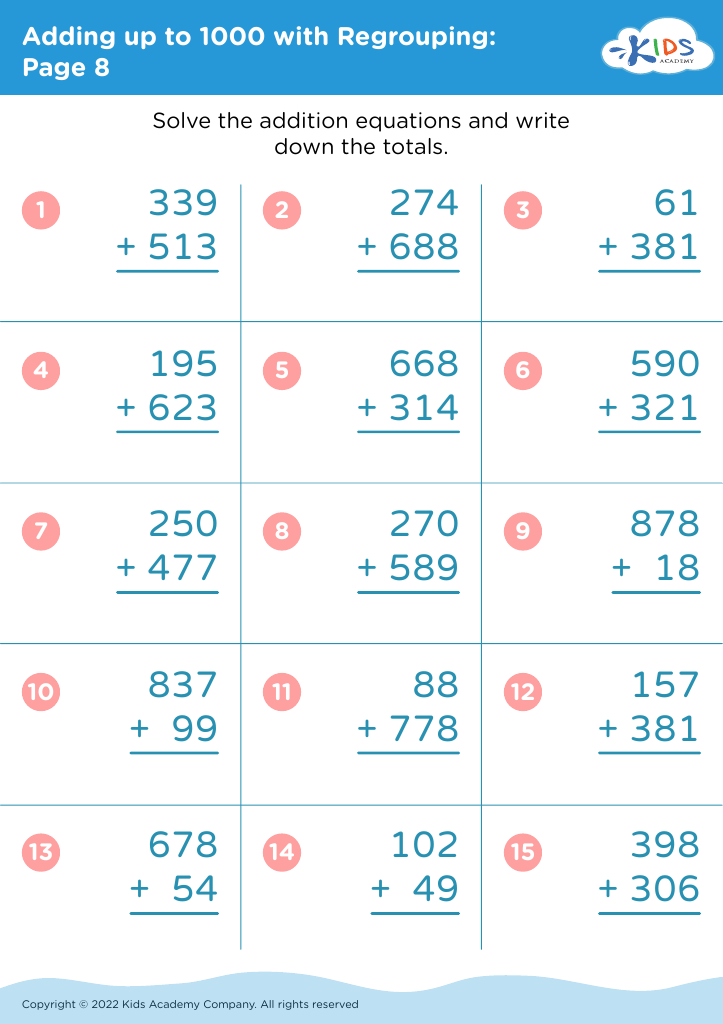
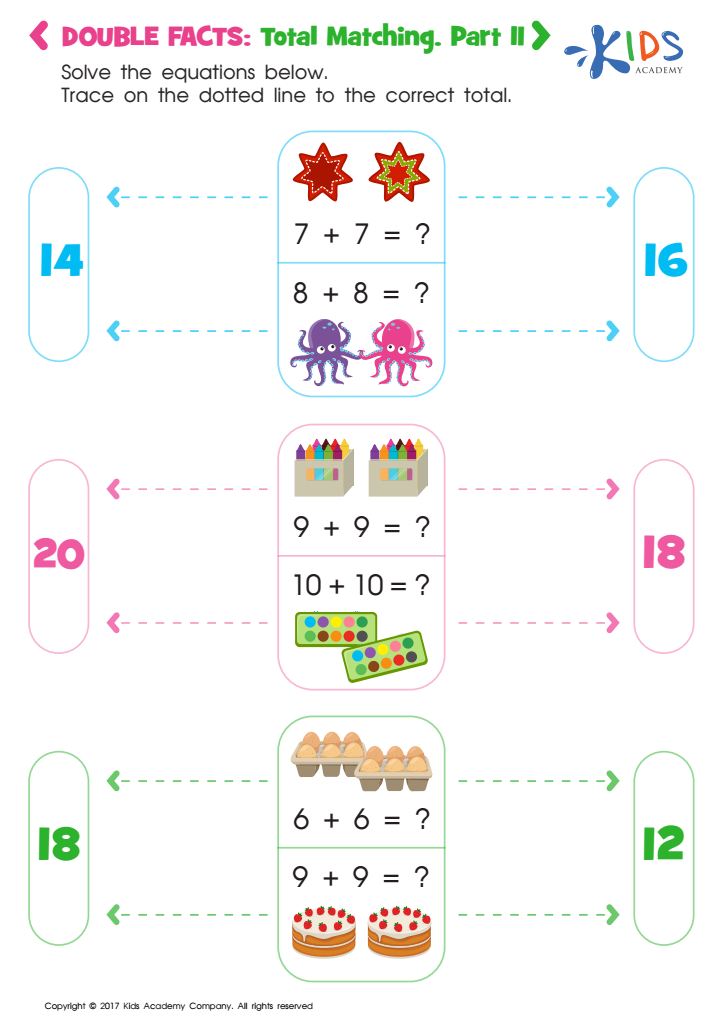
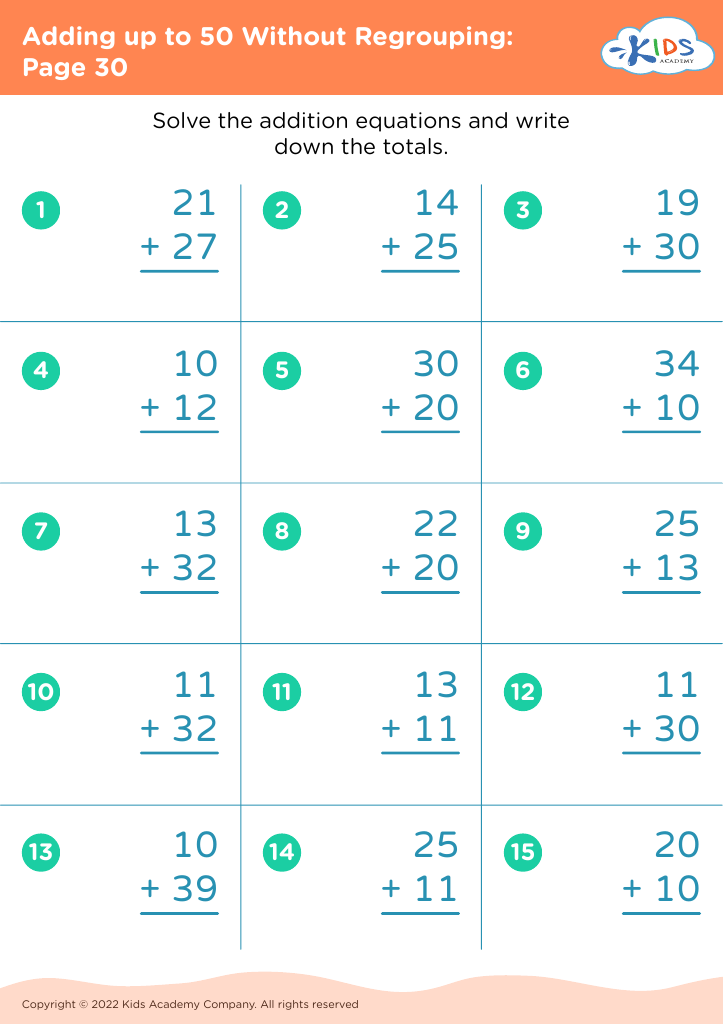
Double Facts: Total Matching 2 Worksheet








Understanding addition is a foundational skill for children ages 4-9, and both parents and teachers play pivotal roles in nurturing this essential element of early mathematics. During these formative years, children are developing critical cognitive abilities, and mastering addition sets the stage for more advanced math concepts such as subtraction, multiplication, and division. When parents and teachers emphasize understanding addition, they help children build a strong numerical foundation, enhancing their overall problem-solving and analytical skills.
In this age range, children are highly receptive to learning and forming patterns of thinking. By grasping the concept of addition early on, they become more confident in tackling math-related tasks. This confidence can lead to a positive attitude toward mathematics, reducing anxiety and fostering a lifelong appreciation for the subject.
Furthermore, understanding addition helps in practical, everyday scenarios, such as counting objects, handling money, and evaluating quantities. These practical applications make the concept tangible and relevant, reinforcing its importance.
Parents and teachers have the dual responsibility to create supportive and engaging learning environments. Through interactive activities, games, and everyday experiences, they can instill a deep understanding and appreciation of addition, ultimately equipping children with the skills necessary for future academic and personal success.








