Understanding directions Addition Worksheets for Ages 4-9
3 filtered results
-
From - To
Welcome to our "Understanding Directions Addition Worksheets" for ages 4-9! Designed to enhance math skills through engaging activities, these worksheets help young learners develop a strong foundational understanding of addition. Each worksheet teaches children how to follow directions accurately, reinforcing their ability to comprehend instructions while mastering basic math concepts. With vibrant illustrations and age-appropriate challenges, kids will enjoy practicing addition in a fun and interactive way. Our resources are perfect for classroom settings or at-home learning, ensuring that your child gains confidence in their math abilities while learning to navigate directions carefully. Unlock the fun in learning today!
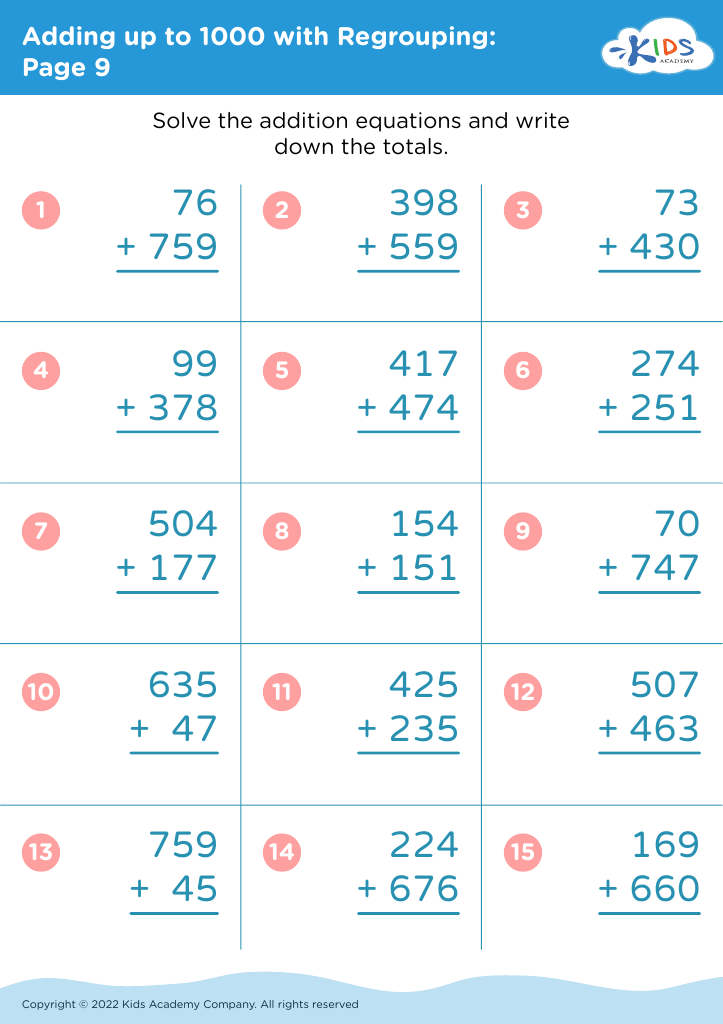
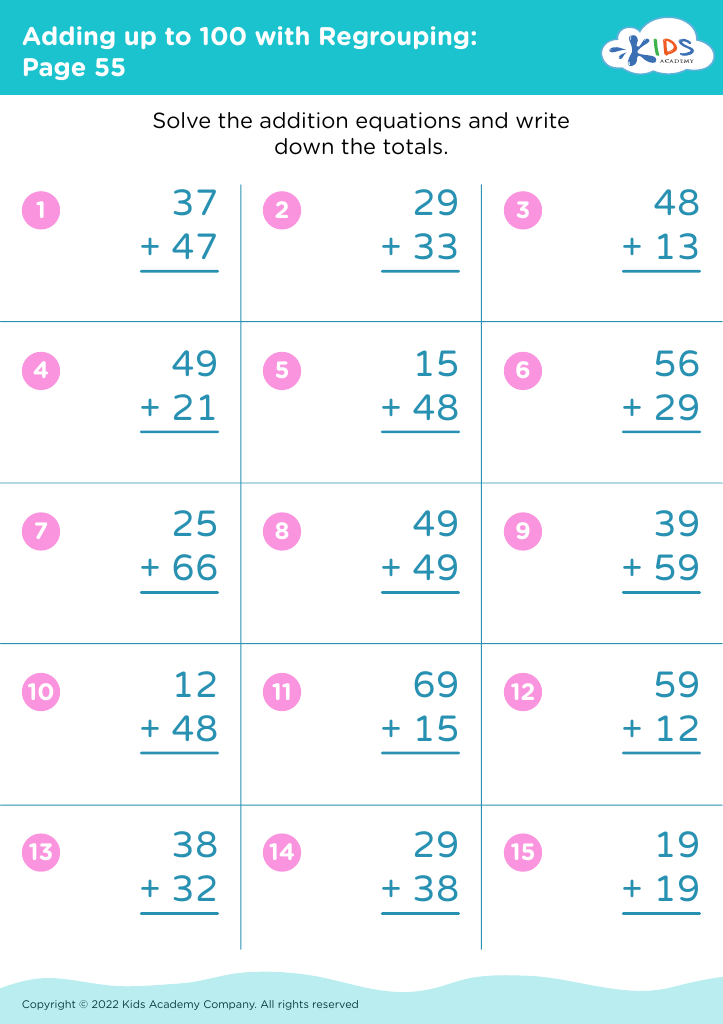
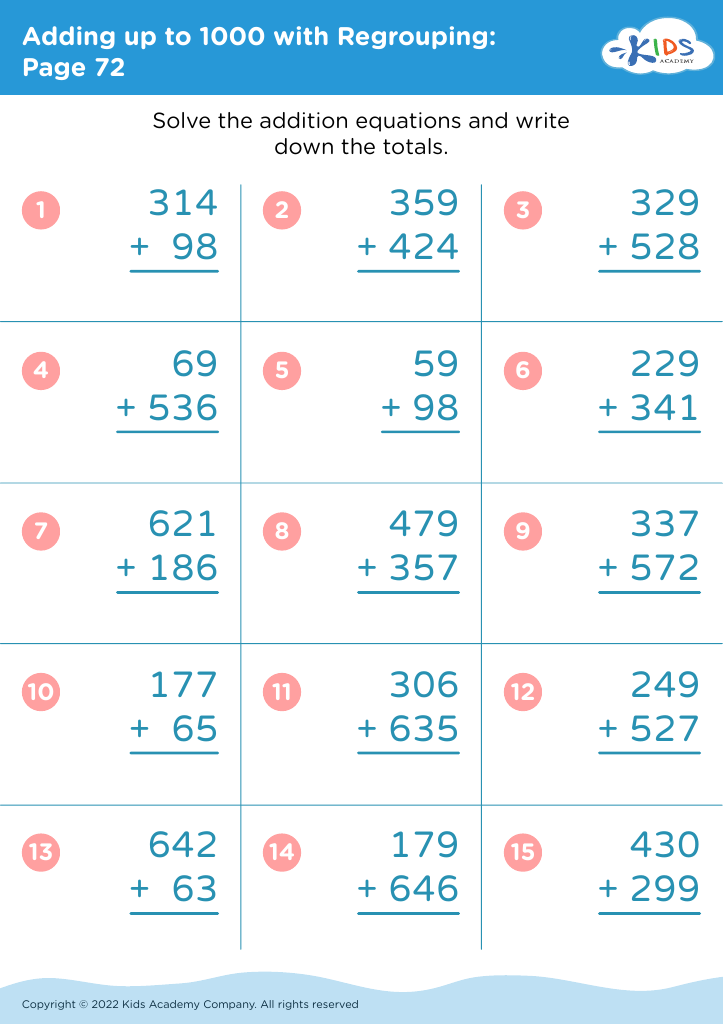





.jpg)


Understanding directions for addition is crucial for children aged 4-9, as it lays the groundwork for mathematical concepts that are essential in their educational journey. At this age, children are developing cognitive abilities and mathematical thinking, and grasping how to follow directions enhances their problem-solving skills and promotes critical thinking.
Parents and teachers play a vital role in building a child’s mathematical foundation. By guiding them to understand addition through clear, concise directions, educators can ensure students grasp concepts such as number recognition, counting, and operations. This understanding also fosters confidence, as students who can follow directions effectively are more likely to engage in learning activities and seek out challenges.
Moreover, comprehending directions in addition helps children develop language skills, as they learn to interpret mathematical terminology. This sets the stage for improved communication and collaboration in future learning experiences. Additionally, the ability to interpret and execute directions translates into real-world skills, aiding children in tasks beyond the classroom.
For these reasons, prioritizing comprehension of addition directions is an investment in a child’s overall education, empowering them with the confidence and skills necessary for academic success and lifelong learning.








