Understanding numeracy Addition Worksheets for Ages 4-9
4 filtered results
-
From - To
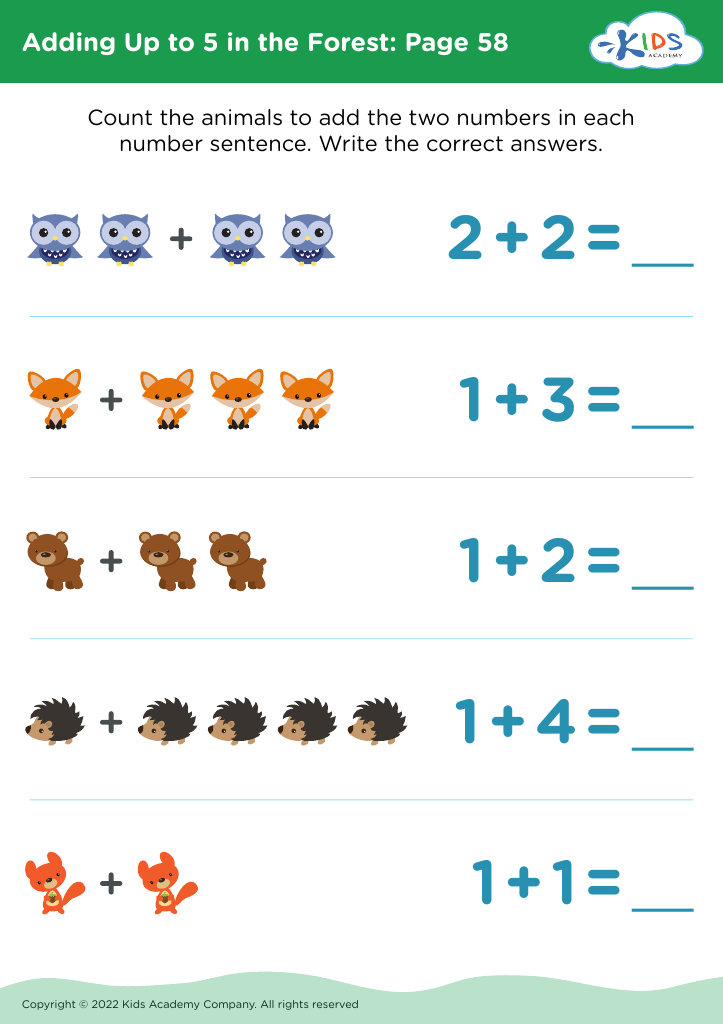
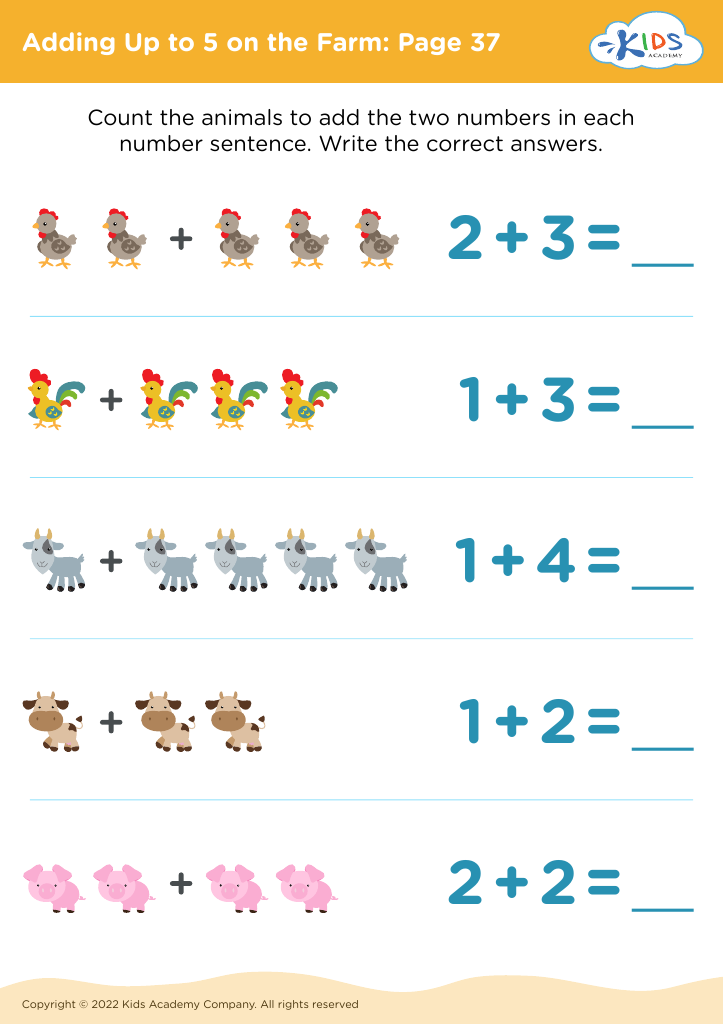
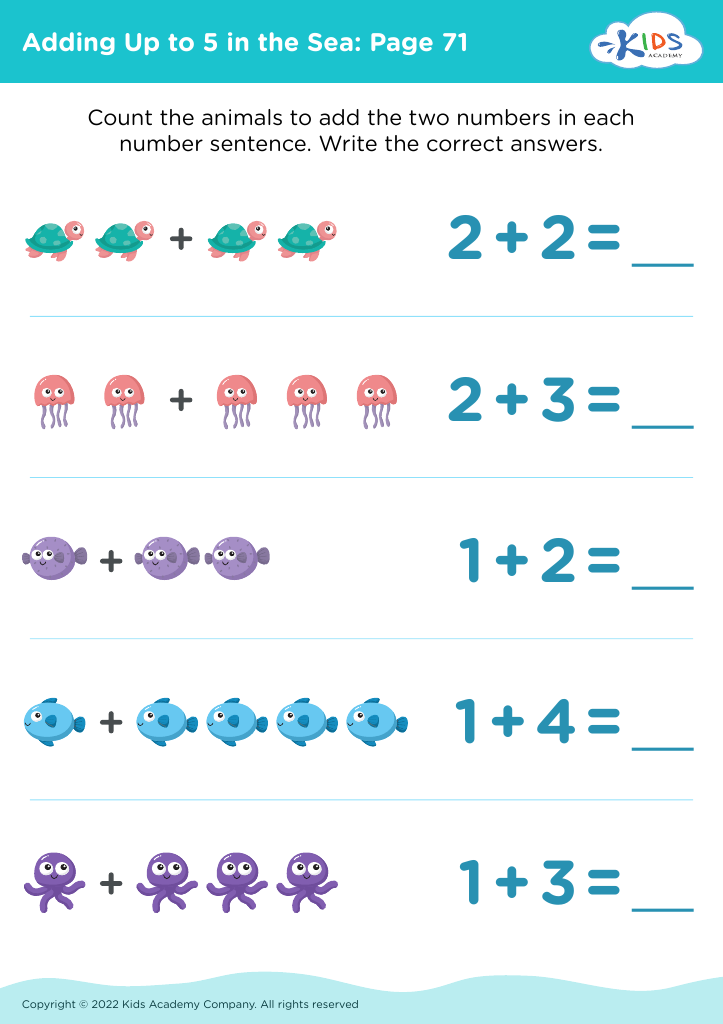
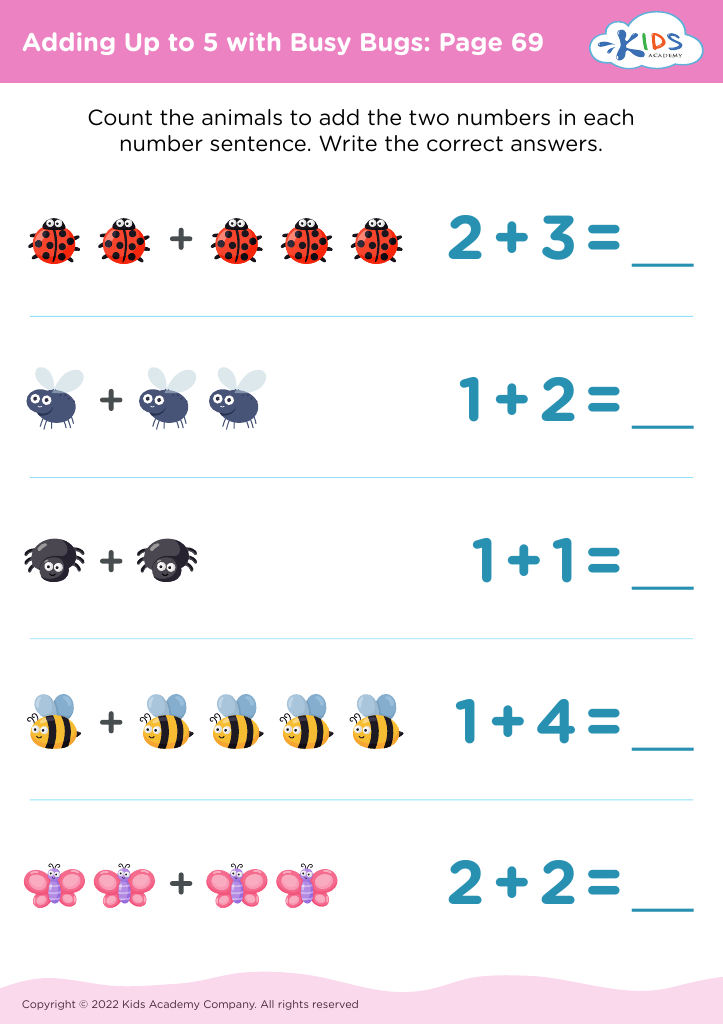
Explore our "Understanding Numeracy Addition Worksheets" designed for children ages 4-9, perfect for enhancing foundational math skills. These engaging worksheets simplify addition concepts through colorful visuals and interactive exercises, making learning enjoyable. By practicing these worksheets, children will grasp basic addition, develop problem-solving strategies, and foster number recognition and counting skills. Tailored to various learning levels, our resources accommodate both beginners and advanced learners, ensuring a thorough understanding of numeracy. Help your child build confidence in math while having fun with themed activities that promote critical thinking and strengthen their love for learning. Unlock the joys of addition today!







Understanding numeracy and addition from ages 4 to 9 is crucial for several reasons. Early mathematical skills serve as the foundation for later academic success and critical thinking abilities. At this age, children are naturally curious about numbers, and fostering this interest can enhance their cognitive development and problem-solving skills.
Addition, in particular, introduces fundamental concepts that underpin more complex mathematics. Mastering basic addition helps children develop number sense, which enables them to understand relationships between numbers and their applications in everyday life. This early understanding lays the groundwork for future math-related subjects, influencing their educational trajectory.
Moreover, active engagement in numeracy practices between parents and teachers can create a positive learning environment. It nurtures a child's confidence and interest in math, which is essential for overcoming anxiety associated with the subject later on. Meaningful connections between numbers and real-life situations, such as counting objects or sharing items, enhance comprehension and retention.
Importantly, as children increasingly encounter numbers in technology and media, a solid foundation in addition will empower them to navigate these tools effectively. Investing time and effort into understanding numeracy ensures children feel confident, capable, and excited about their mathematical journey.








