Understanding numerical values Addition Worksheets for Ages 4-9
4 filtered results
-
From - To
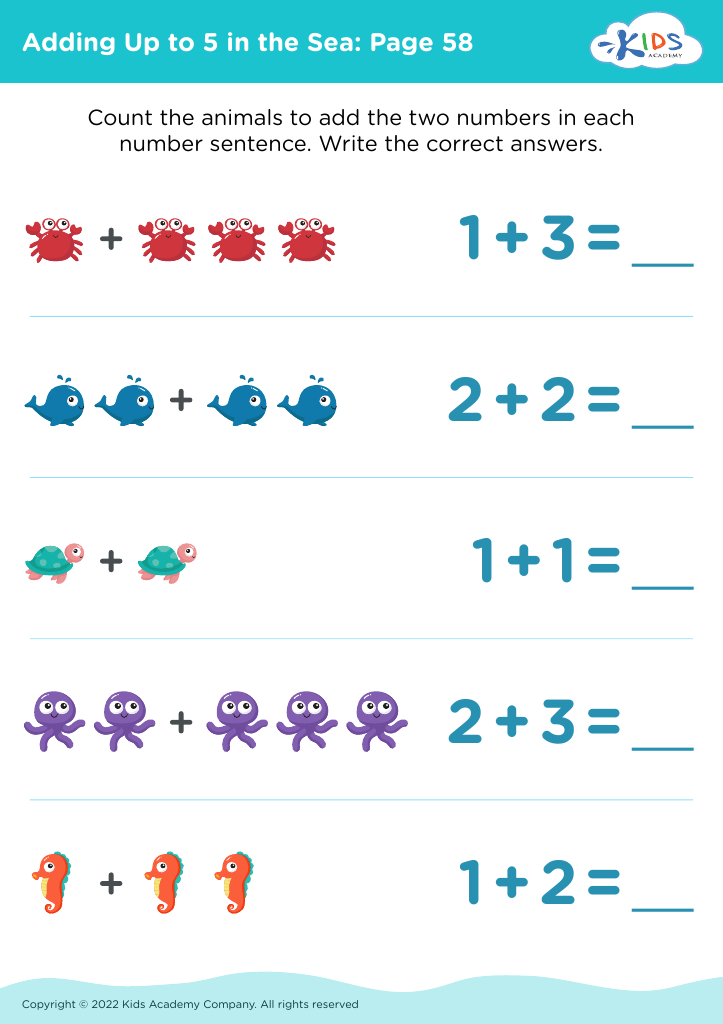
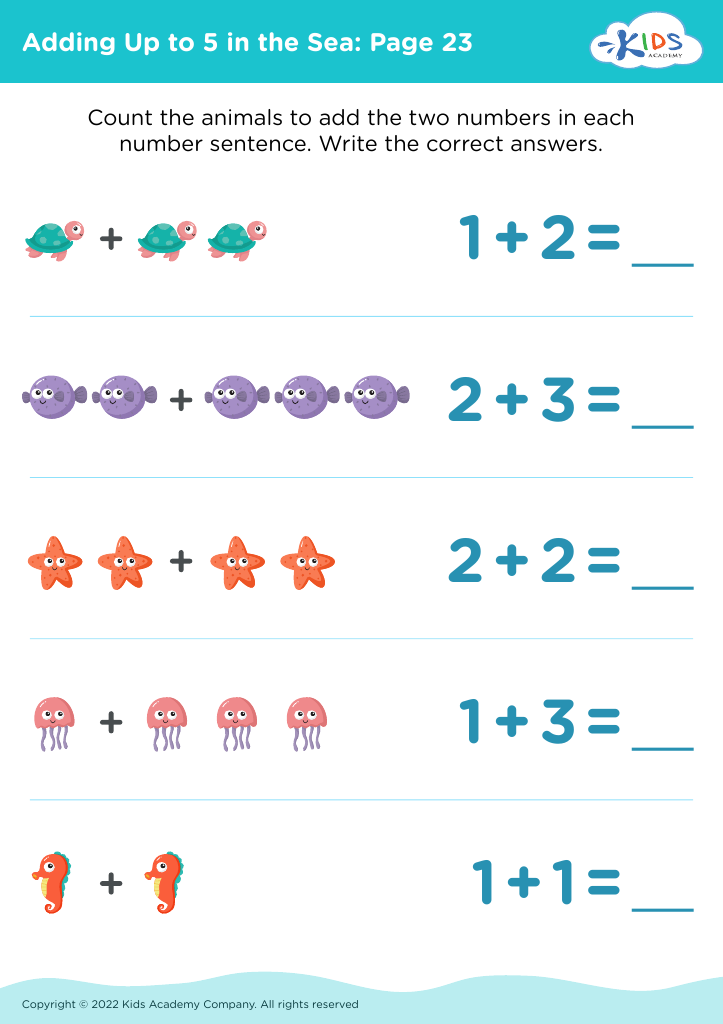
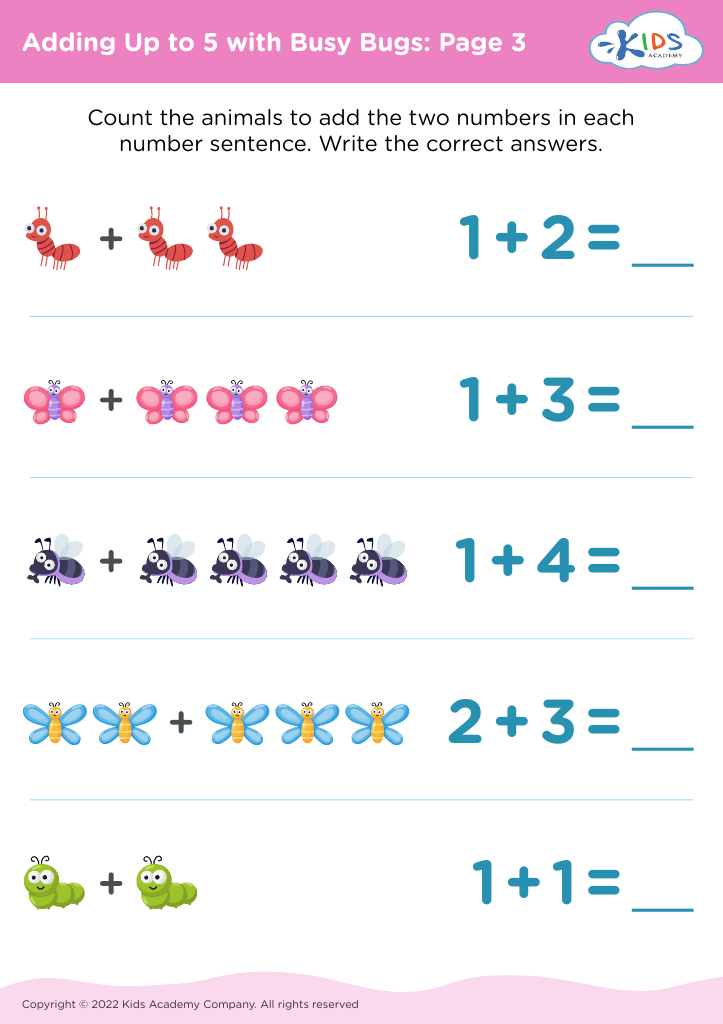
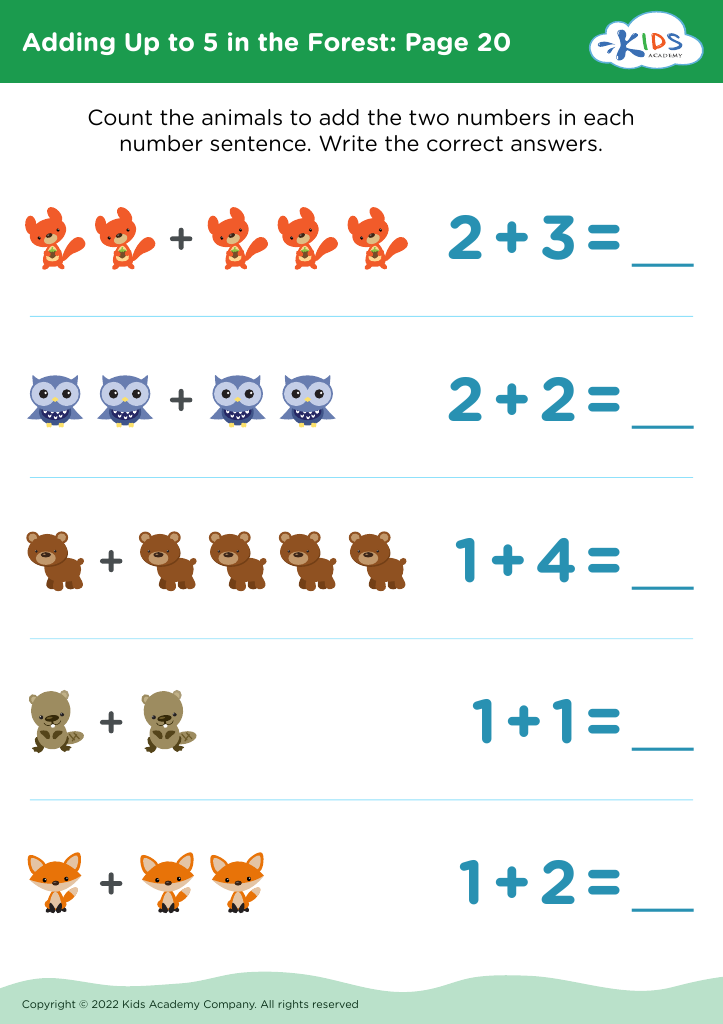
Explore our "Understanding Numerical Values Addition Worksheets" designed specifically for children ages 4-9. These engaging worksheets help young learners recognize and comprehend numerical values through fun activities and illustrations. Perfect for reinforcing fundamental math skills, our resources encourage children to practice addition while developing a deep understanding of numbers. With a range of exercises that cater to various learning styles, kids will gain confidence in their mathematical abilities while enjoying the process. Whether in the classroom or at home, our worksheets provide an enjoyable way to make learning about numbers and addition a delightful experience for early learners. Download now and inspire future mathematicians!








Understanding numerical values and addition is essential for children aged 4-9, as it lays the foundation for future mathematical skills and critical thinking. During these formative years, children develop cognitive abilities and learn to make sense of the world around them. Grasping numerical values enables them to comprehend everyday situations, such as counting items, understanding money, and telling time, fostering independence and confidence in their decision-making abilities.
Additionally, addition is a fundamental mathematical operation that acts as a building block for more complex concepts, such as subtraction, multiplication, and eventually division. When children understand how to add, they are equipped to tackle various problem-solving scenarios, enhancing their overall academic performance.
Moreover, engaging with numerical values through addition can enhance children’s socio-emotional development. Participating in fun activities like games or everyday situations that incorporate math helps strengthen parent-child and teacher-student bonds. This interaction nurtures a positive attitude towards learning and math in particular, encouraging a growth mindset that values perseverance and resilience.
Ultimately, by focusing on understanding numerical values and addition, parents and teachers create an enriching environment that promotes lifelong learning and equips children with essential skills they will need in the world beyond the classroom.








