Understanding sequencing Addition Worksheets for Ages 4-9
7 filtered results
-
From - To
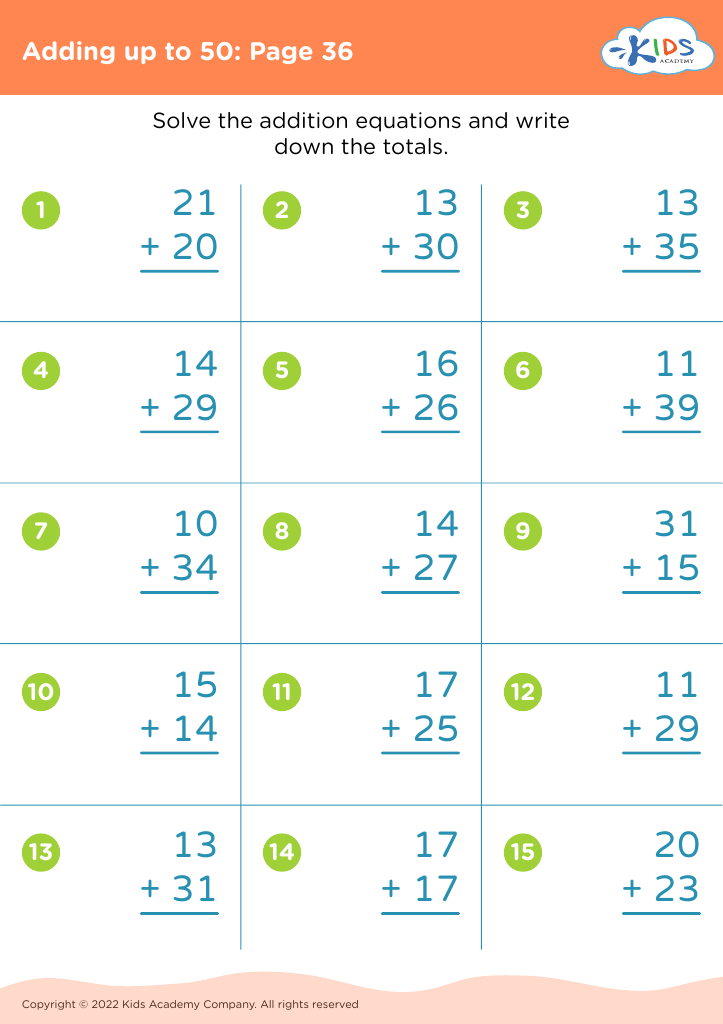
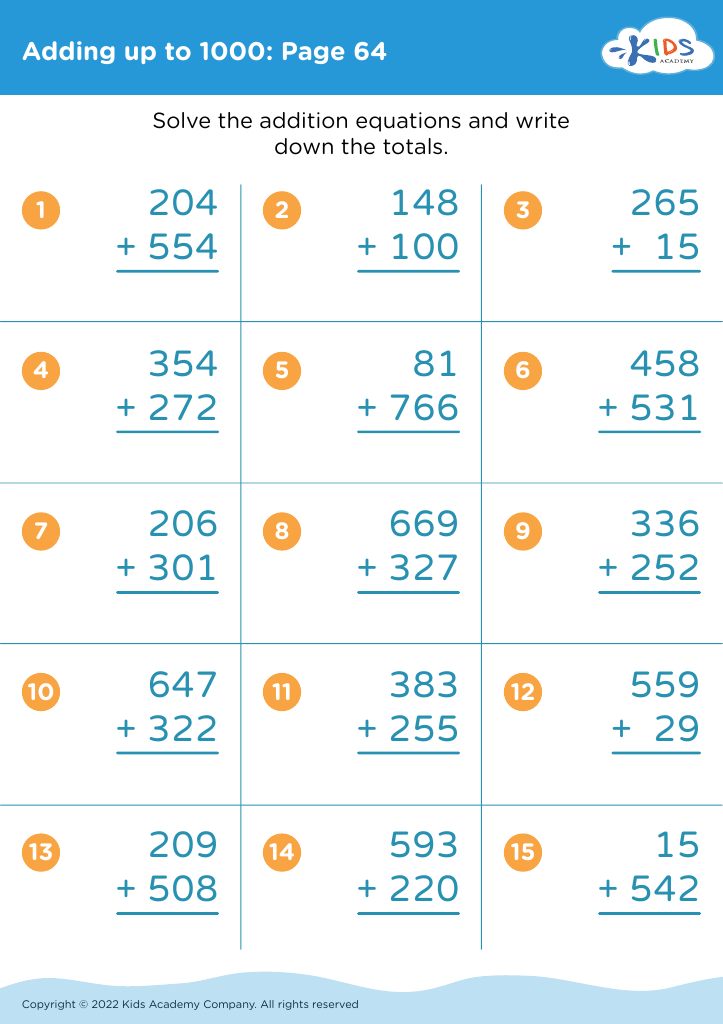
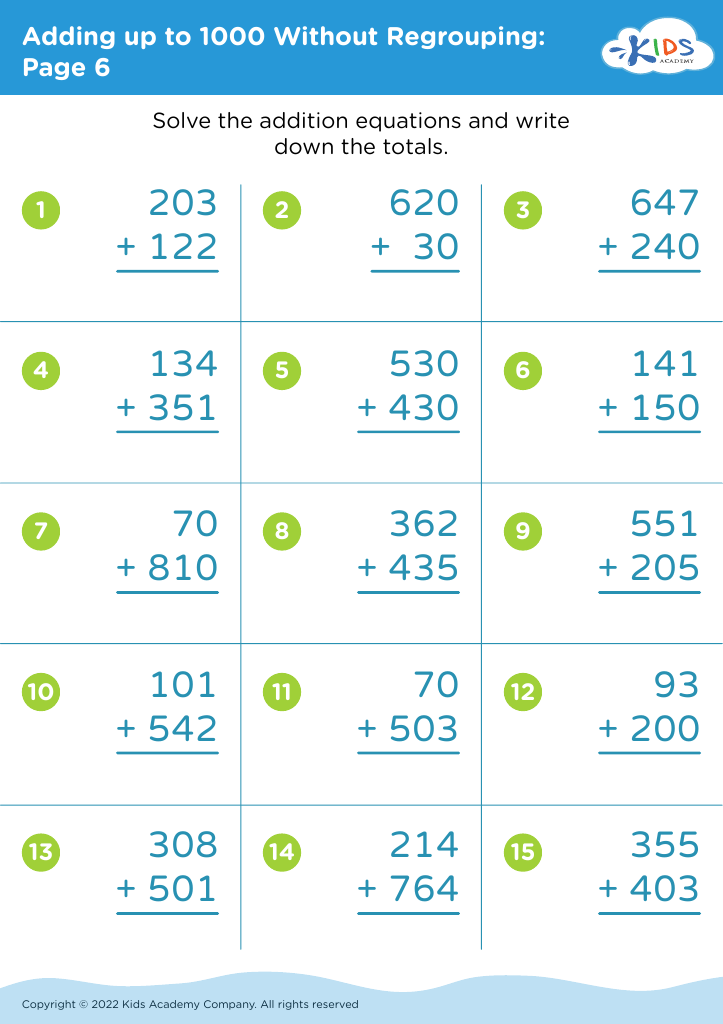
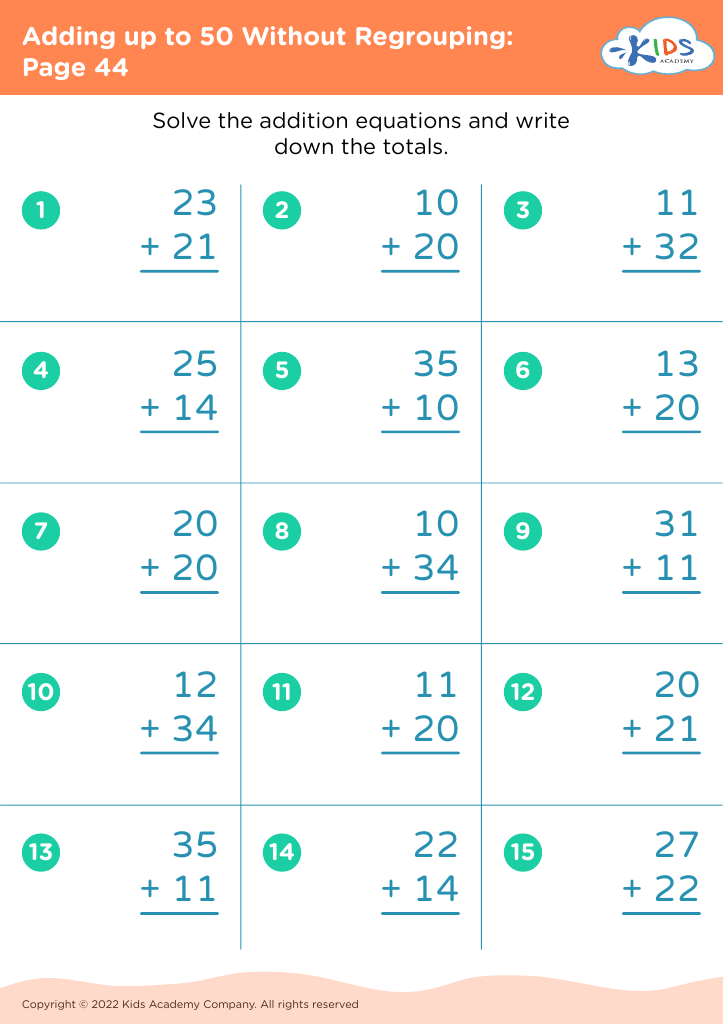
Discover the perfect way to enhance your child's math skills with our "Understanding Sequencing Addition Worksheets for Ages 4-9." These engaging worksheets, designed by expert educators at Kids Academy, help young learners master the basics of addition through fun sequencing activities. With bright illustrations and age-appropriate tasks, children develop essential counting, problem-solving, and logical thinking skills. Our comprehensive collection ensures solid mathematical foundations while keeping kids entertained and motivated. Ideal for parents and teachers, these worksheets are an excellent resource to make early math learning enjoyable and effective. Elevate your child's education with our expertly crafted addition sequencing worksheets today!
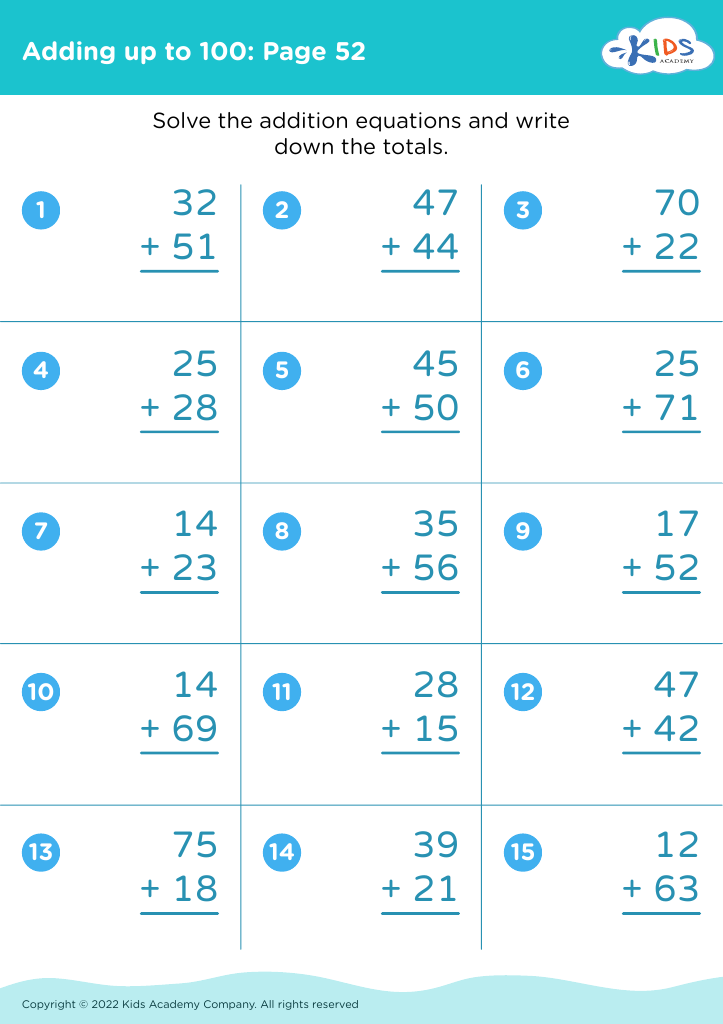
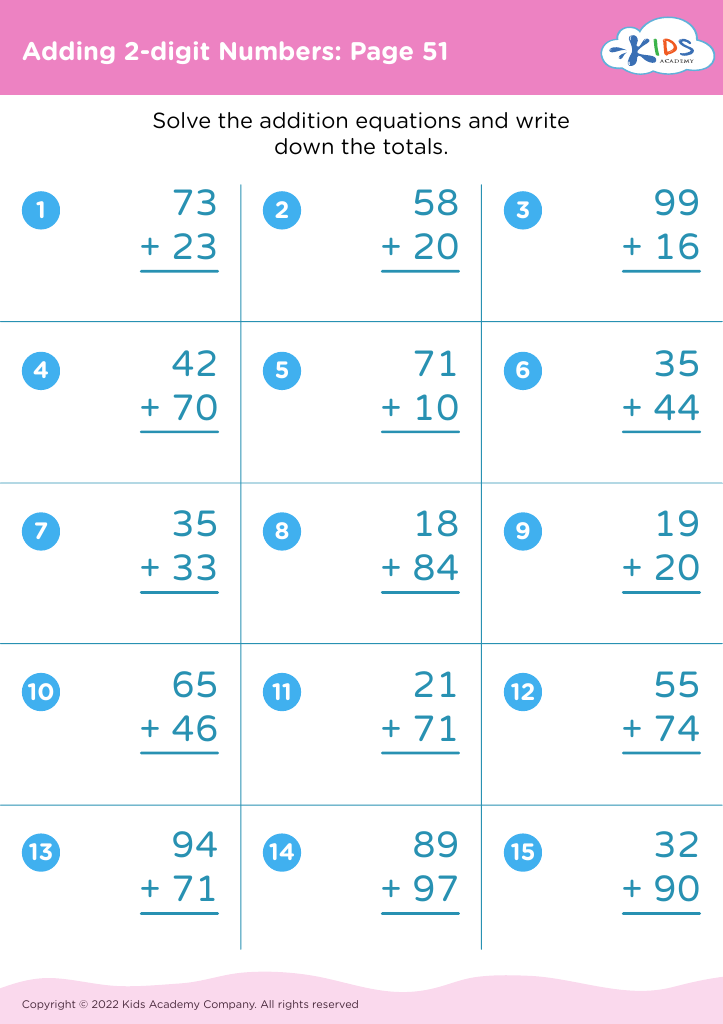
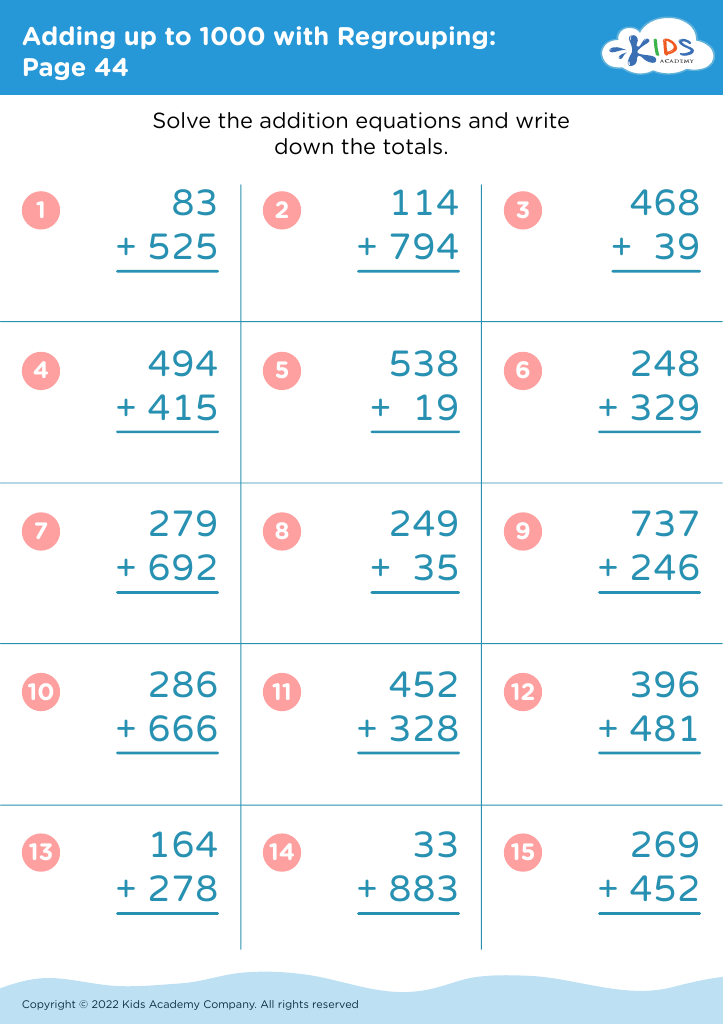








Understanding sequencing addition is crucial for children aged 4-9 as it lays the foundation for their mathematical development and enhances cognitive skills that are vital for everyday problem-solving. At this early age, children are naturally curious and capable of absorbing concepts that set the stage for future learning. Sequencing addition helps them grasp the concept of numerical order and the relationship between numbers, which are essential for more advanced math skills such as multiplication and division.
Parents and teachers should prioritize this area because it boosts a child’s confidence and fosters a positive attitude towards mathematics. When children can follow and understand the steps involved in sequencing addition, they build a sense of accomplishment that motivates them to tackle more complex problems.
Furthermore, it enhances their logical thinking and reasoning capabilities. This skill is not restricted to math alone; it translates into better decision-making and planning skills in everyday life. For instance, understanding sequences helps in following instructions, organizing tasks, and comprehending stories.
By supporting children in mastering sequencing addition, parents and teachers are not just improving their math skills, but also contributing to their overall intellectual growth and preparing them for academic and real-life success. This investment in a child's early education is pivotal in shaping a well-rounded, competent individual.








