Visual representation comprehension Addition Worksheets for Ages 4-9
5 filtered results
-
From - To
Welcome to our collection of Visual Representation Comprehension Addition Worksheets designed specifically for children ages 4 to 9! These engaging worksheets enhance young learners' mathematical skills by incorporating visual aids to help them understand addition concepts. By using images, diagrams, and colorful graphics, kids will develop a solid foundation in basic arithmetic while enjoying learning. Our thoughtfully created worksheets cater to various skill levels, ensuring that each child progresses at their own pace. Empower your young mathematicians today with these fun and interactive resources that make mastering addition a delightful journey! Explore our worksheets and watch comprehension skills flourish!
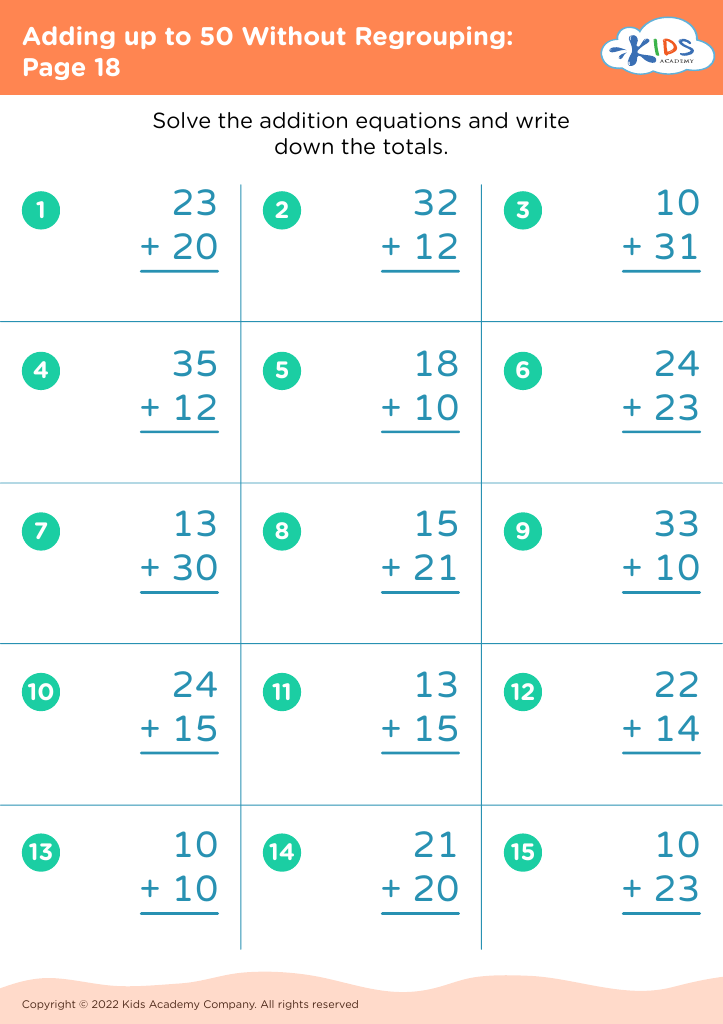
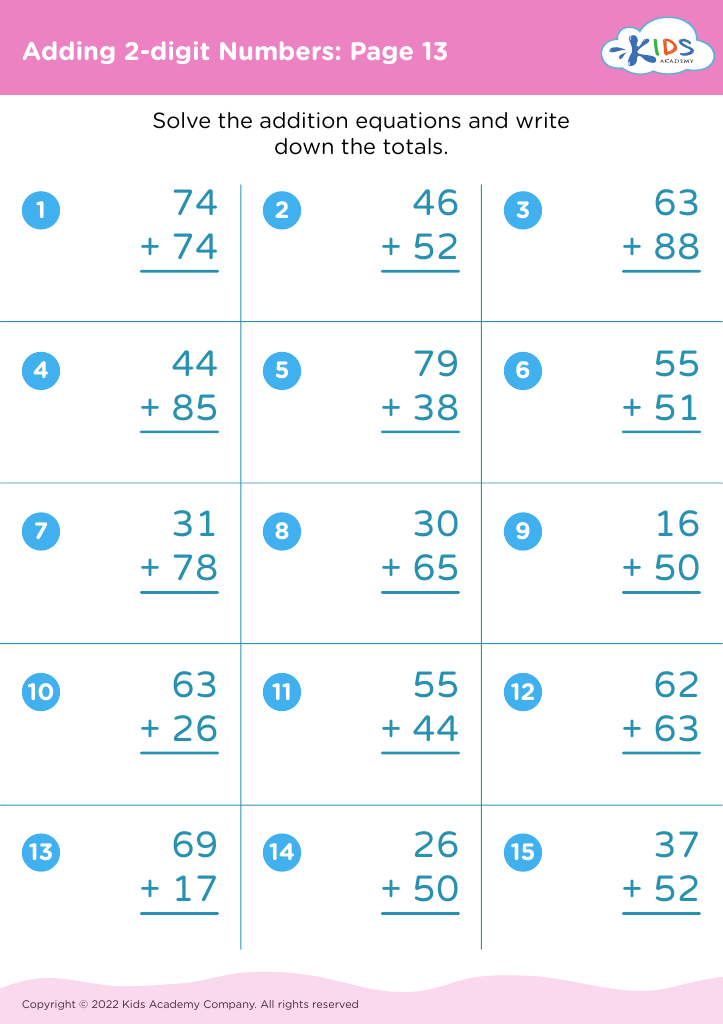
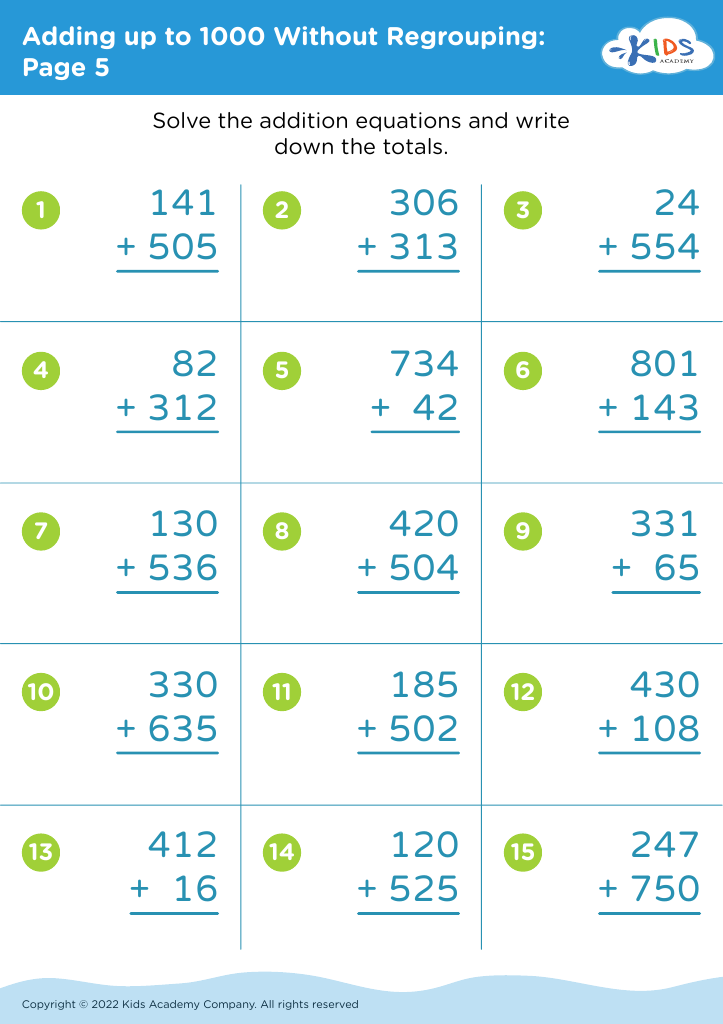
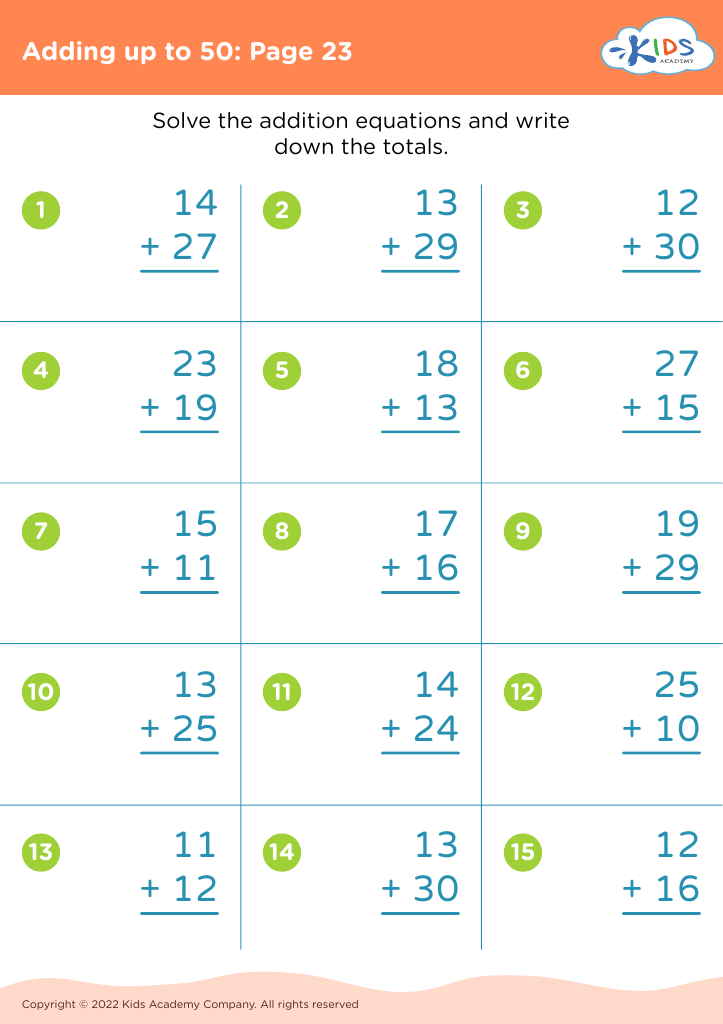
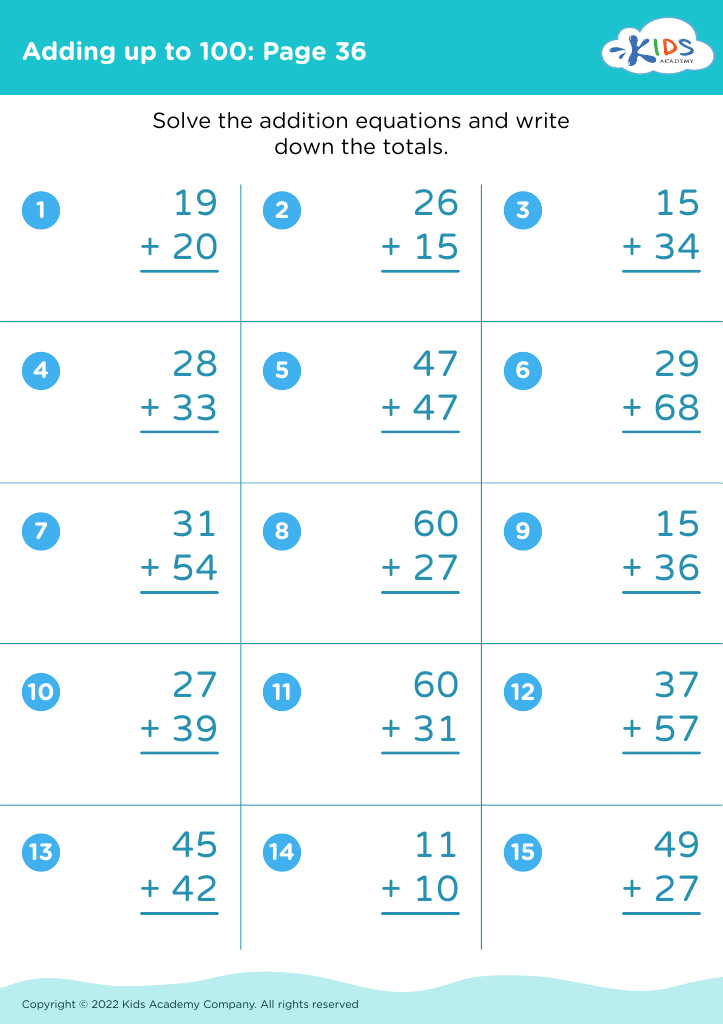








Visual representation comprehension in addition is essential for children aged 4-9 because it provides foundational skills necessary for mathematical understanding and problem-solving. At this developmental stage, children are naturally visual learners. Using images, drawings, or manipulatives can help them grasp abstract concepts, making numbers and operations more relatable and tangible.
To foster a strong mathematical mindset, it's crucial for parents and teachers to integrate visual aids into learning activities. Visual representations, like number lines, blocks, or pictures, enable children to better understand addition concepts by offering concrete examples of how quantities combine. This approach not only aids in grasping basic arithmetic but also develops critical thinking and reasoning skills.
Moreover, early successful experiences with visual tools can build confidence in children, making them more eager to explore math independently. As they progress to more complex concepts, these early visual strategies will serve as a solid foundation, allowing them to connect ideas and methods more readily.
By prioritizing visual representation in addition, caregivers play a vital role in ensuring that children develop not only core competencies in math but also healthy attitudes toward learning and risk-taking in challenging subjects.








