Counting skills Money Worksheets for Ages 4-9
5 filtered results
-
From - To
Enhance your child's math skills with our engaging Counting Skills Money Worksheets designed for ages 4-9! These interactive worksheets introduce young learners to the concept of counting money in a fun and relatable way. With colorful illustrations and age-appropriate activities, your child will master counting coins and bills while developing essential math skills. Our resources not only foster numerical understanding but also promote critical thinking as children solve real-world problems involving money. Perfect for classroom use or at-home learning, these worksheets provide a valuable foundation for future financial literacy. Start building your child's confidence in counting money today!
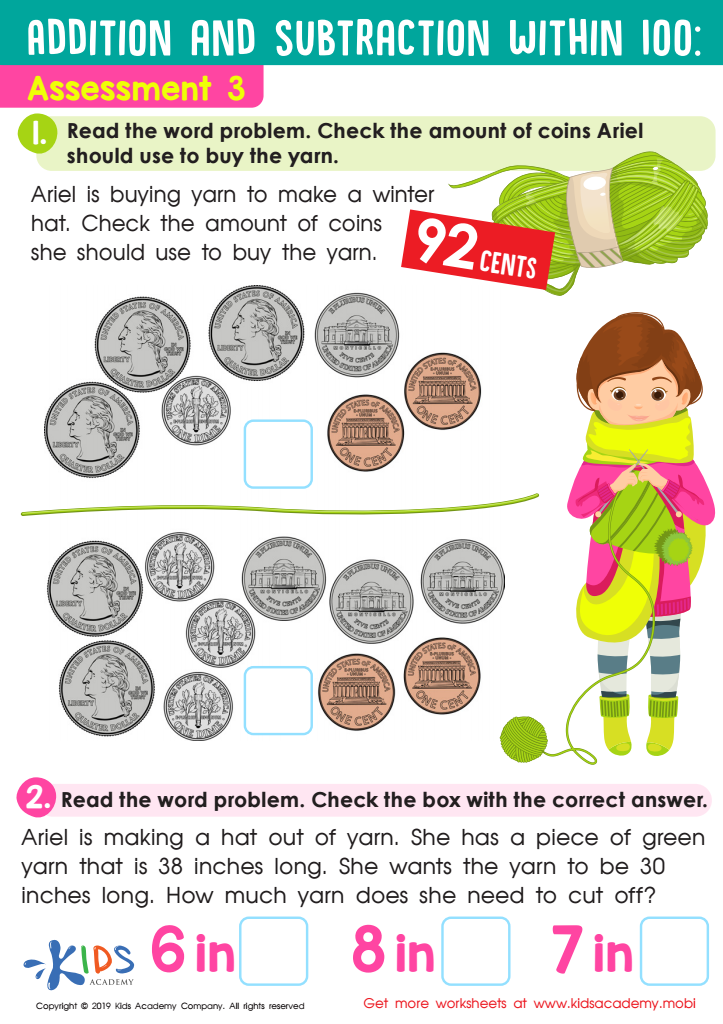
Assessment 3 Math Worksheet
 Assign to My Students
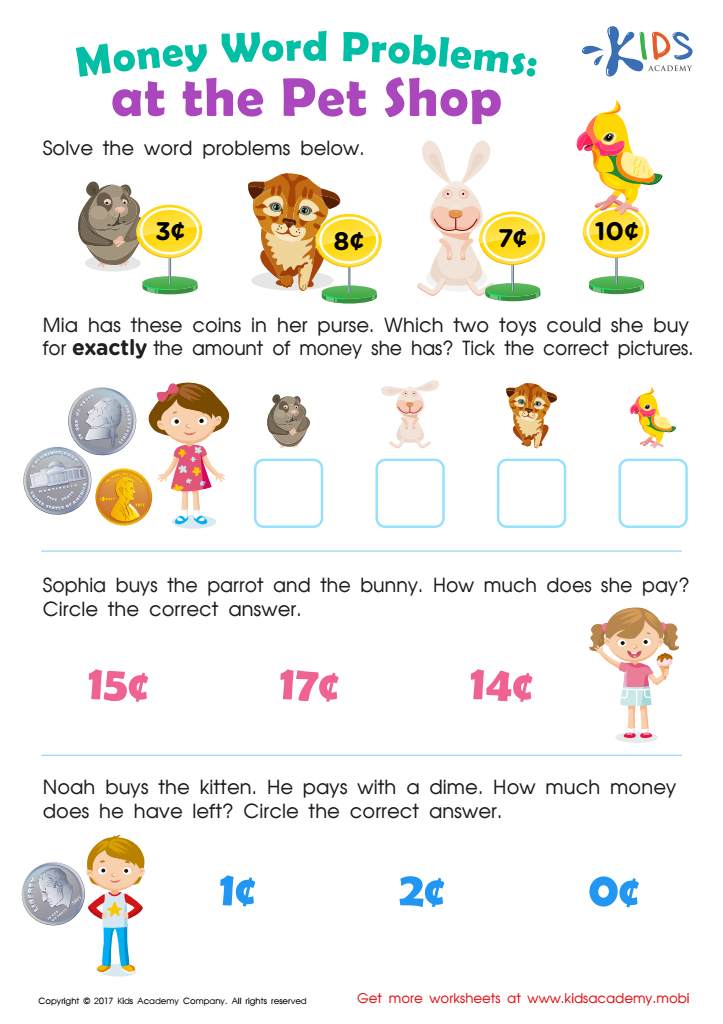
Pet Shop Worksheet
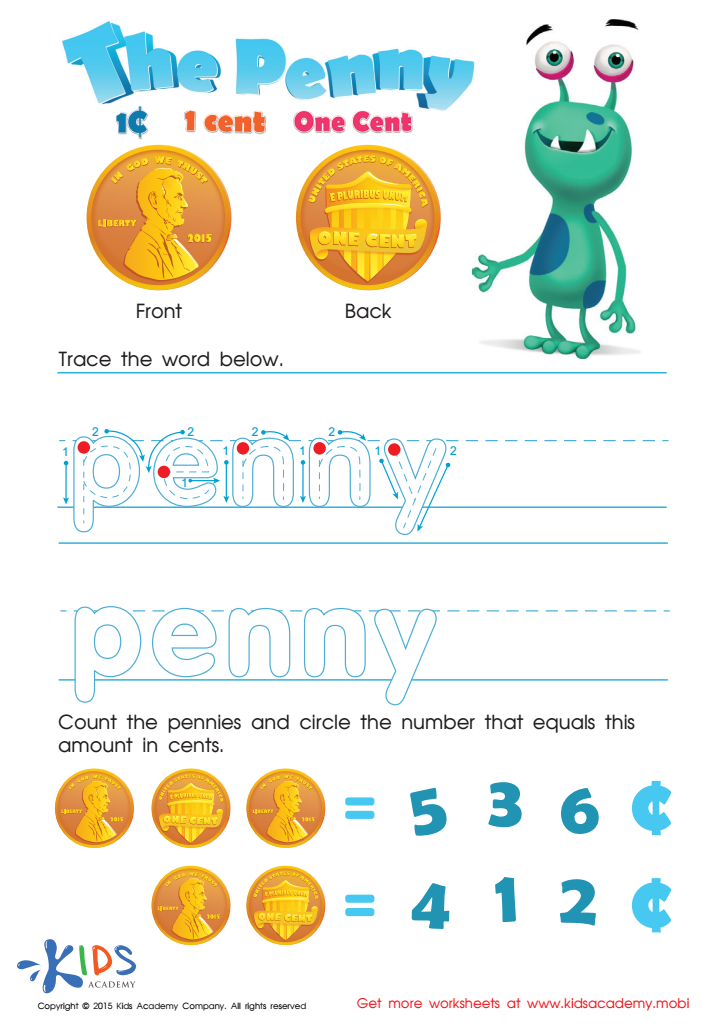
One Cent or the Penny Money Worksheet
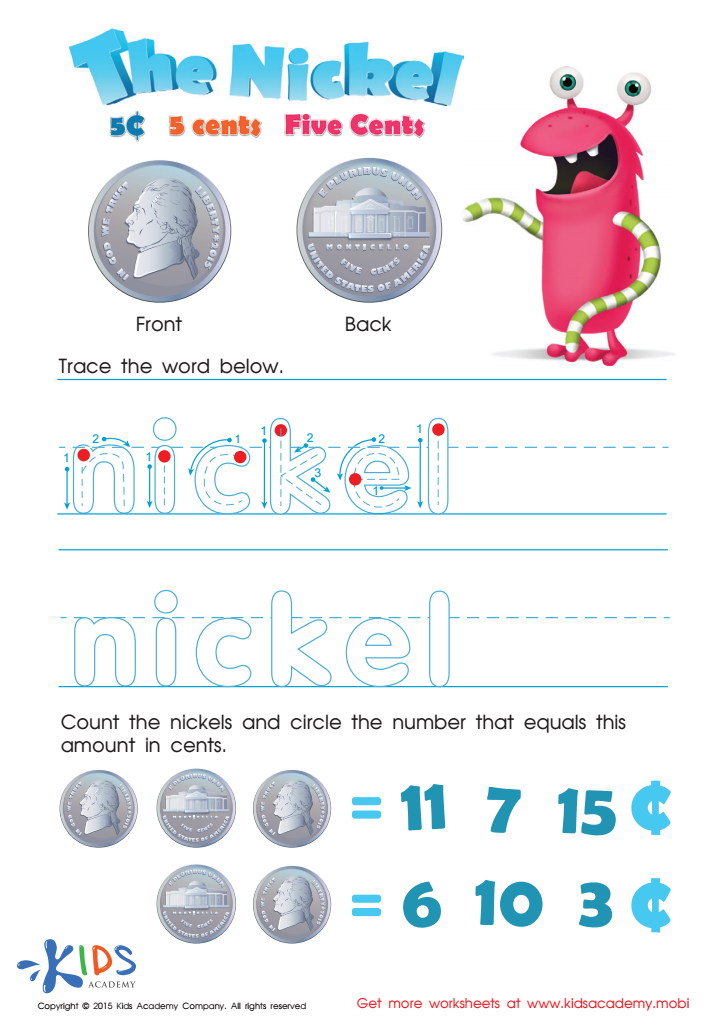
Five Cents or the Nickel Money Worksheet
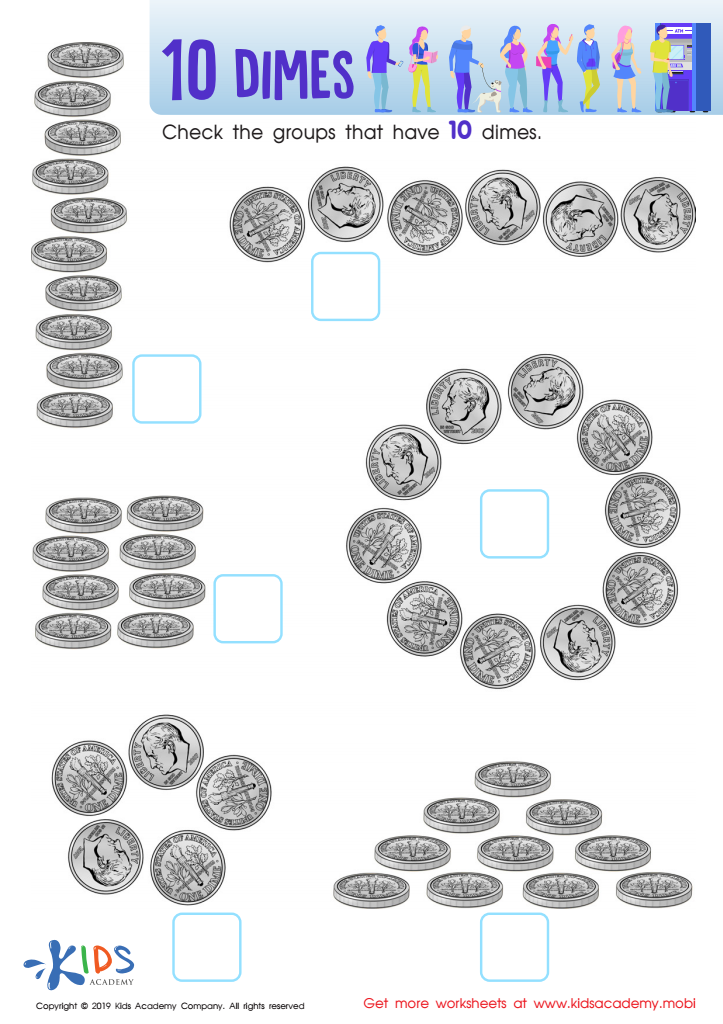
10 Dimes Worksheet








Counting skills, particularly related to money, are crucial for children aged 4-9 as they lay a foundation for financial literacy and practical mathematics. Teaching kids to recognize coins, understand their values, and count money will not only enhance their numerical skills, but also boost their problem-solving abilities. Understanding money management helps children grasp concepts of saving, spending, and budgeting from an early age, promoting responsible financial habits.
For parents and teachers, fostering counting skills through money engages children in a tangible, fun way of learning. Real-life applications, such as playing store or dealing with allowances, create meaningful connections between classroom theory and everyday life. Additionally, these skills enhance a child’s confidence in handling transactions, which is essential as they grow older and encounter more complex financial decisions.
Moreover, interactive games and hands-on activities centered around counting money can make learning enjoyable, capturing children’s interest. This not only solidifies their understanding but also fosters a positive attitude towards mathematics. By prioritizing counting skills related to money, parents and teachers enable children to develop essential life skills that are beneficial in academic settings and beyond, ultimately preparing them for a sustainable future.








