
Basic geometry skills Geometry Worksheets for Ages 4-9
4 filtered results
Difficulty Level
Grade
Age
-
From - To
Subject
Activity
Standards
Unlock the world of shapes and spatial understanding with our Basic Geometry Skills Geometry Worksheets for Ages 4-9. Perfectly tailored for young learners, these engaging and educational worksheets help kids grasp fundamental geometry concepts through fun exercises. Teachers and parents will find activities on shapes, patterns, symmetry, and more, fostering critical thinking and problem-solving skills. With vibrant illustrations and interactive tasks, children will build a strong foundation in geometry while enjoying the learning process. Equip your child with essential geometry knowledge and watch their confidence soar as they navigate their mathematical journey. Explore our comprehensive collection today!
Favorites
With answer key
Interactive
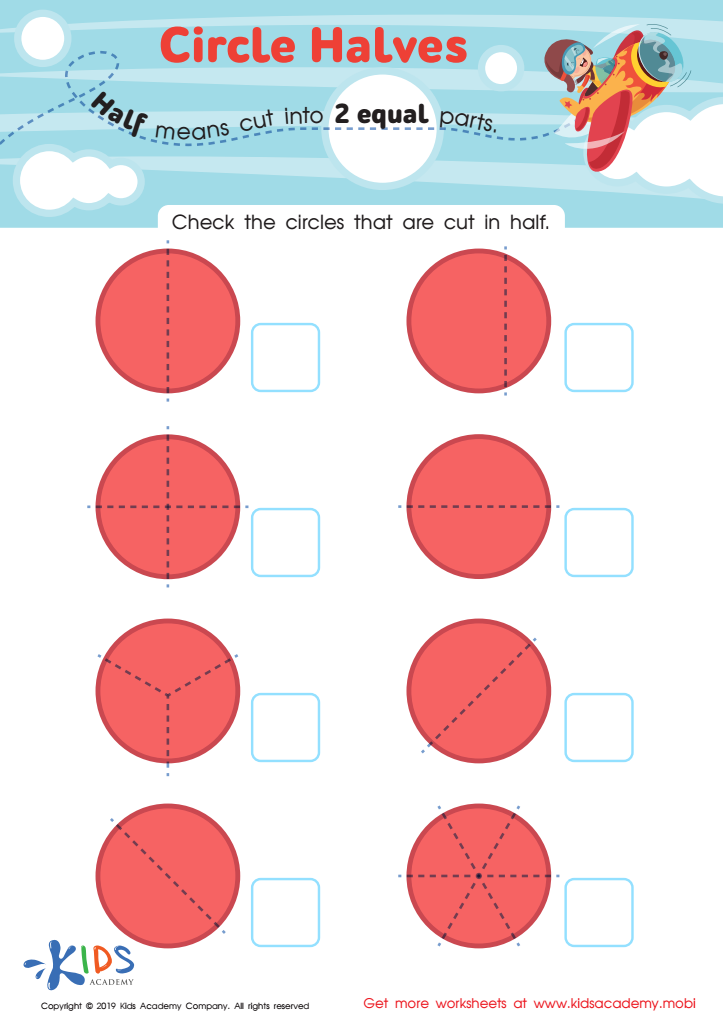
Circle Halves Worksheet
Remind your kindergartners that objects can be divided into halves, thirds and fourths. Now, look at this worksheet with your students and help them check the circles cut in half.
 Assign to My Students
Circle Halves Worksheet
Worksheet











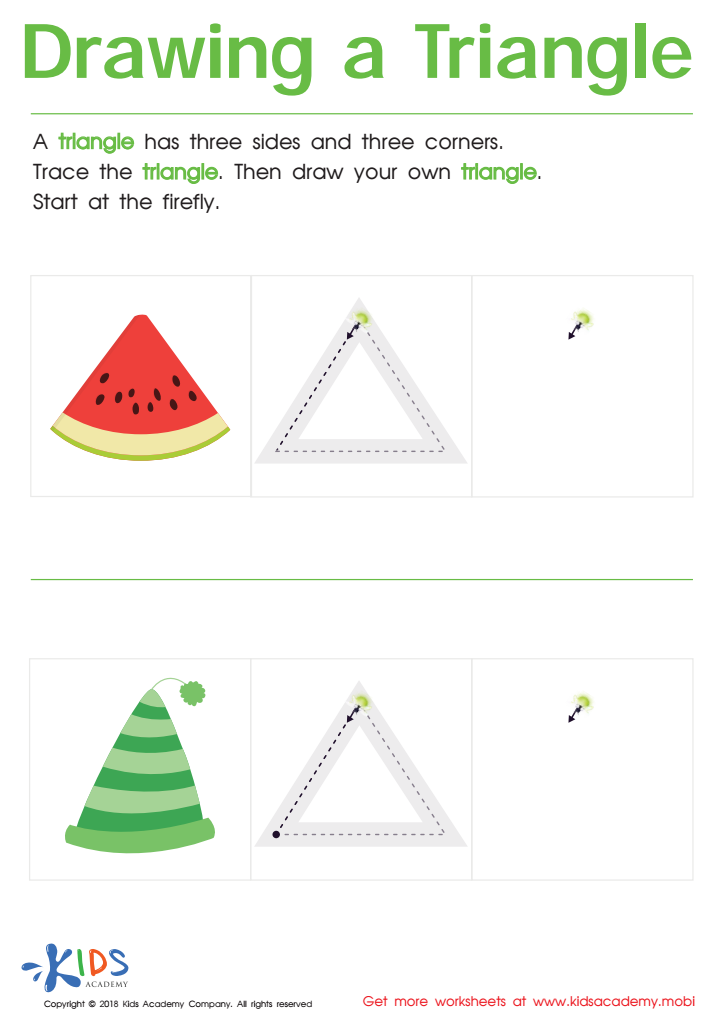
Drawing a Triangle Worksheet
Help your child develop fine motor skills with this fun, traceable printable! It teaches them how to draw a triangle, with easy steps and cute picture motivation. They'll work on pre-writing skills, pencil position, and grip control without even realizing it. With this basic shape, they'll gain a foundation for strong writing and drawing skills.
Drawing a Triangle Worksheet
Worksheet
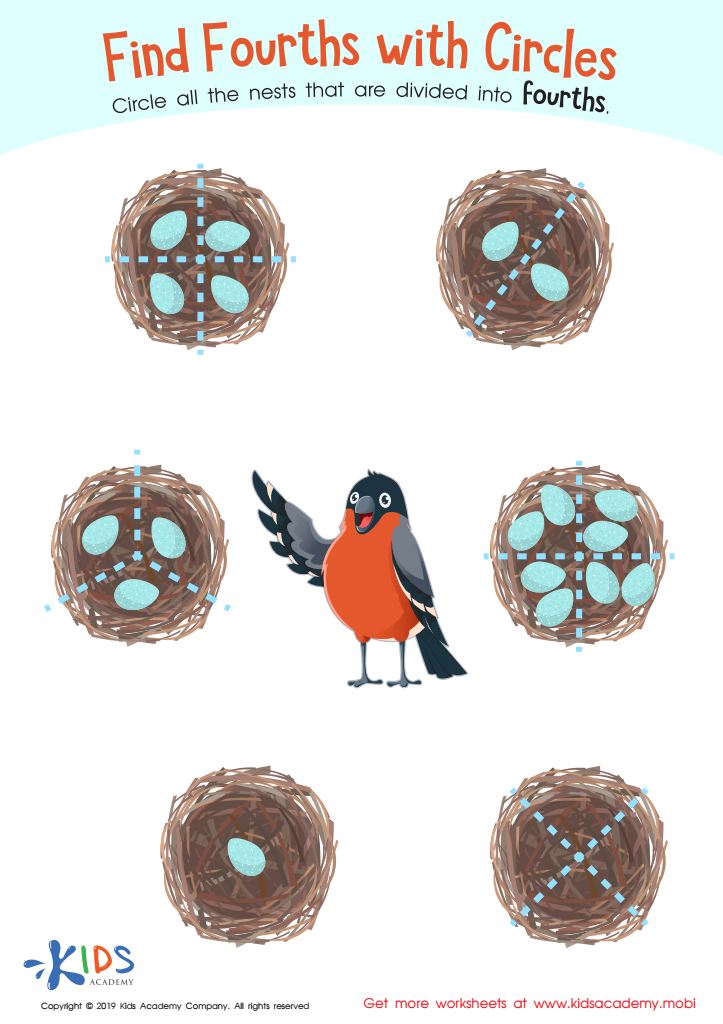
Find Fourths Circles Worksheet
Finding fractions with this Find Fourths with Circles worksheet can be fun! Your child will see a picture of circles divided into different fractions and circle the nests divided into fourths. With the help of their cheery bird friend, they can look for nests with four equal parts and be successful in finding the correct nest.
Find Fourths Circles Worksheet
Worksheet
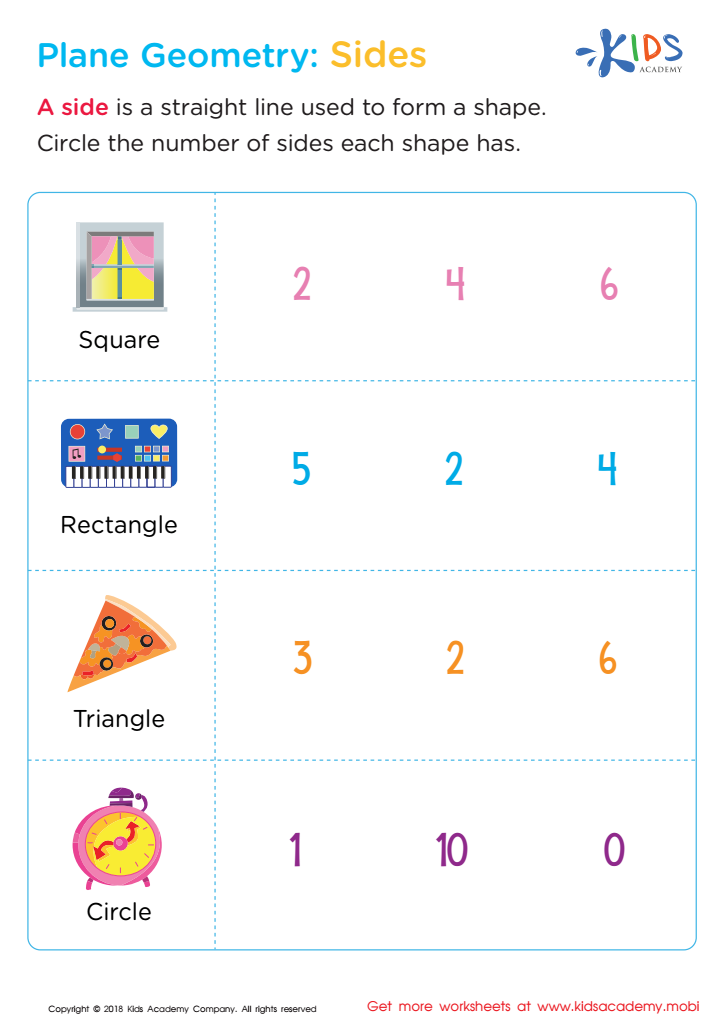
Plane Geometry: Sides Worksheet
Knowing the properties of basic geometric shapes is a great skill to have. Download this free worksheet and let your kids learn about sides and shapes using colorful pictures. They'll see each shape has its own number of sides, laying the groundwork for identifying and recognizing shapes in the future.
Plane Geometry: Sides Worksheet
Worksheet
Join Kids Academy for Free
Who is primarily going to use this learning content?








Parents and teachers should value basic geometry skills for children ages 4-9 because these foundational skills are crucial for cognitive development and practical life applications. At this age, children are naturally curious and eager to explore their environment. Introducing basic geometry helps them understand the world through shapes, sizes, and spatial relationships. This not only enhances their observation and analytical abilities but also lays the groundwork for problem-solving skills.
From recognizing circles, squares, and triangles to identifying patterns and symmetry, geometry nurtures logical thinking and reasoning. These skills are not confined to mathematics alone but are transferable to science, art, and daily activities such as packing a bag efficiently or planning a space.
Furthermore, early geometry education promotes fine motor skills and spatial awareness, which are essential for writing and other tasks involving hand-eye coordination. Socially, working on geometry activities can encourage cooperative learning and communication, as children discuss shapes and solve problems together.
Ultimately, by prioritizing geometry in early education, parents and teachers help children build confidence and a positive attitude towards learning mathematics. A strong geometric foundation creates a ripple effect, fostering critical skills that support academic achievement and real-world functionality well into adulthood.








