Sorting skills Geometry Worksheets for Ages 4-9
5 filtered results
-
From - To
Enhance your child's learning journey with our "Sorting Skills Geometry Worksheets" designed for ages 4 to 9. These engaging, printable worksheets help young learners develop essential sorting and categorization skills while exploring fundamental geometry concepts. Through colorful visuals and age-appropriate activities, children will practice identifying shapes, organizing objects by criteria, and boosting their cognitive abilities. Ideal for classroom use or at-home practice, our worksheets promote critical thinking and enhance fine motor skills. Encourage your child's love for learning and lay a strong foundation in geometry. Start sorting today with our fun and educational resources tailored for budding mathematicians!
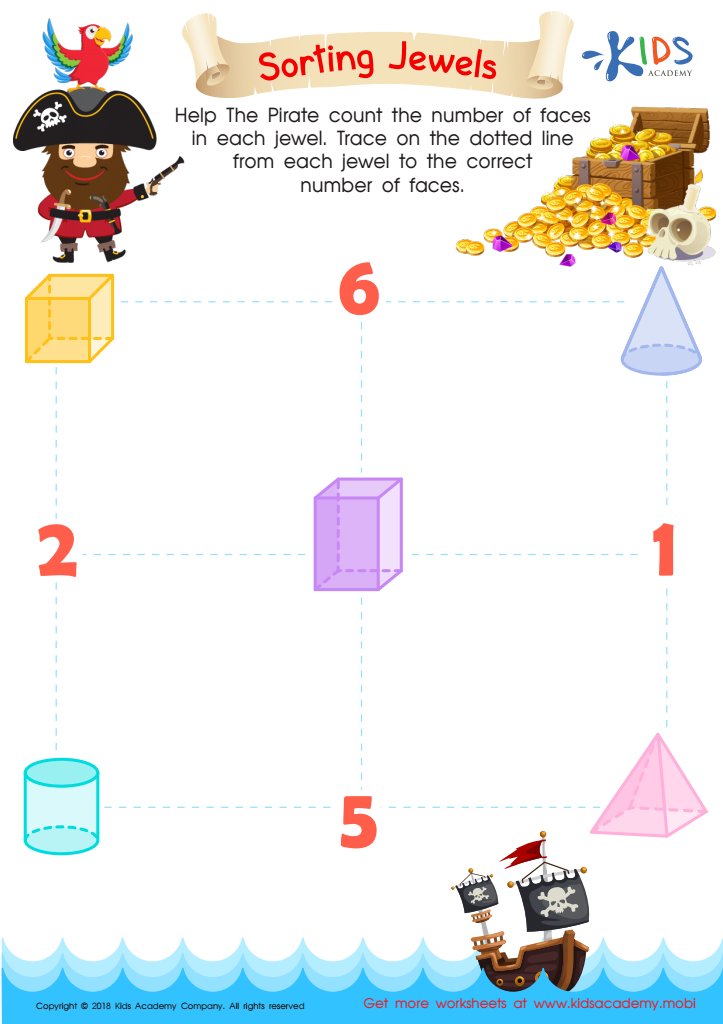
Sorting Jewels Worksheet
 Assign to My Students











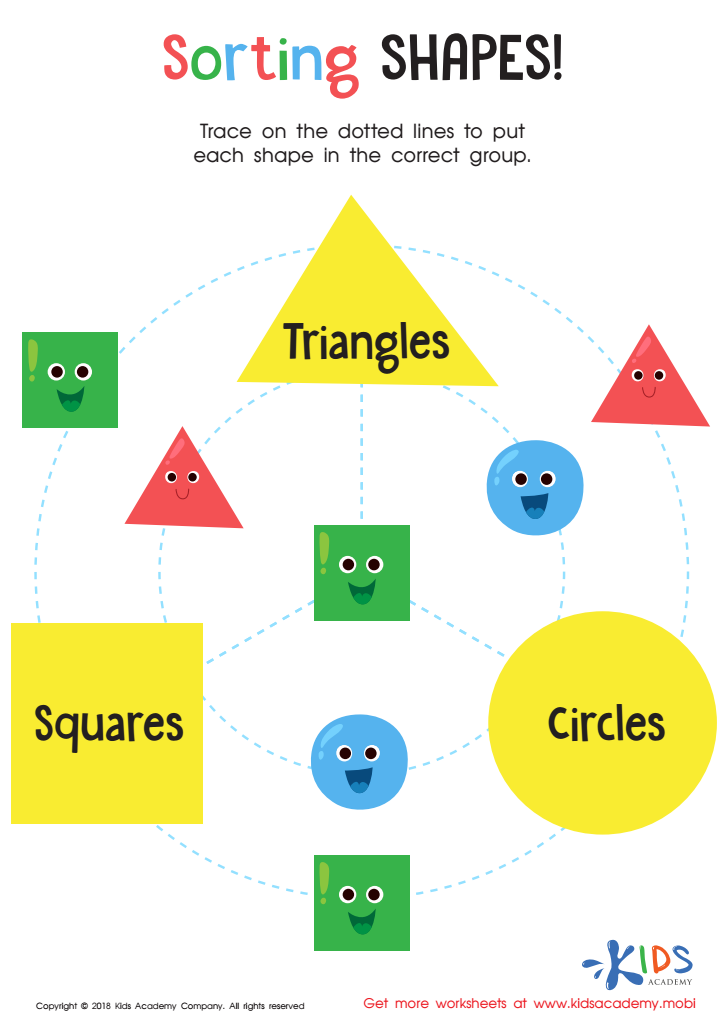
Sorting Shapes - Part 3 Worksheet
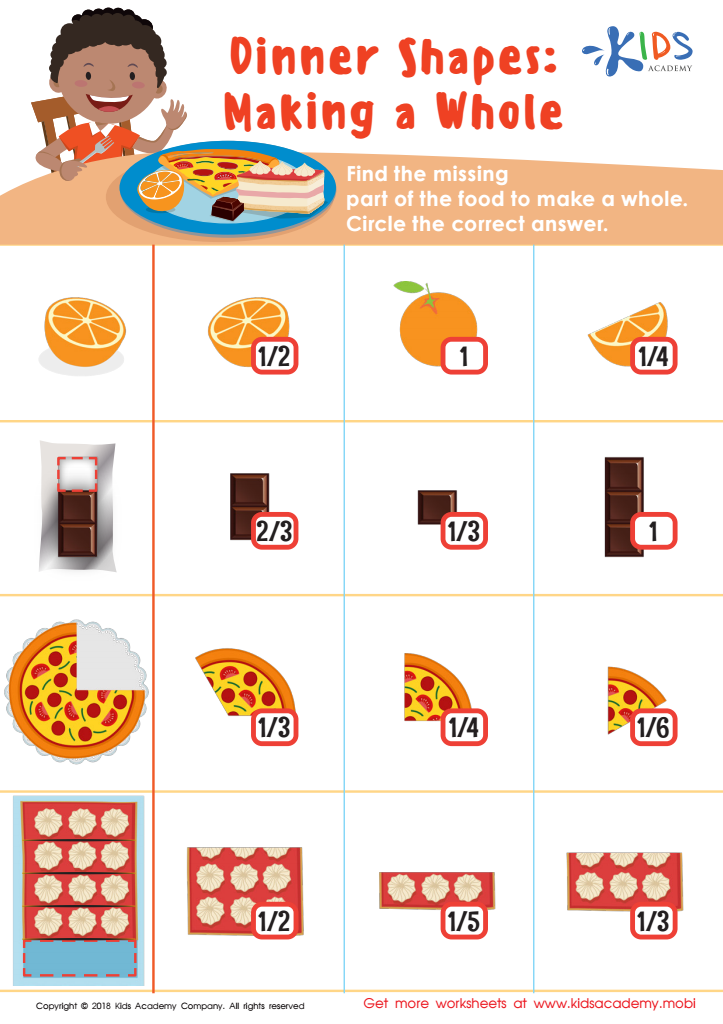
Dinner Shapes: Making a Whole Worksheet
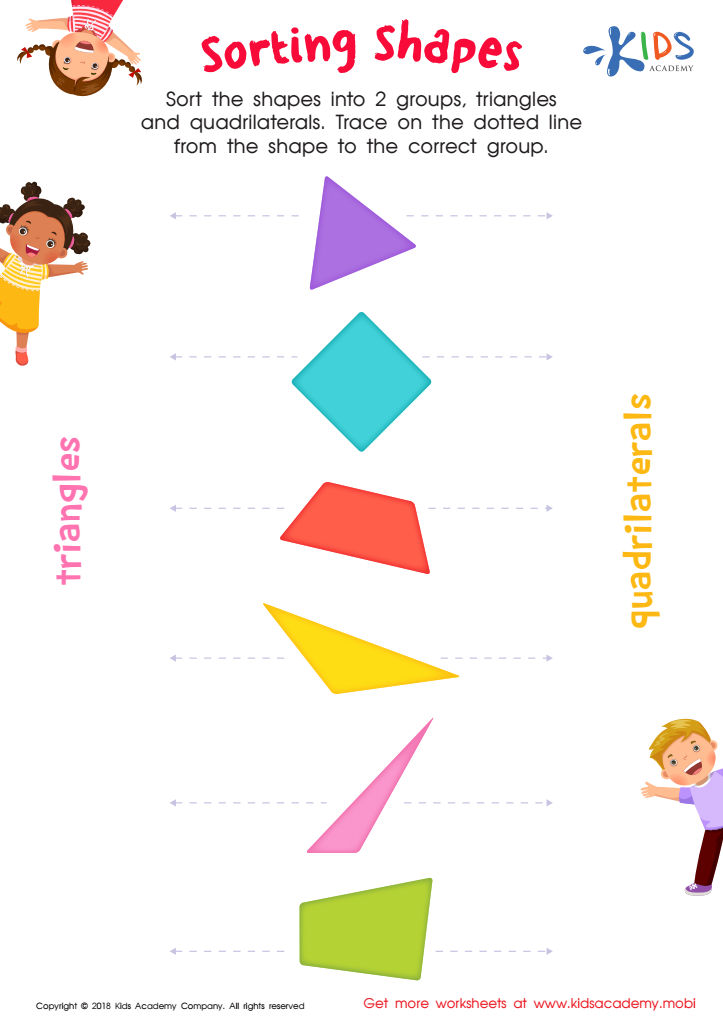
Sorting Shapes Worksheet
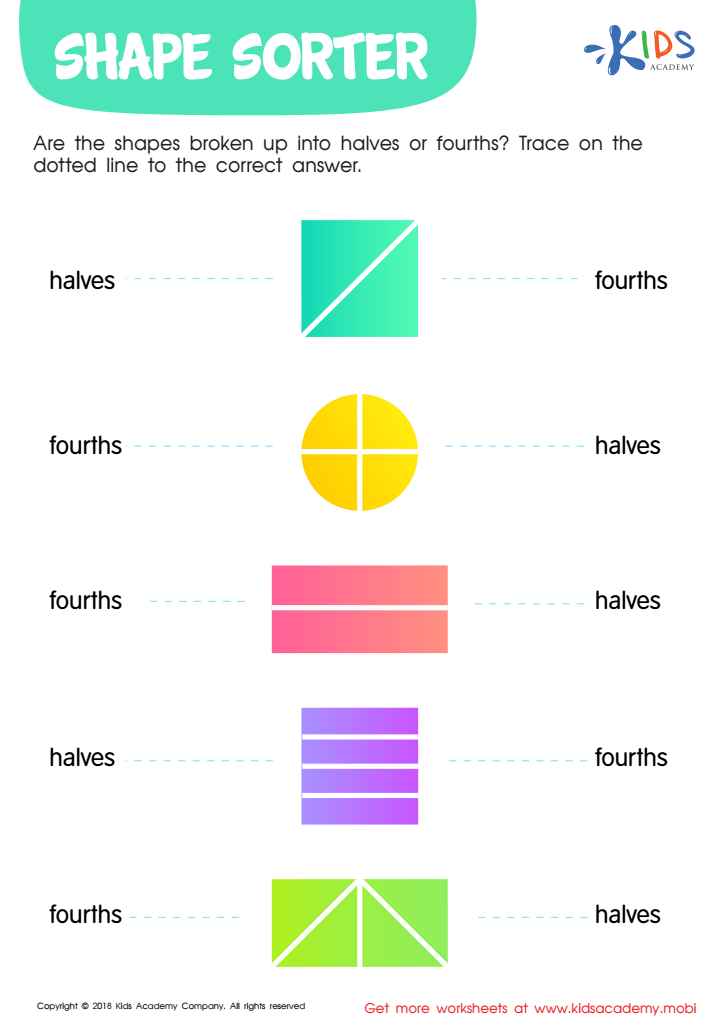
Shape Sorter Worksheet








Sorting skills in geometry are vital for children aged 4-9 as they build the foundation for critical cognitive and analytical abilities. At this developmental stage, children are naturally curious and begin to understand the world around them through shapes, patterns, and spatial relationships. Engaging in sorting activities helps to enhance their visual discrimination and categorization skills.
When children categorize shapes, they learn to identify attributes such as size, color, shape, and number. This process strengthens their problem-solving skills and boosts their ability to identify similarities and differences, which is crucial for mathematical reasoning later in life. Additionally, sorting activities promote language development as children describe their reasoning behind classifications, improving their vocabulary and communication skills.
Parents and teachers should prioritize these activities because sorting also fosters early mathematical concepts, nurturing a positive attitude towards math. As they progress through sorting tasks, children develop a sense of order and logical thinking, which benefits them not only in geometry but across all disciplines. Overall, incorporating sorting skills into early education cultivates a robust foundation for lifelong learning, problem-solving, and critical thinking needed in our increasingly complex world.








