Spatial understanding Geometry Worksheets for Ages 4-9
3 filtered results
-
From - To
Boost your child's spatial awareness with our expertly designed Spatial Understanding Geometry Worksheets, tailored for ages 4-9! These engaging resources offer a perfect blend of fun and education, helping young learners grasp essential geometric concepts through hands-on activities. Each worksheet covers a range of skills, from recognizing shapes to understanding spatial relationships, supporting cognitive development in an interactive way. Ideal for both homeschooling and classroom use, our worksheets ensure that kids build a solid foundation in geometry while enjoying their learning journey. Discover the joy of geometry with Kid's Academy and watch your child’s confidence soar!
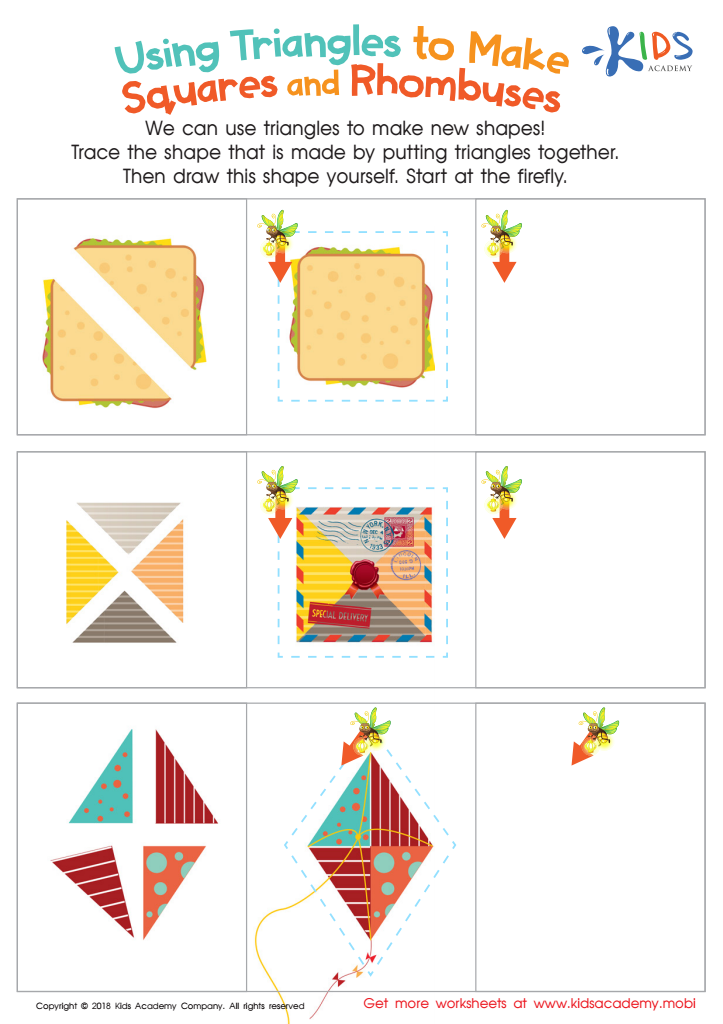
Using Triangles to Make Squares and Rhombuses Worksheet
 Assign to My Students











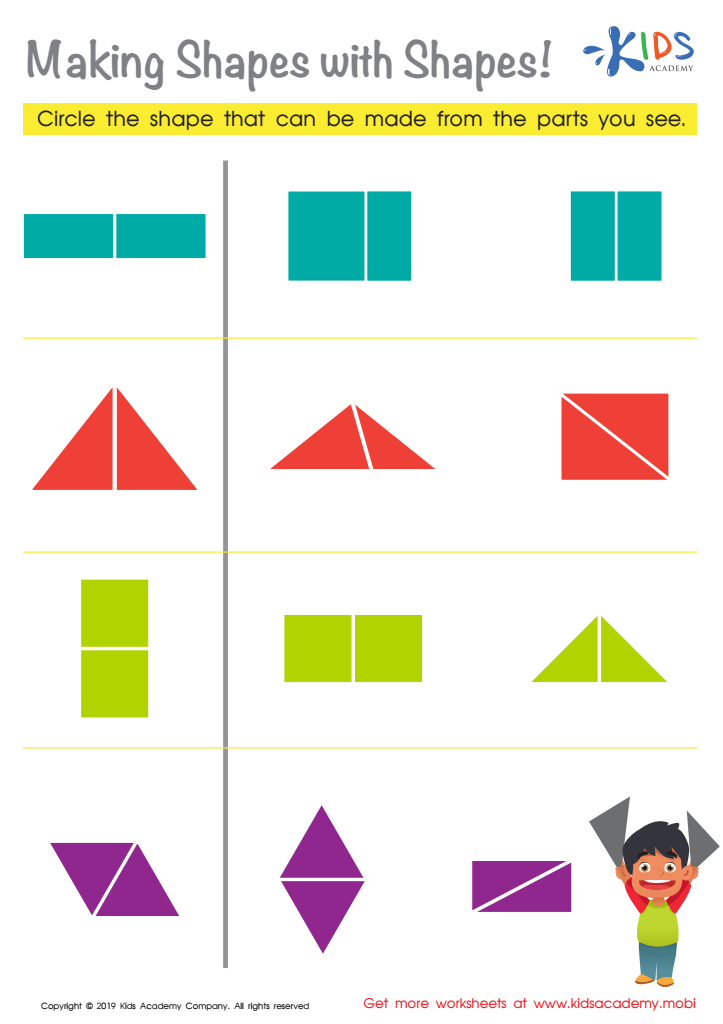
Making Shapes with Shapes Worksheet
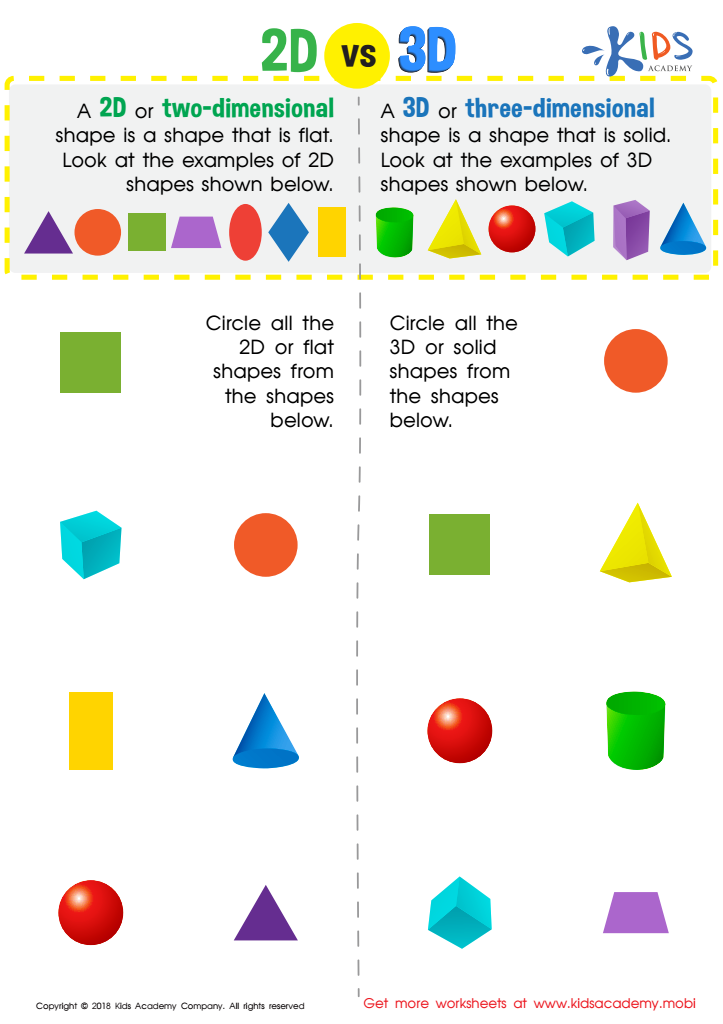
2D vs 3D Shapes Worksheet








Spatial understanding and geometry are fundamental skills crucial to a child's cognitive development, especially at ages 4-9. During these formative years, young brains are particularly adept at absorbing information and forming neural connections. Abilities in spatial awareness and geometry provide a basis for various critical life skills and disciplines.
Firstly, spatial understanding directly enhances problem-solving abilities. Recognizing shapes, their properties, and how they interact in space fosters logical and abstract thinking. This nurtures a child's ability to solve puzzles and approach complex problems systematically. Early grasp in geometry also builds preliminary math skills, aiding in comprehension of more advanced topics like algebra and calculus as children grow older.
Moreover, there's substantial interplay between spatial skills and other subjects, including art, science, and physical movement. For instance, understanding geometry can significantly improve a young child’s capabilities in areas such as drawing, where grasping relationships between objects and their sizes is vital.
Socially and physically, this knowledge also benefits children. Better spatial awareness helps in physical navigation, enhancing gross motor skills in activities like sports and dance. Finally, given that early challenges in spatial cognition can lead to academic struggle later, investing in this area can alleviate future educational difficulties, learning disabilities, and build overall confidence in the child’s capabilities.








