Visual Learning Geometry Worksheets for Ages 4-9
5 filtered results
-
From - To
Discover an engaging collection of Visual Learning Geometry Worksheets designed specifically for children ages 4-9. These worksheets enhance critical math skills through captivating visuals, making geometry both fun and accessible. Perfect for early learners, each printable sheet combines colorful illustrations with interactive activities, helping kids understand shapes, sizes, and spatial relationships. From identifying basic shapes to exploring patterns, these worksheets encourage a hands-on approach, fostering a love for learning. Parents and educators can seamlessly integrate these resources into their lesson plans, ensuring that young students grasp essential geometry concepts while building a solid foundation for future mathematical success. Explore today!
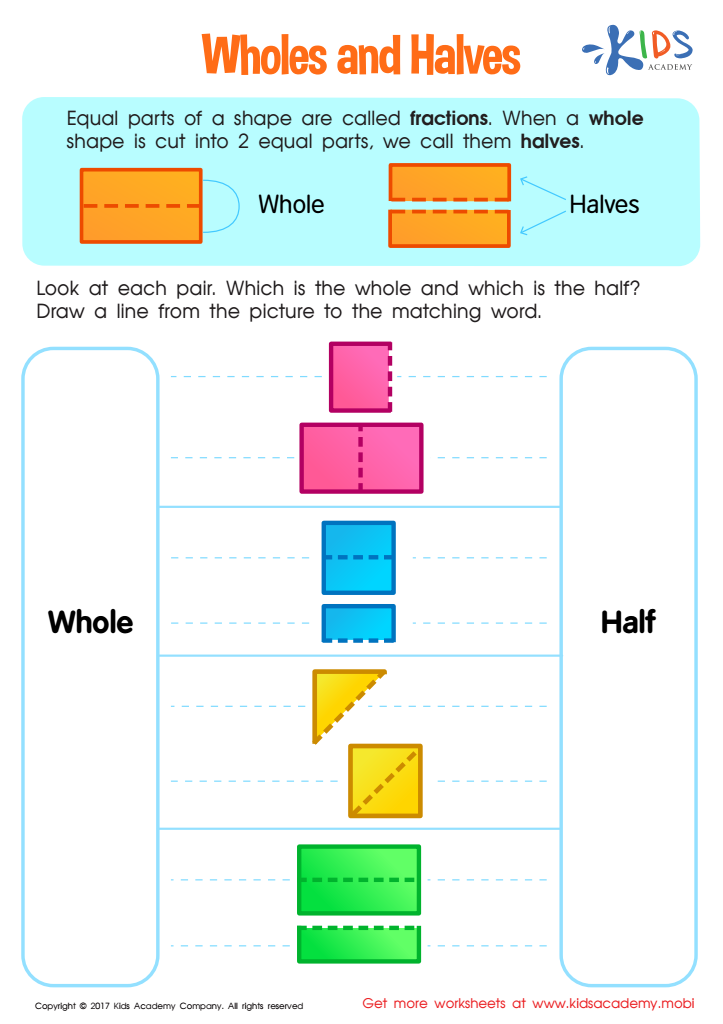
Wholes and Halves Worksheet
 Assign to My Students











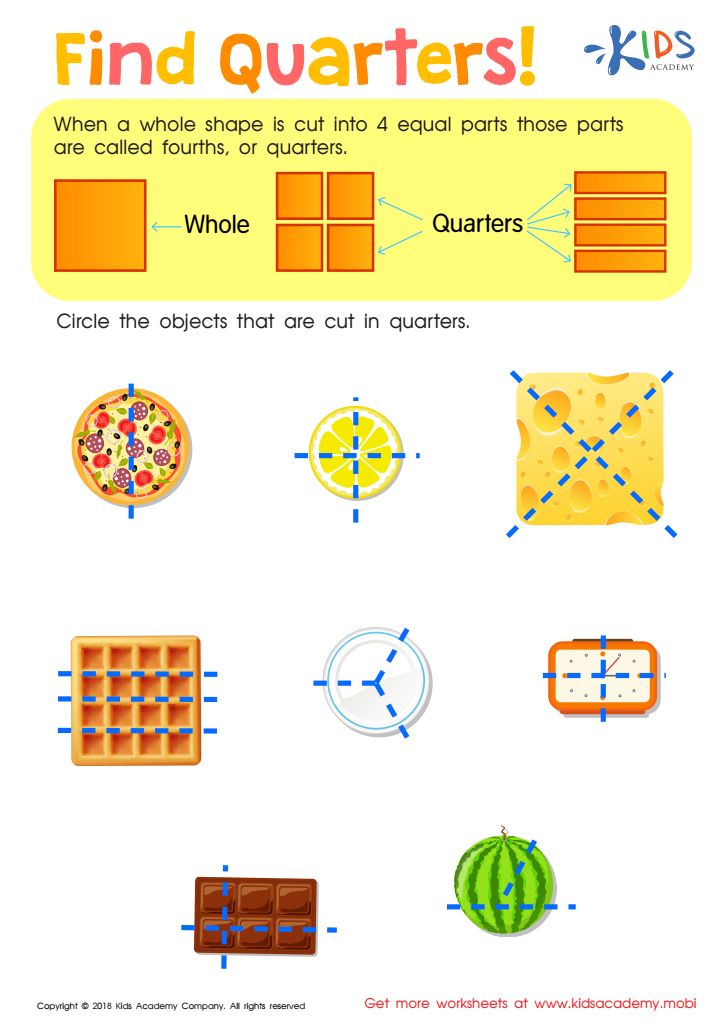
Find Quarters Worksheet
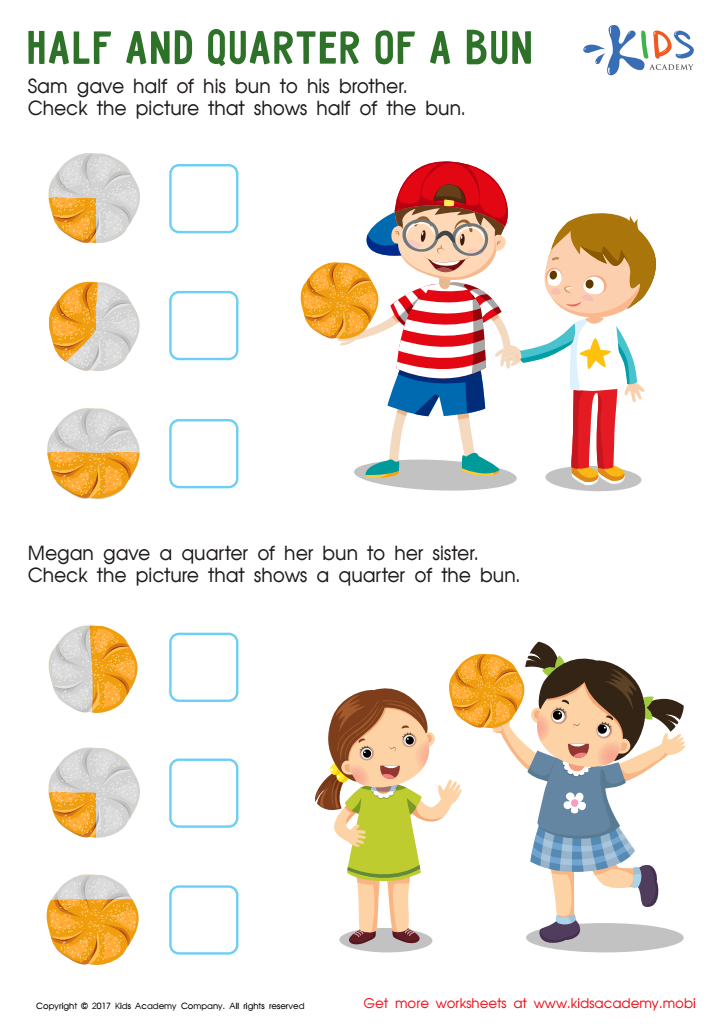
Half and Quarter of a Bun Worksheet
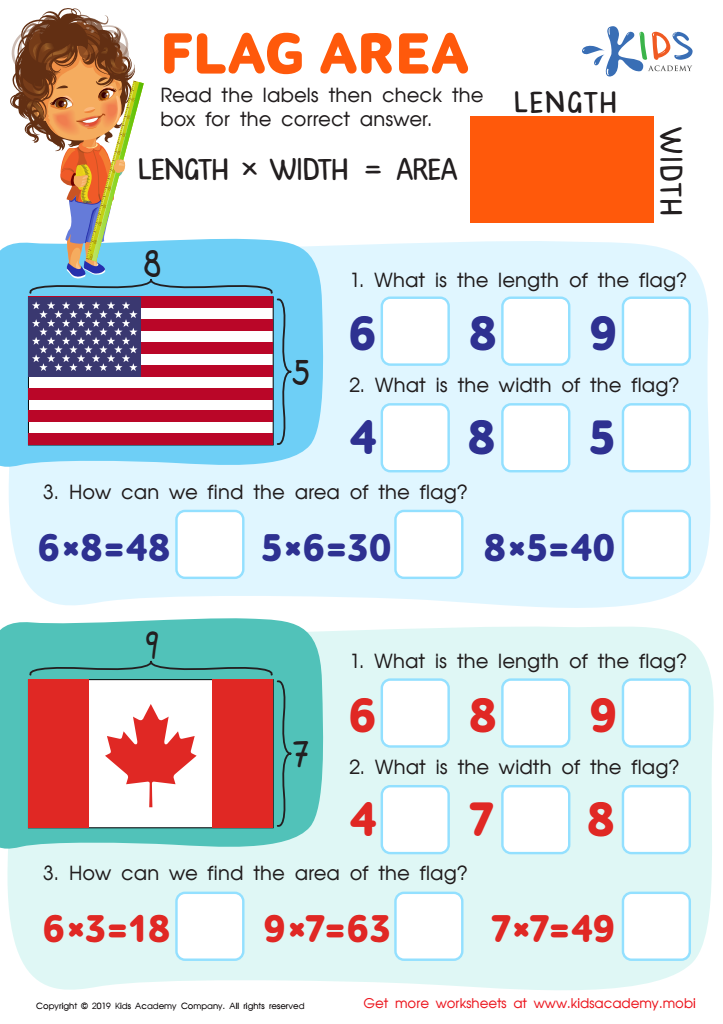
Flag Area Worksheet
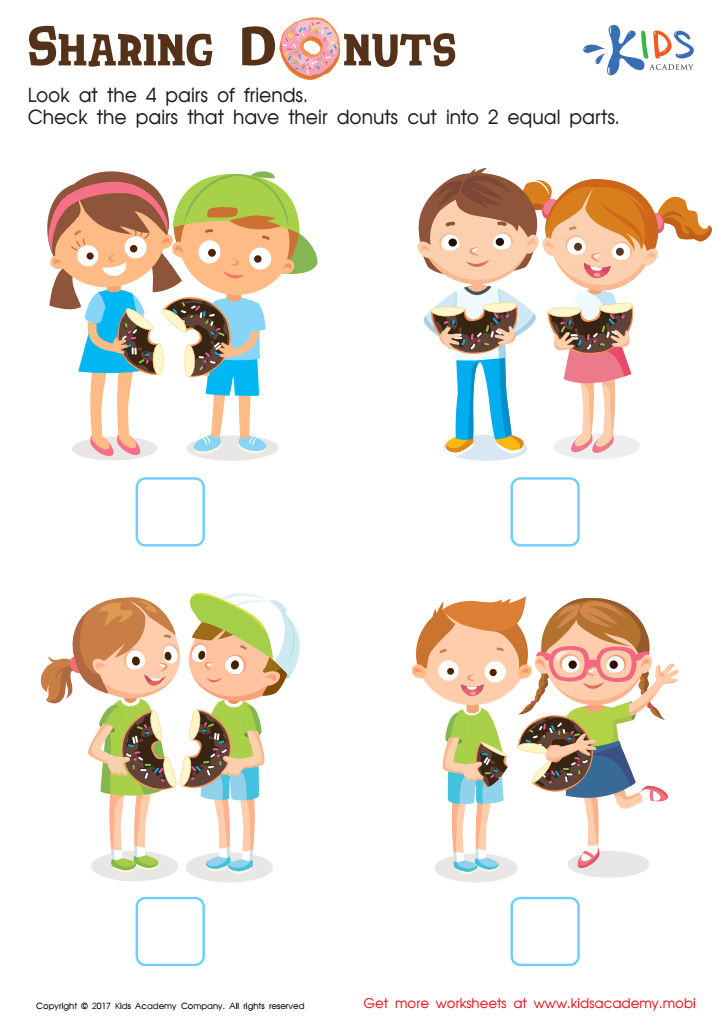
Sharing Donuts Worksheet








Visual learning in geometry is crucial for children aged 4-9 because it lays the foundation for critical math skills and spatial awareness. At this early stage, children learn best through hands-on activities, visual aids, and engaging interactions. Geometry helps young learners understand shapes, sizes, patterns, and relationships, which are essential for daily life and advanced mathematics.
By incorporating visual learning strategies, such as using blocks, drawings, and interactive games, parents and teachers can make geometric concepts more relatable and enjoyable. This not only fosters curiosity but also aids in strengthening problem-solving abilities and logical thinking. Furthermore, visual learning caters to different learning styles, ensuring that all children grasp the material effectively.
Encouraging exploration of geometry visually also enhances cognitive development, as children begin to recognize and categorize shapes in their environment, improving observational skills. As they grow, these foundational understanding and abilities seamlessly translate into more complex mathematical concepts. In essence, investing in visual geometry learning is not just about teaching shapes; it's about building a strong mathematical base that will support children's educational journeys and daily lives. Therefore, parents and teachers should prioritize these learning methods to promote overall developmental success.








