
Analyzing data Graphs Worksheets for Ages 4-9
5 filtered results
Difficulty Level
Grade
Age
-
From - To
Subject
Activity
Standards
Discover engaging and educational "Analyzing Data Graphs Worksheets for Ages 4-9" tailored to foster young learners' comprehension of data through fun activities. Each worksheet introduces age-appropriate graphs, charts, and pictograms to help children interpret, compare, and analyze data effectively. Our expertly designed worksheets develop critical thinking, analytical, and mathematical skills by making data analysis accessible and enjoyable. Ideal for home or classroom use, these printables not only enhance learning but also build a strong foundation in math. Equip your child with the tools they need to succeed in data analysis with our incredible selection of interactive worksheets!
Favorites
With answer key
Interactive
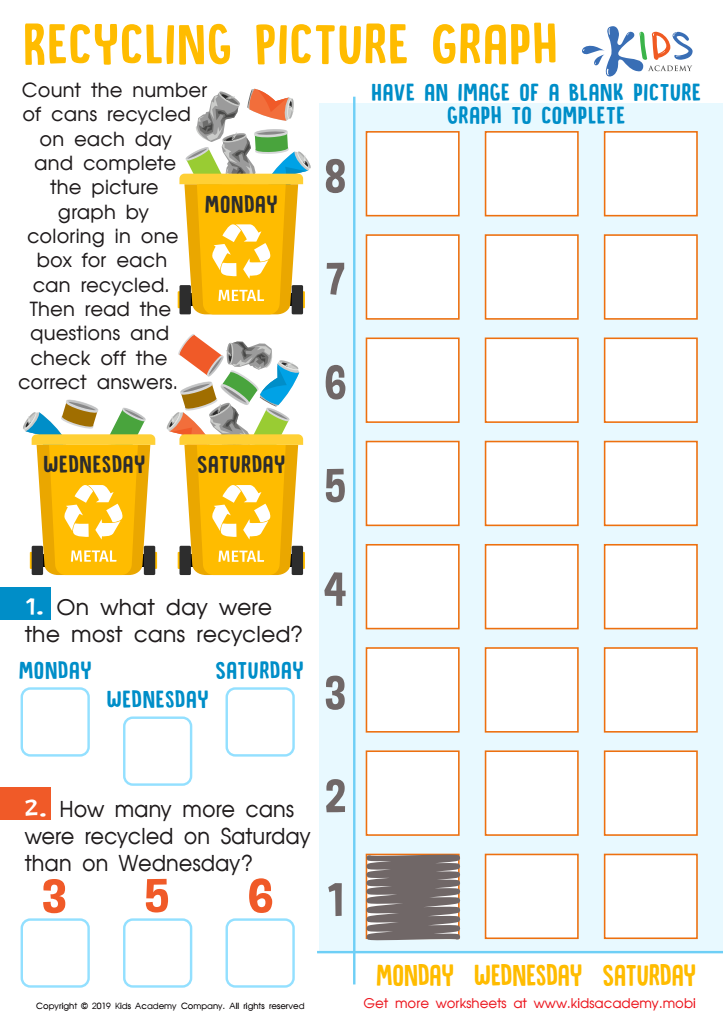
Recycling Picture Graph Worksheet
This worksheet can help kindergartners learn numbers and why recycling is important. After using items and materials, they can turn them into new materials instead of throwing them away. Guide your students to follow the instructions and answer the questions at the end. Help them understand how recycling benefits our environment.
 Assign to My Students
Recycling Picture Graph Worksheet
Worksheet
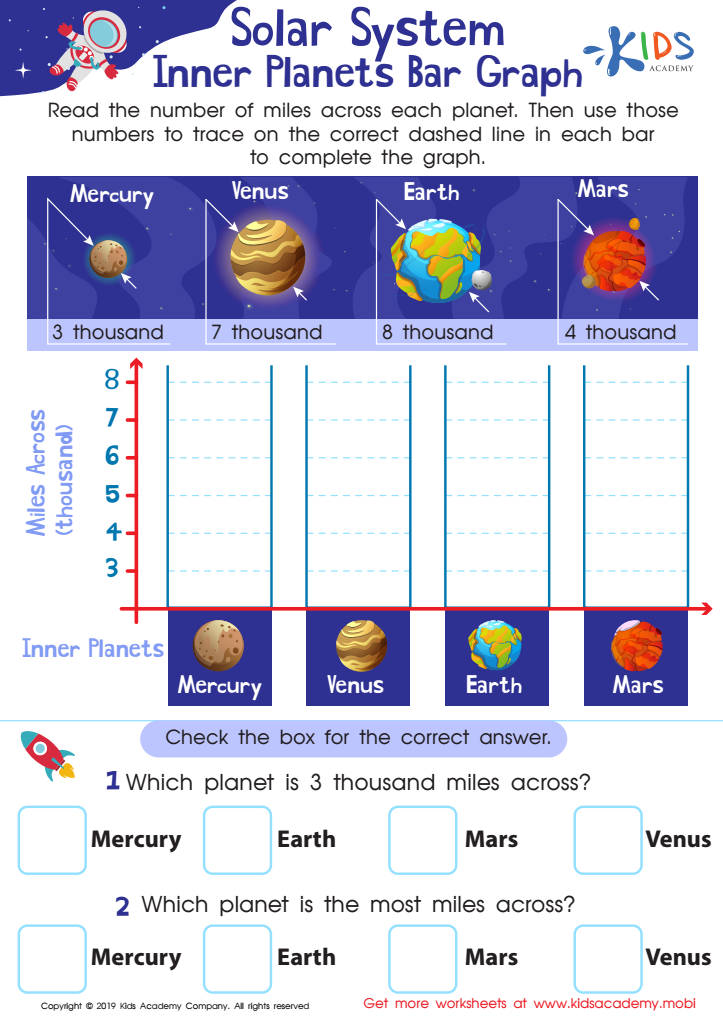
Planets Bar Graph Worksheet
With this fun, educational worksheet, kids can learn about bar graphs and the solar system simultaneously. Introduce them to the concept by reading out the number of miles for each planet, then help them trace the dashed lines in each bar to complete the graph.
Planets Bar Graph Worksheet
Worksheet
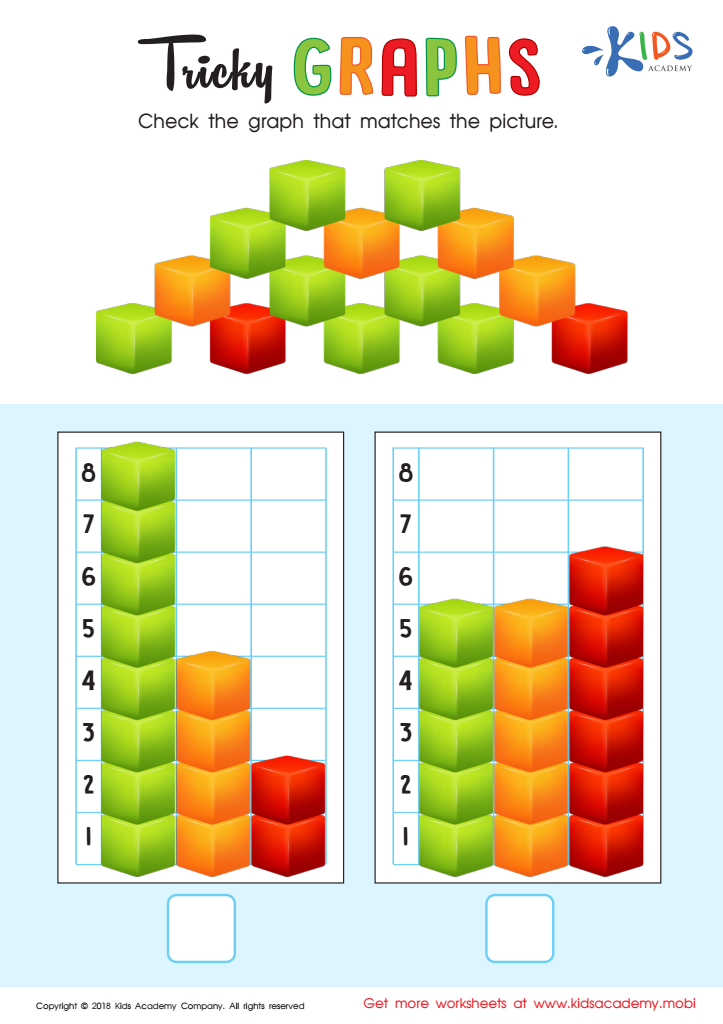
Tricky Graphs Worksheet
Looking for a fun way to sharpen your kid's graphing skills? Get this colorful PDF worksheet! They'll get to practice visual discrimination, counting, and creating bar graphs. Plus, graphing and reading graphs are essential for problem-solving in math.
Tricky Graphs Worksheet
Worksheet
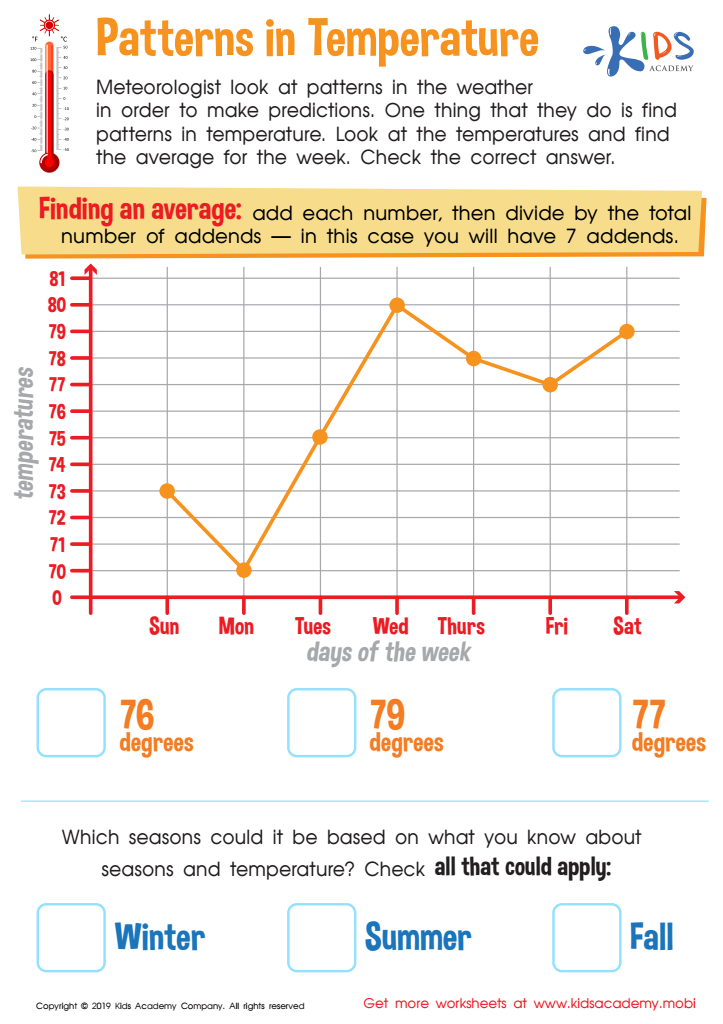
Patterns in Temperature Worksheet
Kids need to learn how to read and interpret data from graphs and charts. This free worksheet on temperature patterns helps them to do just that. They'll practice finding averages and answer questions in multiple-choice format. Plus, it provides a great learning experience!
Patterns in Temperature Worksheet
Worksheet
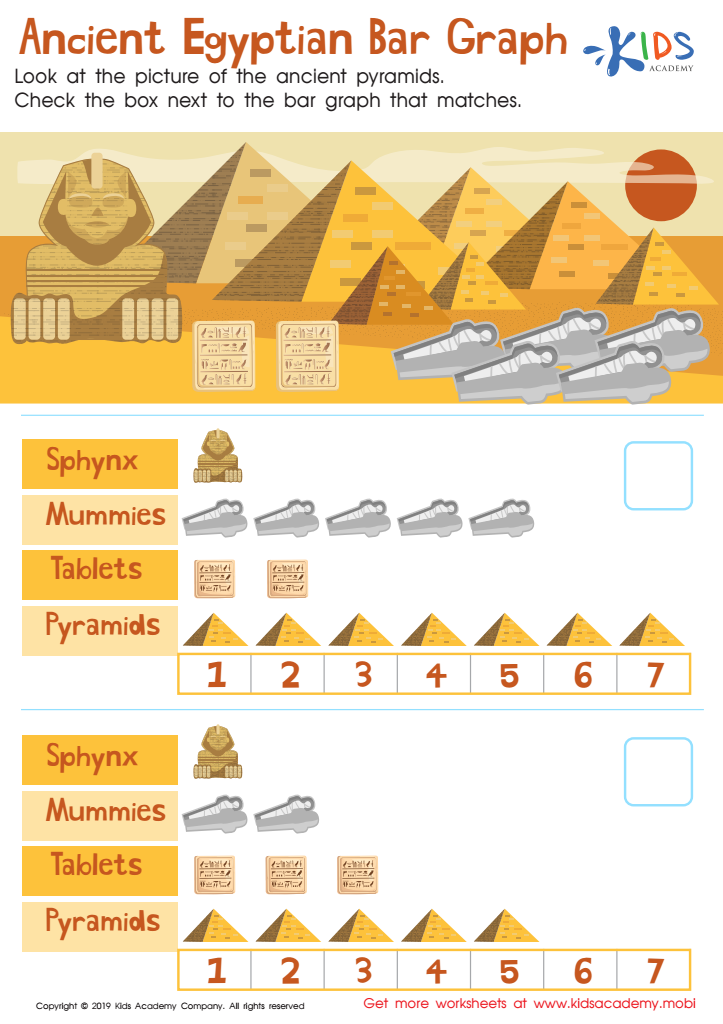
Egyptian Bar Graph Worksheet
Help your kids get a hang of bar graphs with this fun worksheet. Examine the picture of the ancient pyramids and help them match the bar graph to it. Check the box next to the correct bar graph and watch your little ones learn quickly!
Egyptian Bar Graph Worksheet
Worksheet
Join Kids Academy for Free
Who is primarily going to use this learning content?








Understanding and analyzing data graphs is a crucial skill for children aged 4-9 that sets the foundation for their future academic and everyday success. At this developmental stage, children are curious and eager to understand the world around them. Introducing them to data graphs can help in multiple areas, such as critical thinking, problem-solving, and comprehend complex information visually.
Firstly, learning about data graphs enhances numerical literacy. It helps children grasp concepts like counting, comparing quantities, and recognizing patterns. When kids start recognizing trends and relationships in data, they begin to develop a logical mindset—essential skills not just for mathematics, but also for science, social studies, and daily decision-making.
Secondly, data graphs can make learning more interactive and engaging. Children often learn best through visual and hands-on activities. Analyzing simple graphs created from class polls or charts depicting their favorite fruits can stimulate their interest and make abstract concepts more concrete and understandable.
Lastly, these graphs support collaborative learning. By discussing data in groups, students enhance their communication and social skills. They learn to articulate their ideas, listen to others, and derive meanings collectively. This fosters a sense of community and enhances their analytical abilities early on, laying a strong academic groundwork for the future.
Giving children experience in data graphs from an early age fosters a lifelong ability to think critically and analyze information effectively.








