Comparing quantities Numbers Worksheets for Ages 4-9
4 filtered results
-
From - To
Explore our engaging "Comparing Quantities Numbers Worksheets" designed specifically for children aged 4-9. These interactive resources help young learners develop essential math skills by comparing and understanding different quantities. Through fun activities, kids will practice identifying larger or smaller groups, enhancing their number sense and comprehension. Our worksheets incorporate colorful visuals and age-appropriate tasks to keep children motivated and eager to learn. Perfect for homeschool settings or supplementary learning, these worksheets support early math education while building a solid foundation for future arithmetic skills. Download now to enrich your child’s understanding of numbers and foster their love for learning!
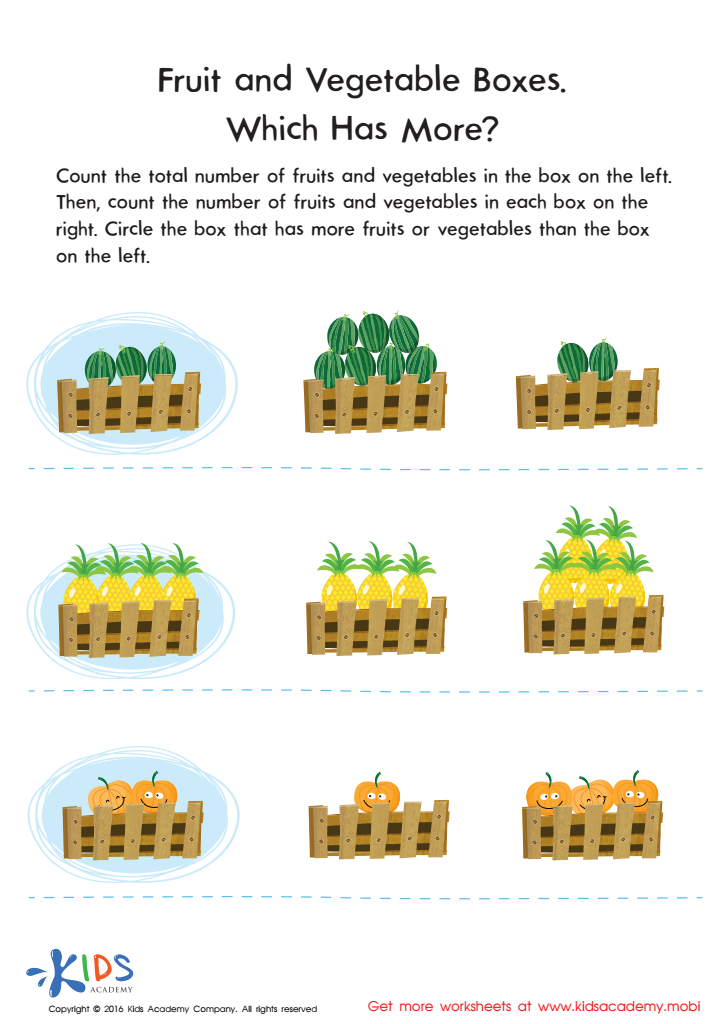
Which Has More? Size Worksheet
 Assign to My Students
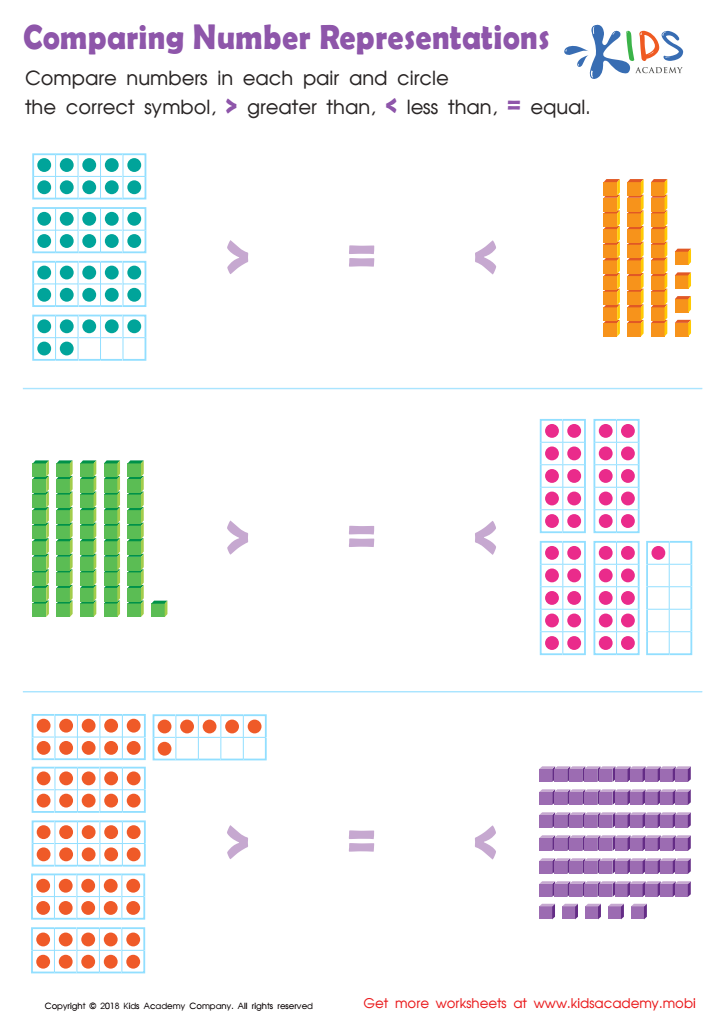
Comparing Number Representations Worksheet
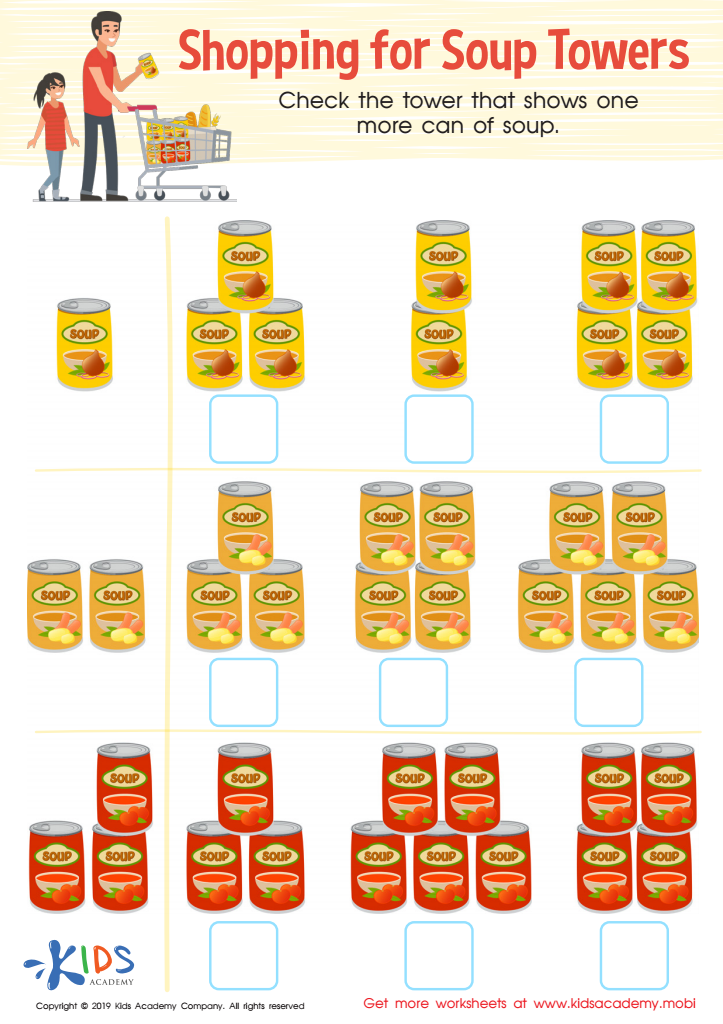
Soup Towers Worksheet
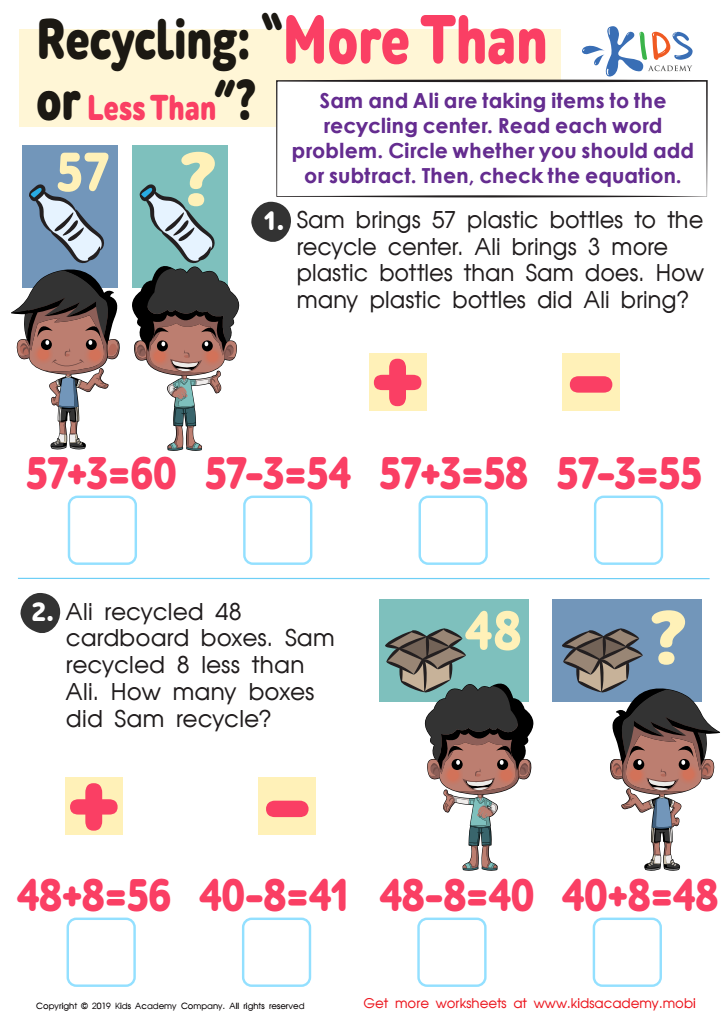
Recycling - More or Less Worksheet






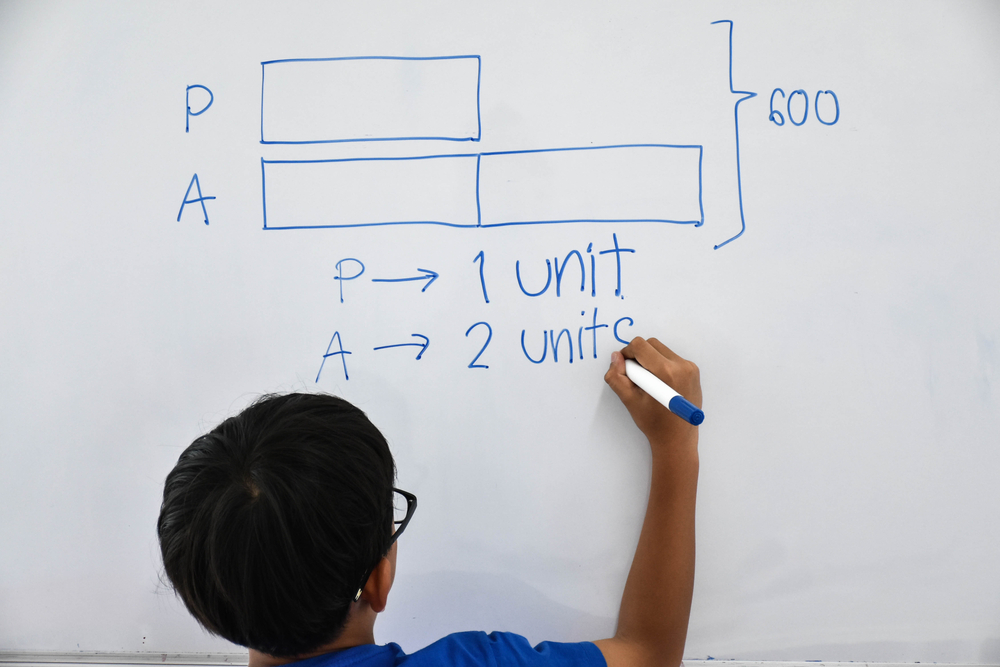

Comparing quantities is a foundational mathematical skill that significantly impacts a child's cognitive development and everyday decision-making abilities. For children aged 4-9, understanding how to compare numbers fosters critical thinking, problem-solving, and logical reasoning skills that serve as the bedrock for future math concepts. When parents and teachers focus on teaching comparison skills, they help children grasp essential ideas of "more than," "less than," and "equal to." This understanding extends beyond numbers; it enhances children's ability to analyze situations, make informed choices, and develop effective strategies in diverse contexts.
Moreover, comparing quantities promotes language development as children learn to articulate their thought processes using mathematical vocabulary. It encourages engagement through games and hands-on activities, making learning enjoyable and interactive.
By emphasizing the importance of comparing quantities, parents and teachers equip children with lifelong skills that transcend math, influencing their ability to understand patterns, relationships, and functionalities in the world around them. Ultimately, supporting children in mastering this concept lays the groundwork for a strong foundation in mathematics, curiosity, and resilience as they embrace more advanced concepts and challenges in their academic journey.








