Understanding comparisons Numbers Worksheets for Ages 4-9
3 filtered results
-
From - To
Discover the exciting world of understanding comparisons with our engaging worksheets designed specifically for children ages 4 to 9! These fun, interactive activities help young learners develop essential math skills by comparing numbers, quantities, and objects. Your kids will enjoy distinguishing between "more than," "less than," and "equal to" through colorful visuals and hands-on exercises. Each worksheet is tailored to make learning math concepts enjoyable while building confidence in their abilities. Perfect for home or classroom use, our resources provide a solid foundation in mathematical reasoning, ensuring your child is well-prepared for future learning. Get started today and watch as your child's understanding soars!
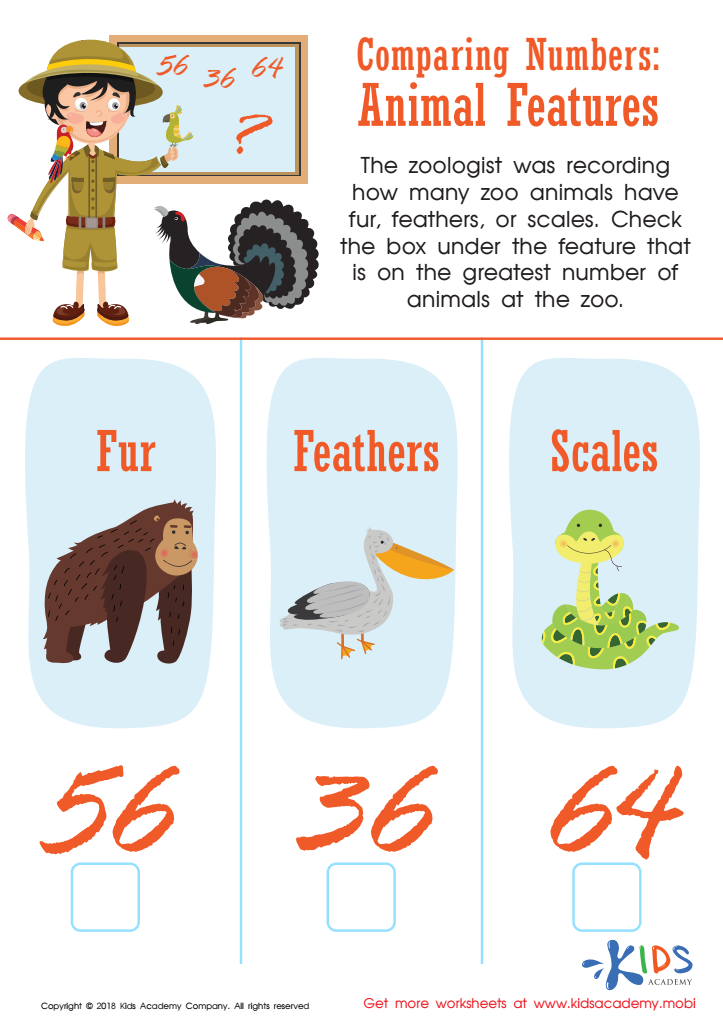
Animal Features Worksheet
 Assign to My Students
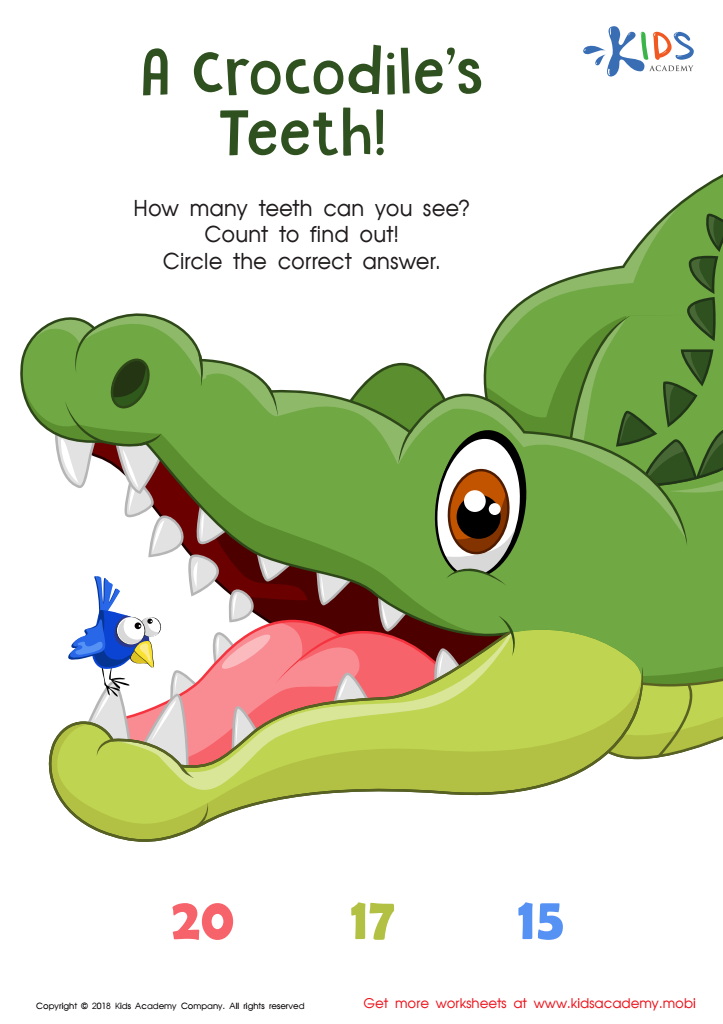
A Crocodile's Teeth Worksheet
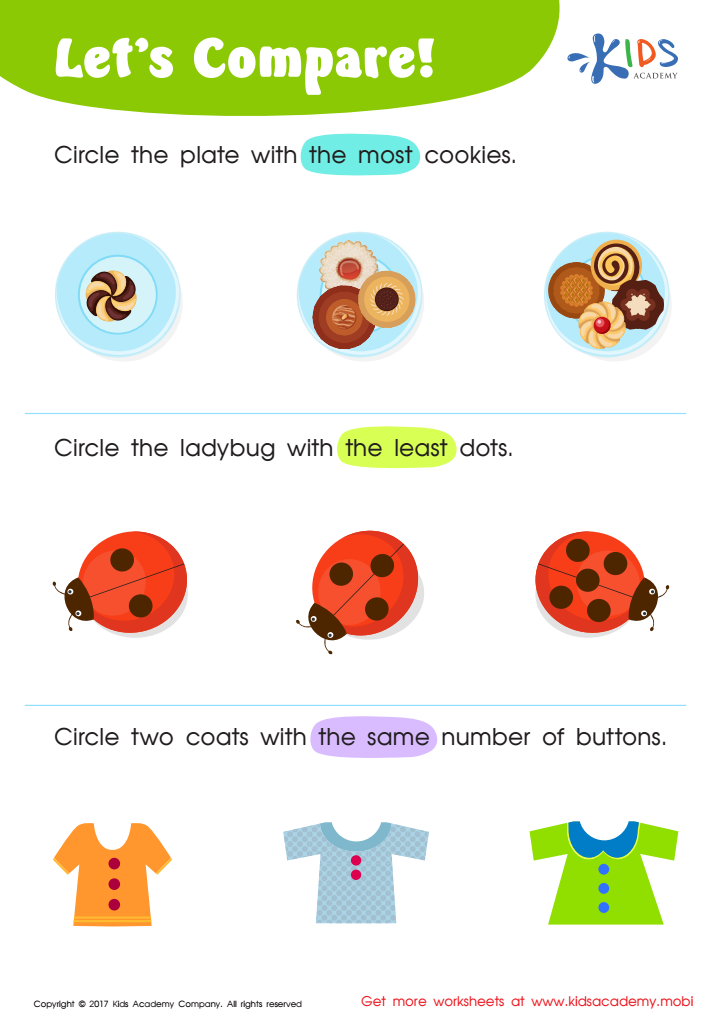
Matching: Classifying Toys by Size Worksheet








Understanding comparisons of numbers is crucial for children aged 4-9 as it lays the foundation for strong mathematical skills and critical thinking. At a young age, children begin to grasp concepts of more than, less than, and equal to, which are fundamental in their everyday experiences. When parents and teachers emphasize these comparisons, they help children build a solid understanding of quantity and value, aiding their transition to more complex math topics in later years.
Furthermore, logical reasoning is enhanced when children engage in comparing numbers. This skill not only applies to mathematics but also fosters analytical thinking applicable in various life situations. For instance, being able to compare heights, ages, or even emotions helps children articulate thoughts and make decisions.
In addition, mastering comparisons encourages confidence in problem-solving abilities. Children learn how to evaluate options, estimate outcomes, and understand relationships, both numerically and socially. This is especially important in a collaborative learning environment, where teamwork is essential. Thus, parents and teachers should prioritize fostering an understanding of numerical comparisons, paving the way for academic success and the development of critical life skills in young learners.








