Filters

7 filtered results

Clear all filters
Favorites
With answer key
Interactive

7 filtered results

Difficulty Level

Grade


Explore our "Understanding Patterns" number worksheets designed for children aged 4-9! These engaging, printable resources help young learners identify and create numerical patterns, a vital foundational skill in math. Each worksheet features colorful illustrations and interactive exercises tailored to develop your child’s critical thinking and problem-solving abilities. Through a variety of fun activities, children will enhance their pattern recognition, which is essential for future math success. Perfect for at-home learning or classroom practice, these worksheets will nurture your child’s excitement for math while building their confidence. Start your child’s journey into the world of numbers today!

Check out this FREE Trial Lesson on Numbers for age 4-9!

What’s the Rule - Part 2

Favorites
With answer key
Interactive
  • 4-9
  • Understanding patterns
  • Numbers
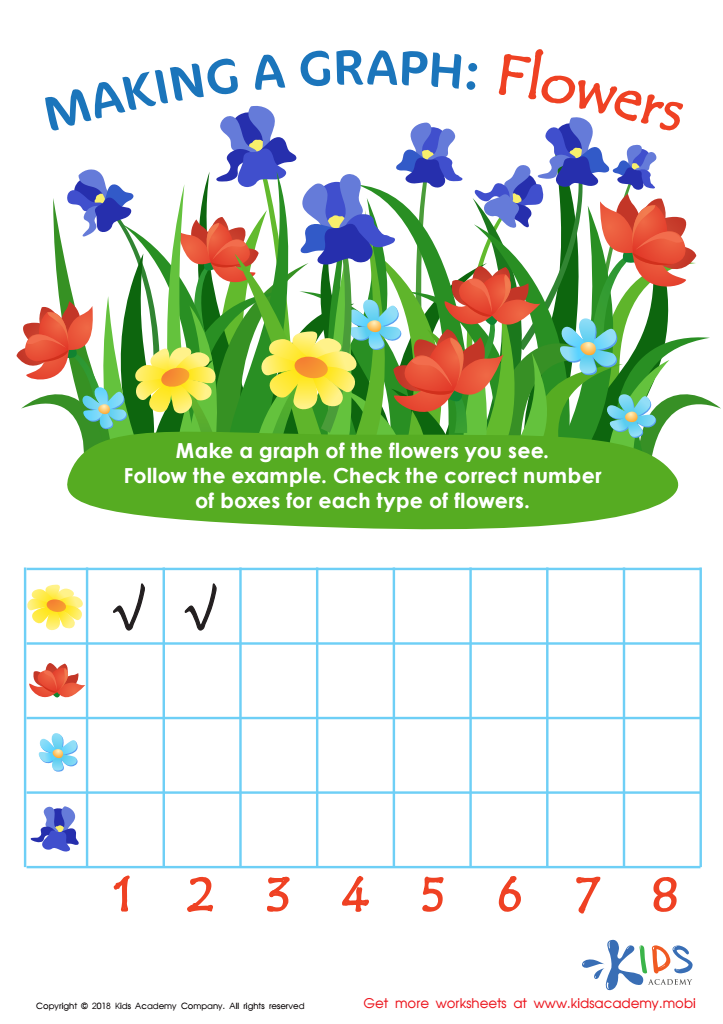
Making a Graph: Flowers Worksheet

Making a Graph: Flowers Worksheet

Kids will love this engaging PDF graph. They'll count flowers and use checkmarks to represent the number on the graph, tangibly seeing the differences in an organized way they contributed to. All while developing their number representation and concrete number sense skills without even realizing it!
Making a Graph: Flowers Worksheet
Worksheet
What's the Rule Worksheet

What's the Rule Worksheet

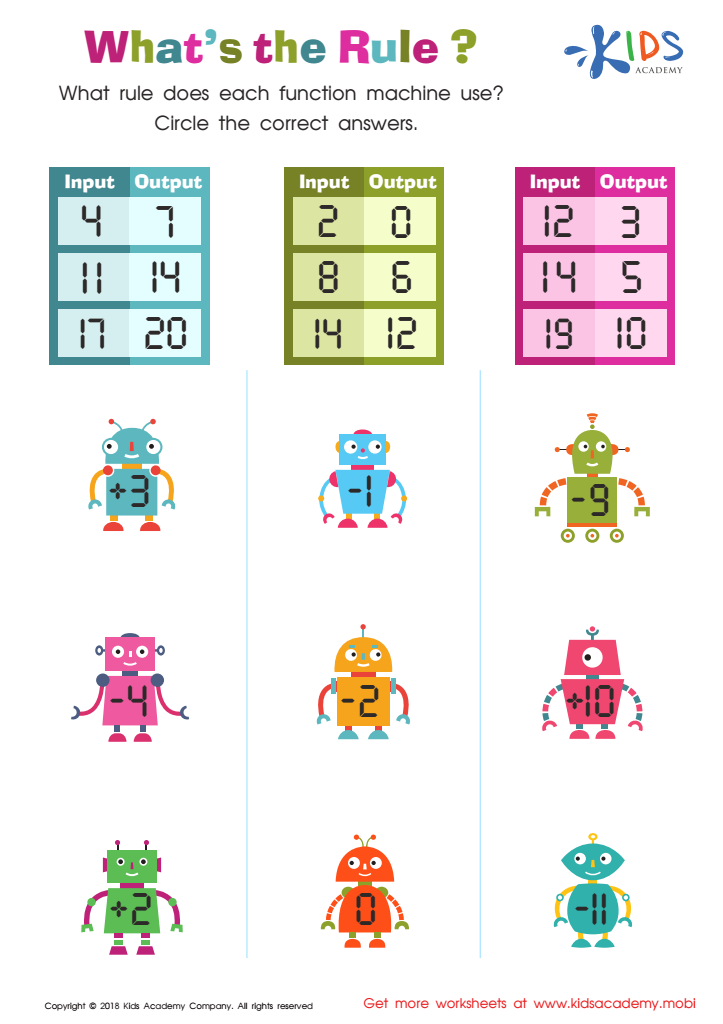
Robots are here to help your child find the relationship between each set of numbers! Adorably illustrated worksheets use vivid pictures that each contain a rule. Look at each function machine and find the pattern or relationship between the input and output. Then, complete the sheet by circling the correct answer!
What's the Rule Worksheet
Worksheet
Find the Last! Worksheet

Find the Last! Worksheet

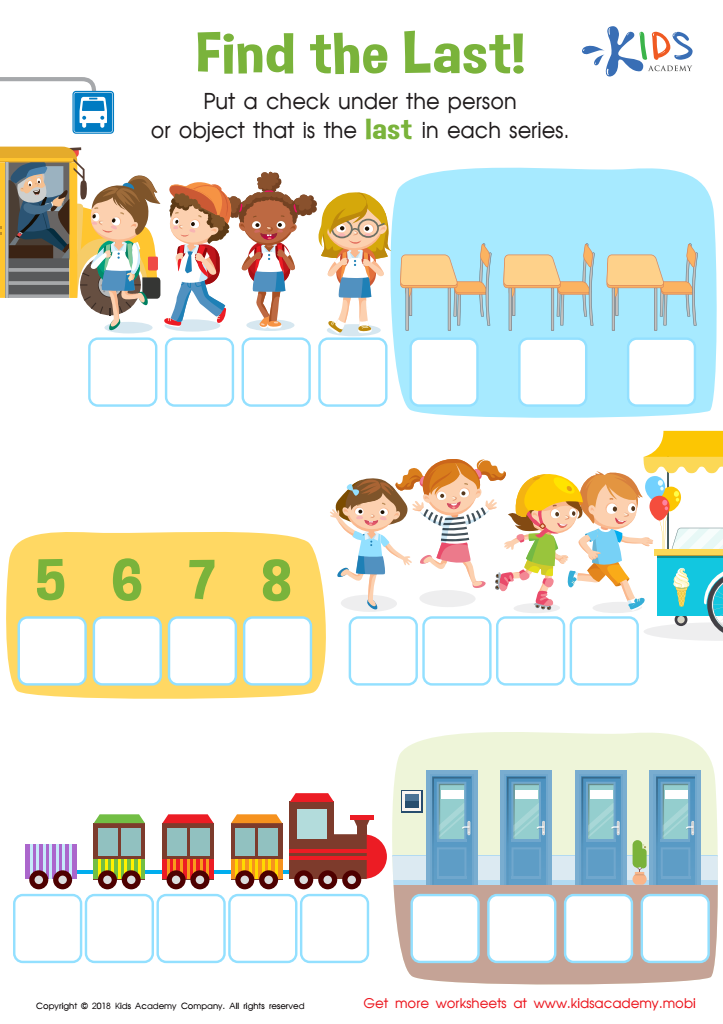
Teach young students about sequence words with this free worksheet. Have them look at sets of people or objects and choose the one that is last. Engage them further by having them describe or act out their day, and what happens last? Enjoy this printout and have fun!
Find the Last! Worksheet
Worksheet
Slinky Steps Worksheet

Slinky Steps Worksheet

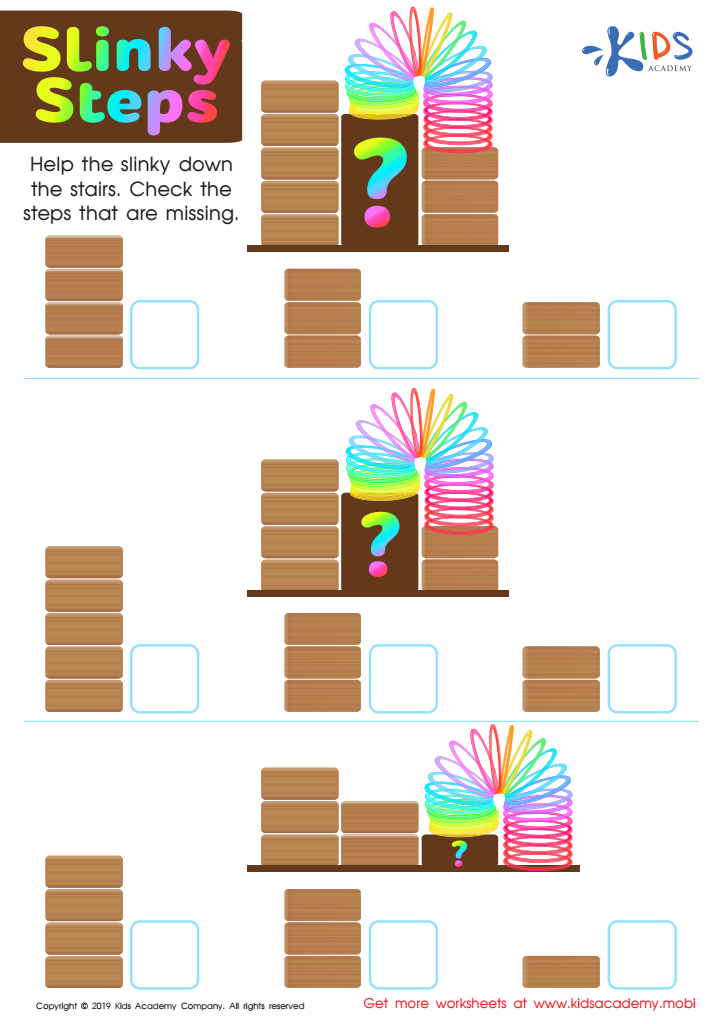
Help your kids improve their counting and math skills with this fun worksheet! Challenge them to help the slinky make its way down the stairs by selecting and checking the missing steps. Your assistance is key - get the printout and let them practice. It's the best way to becoming better in maths!
Slinky Steps Worksheet
Worksheet
Boomerang Addition Worksheet

Boomerang Addition Worksheet

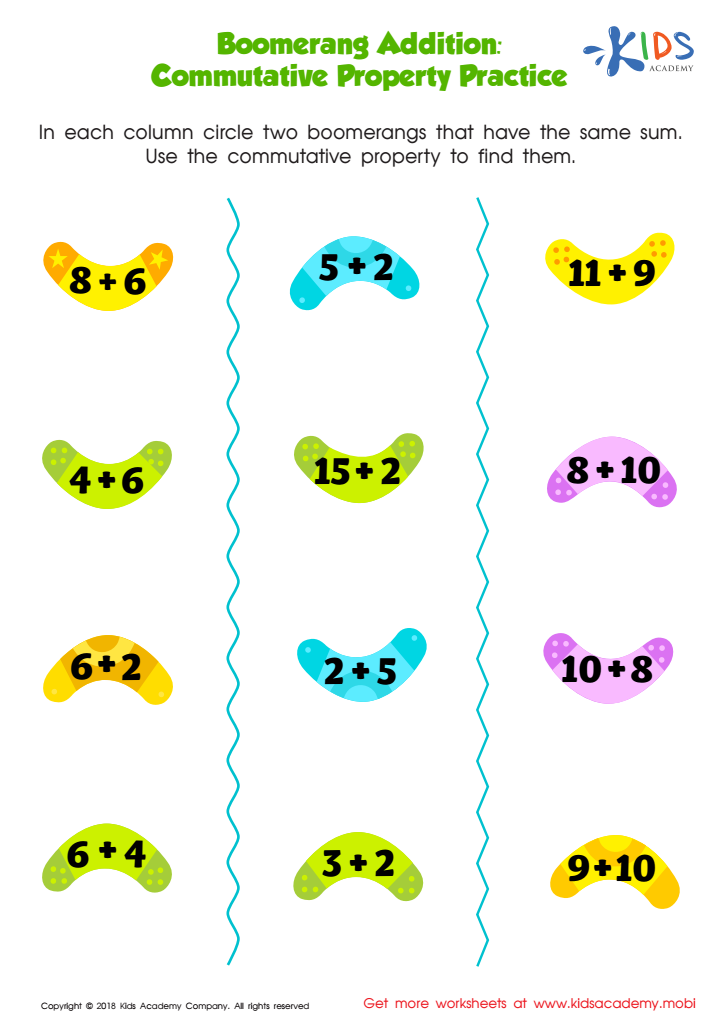
Kids know that when a boomerang is thrown, it reverses its path back. The same goes for addition: numbers can be rearranged and the sum will remain the same. Use this worksheet to find matching pairs of colorful boomerangs and equations. Look through each column and use the commutative property to find the pairs with the same sum.
Boomerang Addition Worksheet
Worksheet
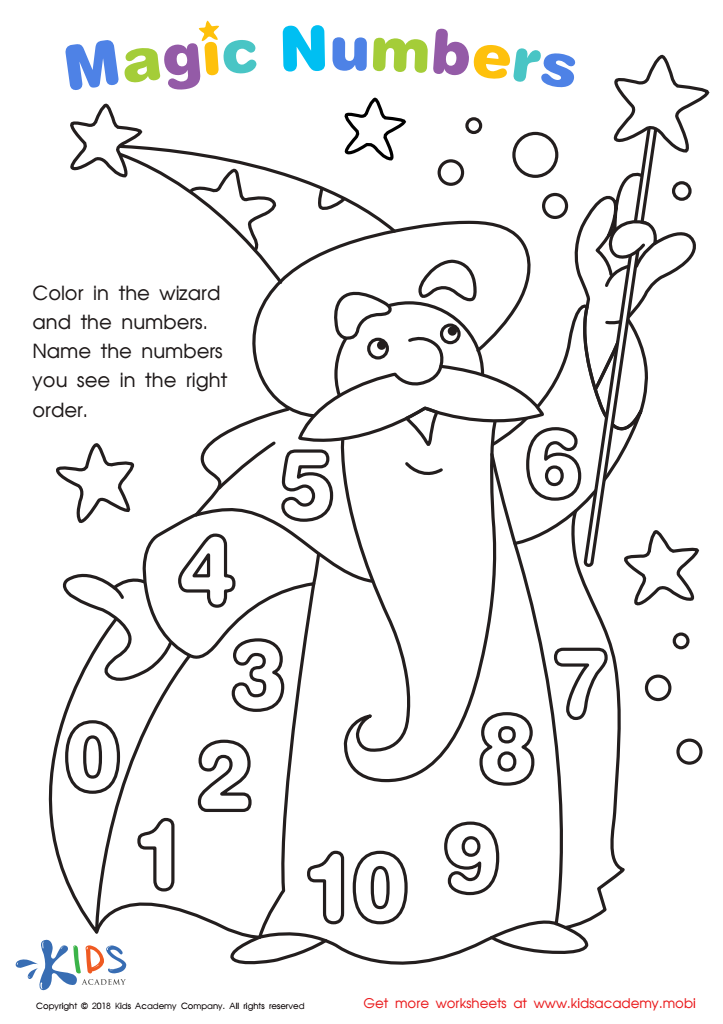
Magic Numbers Worksheet

Magic Numbers Worksheet

Does your child have an interest in magic? Here's something they'll love - a coloring sheet featuring a wizard! Ask them to name the numbers from smallest to highest, then let them pick colors to color in the wizard and the numbers. It's sure to excite them!
Download (PDF)
Assign to My Students
Magic Numbers Worksheet
Worksheet
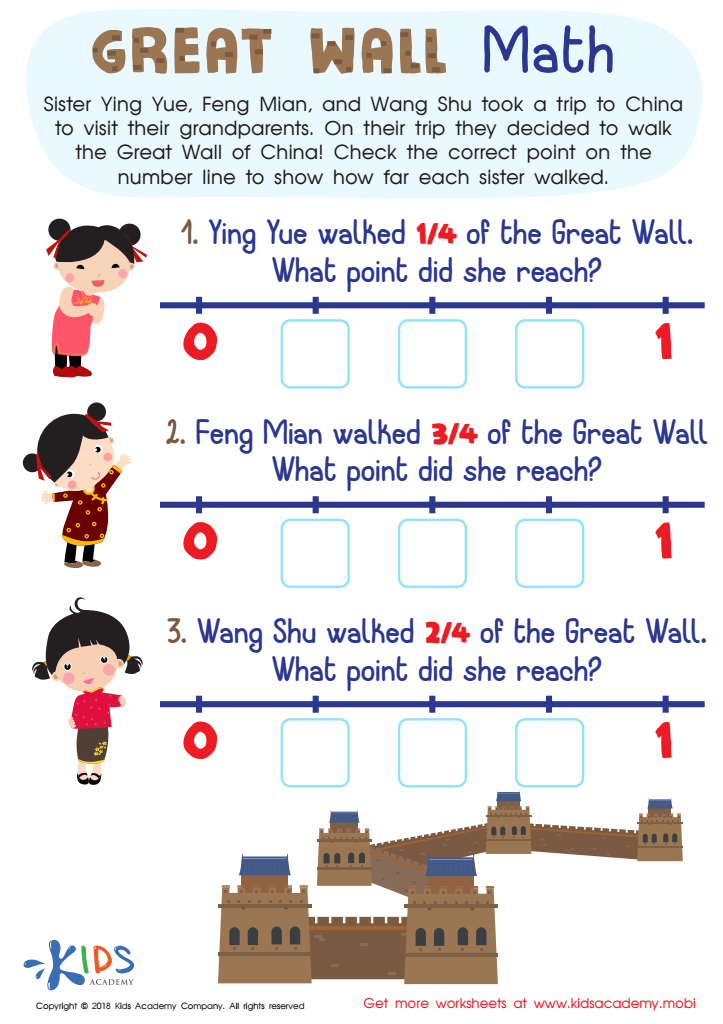
Great Wall Math Worksheet

Great Wall Math Worksheet

Let your kids learn about fraction and history with this printout about the Great Wall of China. Three sisters take a trip to China to visit their grandparents and decide to walk the Great Wall. Ask them to study the pictures and pick the correct point on the number line to show how far each sister went. How about you: has your child ever been to China?
Great Wall Math Worksheet
Worksheet


Understanding patterns in numbers is fundamental for children aged 4-9 as it lays the groundwork for their mathematical skill development and critical thinking. At this age, children are naturally curious and eager to recognize structures, making it an ideal time to introduce them to patterns in numbers. When children learn to identify sequences and relationships, they not only enhance their counting skills but also develop an intuitive sense of arithmetic operations.

Moreover, recognizing patterns fosters logical reasoning and predictive skills. For instance, seeing that the number sequence 2, 4, 6, 8 demonstrates a consistent increment teaches kids about addition and multiplication in a tangible way. This early exposure to patterns builds confidence that translates into their performance in more advanced mathematics later on.

Additionally, understanding patterns is crucial across various disciplines beyond math. It aids in reading by helping learners to understand sound patterns and word structures. Ultimately, by emphasizing patterns early on, parents and teachers can nurture adaptable thinkers who are better equipped to solve problems, make decisions, and understand the world around them in not just mathematics, but in everyday scenarios. Thus, investing in pattern recognition during these formative years is essential for a child's holistic educational development.