
Vocabulary Building Numbers Worksheets for Ages 4-9
3 filtered results
Difficulty Level
Grade
Age
-
From - To
Subject
Activity
Standards
Unlock your child's math potential with our engaging "Vocabulary Building Numbers Worksheets for Ages 4-9"! Tailored for young learners, these fun and educational worksheets focus on enhancing numerical understanding and vocabulary through interactive activities. Perfect for preschoolers to third graders, each worksheet is designed to strengthen key learning skills such as number recognition, counting, and basic arithmetic. Packed with vibrant visuals and exciting exercises, kids will enjoy learning while developing confidence in math. Give your child a head start in their educational journey with our expertly crafted, age-appropriate worksheets. Explore now and watch your little one thrive!
Favorites
With answer key
Interactive
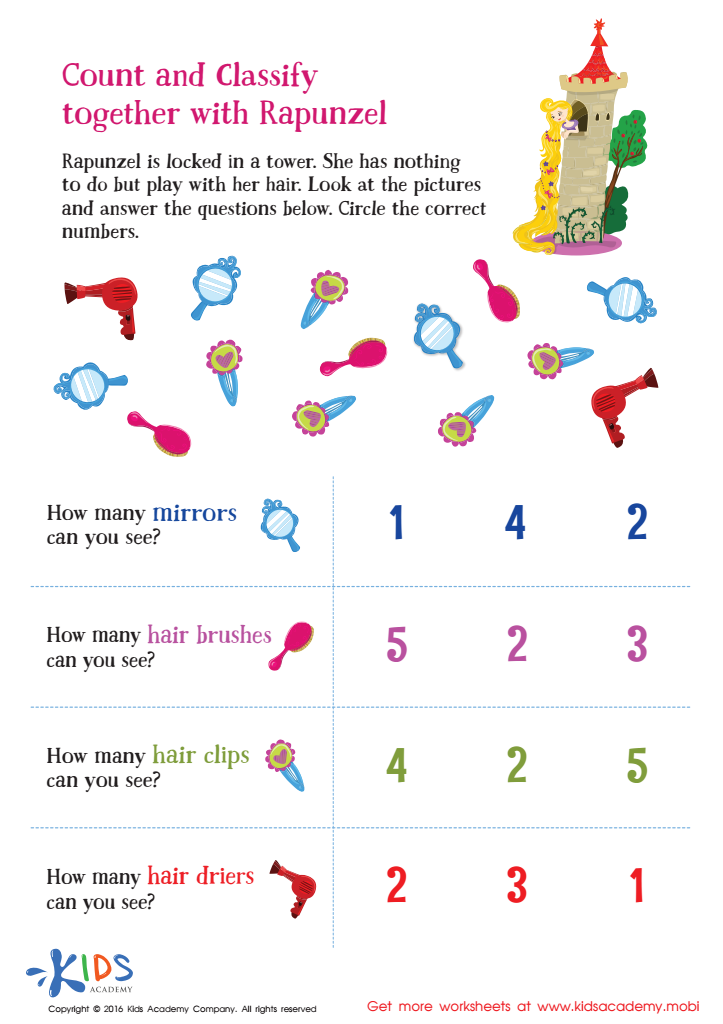
Fairy Tale Worksheet: Count and Classify with Rapunzel
Get printing and shine a light on your pre-math skills!
 Assign to My Students
Fairy Tale Worksheet: Count and Classify with Rapunzel
Worksheet
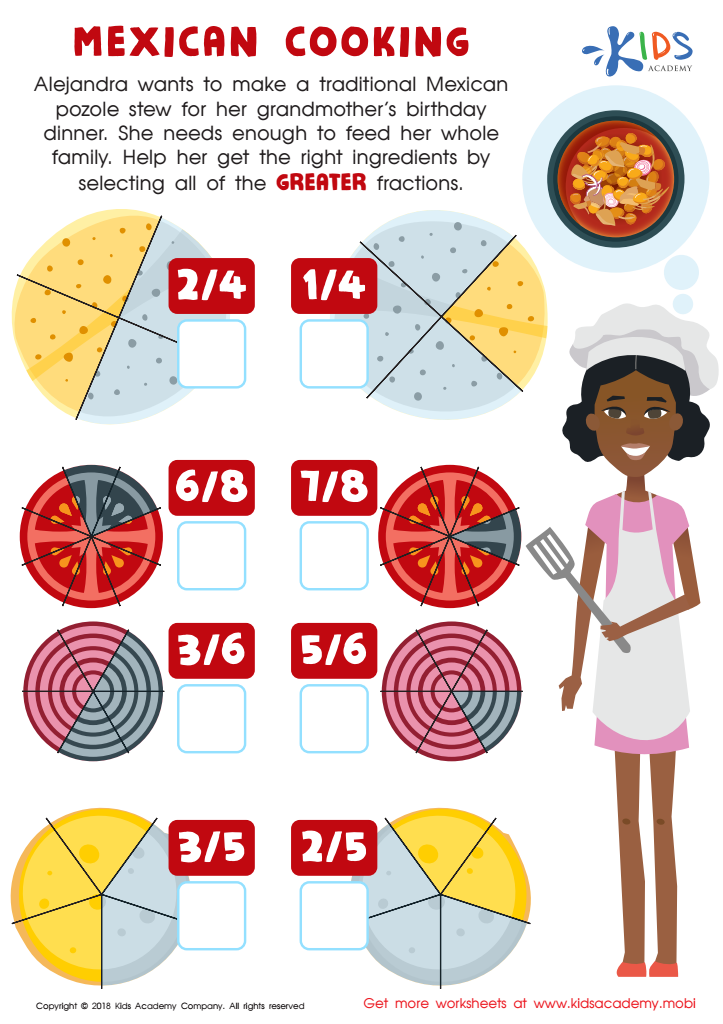
Mexican Cooking Worksheet
Alejandra needs to make a traditional Mexican pazole stew that will feed her whole family. Help her select the right ingredients by choosing the greater fractions in this worksheet. Mexicans have an amazing culture with many unique holidays, customs and dishes - explore it with your kids in your local neighbourhood!
Mexican Cooking Worksheet
Worksheet
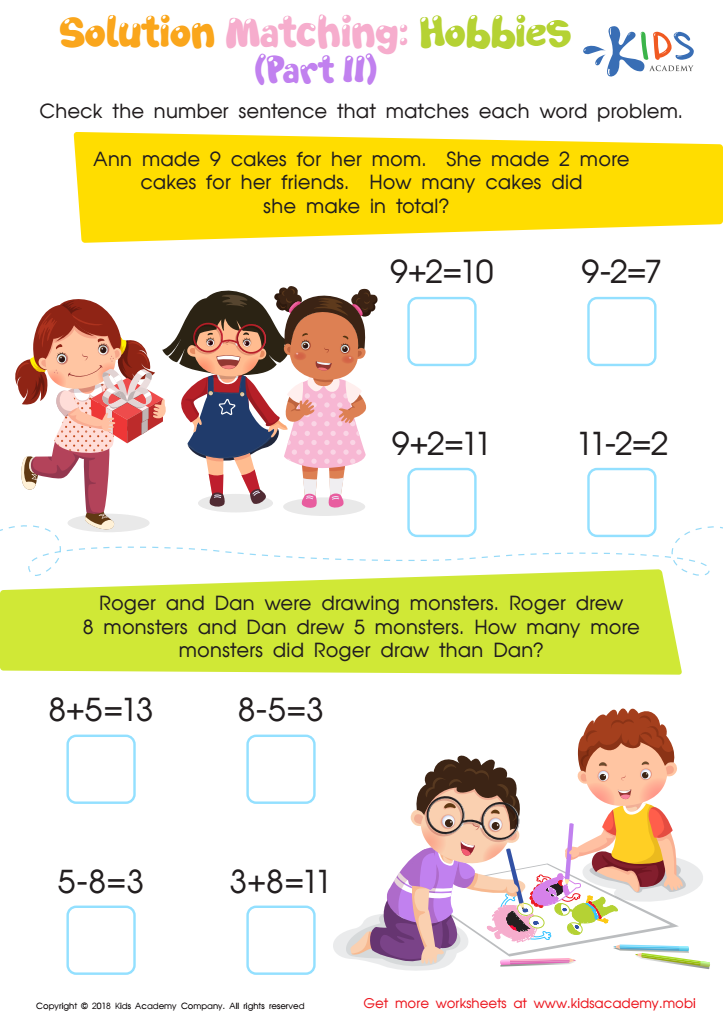
Solution Matching: Hobbies. Part 2 Worksheet
This fun printable worksheet has word problems featuring hobbies your children enjoy! With your child, read through each problem, understanding the numbers and key phrases indicating addition or subtraction. Then, match the correct equation with the solution by checking the box. Math problems are more enjoyable to solve when they’re realistic and engaging!
Solution Matching: Hobbies. Part 2 Worksheet
Worksheet
Join Kids Academy for Free
Who is primarily going to use this learning content?








Vocabulary building is essential for children aged 4-9 as it lays a foundational cornerstone for their overall cognitive, social, and academic development. During these formative years, children’s brains are incredibly receptive to new information, enabling them to learn words quickly and efficiently. By expanding their vocabulary, children can better understand and communicate their thoughts and feelings, fostering stronger interpersonal relationships.
A well-developed vocabulary also supports improved reading comprehension. As children encounter new texts, a rich vocabulary allows them to decode meaning, enhancing their ability to understand complex ideas and narratives. This skill is critical not only for language arts but across all subjects, including math and science, where specific terminology is crucial for understanding concepts and instructions.
Moreover, a broad vocabulary boosts children’s confidence and participation in both classroom settings and social interactions. It encourages curiosity and a love for learning, as children become more eager to explore books, stories, and the world around them. Engaging with a diverse vocabulary early on helps in cultivating critical thinking and problem-solving skills.
In summary, parents and teachers should prioritize vocabulary building for children aged 4-9 to bolster their communication abilities, academic performance, social interactions, and lifelong learning habits, thereby setting them up for success in various aspects of life.








