Animal identification Math Worksheets for Ages 4-9 - Page 2
33 filtered results
-
From - To
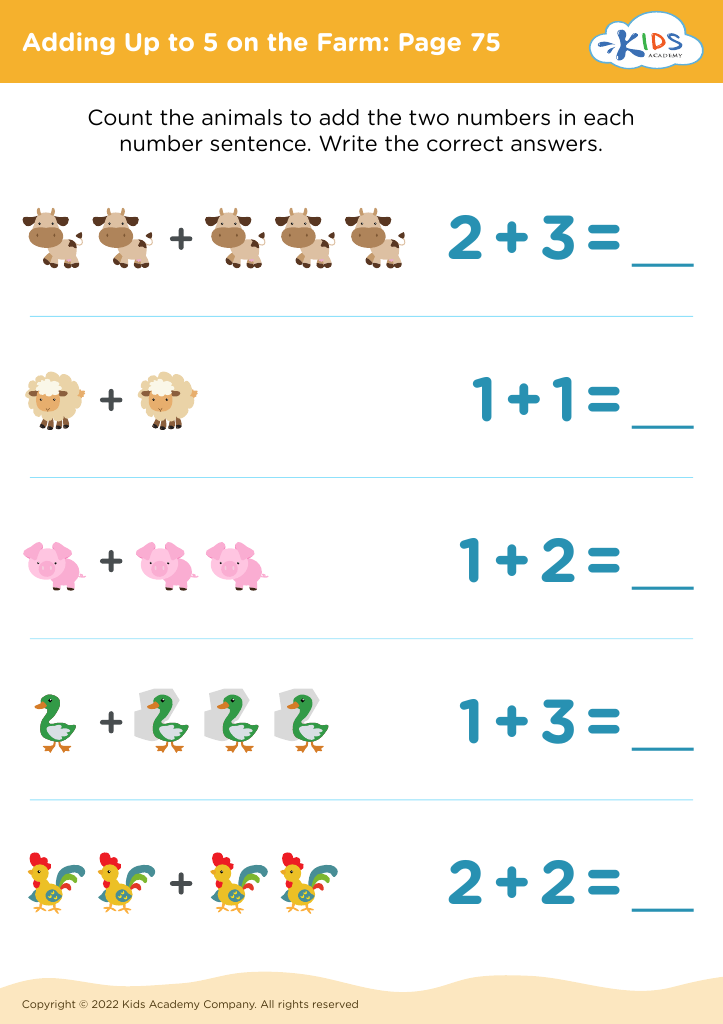
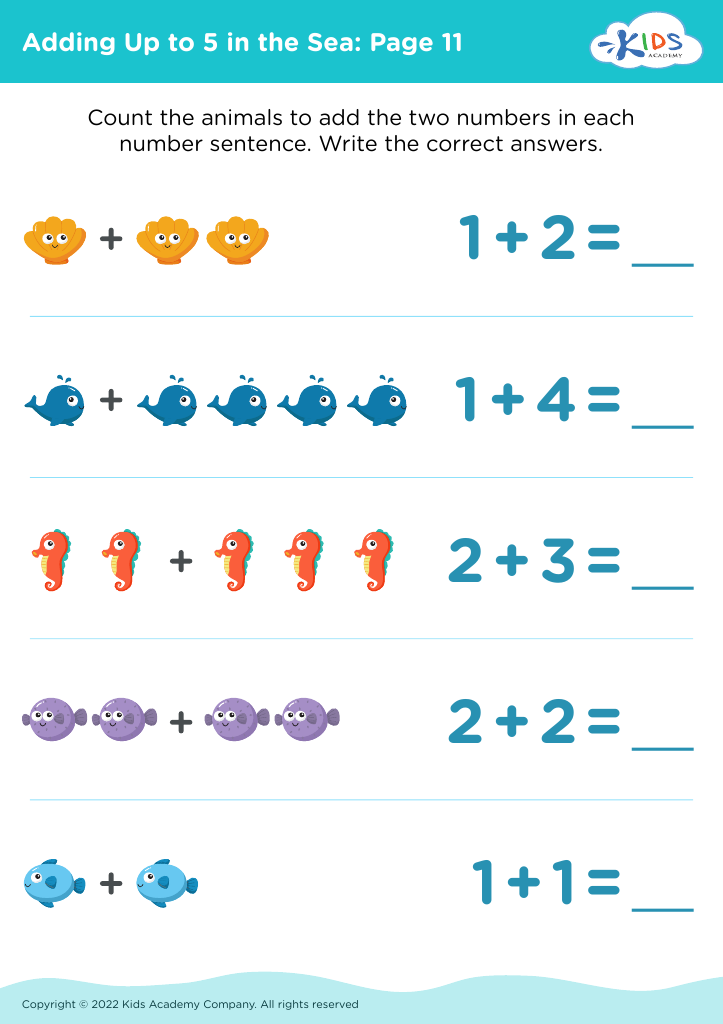
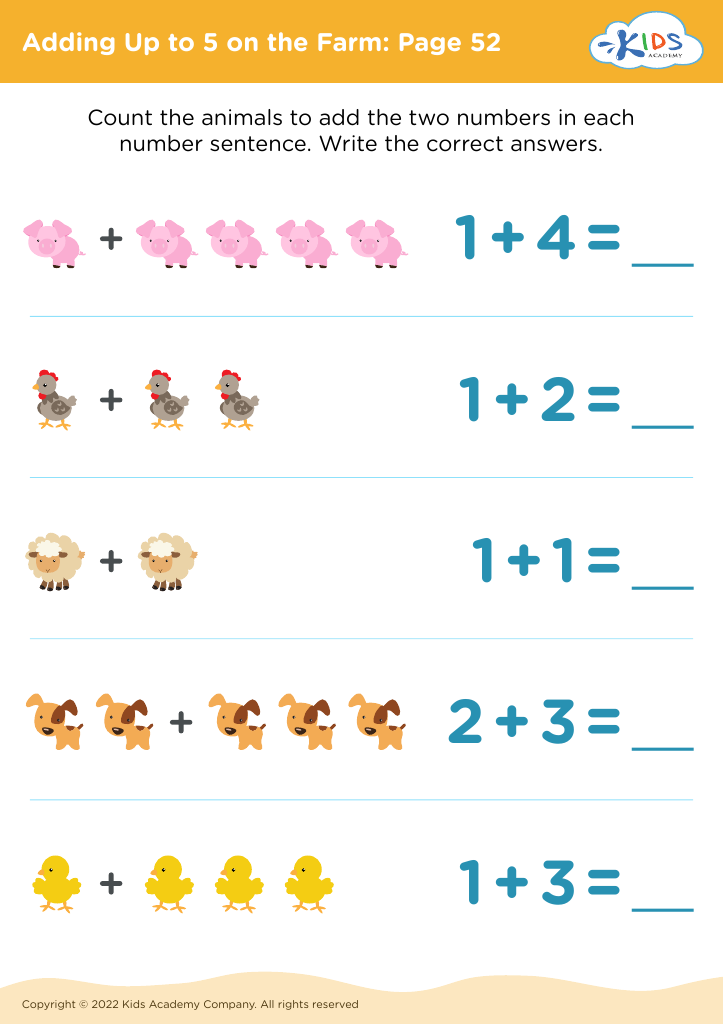
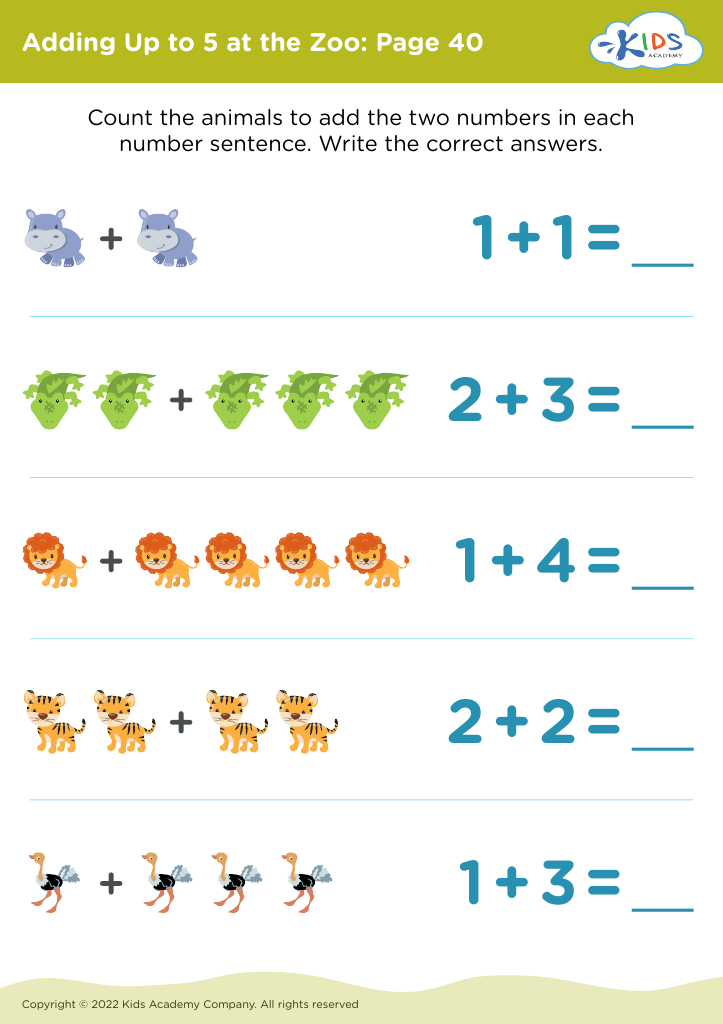
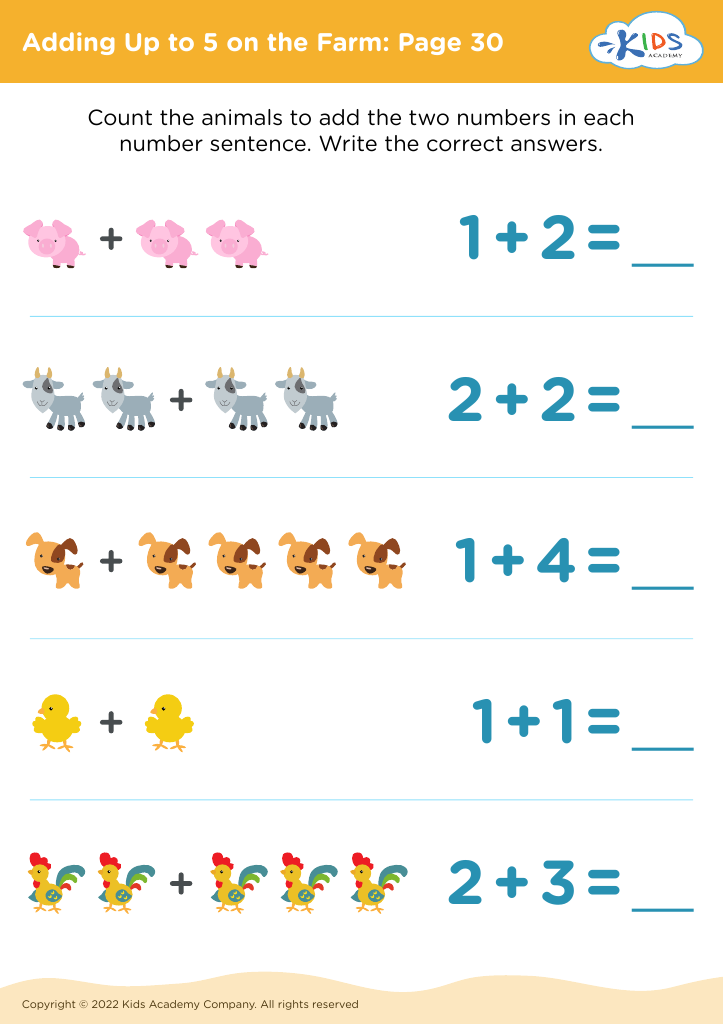
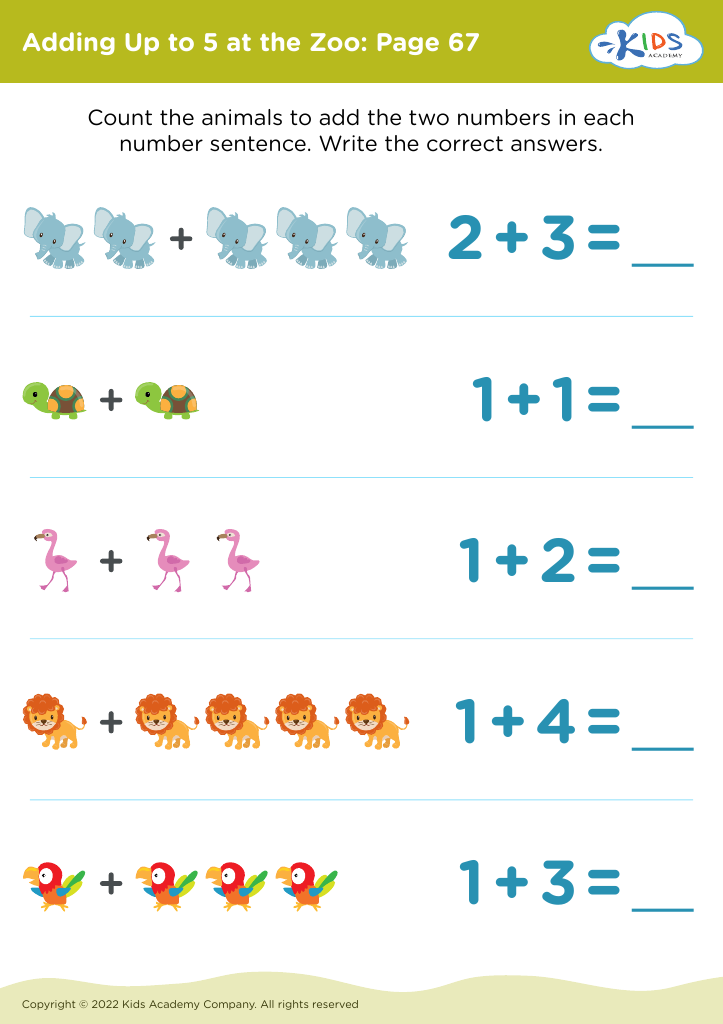
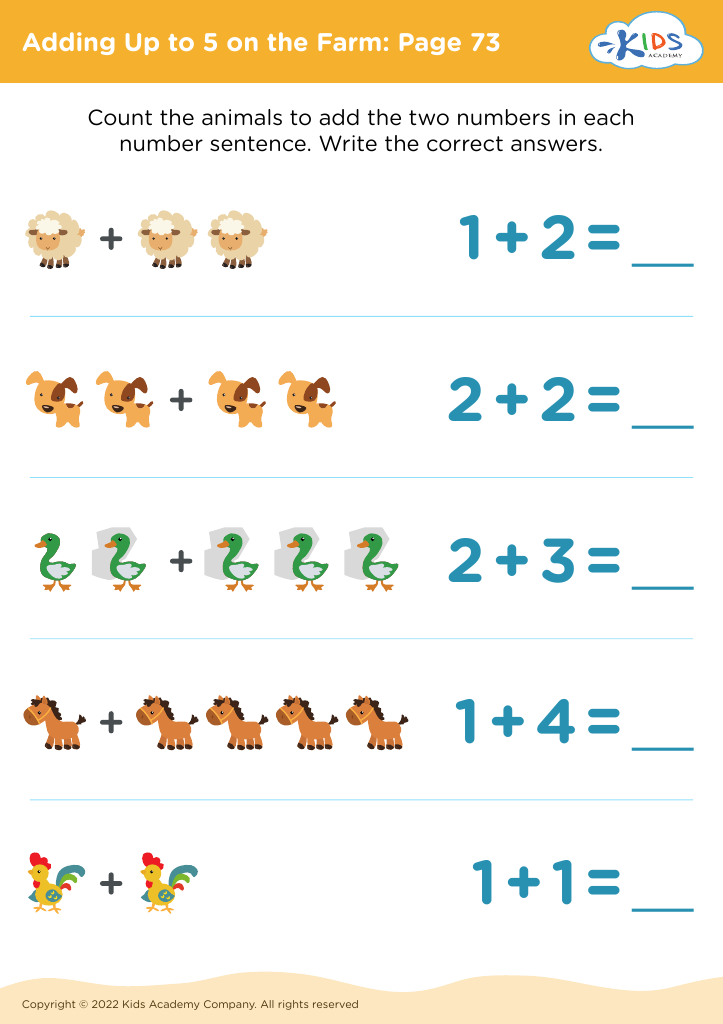
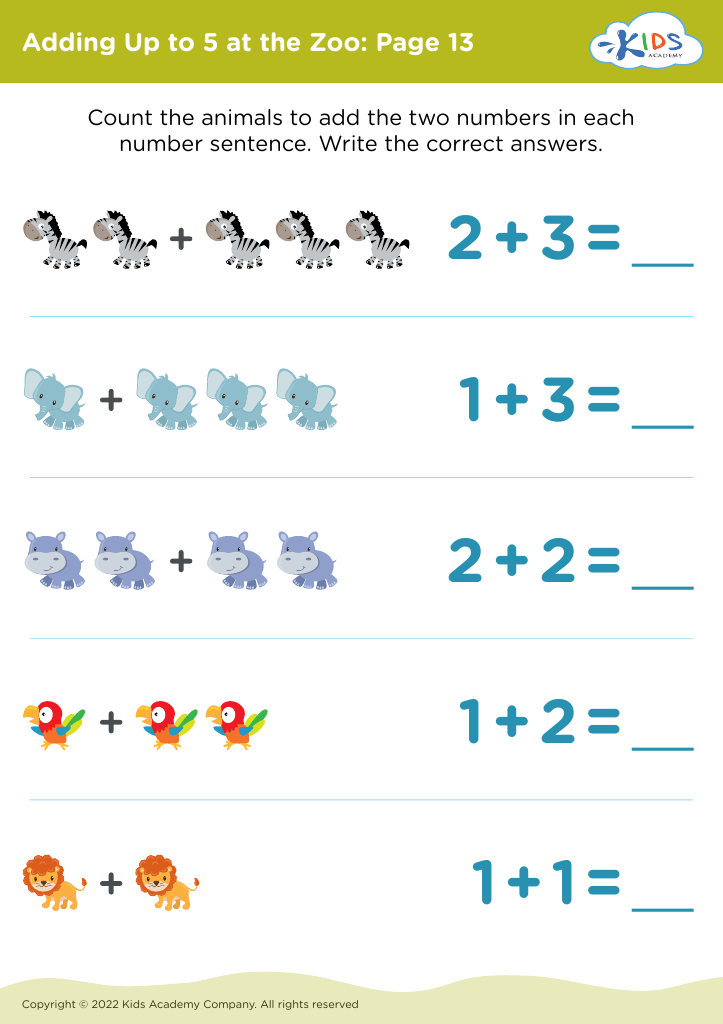
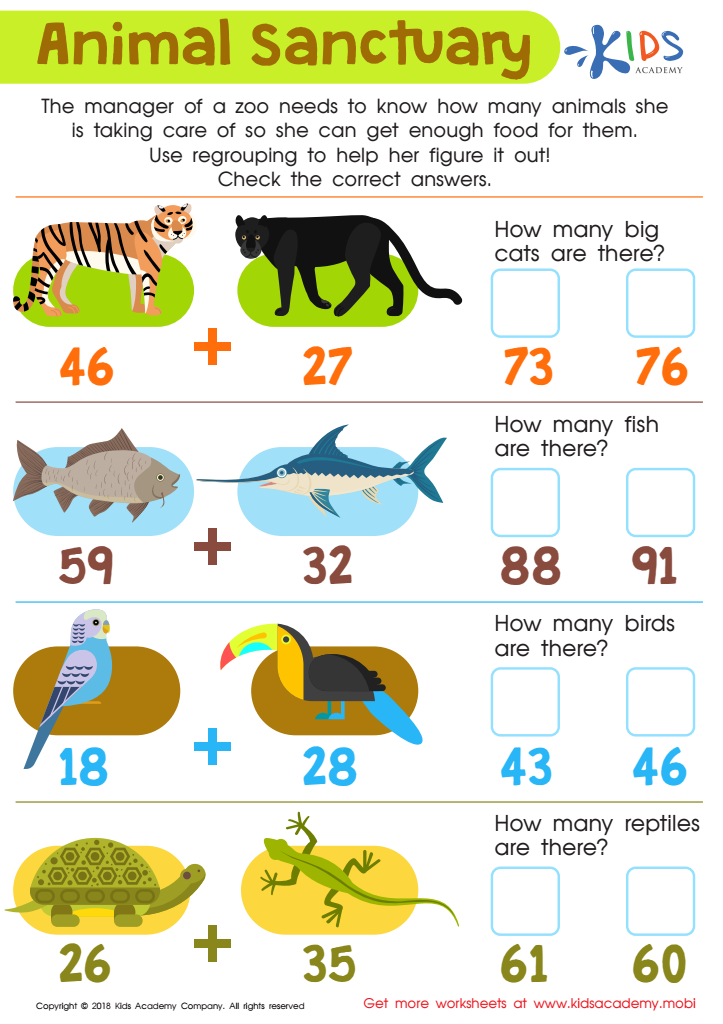
Animal Sanctuary Worksheet
 Assign to My Students








Animal identification math for ages 4-9 offers a unique and engaging way to introduce young learners to essential mathematical concepts while fostering a love for animals and nature. By integrating animal identification with mathematics, parents and teachers provide children with opportunities to practice critical skills such as counting, sorting, and classifying, all within a context that captivates their interest.
Understanding animal characteristics—from colors and sizes to habitats—allows children to develop observational skills and enhance their cognitive abilities. Engaging with math through the lens of animals makes learning relatable and fun, which can help in better retention of concepts. Additionally, this approach nurtures creativity and imagination as children might also invent stories or scenarios involving the animals they’re learning about, thus enriching language and narrative skills.
Furthermore, as children learn about various animals, they also gain awareness about biodiversity and environmental conservation, cultivating empathy and responsibility towards nature. Involving parents and teachers in this process fosters collaboration and reinforces educational values at home and school, making math and science enjoyable and relevant. Supporting animal identification math not only strengthens foundational math skills but also promotes a holistic understanding of the world around them.








