Filters

111 filtered results

Clear all filters
Favorites
With answer key
Interactive

111 filtered results

Difficulty Level

Grade


Check out this FREE Trial Lesson on Math for age 4-9!

Writing Number Sentences for Addition Picture Problems

Favorites
With answer key
Interactive
  • 4-9
  • Animal recognition
  • Math
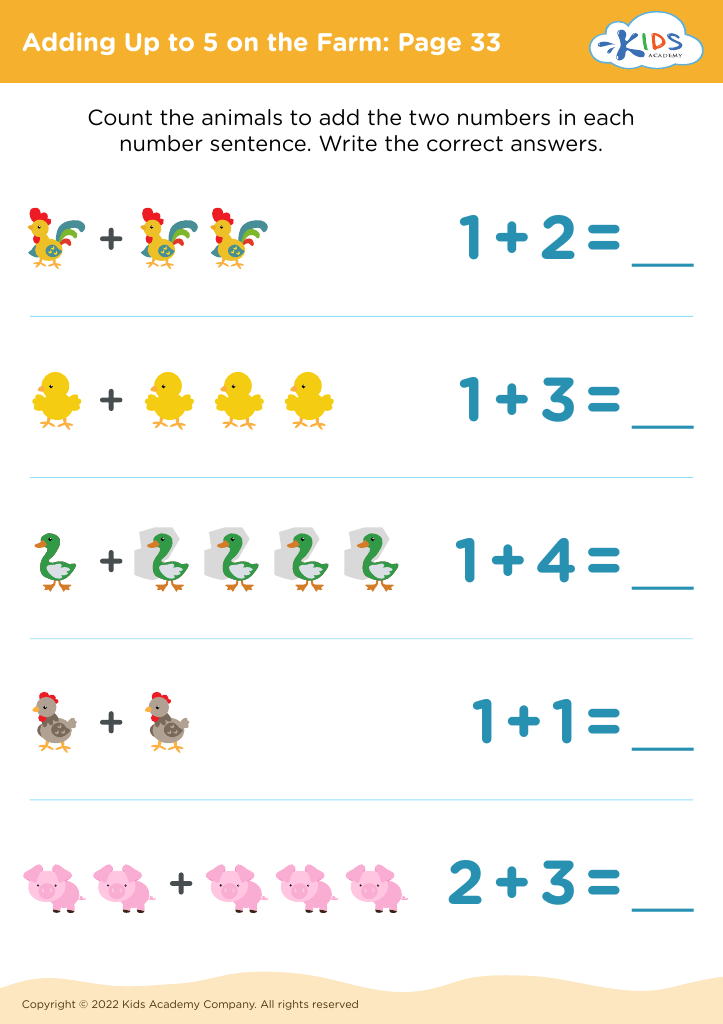
Adding Up to 5 on the Farm: Page 33
Worksheet
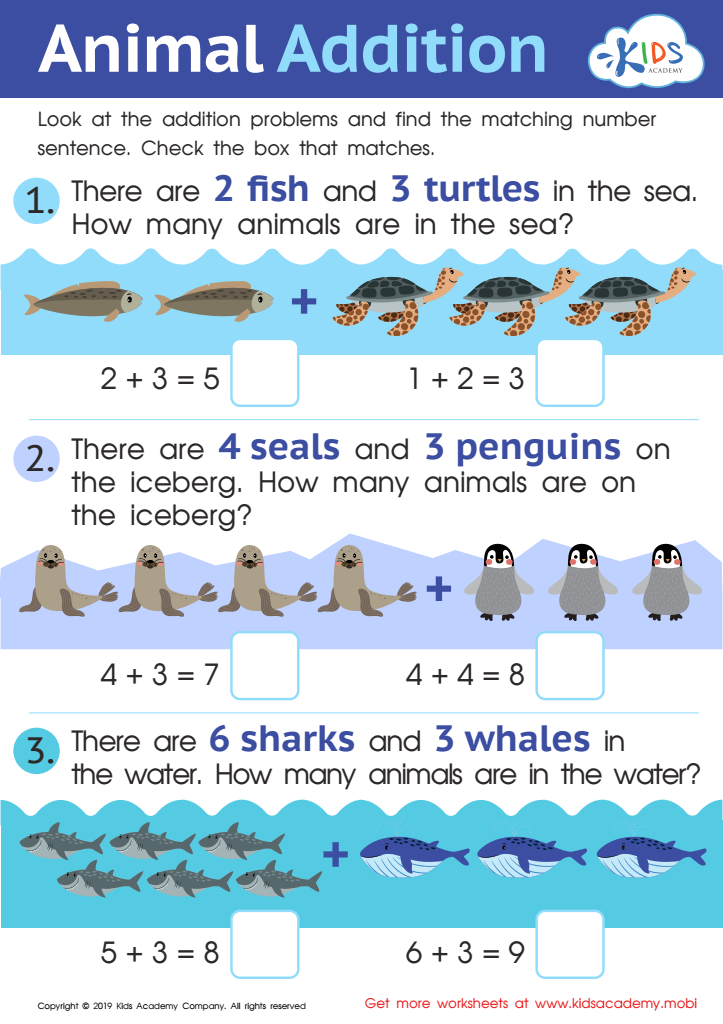
Animal Addition Worksheet

Animal Addition Worksheet

Get your kids learning addition and subtraction with this fun worksheet! Show them that solving equations can be enjoyable and help them match number sentences to the correct boxes. By doing this together, you'll create a positive learning experience that your kids won't forget.
Animal Addition Worksheet
Worksheet
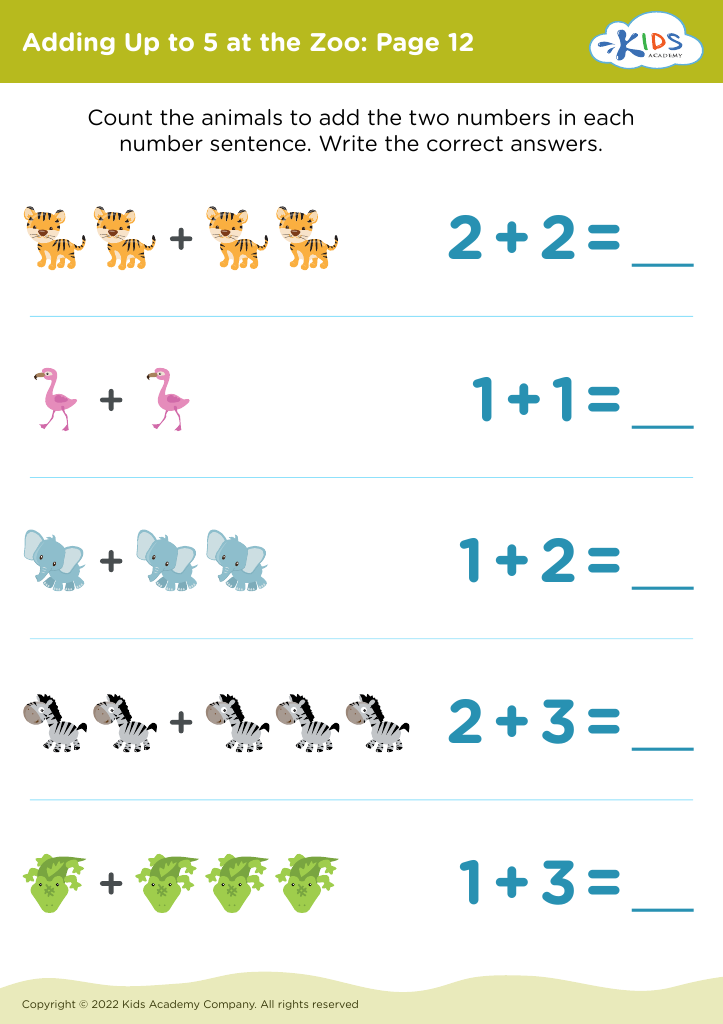
Adding Up to 5 at the Zoo: Page 12
Worksheet
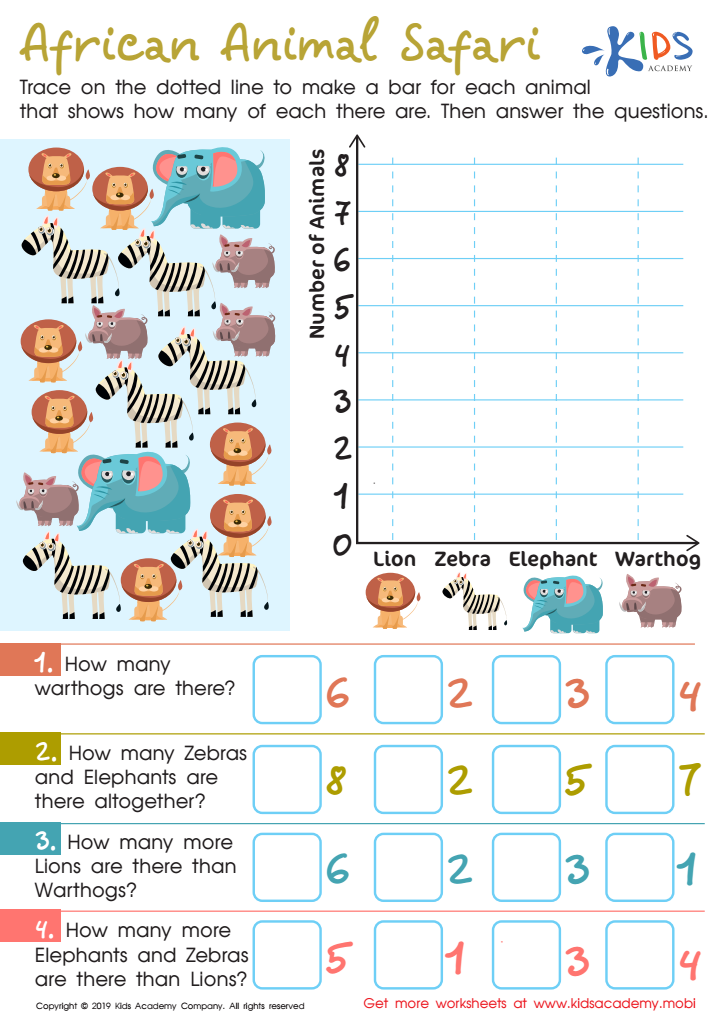
African Animal Safari Worksheet
African Animal Safari Worksheet
Help students learn geography and math, with this worksheet. Examine the graph and ask your students questions. Have them answer using the graph and addition/subtraction exercises. This can help them name continents, countries, and animals unique to each.
African Animal Safari Worksheet
Worksheet
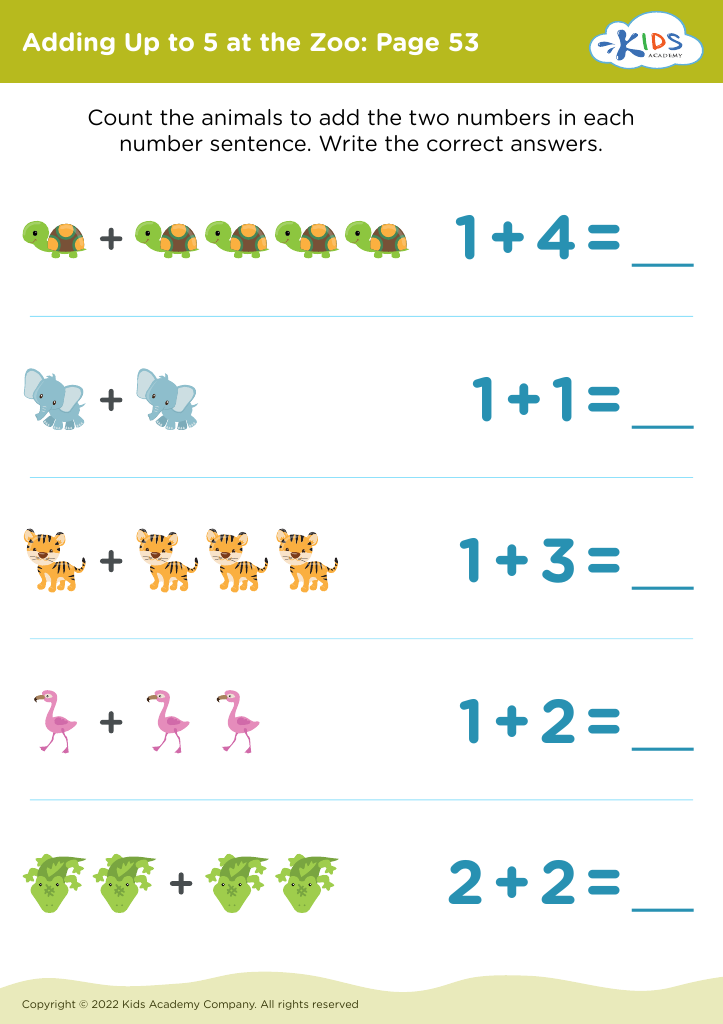
Adding Up to 5 at the Zoo: Page 53
Worksheet
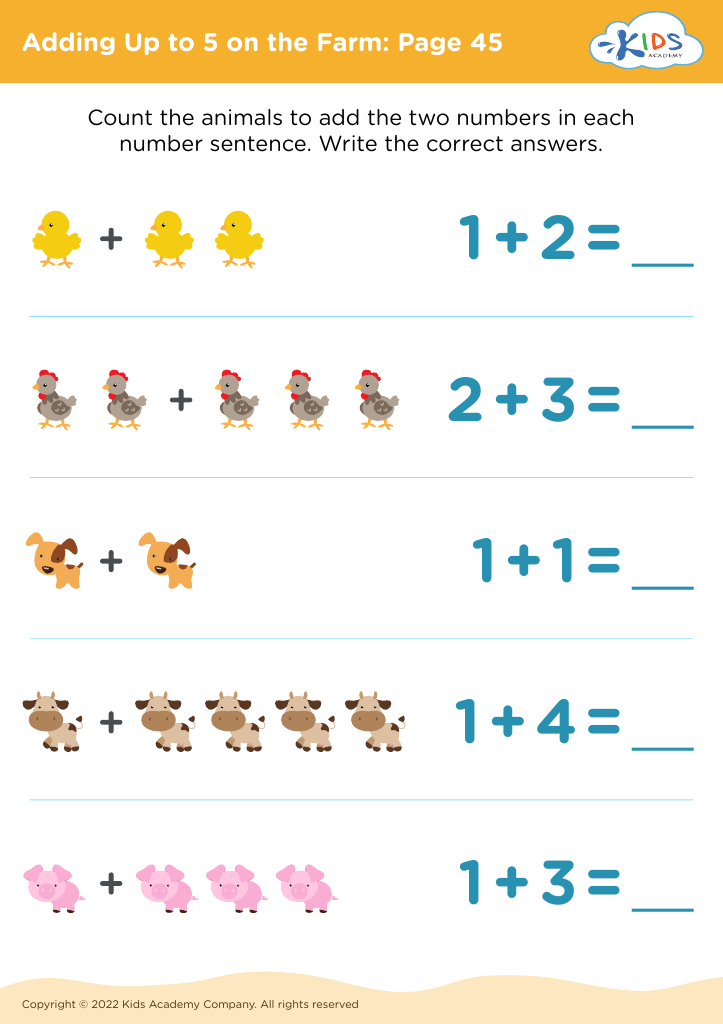
Adding Up to 5 on the Farm: Page 45
Worksheet
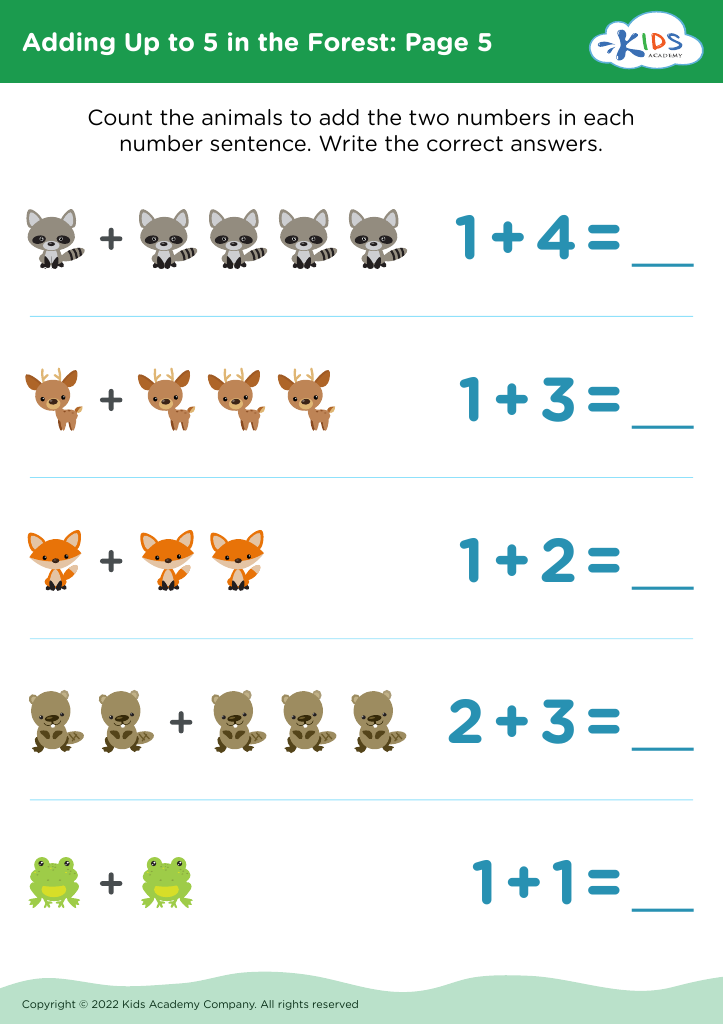
Adding Up to 5 in the Forest: Page 5
Worksheet
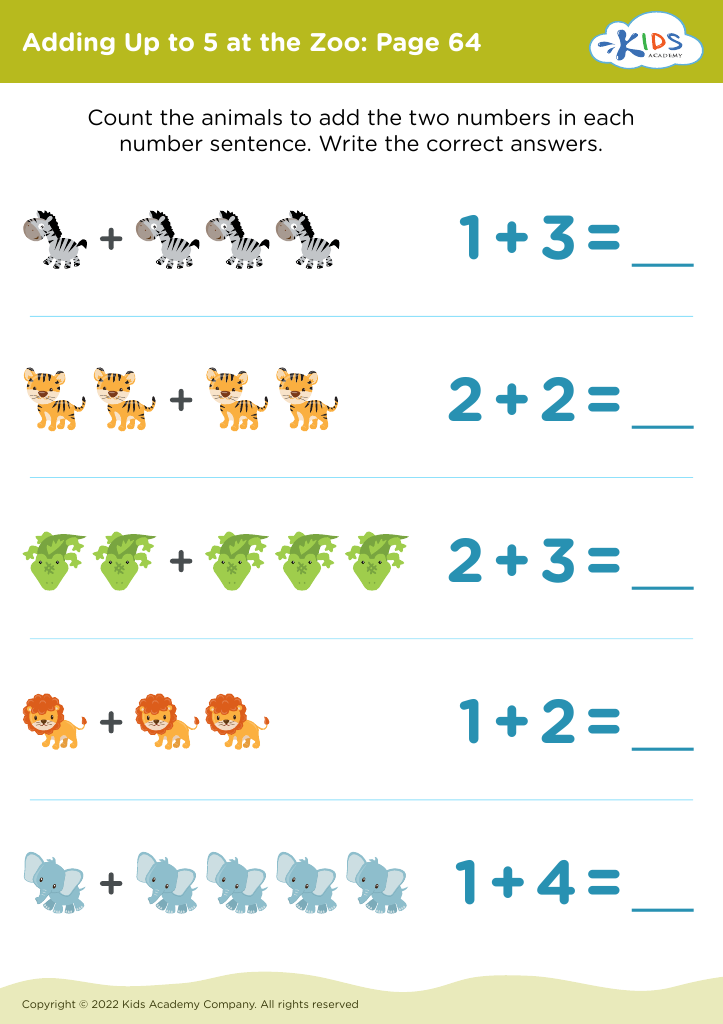
Adding Up to 5 at the Zoo: Page 64
Worksheet
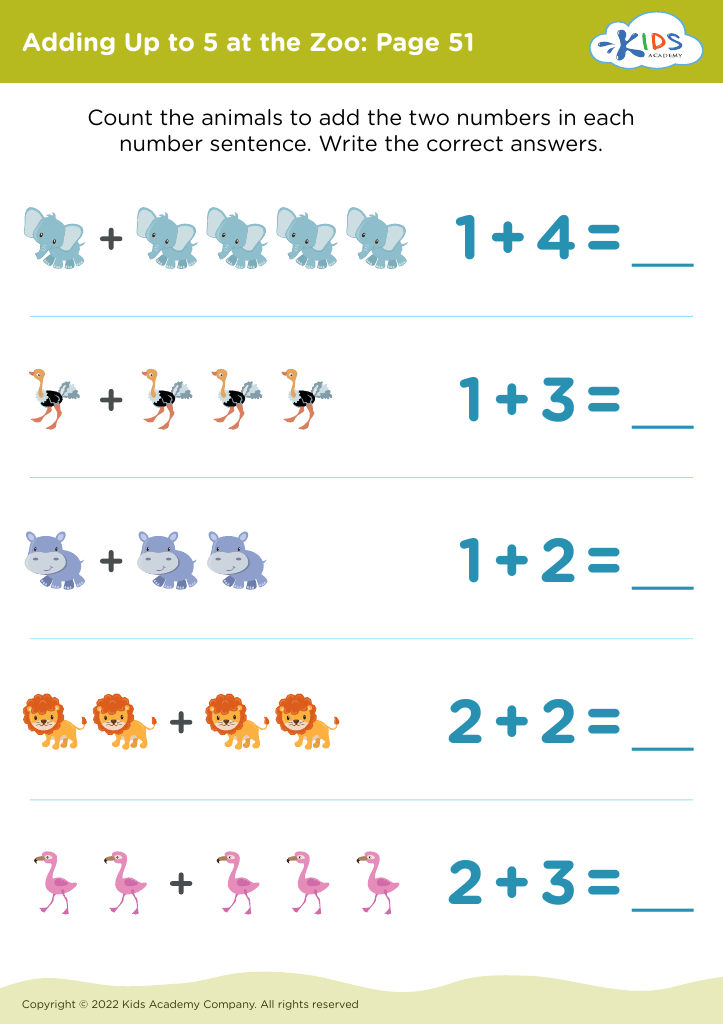
Adding Up to 5 at the Zoo: Page 51
Worksheet
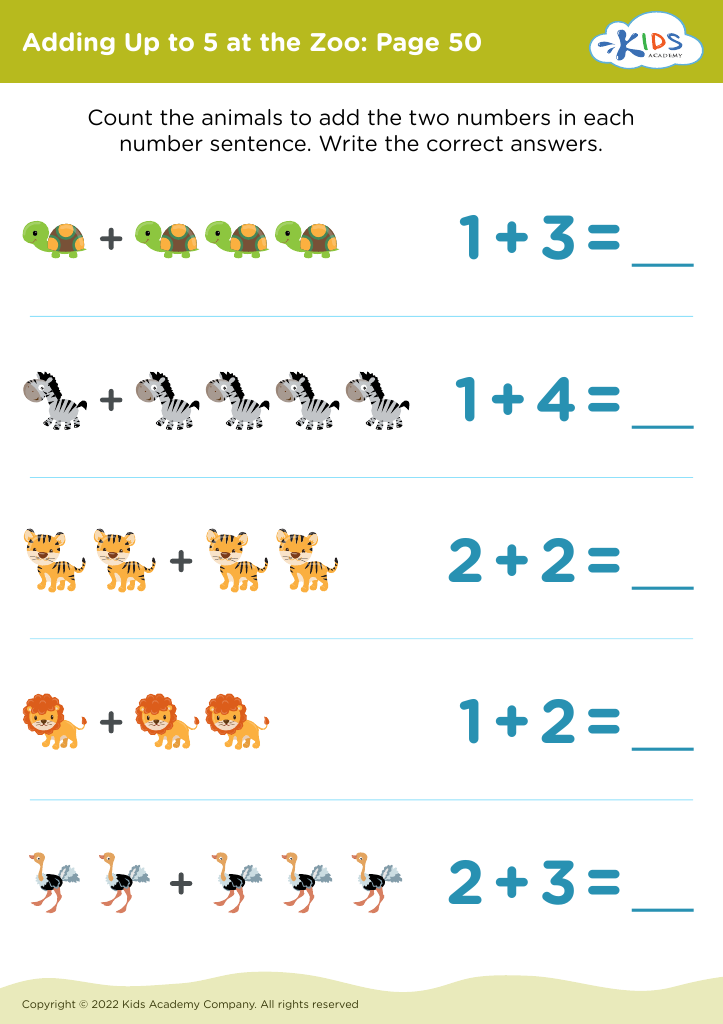
Adding Up to 5 at the Zoo: Page 50
Worksheet
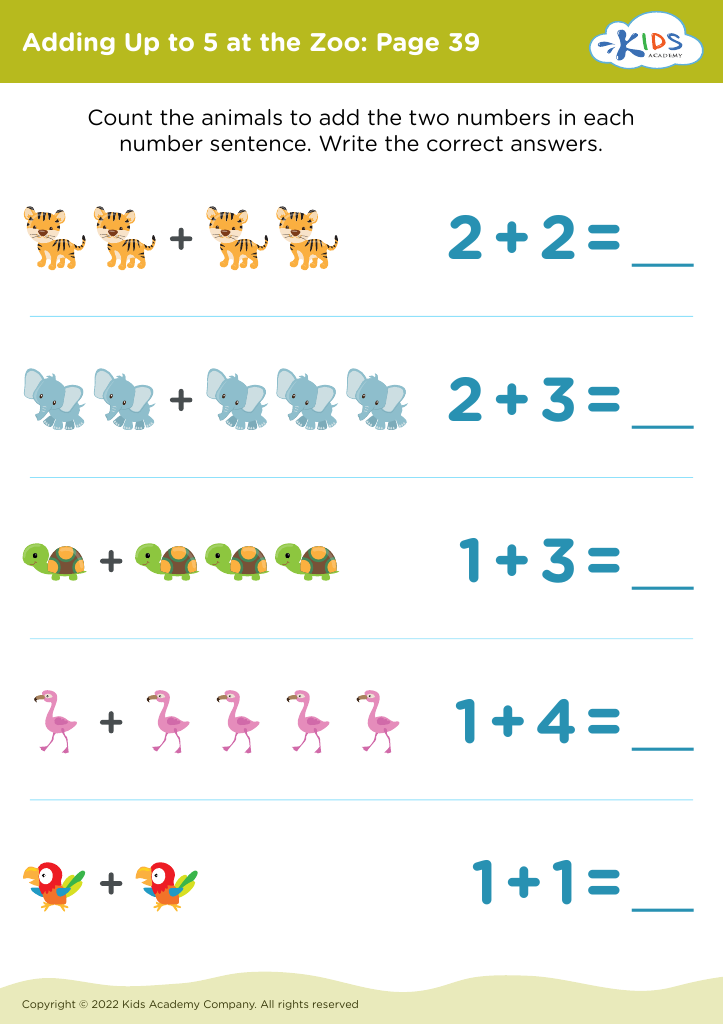
Adding Up to 5 at the Zoo: Page 39
Worksheet
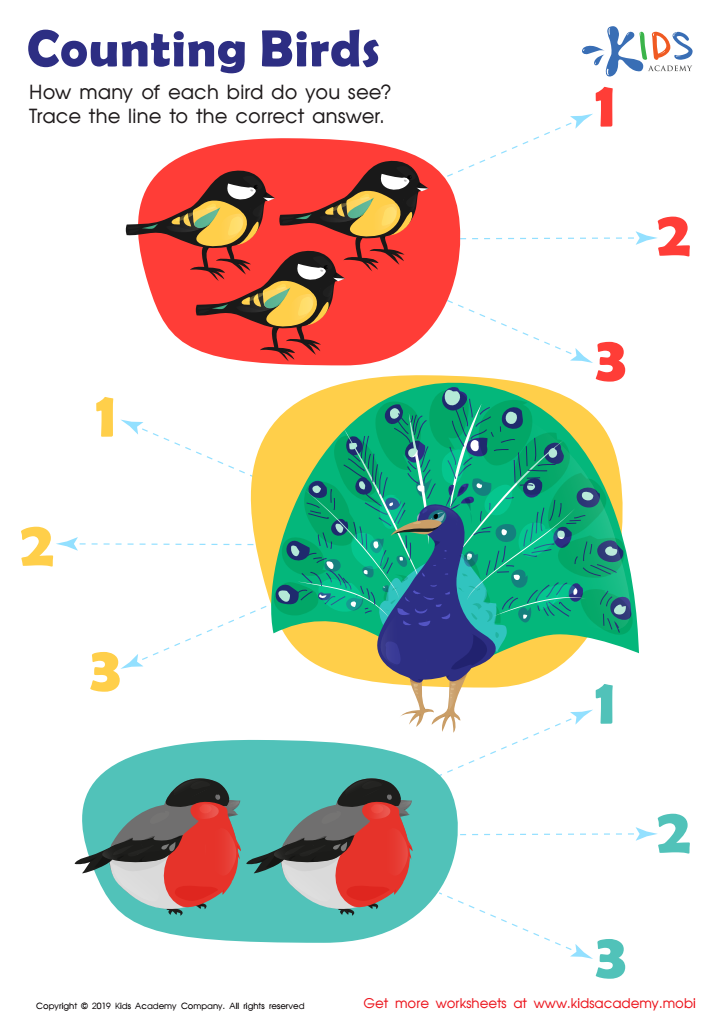
Counting Birds Worksheet

Counting Birds Worksheet

Kids love counting! With each number they learn, they can make a one-to-one representation with an item. The more practice they get, the better. Try this counting worksheet with traceable lines, to give your children practice and work on their fine motor skills. They will enjoy connecting the picture to the right number, and will feel like mathematicians with each success!
Counting Birds Worksheet
Worksheet
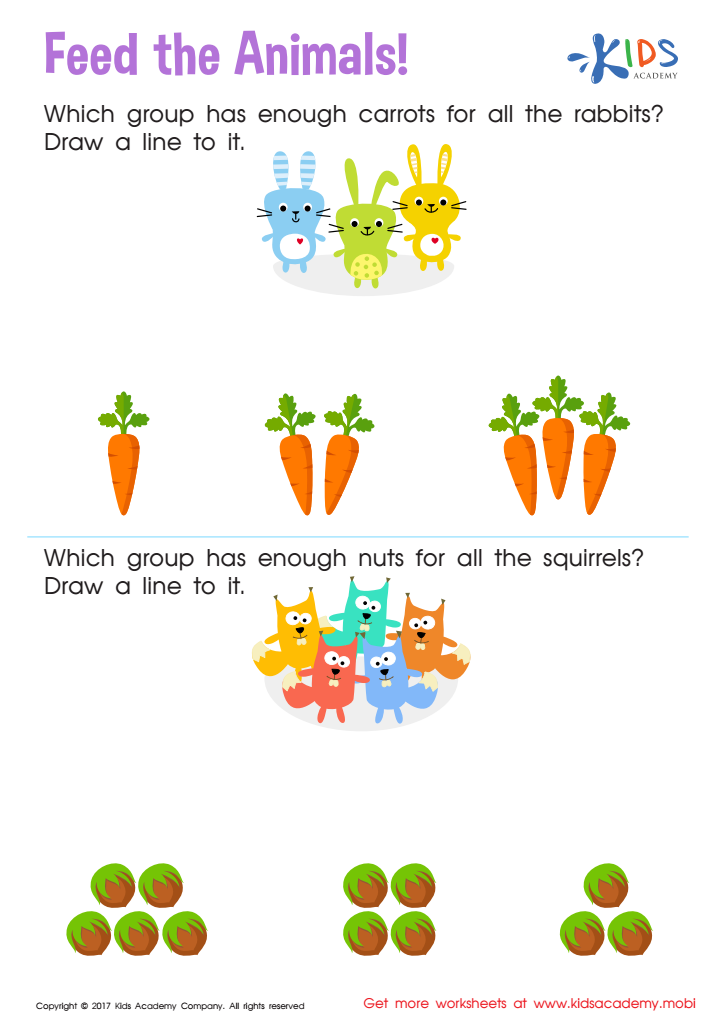
Count and Match: Feed the Animals Worksheet

Count and Match: Feed the Animals Worksheet

Learning and growing involves more than just numbers, phonics and comparison. This Feed the Animals worksheet helps kids to exercise their reasoning skills. They must work out how many rabbits and carrots there are, and then repeat the process for the squirrels. This encourages problem solving and counting skills.
Count and Match: Feed the Animals Worksheet
Worksheet
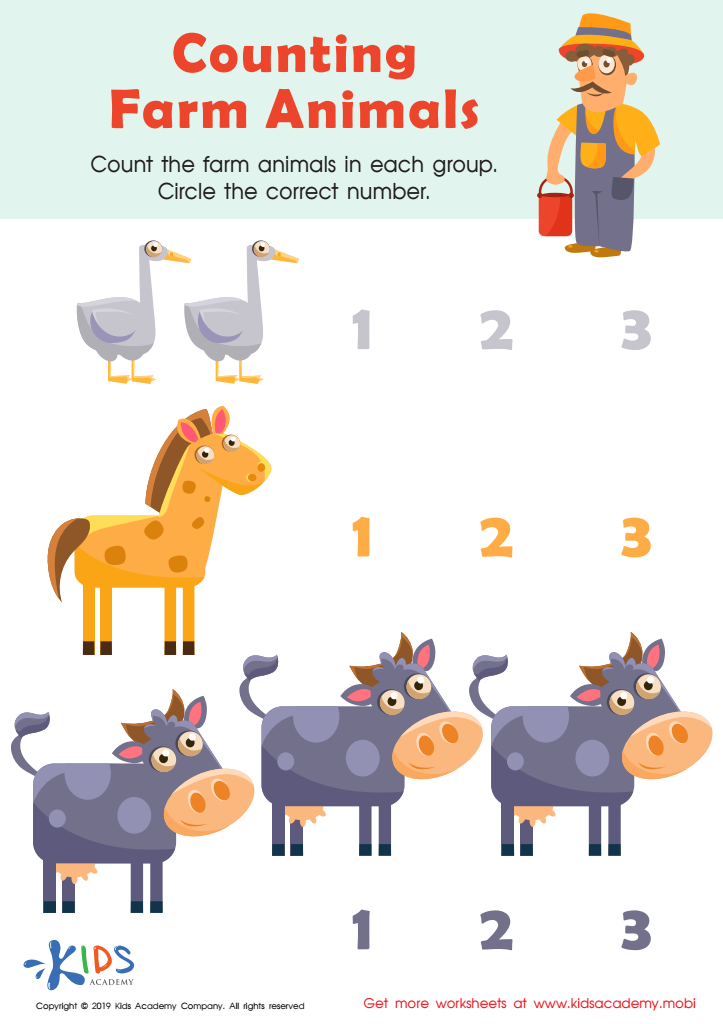
Counting Farm Animals Worksheet

Counting Farm Animals Worksheet

Kids love farms! That's why this free farm animals counting worksheet is great for building number sense and counting skills. Have your young mathematician count the pictures, then circle the corresponding number. It's a fun and meaningful way to practice counting.
Counting Farm Animals Worksheet

Worksheet
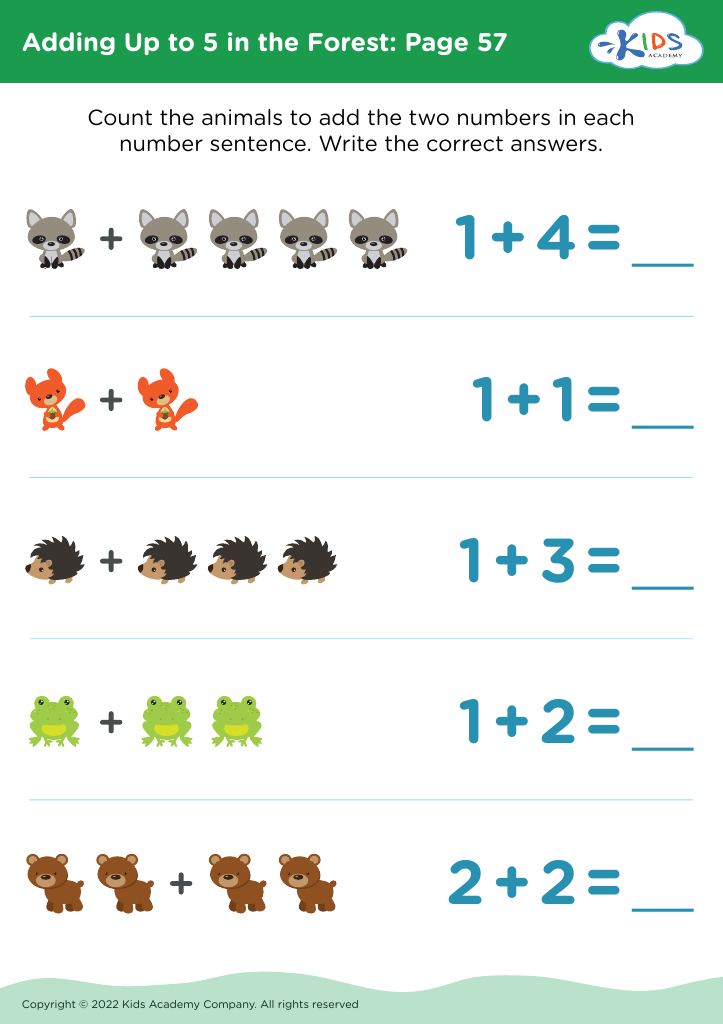
Adding Up to 5 in the Forest: Page 57
Worksheet


... 4 5

Animal recognition math is a unique and engaging approach to teaching mathematical concepts to children aged 4-9. This method combines animal identification and basic math skills to enhance learning in a playful and interactive manner. Parents and teachers should care about this approach for several reasons.

Firstly, it fosters early numeracy skills by integrating familiar subjects, like animals, which can captivate children’s interests. Recognizing animals while solving simple math problems makes learning less intimidating and more enjoyable. Children are more likely to engage in math when it is paired with fun, relatable content.

Secondly, animal recognition math aids in developing critical thinking and problem-solving skills. As children classify animals and use them as math manipulatives, they learn to analyze and organize information. This practice lays the groundwork for more complex mathematical thinking in the future.

Lastly, this method promotes a love for learning through cross-curricular connection. Children not only develop their math skills but also expand their knowledge about different animals, fostering a sense of curiosity about the natural world. By prioritizing animal recognition math, parents and teachers create a rich and interactive learning environment that supports holistic development, engaging young learners in a way that is relevant and meaningful to them.