Basic math abilities Math Worksheets for Ages 4-9
3 filtered results
-
From - To
Discover our engaging Basic Math Abilities Worksheets designed specifically for children aged 4 to 9. These worksheets focus on essential math skills, including addition, subtraction, counting, and number recognition. Crafted to make learning enjoyable, each activity promotes critical thinking and problem-solving. Our user-friendly layout allows young learners to advance at their own pace while building confidence in their math abilities. Perfect for both classroom and home environments, these printable resources support early literacy development and prepare kids for future academic success. Explore our wide selection of worksheets and watch your little ones thrive as they develop a strong mathematical foundation!
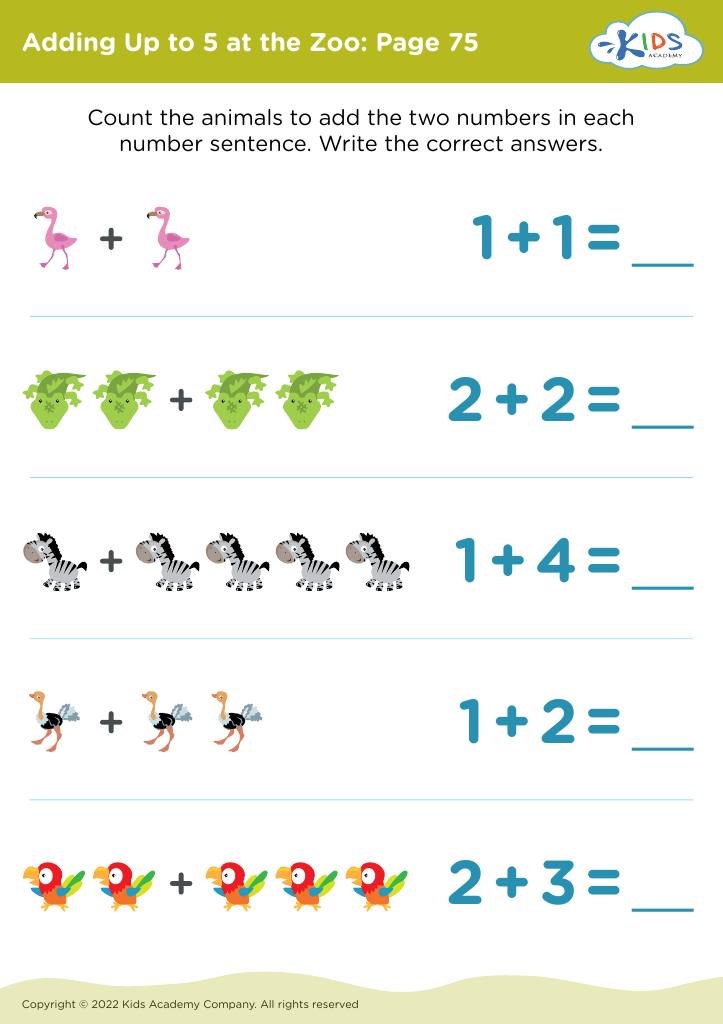
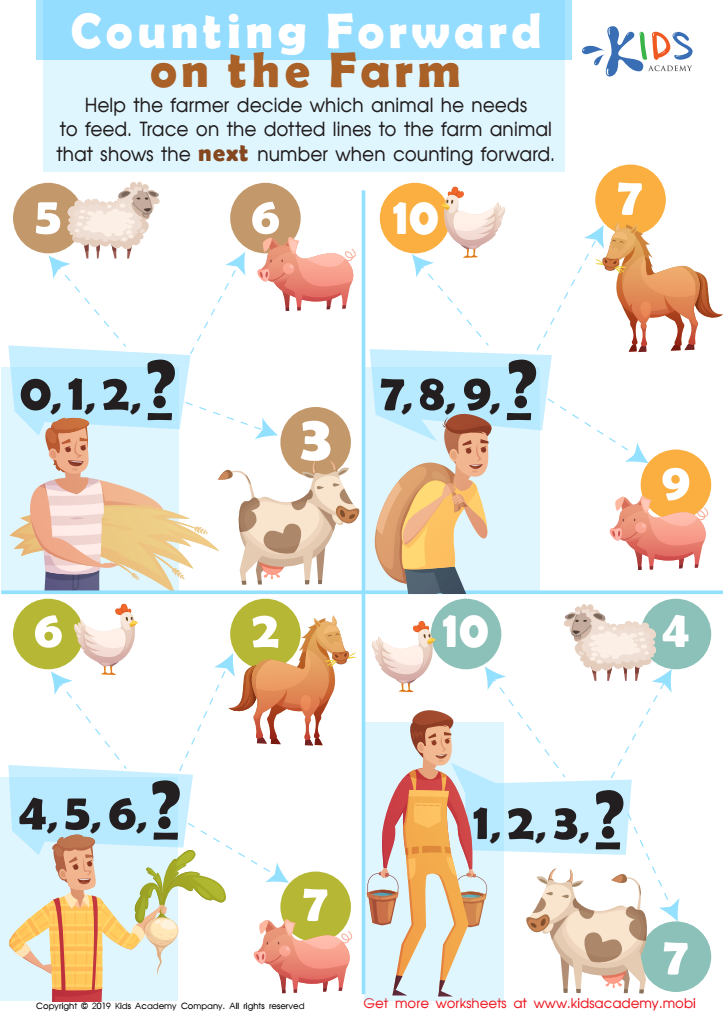
Counting Forward On the Farm Worksheet
 Assign to My Students
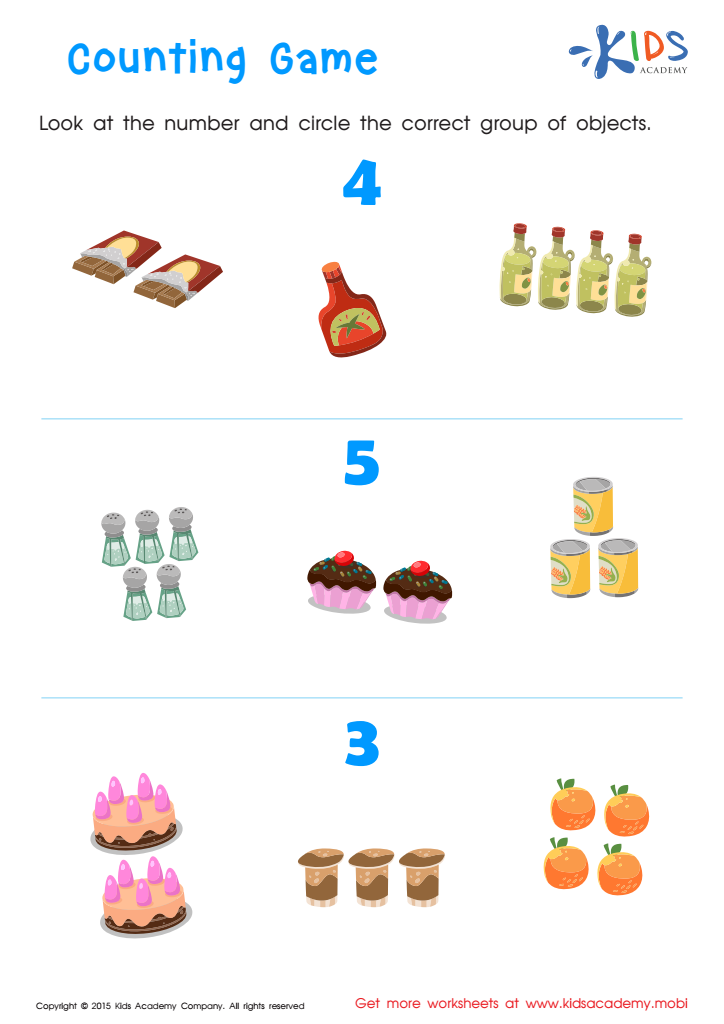
Counting Worksheet








Basic math abilities are crucial for children aged 4-9 as they lay the foundational skills necessary for academic success and everyday problem-solving. In these formative years, children develop essential numerical concepts, including counting, addition, and subtraction. Understanding these basics enhances their cognitive development, critical thinking, and reasoning abilities, all of which are critical in higher grade mathematics and various subjects.
Moreover, mathematical skills are pertinent outside the classroom as well. From budgeting allowance to measuring ingredients in cooking, math is a part of daily life. Early exposure helps foster a positive attitude towards math, reducing math anxiety later on. Parents and teachers play a vital role in nurturing these skills by integrating engaging activities and real-life applications, making learning enjoyable.
Encouraging children to explore math through play-based learning, games, and practical activities can solidify their understanding, making it easier to grasp more complex concepts in the future. Ultimately, emphasizing basic math abilities strengthens a child's overall academic confidence and contributes to their lifelong learning journey, preparing them for personal and professional success in an increasingly quantitative world. It is essential for parents and teachers to recognize and prioritize these foundational skills during this critical developmental stage.








