Basic math learning Math Worksheets for Ages 4-9
3 filtered results
-
From - To
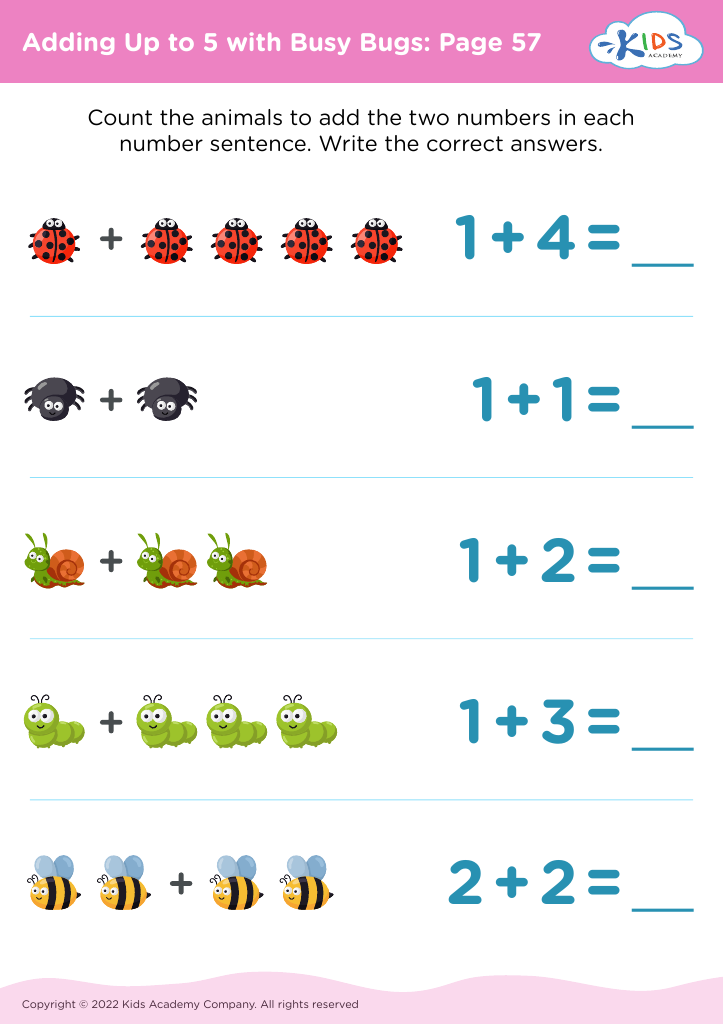
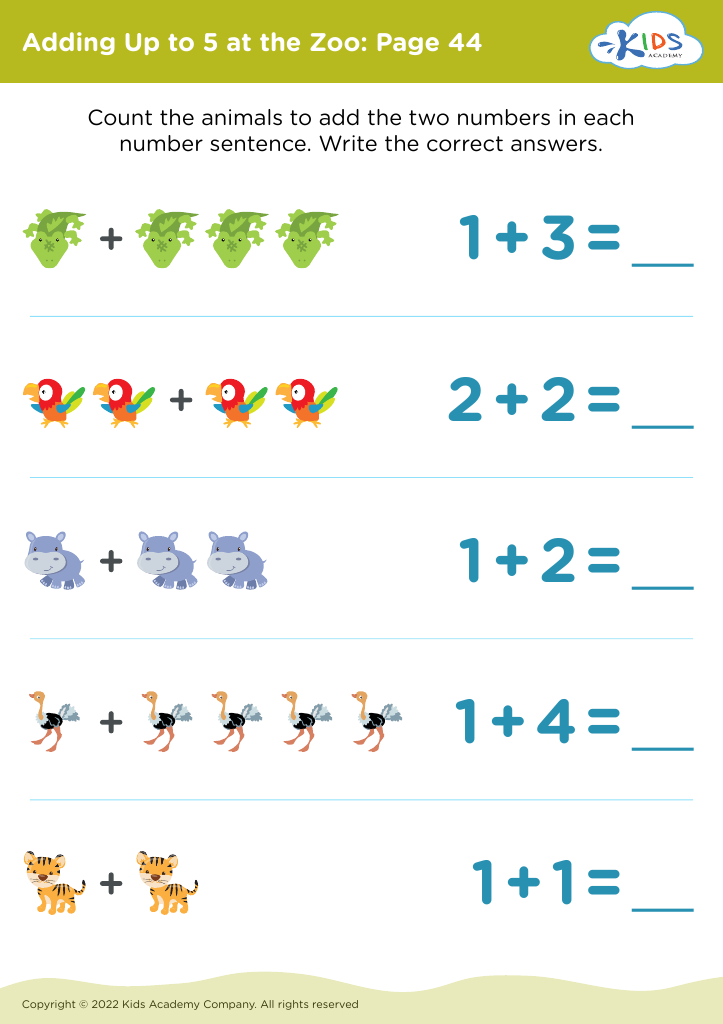
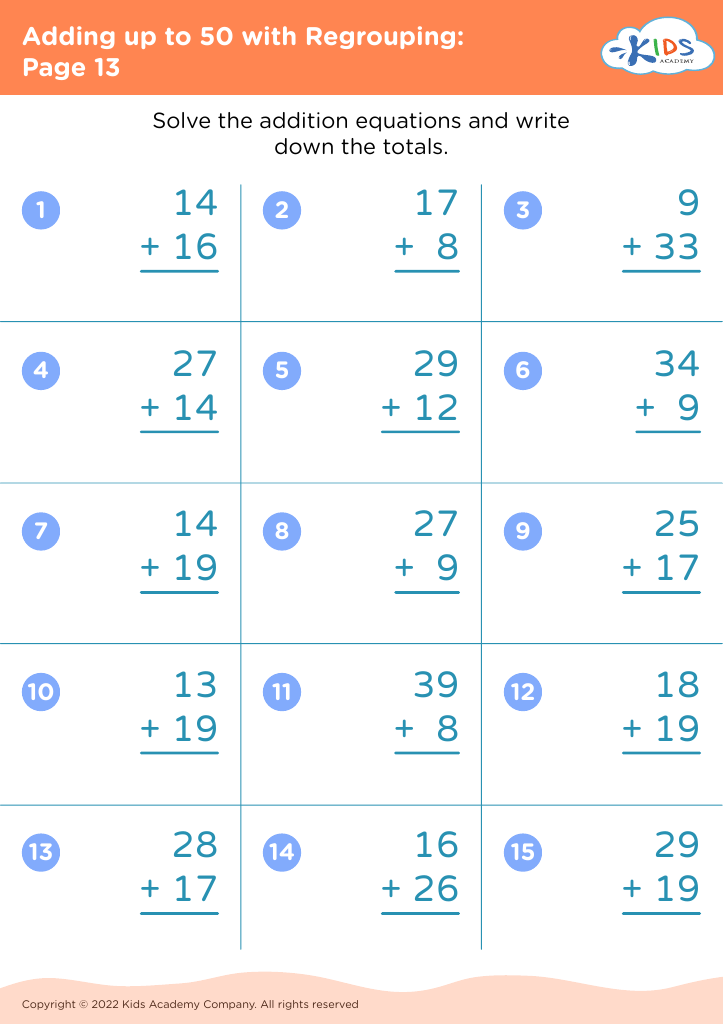
Unlock your child's math potential with our Basic Math Learning Worksheets designed for ages 4-9. Our expertly crafted worksheets make learning math engaging and fun, covering fundamental skills such as addition, subtraction, multiplication, and division. Each worksheet is tailored to gradually build confidence and proficiency, ensuring a strong mathematical foundation. Ideal for both classroom and home practice, our resources support varied learning styles and pace. Watch your child develop essential problem-solving abilities while enjoying each step of the learning journey. Start your child on the path to math success with our comprehensive and easy-to-use printable worksheets!







Parents and teachers should prioritize basic math learning for children ages 4-9 because these early years are crucial for cognitive development and laying a solid foundation for future academic success. Math skills, such as counting, recognizing numbers, and understanding simple addition and subtraction, foster important critical thinking and problem-solving abilities. Mastery of these concepts at a young age helps children develop confidence in their capabilities, reducing anxiety around unfamiliar tasks and more complex subjects in the future.
Early exposure to math also enhances logical reasoning and the ability to recognize patterns, which are essential skills not just in mathematics, but across various fields and everyday situations. When children encounter mathematical concepts early on, they build mental structures that make grasping more advanced topics smoother and more intuitive.
Furthermore, math is inherently linked to other subjects, like science and technology, which are increasingly important in our digital world. By encouraging a strong mathematical foundation, parents and teachers ensure that children are better prepared for a wide range of learning experiences and career opportunities.
In essence, nurturing an early interest and proficiency in basic math doesn't just aid academic progress—it fosters a lifelong appreciation for learning and equips children with essential life skills.








