Basic Math Skills Math Worksheets for Ages 4-9 - Page 8
171 filtered results
-
From - To
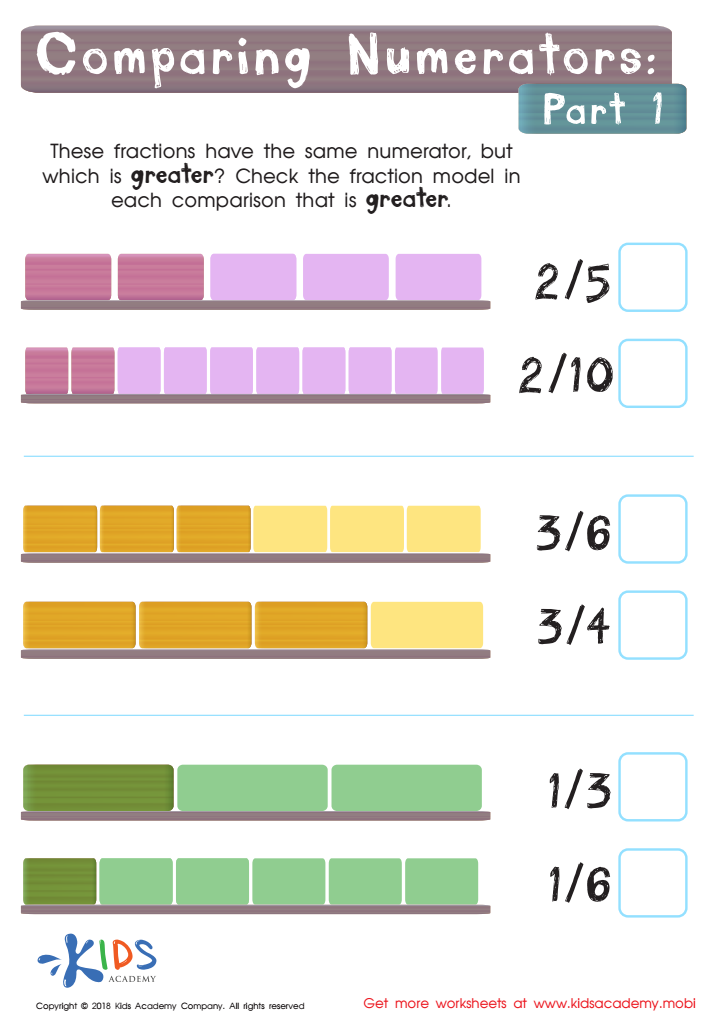
Comparing Numerators Part 1 Worksheet
 Assign to My Students
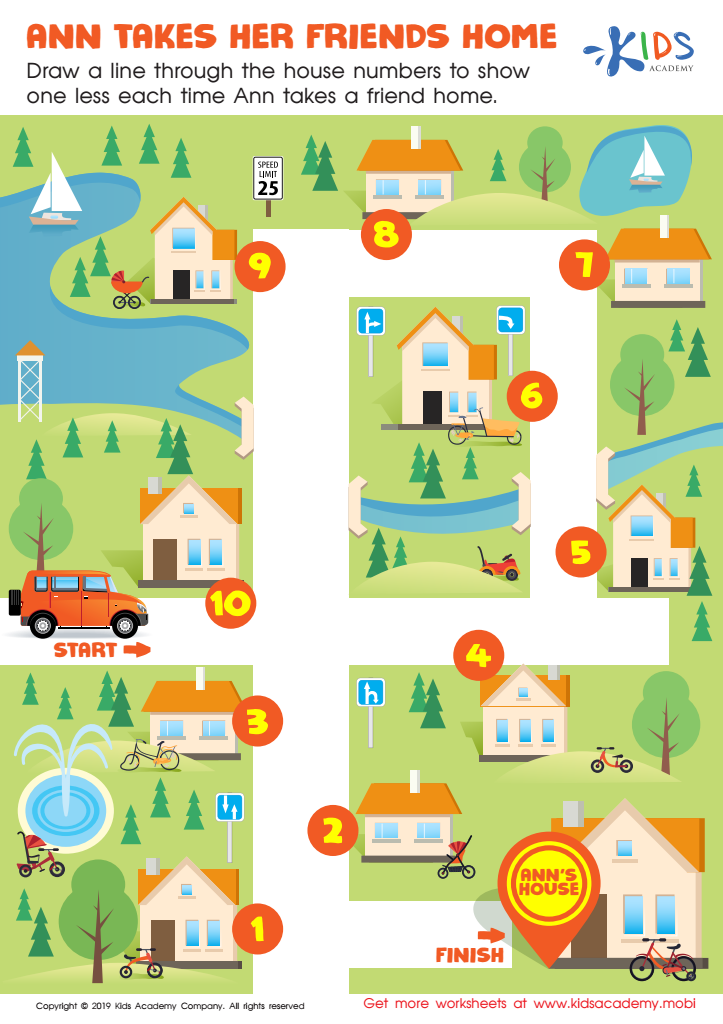
Ann Takes her Friends Home Worksheet
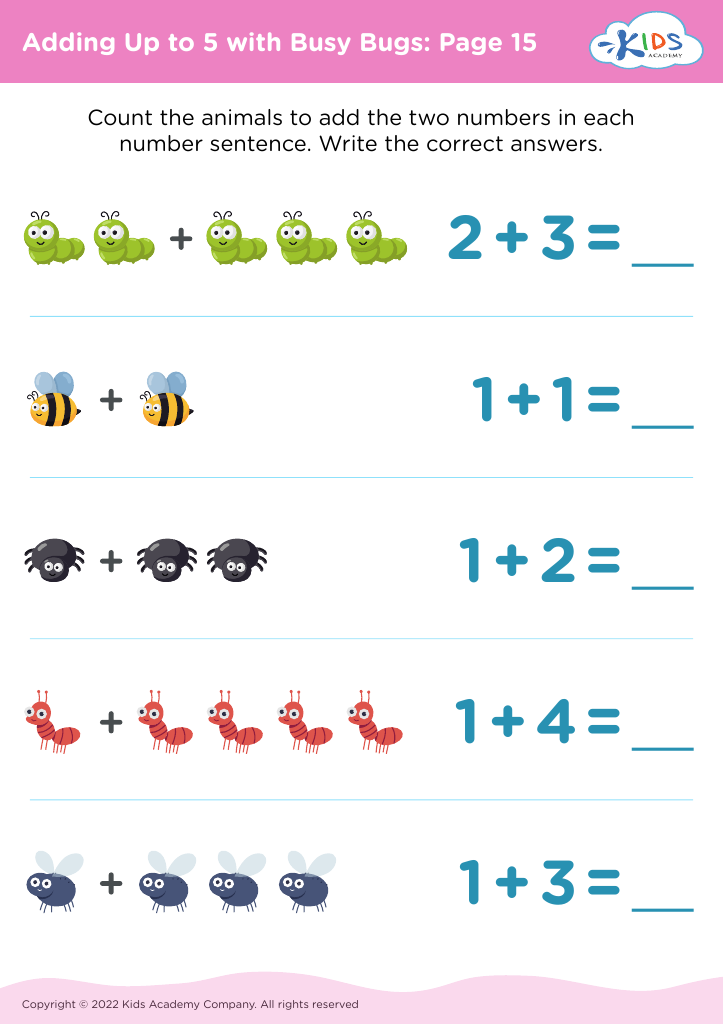








Parents and teachers should prioritize basic math skills for children aged 4-9 because these formative years lay the foundation for all future learning. At this age, children’s brains are exceptionally receptive to new information, making it an ideal time to introduce fundamental mathematical concepts. Mastery of these basics—such as number recognition, counting, simple addition and subtraction—not only facilitates improved performance in advanced math topics but also enhances critical thinking and problem-solving abilities.
Mathematics doesn't just pertain to academia; it is integral to everyday life. Basic math proficiency helps children develop essential life skills such as logical reasoning, spatial awareness, and even time management. These skills are crucial for daily tasks like following recipes, budgeting allowances, or understanding sports scores. Early success in math fosters a sense of achievement and confidence, nurturing a positive attitude toward learning.
Moreover, early math skills correlate with future academic success across various subjects. Research indicates that early competence in math can predict academic achievement in later years, making it vital for holistic educational development. Parents and teachers have the unique opportunity to impact a child’s lifelong relationship with learning by ensuring these basic skills are firmly in place. Encouraging a solid grounding in basic math thus serves as an invaluable investment in a child's future.








