Building vocabulary Math Worksheets for Ages 4-9
3 filtered results
-
From - To
Boost your child's mathematical vocabulary with our engaging math worksheets designed for ages 4-9. These carefully curated resources help young learners develop essential language skills while exploring math concepts. Each worksheet encourages imagination, comprehension, and application of new vocabulary in context, making math fun and approachable. Whether it's identifying shapes, understanding numbers, or solving word problems, our worksheets provide a hands-on learning experience. Perfect for classroom or home use, these materials make vocabulary building an exciting journey. Start enriching your child's math language skills today for a strong foundation in academic success! Explore our collection and watch their confidence grow!
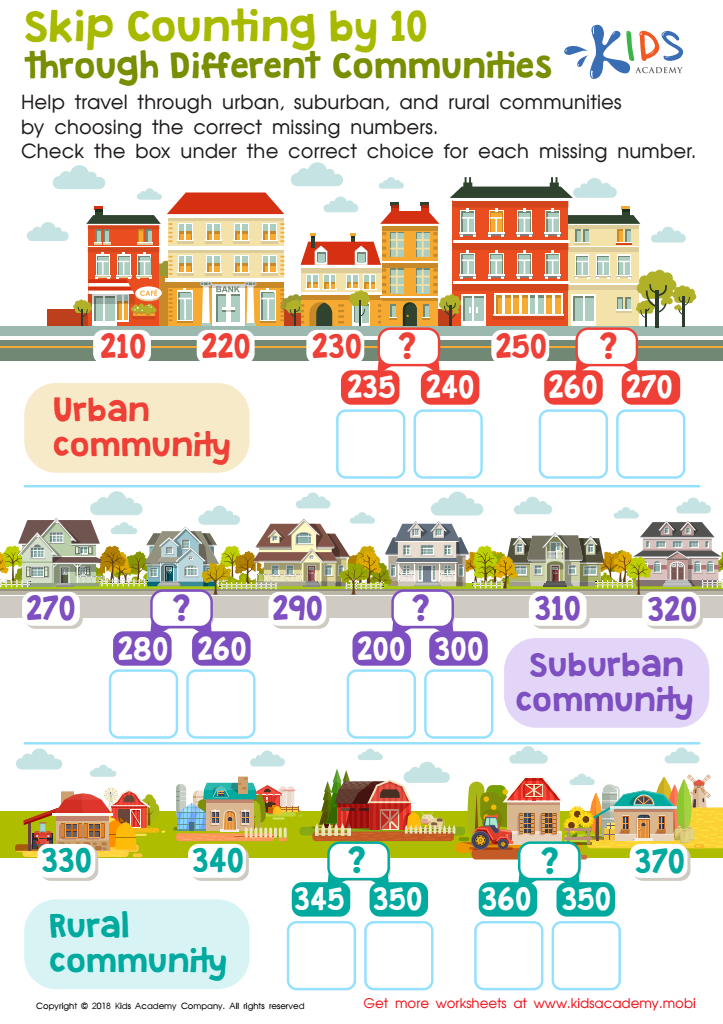
Skip Counting by 10 through Different Communities Worksheet
 Assign to My Students








Building vocabulary in math for ages 4-9 is crucial for several reasons. First, a strong math vocabulary lays the foundation for understanding mathematical concepts, promoting a child's ability to think critically and solve problems effectively. Early exposure to mathematical words and phrases helps children make connections between language and numeracy, which can enhance their overall learning experience.
Moreover, vocabulary development in math encourages confidence. When children have the words to express their understanding, they are more likely to participate in discussions, ask questions, and engage with mathematical problems. This not only boosts their self-esteem but also reinforces their learning, making them more resilient learners.
Additionally, a well-developed math vocabulary helps in standardized assessments and academic success. As students progress through their education, the ability to comprehend and manipulate mathematical terms becomes increasingly important.
For teachers and parents, focusing on math vocabulary supports a holistic approach to education. It allows them to create an enriched learning environment that recognizes the importance of language in math, fostering a love for the subject early on. Consequently, investing effort in vocabulary development in math can significantly influence children's academic journeys and lifelong learning in mathematics.








