Enhance your child's critical thinking with our engaging "Developing Problem-Solving Abilities" math worksheets, designed specifically for ages 4-9. Our resources promote creative thinking, logical reasoning, and practical application of mathematical concepts through fun and interactive activities. Each worksheet presents age-appropriate challenges that encourage children to explore solutions independently and develop a resilient mindset. By fostering problem-solving skills early on, your child will gain confidence in tackling academic challenges while enjoying the process of learning math. Perfect for home or classroom use, our worksheets are a fantastic tool to ignite curiosity and empower young learners in their mathematical journey!
Check out this FREE Trial Lesson on Math for age 4-9!

Equivalent Fractions

Favorites
With answer key
Interactive
  • 4-9
  • Developing problem-solving abilities
  • Math
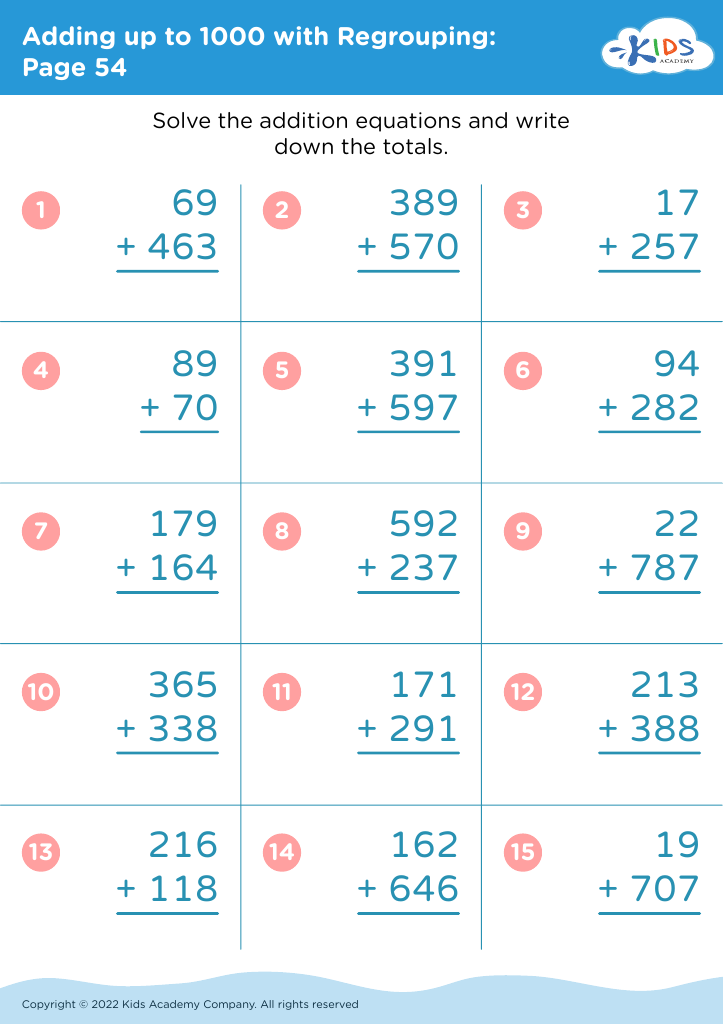
Adding up to 1000 with Regrouping: Page 54
Worksheet
Repeated Addition = Multiplication Worksheet

Repeated Addition = Multiplication Worksheet

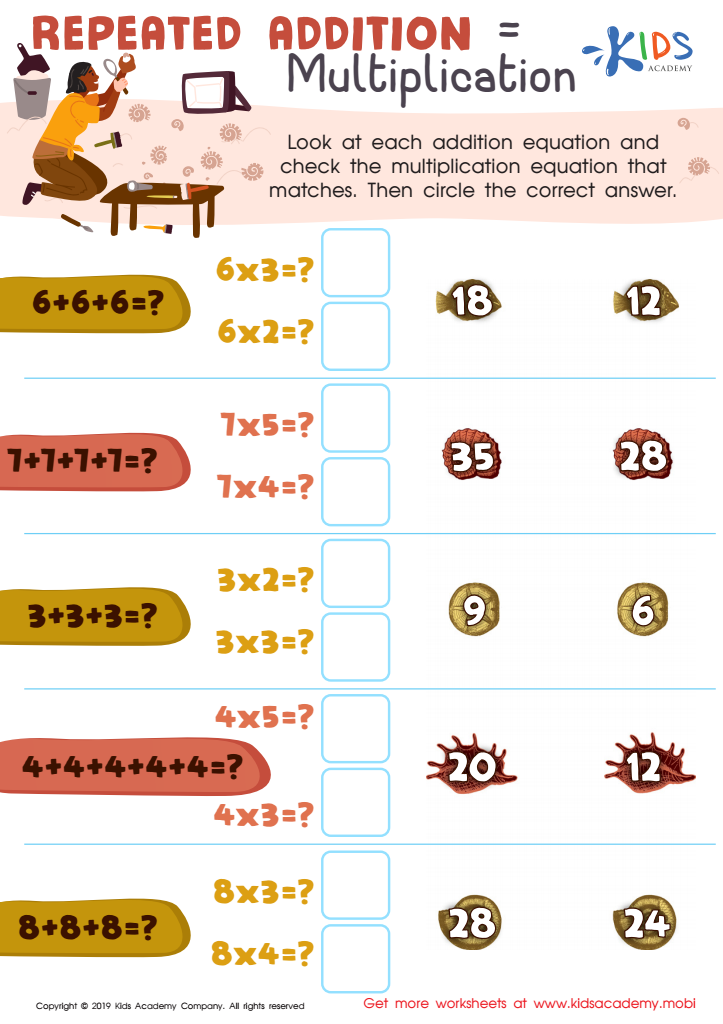
If your child is having trouble with math, worksheets like this can help them get more practice. Addition, subtraction, and multiplication go together. Look over each addition equation and pick the matching multiplication equation, then circle the correct answer. This can give your child the necessary practice to understand mathematics better.
Repeated Addition = Multiplication Worksheet
Worksheet
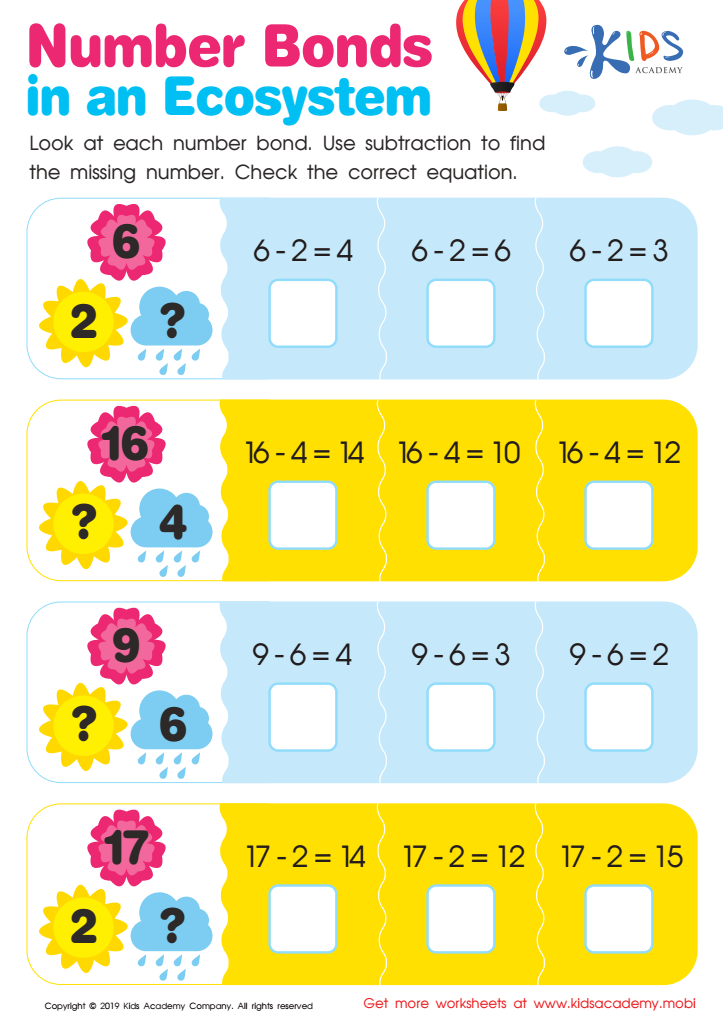
Number Bonds in an Ecosystem Worksheet
Number Bonds in an Ecosystem Worksheet

This worksheet is a great tool to help your kids sharpen their maths skills. Use the colourful images to teach them how to subtract the missing numbers and check the equation. Show them the four different images and let them try solving each number bond. With your guidance, they'll be able to hone their maths skills in no time!
Number Bonds in an Ecosystem Worksheet
Worksheet
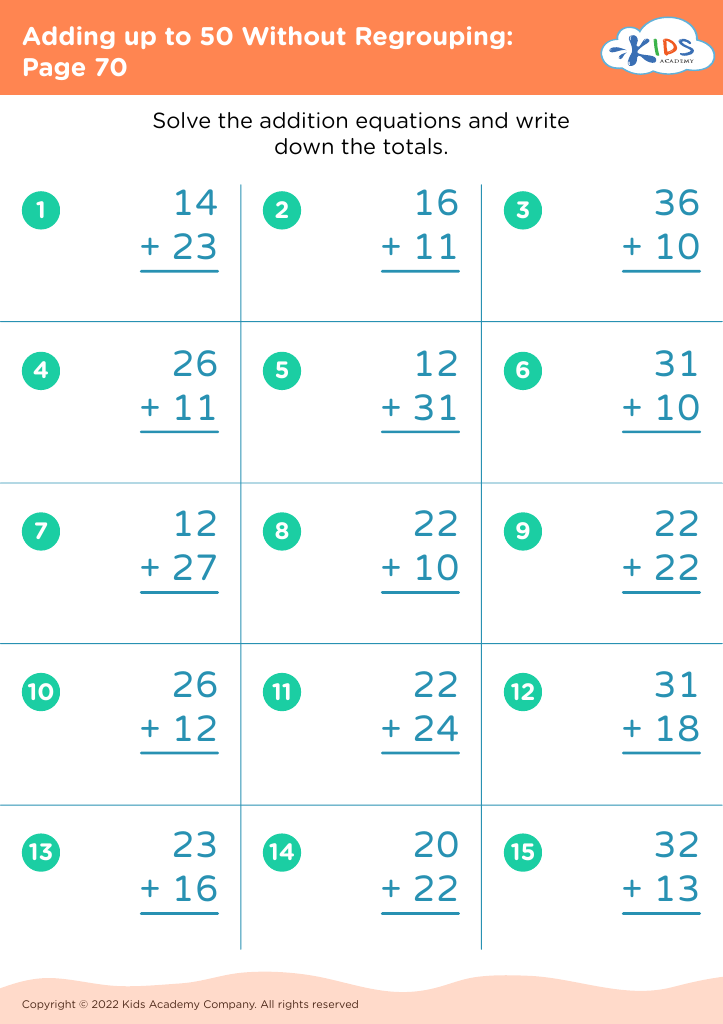
Adding up to 50 Without Regrouping: Page 70
Worksheet
Make It Equal Worksheet

Make It Equal Worksheet

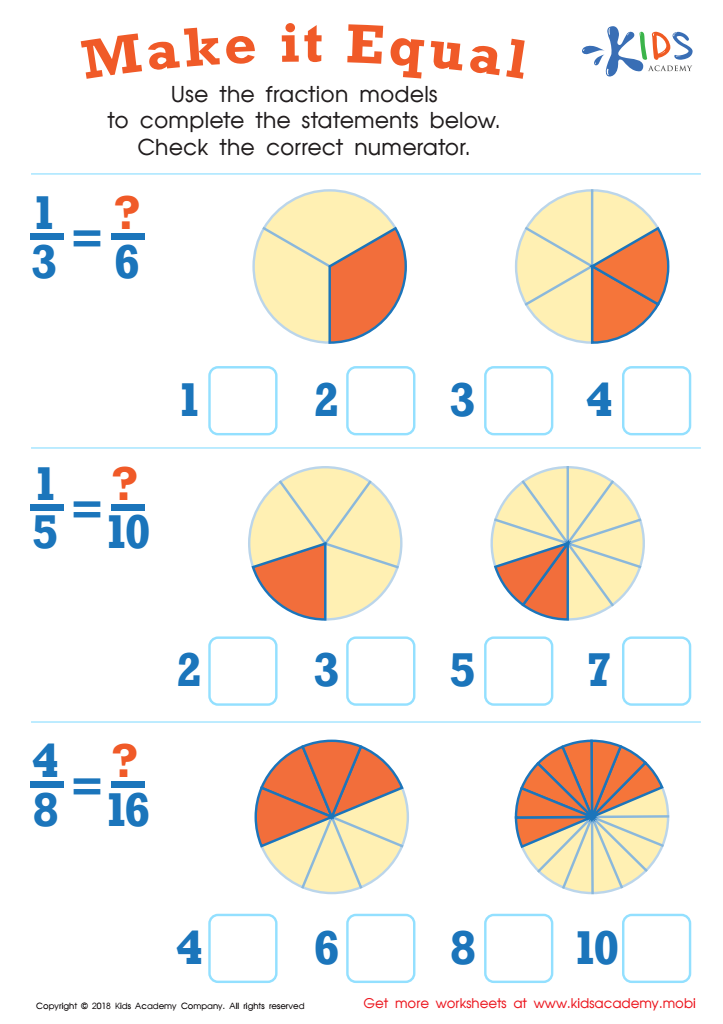
Ask your kids to complete the equations in the worksheet and find the correct numerator. Explain that numerators are the numbers at the top of a fraction and guide them as they count the shaded parts of the shapes. There are three equations to figure out.
Make It Equal Worksheet
Worksheet
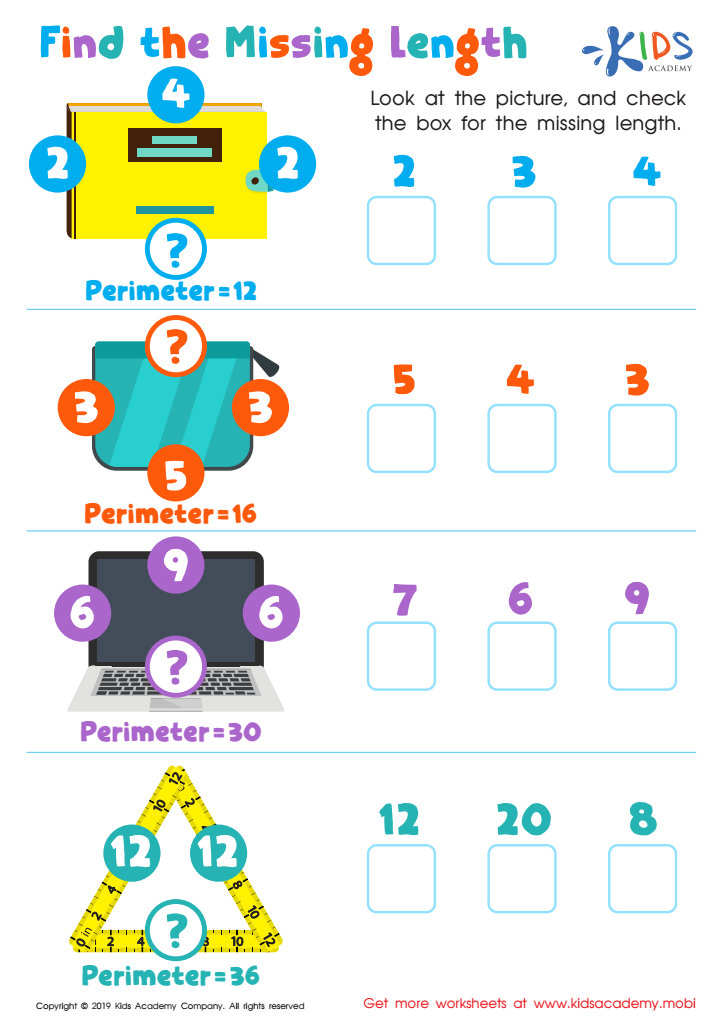
Find the Missing Length Worksheet

Find the Missing Length Worksheet

Help your kids learn more about geometry, addition and subtraction with this simple worksheet. Look at the four equations and solve the problems with your little ones. Have them check the box for the missing length. This will help your kids become more comfortable with math calculations.
Find the Missing Length Worksheet
Worksheet
Addition and Subtraction Within 1: Assessment 1 Worksheet

Addition and Subtraction Within 1: Assessment 1 Worksheet

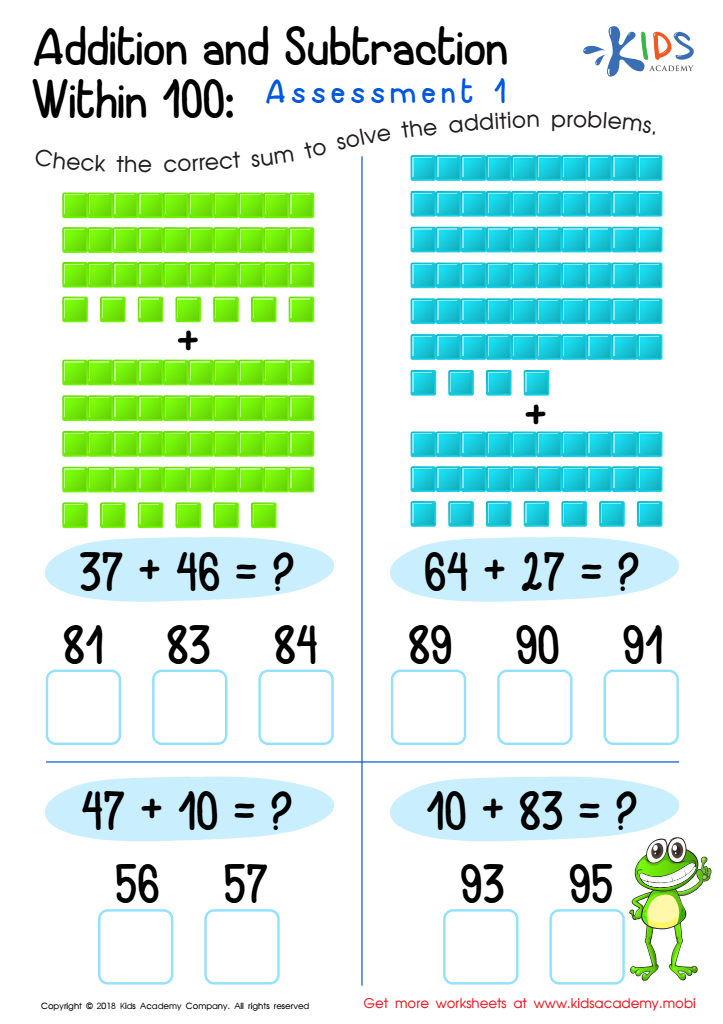
Help your kids develop their math skills with this worksheet! Addition and subtraction can be daunting for young learners, but you can make it easier for them with this pdf. Use it to check the correct sum and help them solve the addition problems. This is a great way to get them ready to be future great mathematicians.
Addition and Subtraction Within 1: Assessment 1 Worksheet
Worksheet
What Equation Is That? Worksheet


What Equation Is That? Worksheet

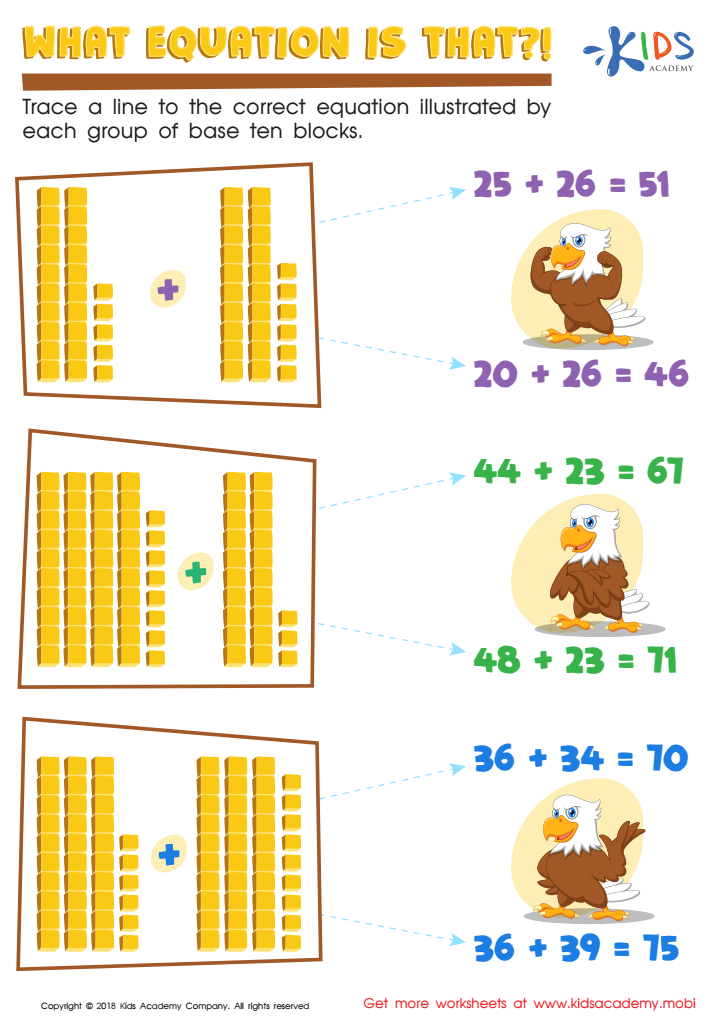
Have your students practice counting with base ten blocks. This will help them with math struggles. Homework and worksheets will help them improve; ask them to trace lines to the correct equation on a tracing sheet. Guide them as they count the blocks and trace the lines.
What Equation Is That? Worksheet

Worksheet


Developing problem-solving abilities in math for children aged 4-9 is crucial for several reasons. First, this age is foundational for cognitive development; children begin to understand basic concepts of numbers, patterns, and relationships, which serves as a building block for more complex mathematical thinking. By fostering problem-solving skills early, parents and teachers can instill a love for learning and confidence in tackling challenges.

Moreover, math problem-solving teaches critical thinking and logical reasoning. These skills are not only essential for academic success but also vital for real-life situations, enabling young learners to analyze problems, devise solutions, and make informed decisions as they grow.

Encouraging children to explore math through play, hands-on activities, and engaging puzzles nurtures persistence and resilience, teaching them that mistakes are part of learning. This positive mindset boosts self-esteem and encourages a growth mindset, essential for lifelong learning. Finally, mathematical proficiency is increasingly important in today’s technology-driven society, impacting career opportunities.

By actively supporting and engaging children in developing their problem-solving abilities, parents and teachers equip them with essential life skills, prepare them for future academic challenges, and set the foundation for a successful educational journey.