Developing spatial awareness Math Worksheets for Ages 4-9
3 filtered results
-
From - To
Enhance your child's spatial awareness with our engaging Math Worksheets designed for ages 4-9! These thoughtfully crafted worksheets aim to build essential skills in identifying shapes, recognizing patterns, and understanding spatial relationships. Through a variety of fun and interactive activities, young learners will develop critical thinking and problem-solving abilities while gaining confidence in their mathematical understanding. Our printable resources promote hands-on learning, making math an enjoyable experience for children. Perfect for home or classroom use, these worksheets are an excellent way to prepare your child for more advanced math concepts. Discover the joy of learning with our spatial awareness worksheets today!
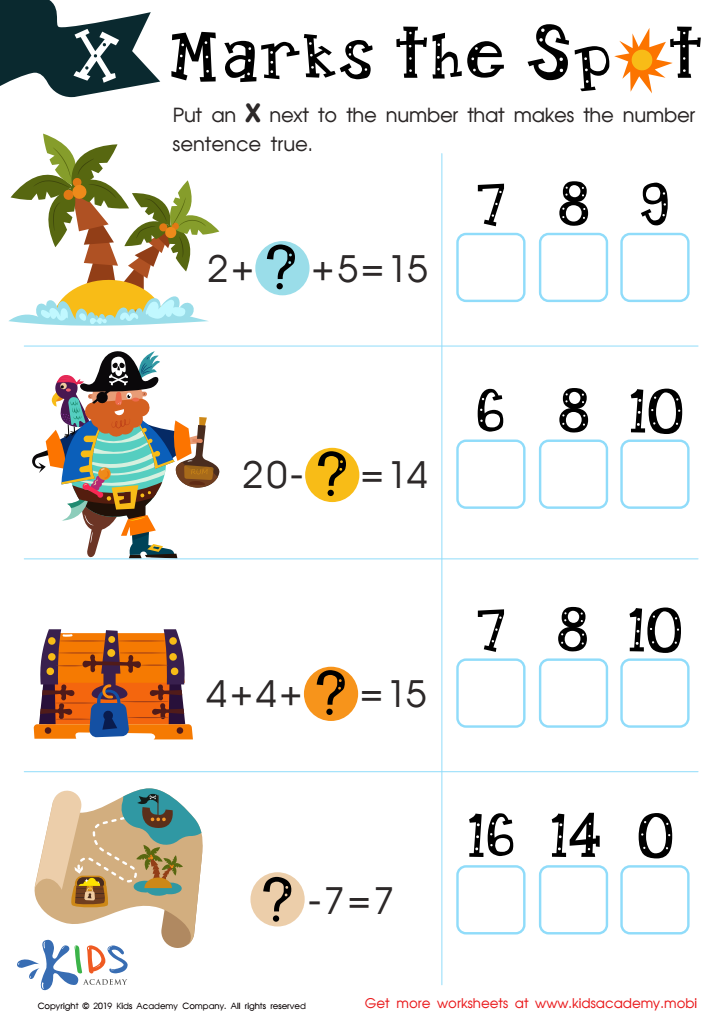
X Marks the Spot Worksheet
 Assign to My Students
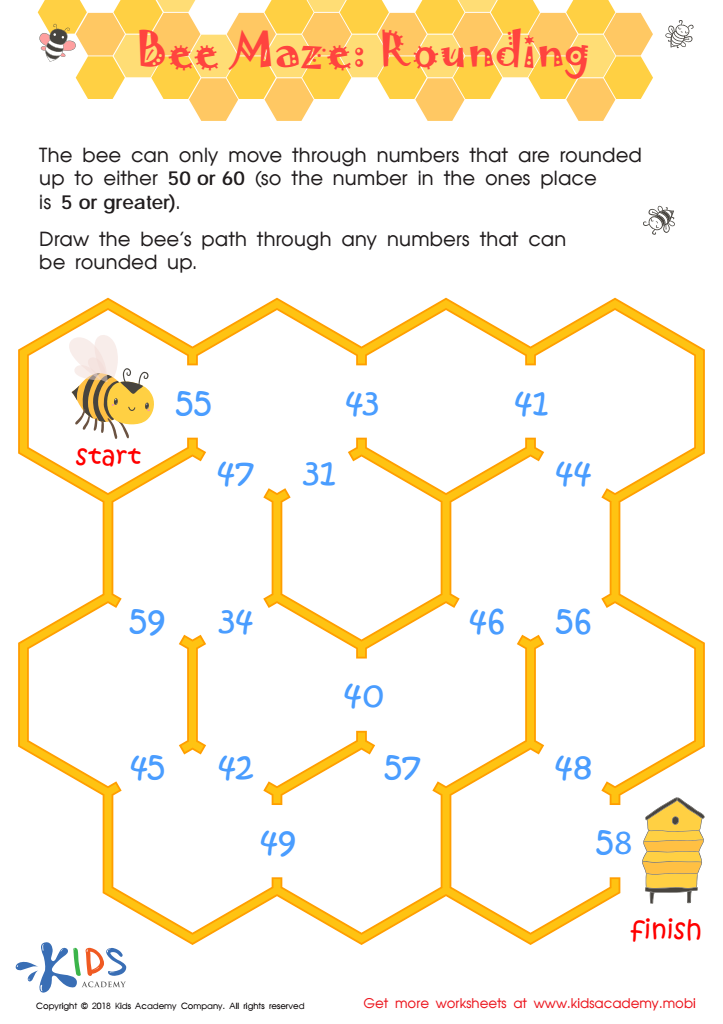
Bee Maze Rounding Worksheet
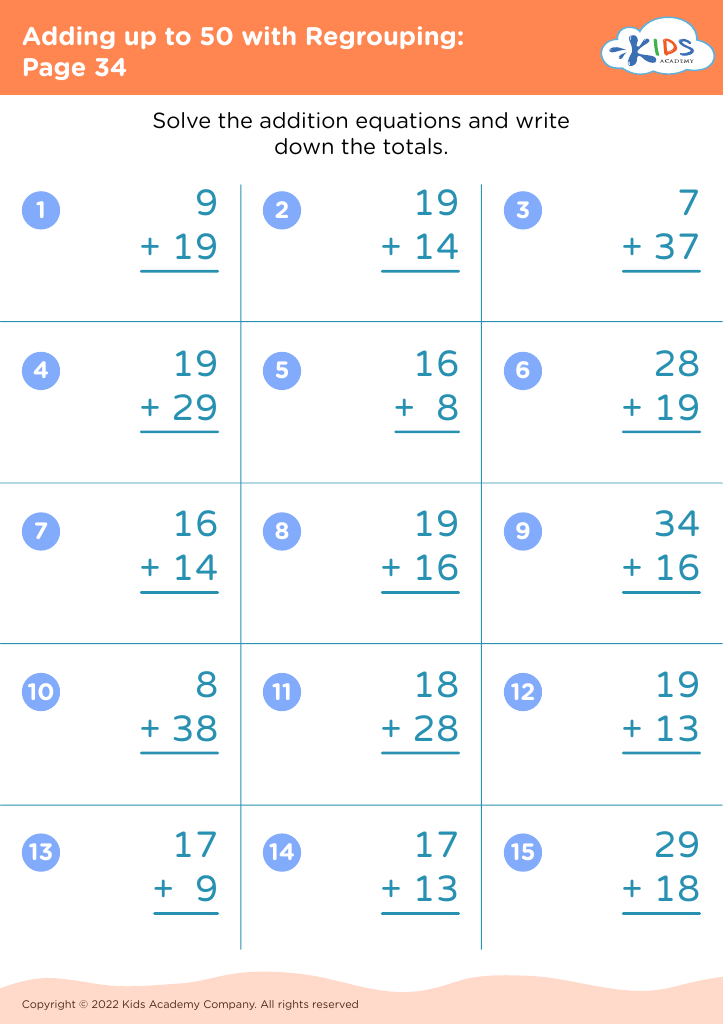








Developing spatial awareness in children ages 4-9 is crucial for their overall cognitive, academic, and social development. Spatial awareness is the ability to understand and navigate spaces and the relationships between objects within that space. For young learners, this foundational skill has immediate and long-term benefits, particularly in mathematics.
Firstly, spatial awareness enhances mathematical reasoning. It helps children grasp geometric concepts such as shapes, symmetry, and measurement more easily. With a solid spatial foundation, children encounter less difficulty with advanced topics later in their education, such as algebra and calculus. Furthermore, these skills foster critical thinking and problem-solving abilities, essential for everyday situations.
Beyond academics, spatial awareness is intricately linked to movement and coordination, aiding in physical activities and contributing to overall motor skills. Socially, children who can understand spatial relationships often collaborate better in group tasks, leading to improved communication skills.
In essence, fostering spatial awareness during these formative years sets the stage for future learning and success. By prioritizing this skill, parents and teachers not only enrich children's educational journeys but also equip them with abilities that will benefit them in various aspects of life.








