Enhance critical thinking Math Worksheets for Ages 4-9
5 filtered results
-
From - To
Discover our engaging and dynamic Math Worksheets designed to enhance critical thinking for children ages 4-9. Our resources blend fun with learning, facilitating key mathematical concepts while promoting analytical thinking and problem-solving skills. Ideal for early grade classrooms or at-home practice, these worksheets are crafted to cater to various learning styles and needs. Each activity is tailored to not only improve math skills but also to spark curiosity and foster a love for learning. Click now to support your child’s educational journey with these exceptional, thoughtfully designed math worksheets!
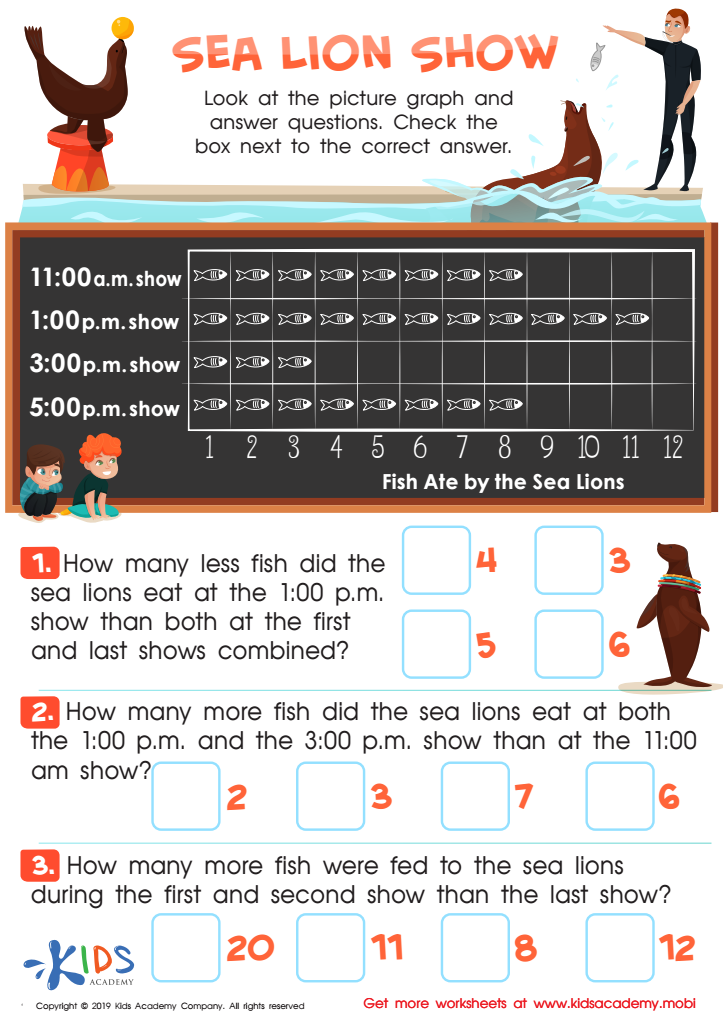
Sea Lion Show Worksheet
 Assign to My Students






.jpg)

Enhancing critical thinking in math for children ages 4-9 is foundational for their overall cognitive development and future academic success. Critical thinking in math helps young learners not only understand numbers and equations but also stimulates their ability to problem-solve, reason logically, and make informed decisions.
When parents and teachers focus on critical thinking skills in math, they foster a mathematical mindset that encourages questions and exploration, turning confusion into curiosity. This age is crucial as it lays the groundwork for how children perceive math – either as an intriguing puzzle to solve or a daunting task to avoid.
Early exposure to critical thinking in math hones skills like pattern recognition, sequencing, and understanding cause-and-effect relationships. These abilities are transferable across subjects, aiding reading comprehension, scientific inquiry, and even social interactions. It also boosts children’s confidence in handling new and complex problems, making them adept learners.
Moreover, in today’s data-driven world, aptitude in analytical thinking and numerical literacy is indispensable. By nurturing these skills early, we prepare children not just for academic achievements but for informed citizenship and professional success. Thus, caring about enhancing critical thinking in math for young children is an investment in their intellectual growth and long-term potential.








