Grammar practice Math Worksheets for Ages 4-9
3 filtered results
-
From - To
Discover engaging Grammar Practice Math Worksheets designed for children aged 4-9 on our website! These printable worksheets seamlessly blend foundational grammar skills with essential math concepts, making learning both fun and educational. Perfect for parents and educators, our resources help young learners enhance their sentence structure, punctuation, and spelling while applying these skills to math-related problems. With a variety of activities that cater to different learning styles, kids will enjoy developing their language and math abilities. Explore our collection today and empower your child with the confidence to excel in both grammar and math in a playful and interactive manner!
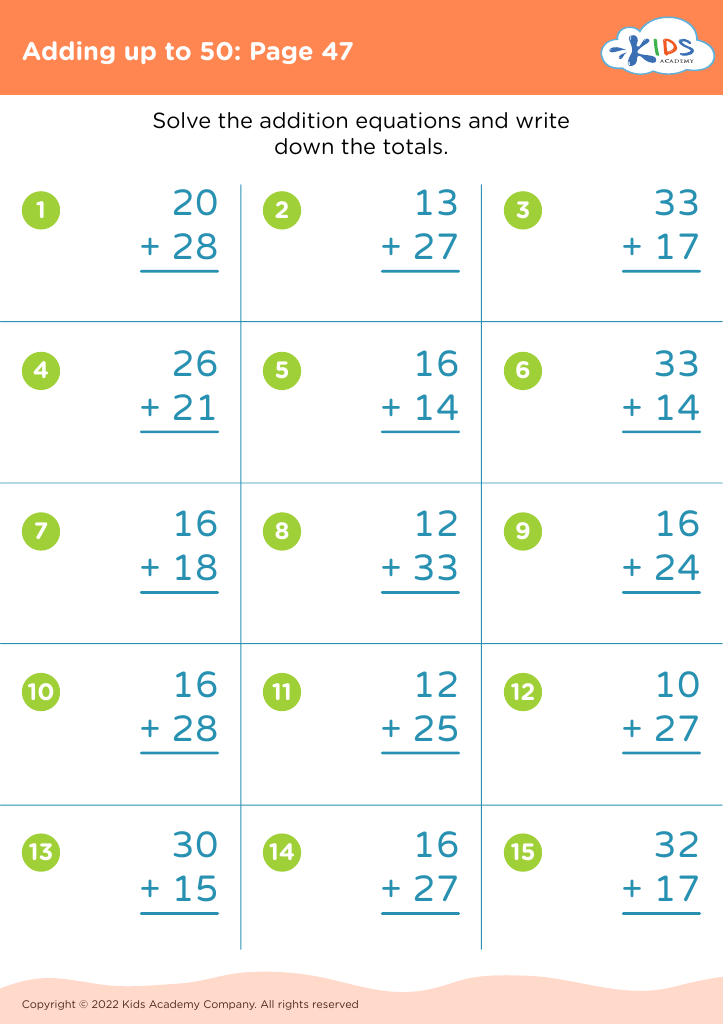
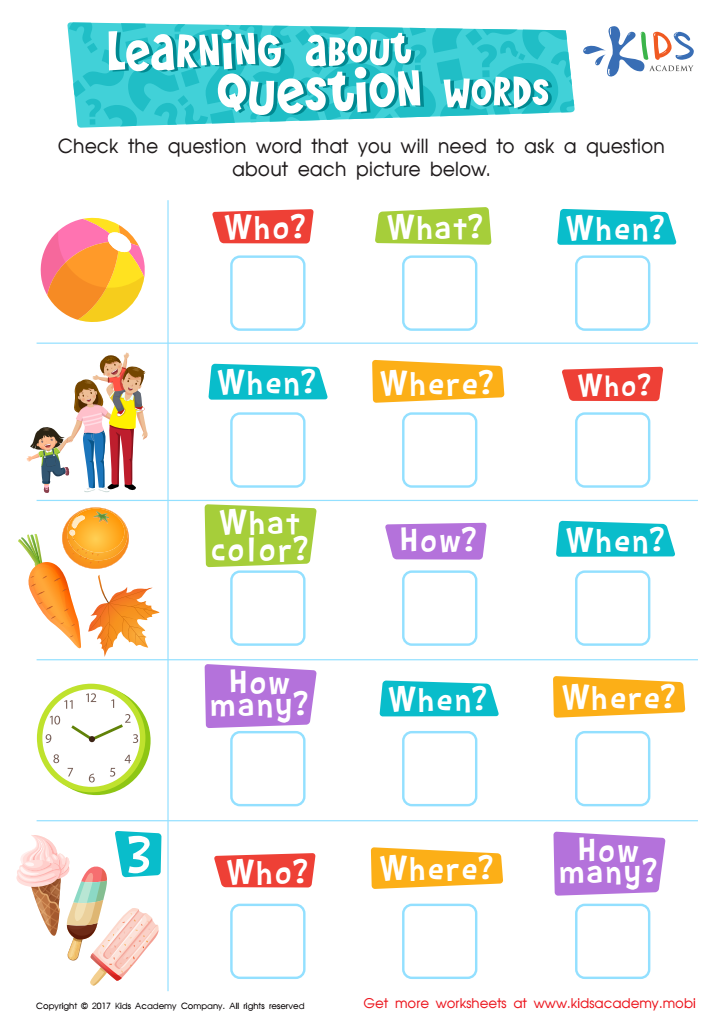
Learning about Question Words Worksheet
 Assign to My Students








Caring about grammar practice in math for children aged 4-9 is essential for several reasons. At this young age, children are not only learning basic math skills, but they're also beginning to comprehend the language used to communicate mathematical concepts. By integrating grammar practice within math education, we create a foundation that helps children articulate their understanding of mathematical ideas, procedures, and problem-solving processes.
First, effective communication enhances comprehension. When children learn to structure their thoughts using proper grammar while discussing math problems, they develop clarity in reasoning and enhance their cognitive skills. This dual focus on grammar and mathematics strengthens their overall academic performance.
Second, it prepares them for future learning. As students progress in their education, the ability to express themselves accurately and confidently in both written and spoken formats becomes increasingly important. Grammar in math isn't solely about language; it's about building critical thinking skills and encouraging logical reasoning.
Lastly, fostering a love for learning is vital. By making math engaging through grammar practice—using stories, group discussions, and games—teachers and parents can create a supportive environment where children feel motivated to explore and express their understanding of the world around them.








