
Improve counting Math Worksheets for Ages 4-9
3 filtered results
Difficulty Level
Grade
Age
-
From - To
Subject
Activity
Standards
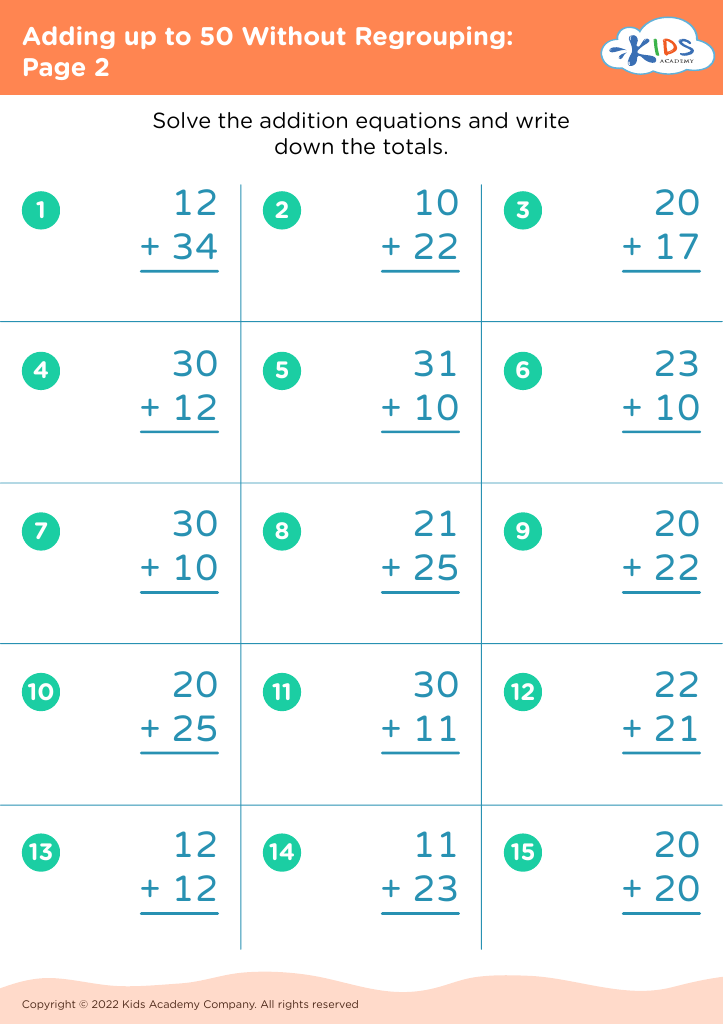
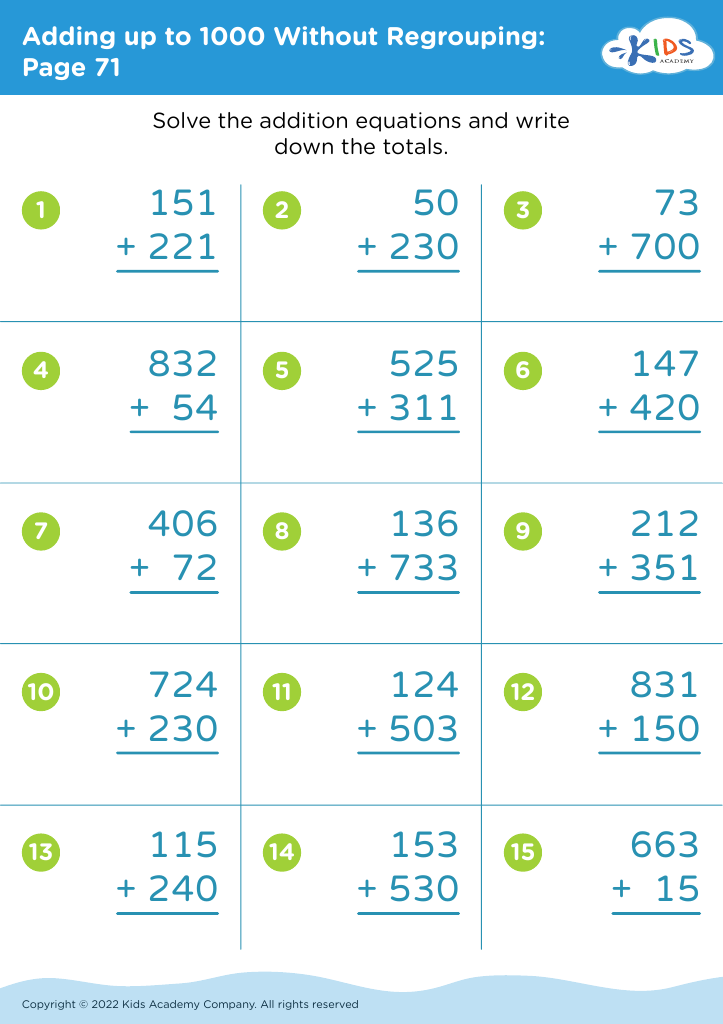
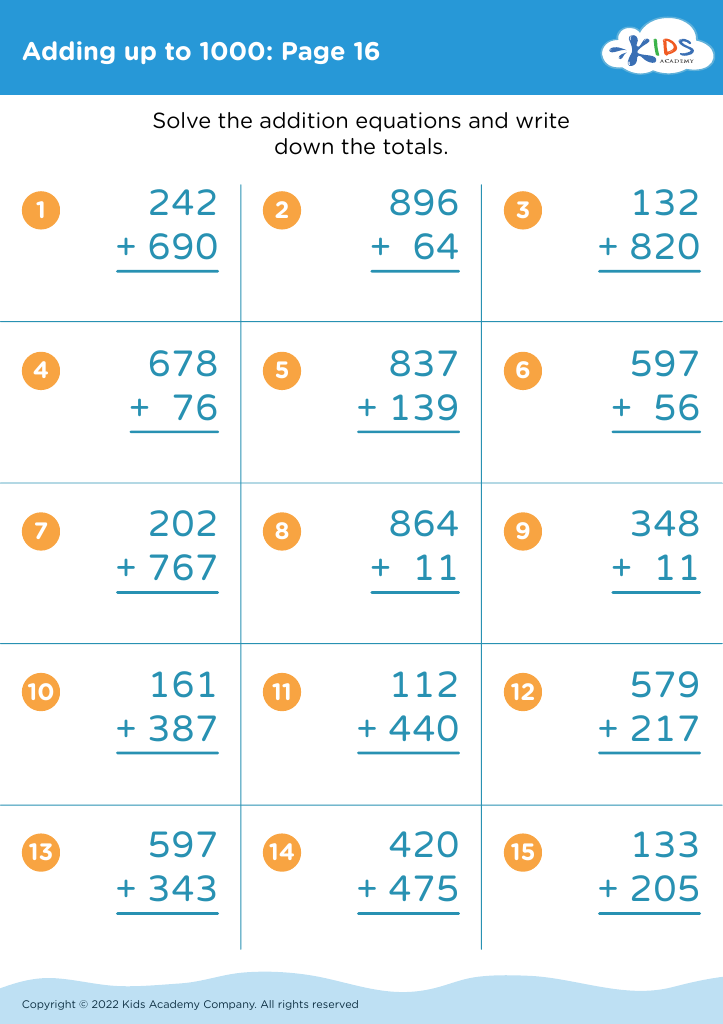
Welcome to our collection of "Improve Counting" math worksheets designed specifically for children aged 4-9! These engaging resources aim to help young learners develop essential counting skills in a fun and interactive way. Our worksheets feature a variety of activities, including number tracing, counting objects, and matching games, tailored to different learning levels. Each worksheet helps to build foundational math concepts, boost confidence, and enhance cognitive development. Perfect for parents and teachers, our printable worksheets are great for at-home practice or classroom activities. Start your child’s counting journey today and watch their mathematical skills flourish!
Favorites
With answer key
Interactive
Join Kids Academy for Free
Who is primarily going to use this learning content?







Counting is foundational to mathematical understanding and plays a crucial role in the cognitive development of children aged 4-9. For parents and teachers, nurturing counting skills is vital for several reasons.
First, counting lays the groundwork for more advanced math concepts such as addition, subtraction, and number recognition. When children learn to count confidently, they develop a strong base for problem-solving and critical thinking in math.
Additionally, mastering counting helps enhance children's spatial reasoning and logical thinking skills, which are essential not just in mathematics but in everyday situations and other subjects as well. When children easily count, they can engage better in activities like playing games, measuring ingredients for a recipe, or understanding time, thus promoting practical life skills.
Furthermore, counting can foster a love for math and an interest in exploring mathematical concepts further. A positive attitude towards math developed during these formative years can influence children's academic performance in the long run.
Lastly, for parents and teachers, encouraging counting through games, songs, and group activities creates a fun and engaging learning environment. Overall, prioritizing counting in early education equips children with the tools they need for academic success and personal development.








