Number comparison skills Math Worksheets for Ages 4-9
3 filtered results
-
From - To
Enhance your child's math journey with our engaging Number Comparison Skills worksheets designed for ages 4-9. These worksheets help young learners develop essential number comparison abilities, laying a solid foundation for future math success. Featuring fun and interactive activities, children will master concepts such as greater than, less than, and equal to while building critical thinking skills. Our thoughtfully crafted exercises cater to various learning styles, ensuring every child can grasp these foundational math concepts with ease. Perfect for home or classroom use, these resources are an excellent way to make learning enjoyable and effective. Start comparing numbers with confidence today!
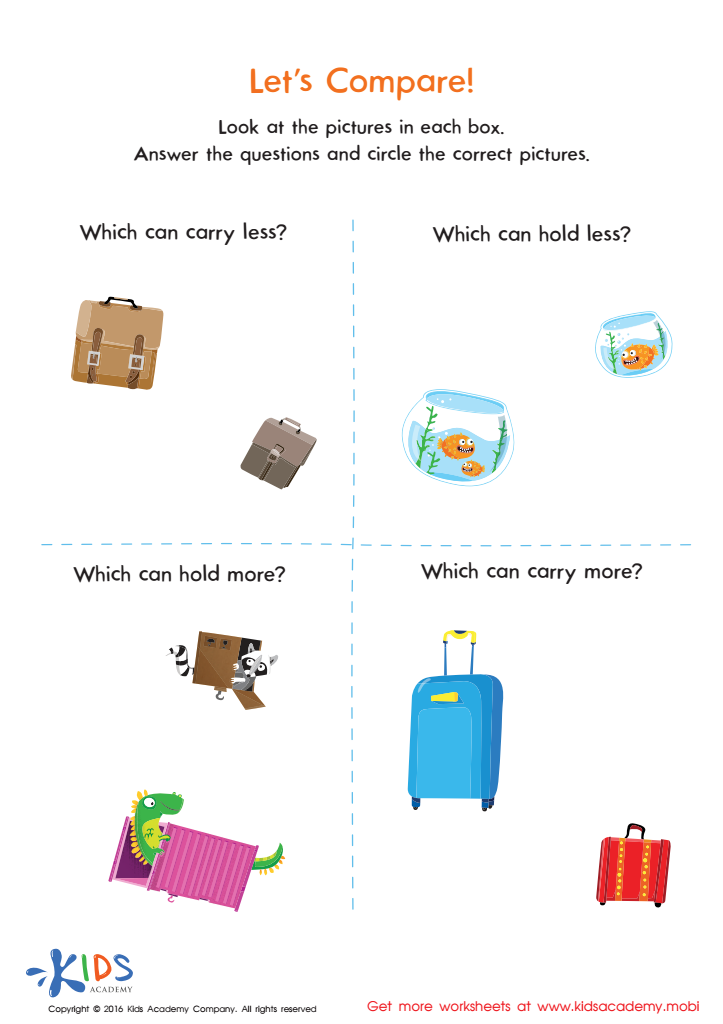
Let's Compare Worksheet: Big or Small
 Assign to My Students
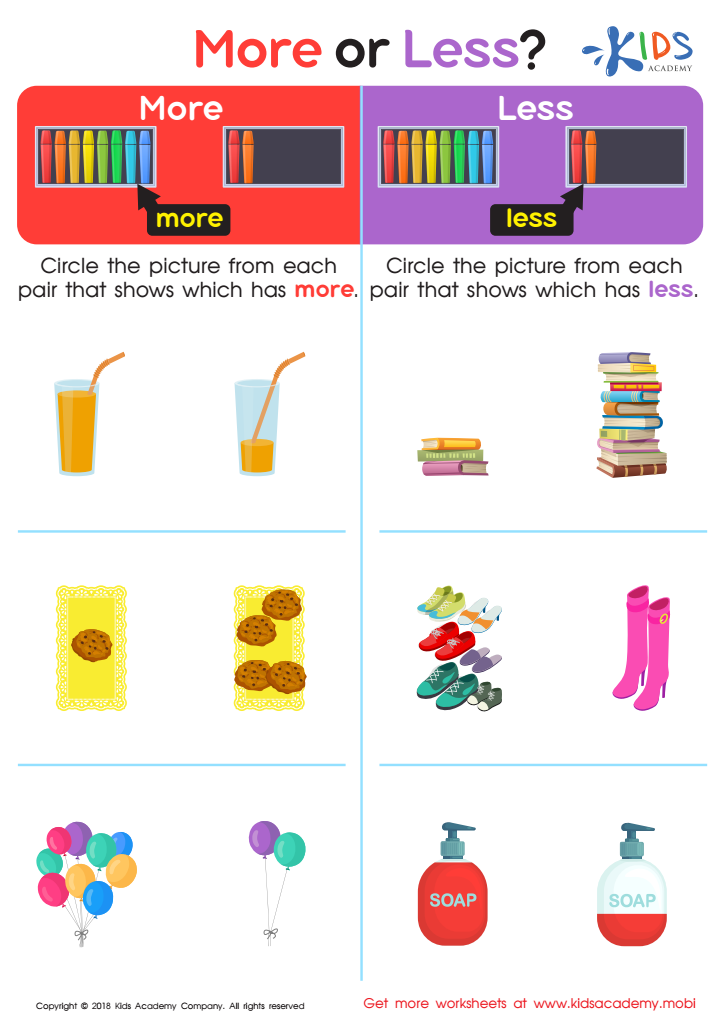
More or Less? Worksheet
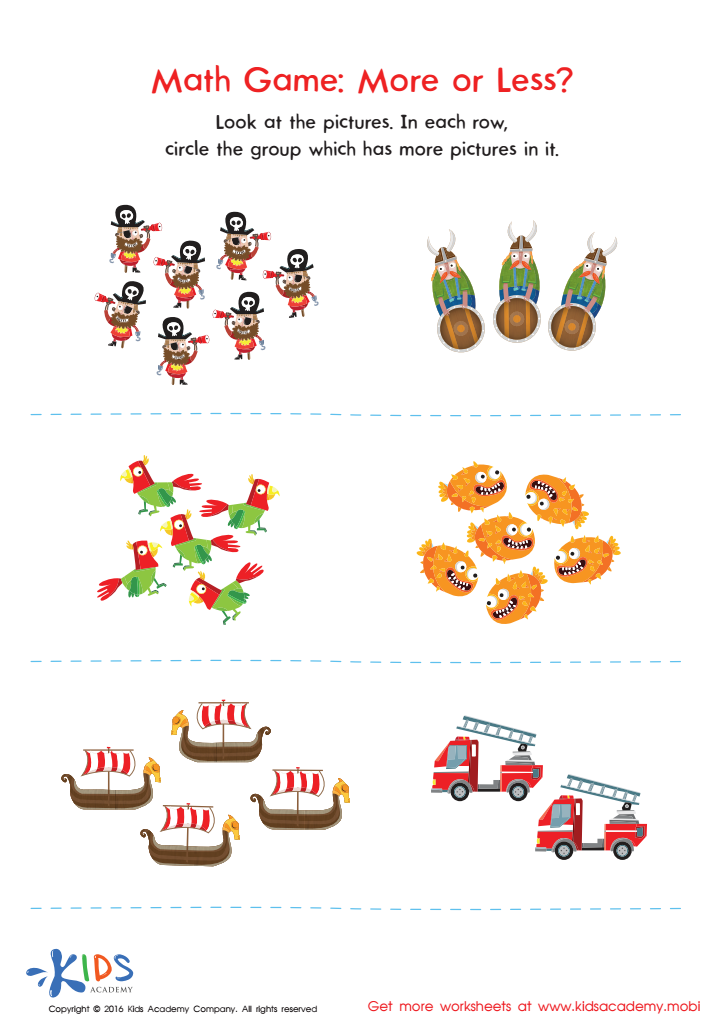
More or Less Worksheet






%20(1).jpg)

Number comparison skills are essential for children aged 4-9 as they lay the foundation for more advanced mathematical understanding and logical reasoning. During these formative years, children learn to recognize numbers, understand quantities, and develop a grasp of mathematical relationships. By focusing on number comparison, children enhance their ability to identify greater than, less than, or equal to relationships, which is critical for problem-solving and decision-making.
Parents and teachers should care about these skills because they facilitate various higher-level math concepts, such as addition and subtraction, as well as measurement and data analysis. Mastering number comparison also boosts children's confidence in math, making them more willing to engage with complex topics as they progress in their education.
Furthermore, these skills stretch beyond math; they promote critical thinking and analytical skills applicable in everyday life, helping children make logical comparisons and understand the world around them. As we prepare children for a future increasingly driven by technology and data, instilling strong number comparison abilities can foster lifelong learners capable of tackling complex challenges. Investing time and resources to develop these skills at an early age supports a child's overall academic success.








