Number tracing Math Worksheets for Ages 4-9
4 filtered results
-
From - To
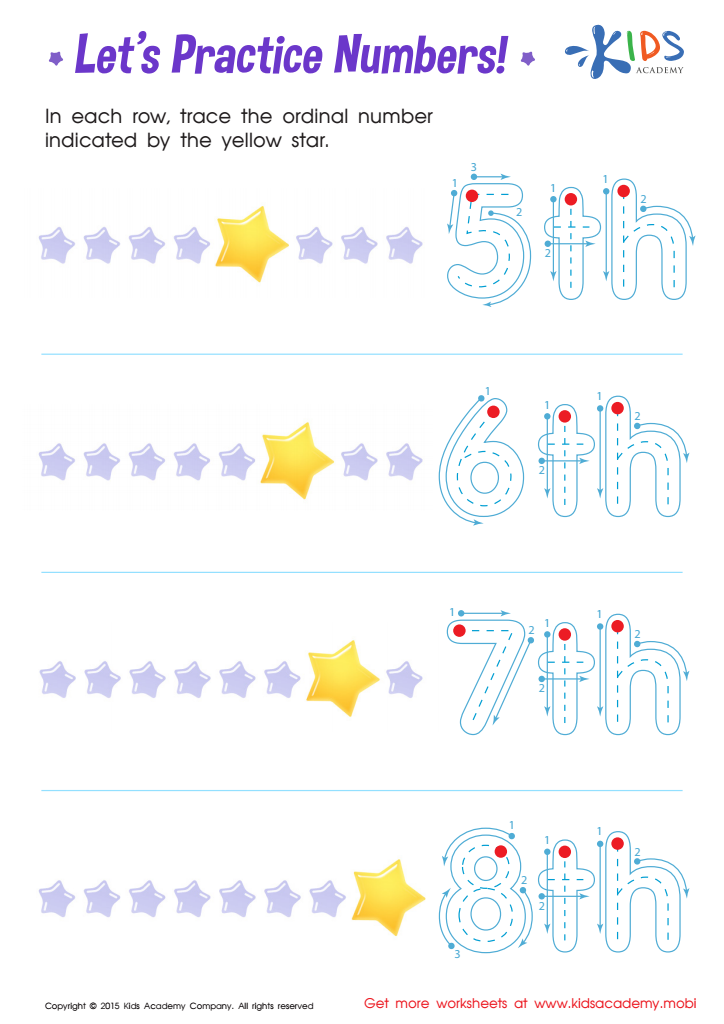
Discover our engaging Number Tracing Math Worksheets designed specifically for children ages 4-9! These printable worksheets provide a fun and interactive way for young learners to develop their number recognition and fine motor skills. Each worksheet features bold, clear numbers for easy tracing, helping children master their counting skills and build confidence in their math abilities. Whether at home or in the classroom, our resources are perfect for reinforcing foundational math concepts while fostering a love for learning. Explore our collection today and watch your child gain essential skills that will set them up for future success in mathematics!
 Assign to My Students
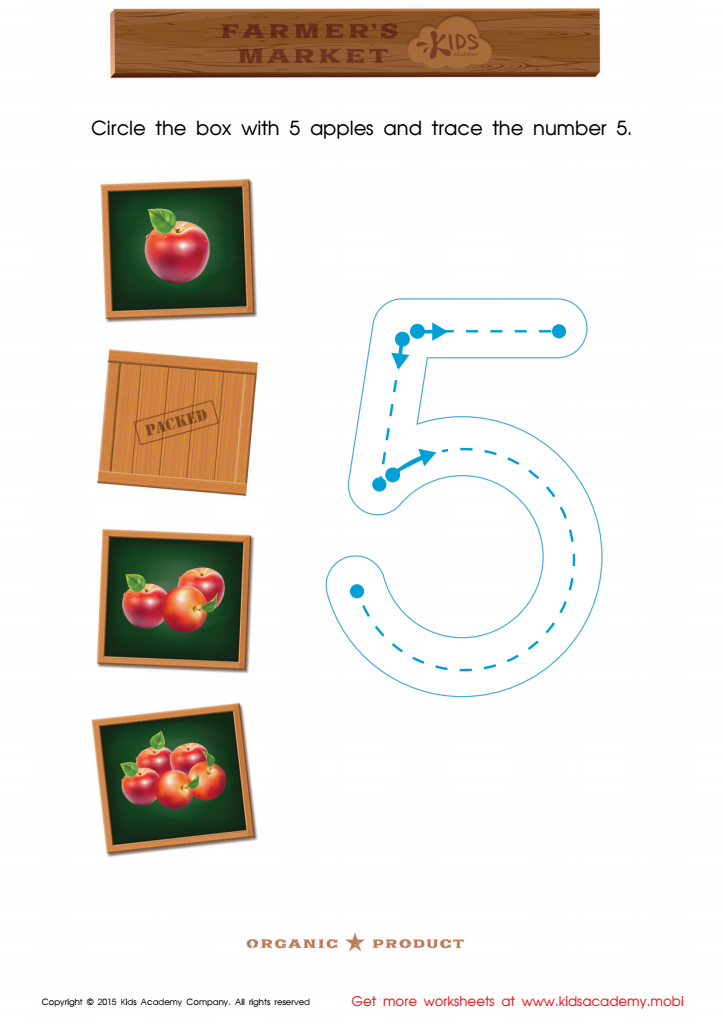
Count the Apples and Trace the Number 5 Printable







Number tracing is a critical foundational activity for children aged 4-9, as it lays the groundwork for their mathematical understanding. For parents and teachers, fostering early numeracy skills is essential. Tracing numbers helps children develop fine motor skills and hand-eye coordination, which are integral as they learn to write and engage in more complex math tasks later on.
Additionally, number tracing reinforces number recognition and comprehension. When children trace numbers, they begin to associate their shapes with their numerical values, aiding memory retention. This activity also encourages patterns and sequencing, which are crucial for foundational math concepts.
Moreover, number tracing offers a multisensory experience. Children not only see and write the numbers but also often say them aloud, reinforcing auditory learning alongside visual and kinesthetic experiences. This combination supports diverse learning styles, making the activity accessible for all children.
Ultimately, prioritizing number tracing equips young learners with confidence and competence in math, setting a solid foundation for future skills. Engaging in such activities not only is essential for cognitive development but also fosters a positive attitude toward learning mathematics that can last a lifetime. Parents and teachers play a crucial role in nurturing these skills early on.








