
Practice counting Math Worksheets for Ages 4-9
6 filtered results
Difficulty Level
Grade
Age
-
From - To
Subject
Activity
Standards
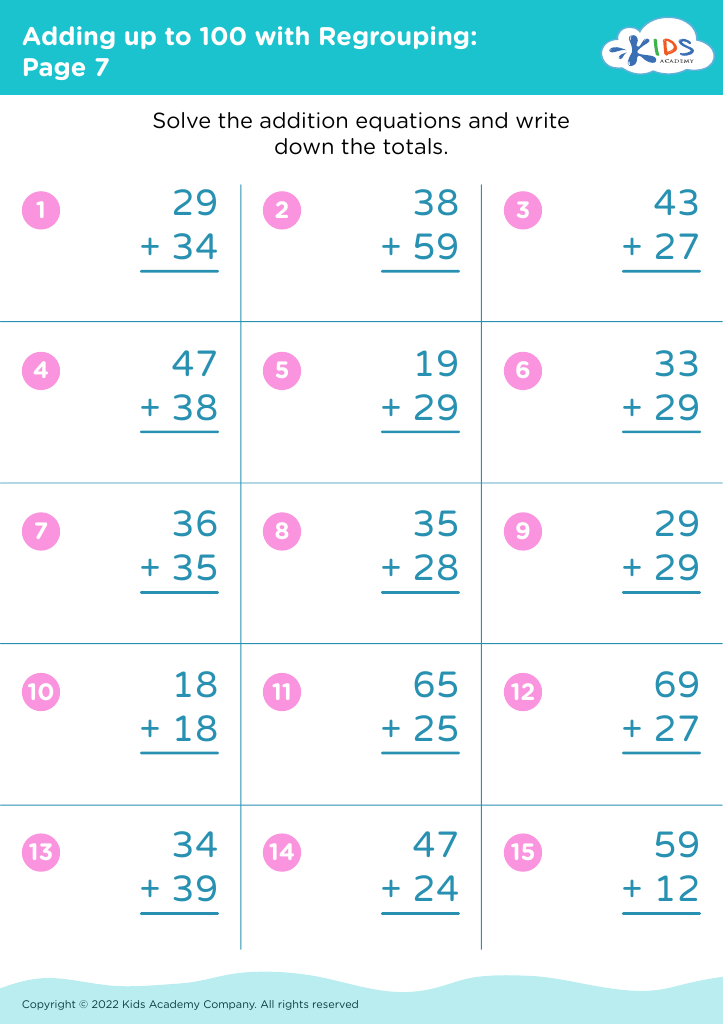
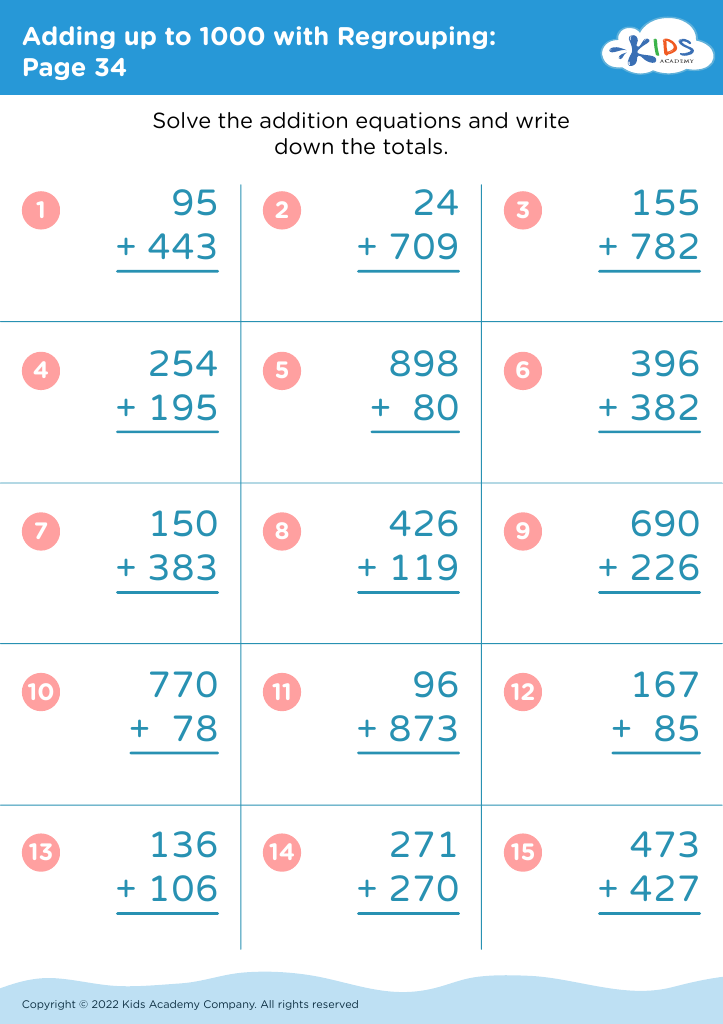
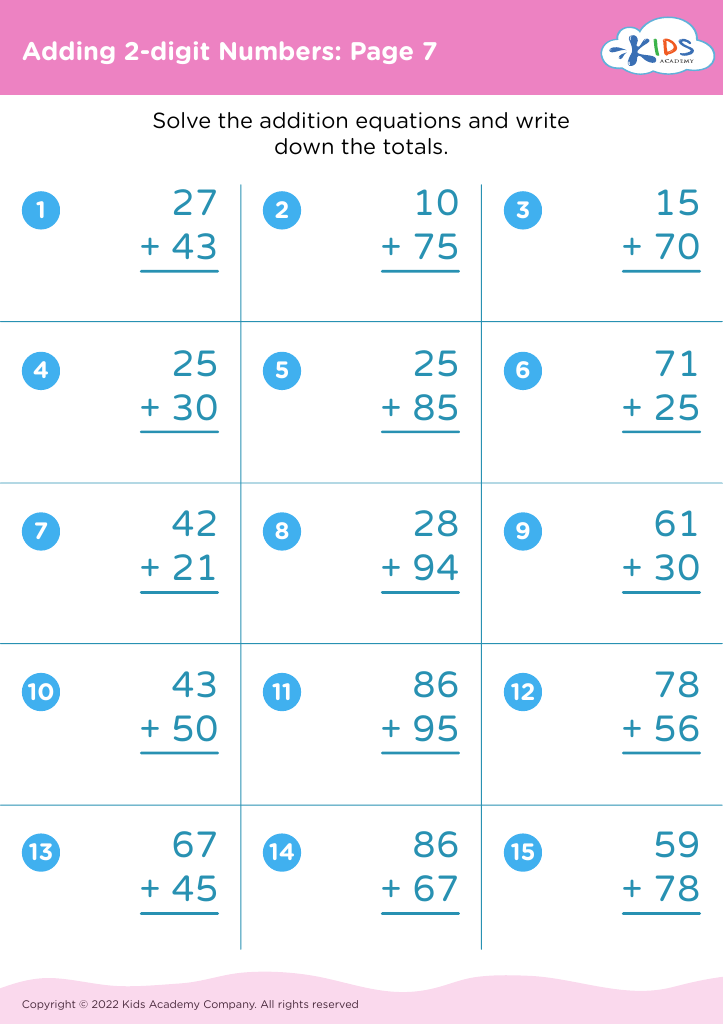
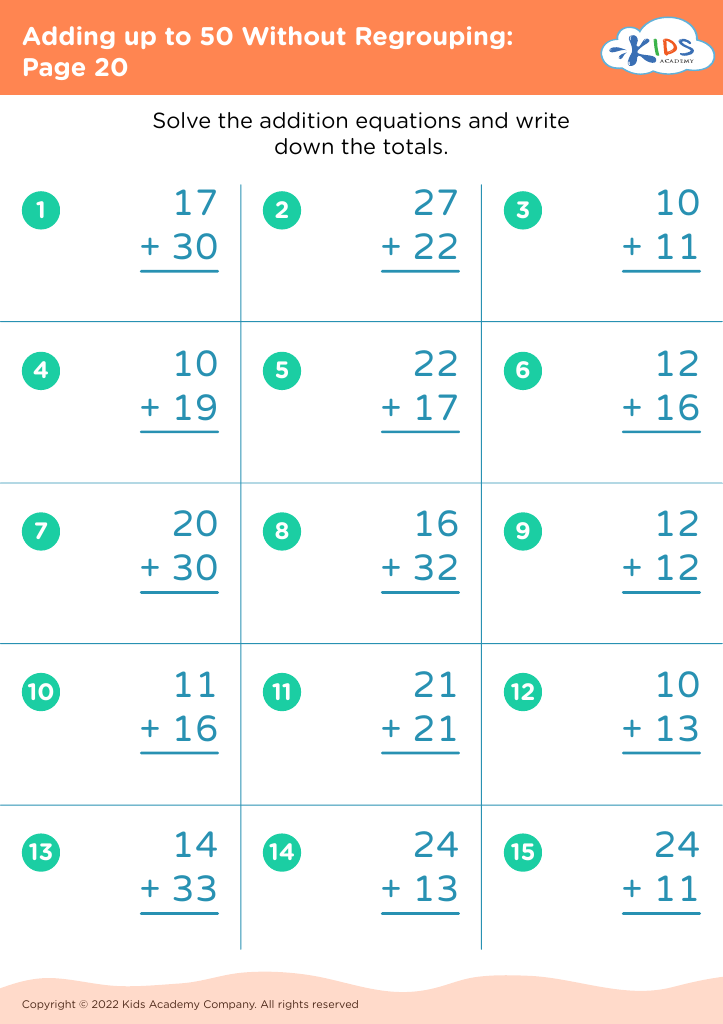
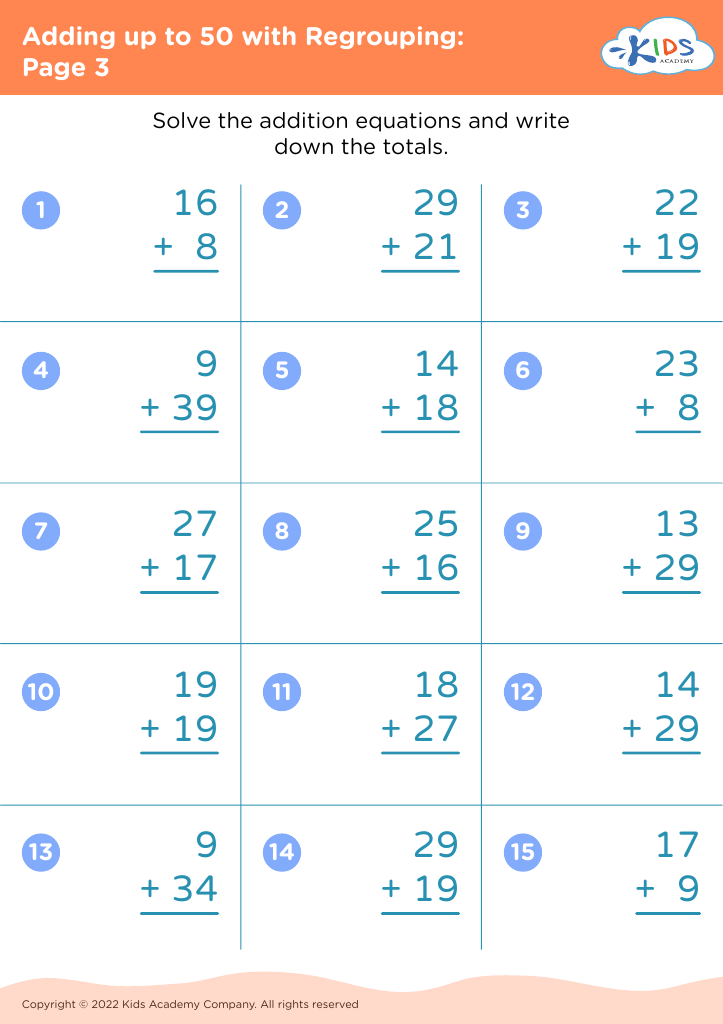
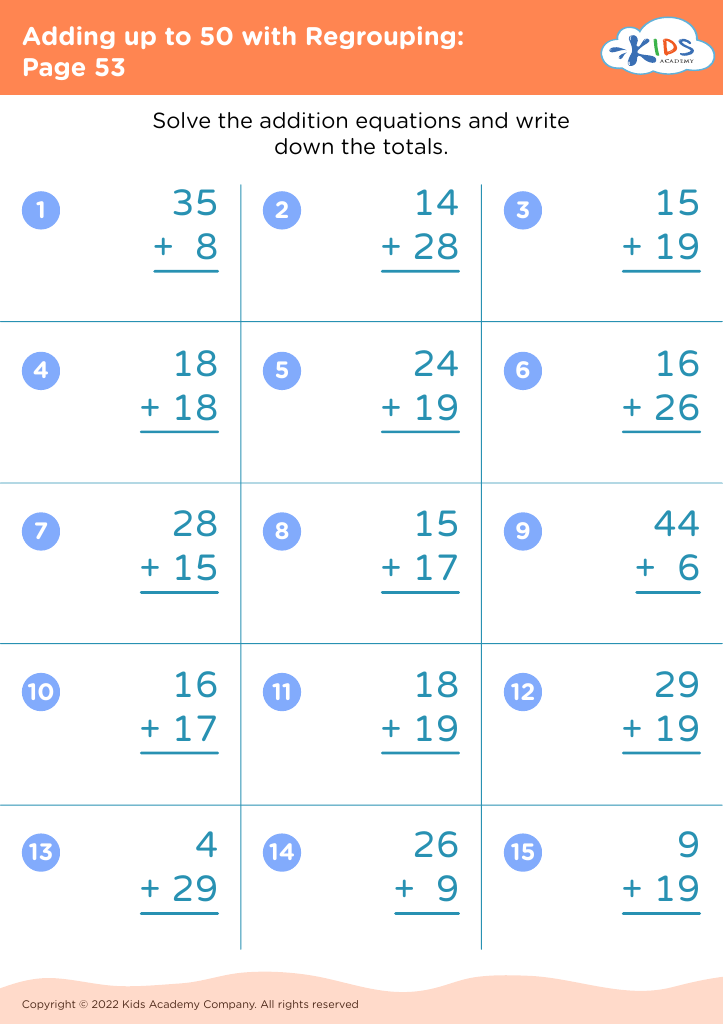
Welcome to our Practice Counting Math Worksheets for Ages 4-9! Designed to foster essential counting skills, these engaging worksheets offer a fun and interactive way for children to build a solid math foundation. Tailored for young learners, they include colorful illustrations and age-appropriate activities that enhance number recognition and counting proficiency. Encouraging both independent learning and guided practice, our worksheets are perfect for classroom use or at-home learning. Parents and teachers will find that these resources not only illuminate the joy of counting but also instill confidence in young mathematicians. Start counting today and watch your child's skills grow!
Favorites
With answer key
Interactive
Join Kids Academy for Free
Who is primarily going to use this learning content?








Parents and teachers should prioritize practice counting math for children aged 4-9 because it forms the foundation for all future mathematical understanding. Counting is an essential skill that helps young learners recognize patterns, understand numerical relationships, and develop problem-solving abilities. Mastering counting enables children to move confidently into more complex concepts, such as addition, subtraction, and even basic fractions.
Moreover, counting enhances children's cognitive development by improving their ability to focus, observe and analyze their environment. Engaging in counting activities fosters a sense of achievement, boosting self-esteem and encouraging a positive attitude toward learning. Through fun, interactive counting games and songs, children can develop a love for math and develop critical thinking skills.
Additionally, early counting practices support number sense, which is crucial for daily life skills, such as budgeting or telling time. Parents and teachers play a vital role in creating a rich, supportive learning atmosphere that encourages exploration and curiosity around numbers.
Ultimately, investing time in counting not only equips children with necessary academic skills but also helps cultivate a lifelong passion for learning. Such foundational skills will benefit them far beyond the classroom, making a compelling case for prioritizing counting practice in early education.








